

Fashion
ICE cotton eases amid global economic & geopolitical uncertainties

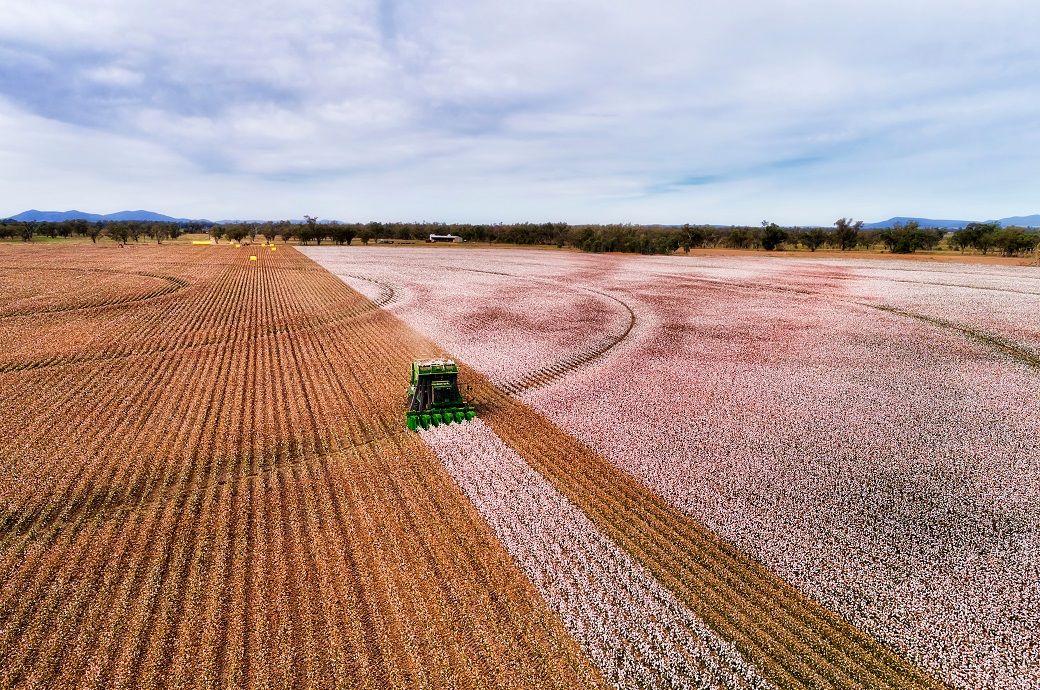
The most actively traded March cotton contract eased 0.04 cents to settle at 64.30 cents per pound, marking its second-lowest close since January 2, 2026. Cotton futures remained locked in a narrow range throughout the session, with prices finishing from 7 points lower to 9 points higher.
ICE cotton futures edged lower as the market searched for clearer demand signals amid global economic and geopolitical uncertainty.
Limited losses were cushioned by strength in grain markets and a rebound in global equities after tariff concerns eased.
Trading volumes and open interest stayed robust, signalling persistent participation despite narrow price movement.
Despite minimal price movement, turnover remained solid. Trading volume totalled 40,577 contracts, compared with 56,942 contracts cleared in the previous session. Open interest reached its sixth consecutive all-time high, rising by 2,128 contracts to 338,853. Over the past 14 sessions, open interest has increased every day, adding a cumulative 39,281 contracts, highlighting unusually persistent participation despite stagnant prices.
Broader markets rebounded after President Donald Trump announced a framework for a NATO-related agreement involving Greenland and withdrew planned February 1 tariffs on European nations. The announcement eased concerns over a potential US–Europe trade conflict that had fuelled sharp losses a day earlier.
All three major US equity indices recovered between half and two-thirds of their prior session losses. Gold posted new all-time highs on both an intraday and closing basis. The US dollar index ended higher but recovered less than 20 per cent of the previous day’s decline.
Market analysts said participants were largely watching how developments unfold. The market has adjusted slightly, but there has been no strong reaction.
US stocks rebounded modestly after their worst sell-off in three months as investors assessed President Donald Trump’s remarks at the Davos Forum.
Rising grain markets provided indirect support. CBOT soybean futures closed higher due to slow early progress in the South American soybean harvest, as market focus shifted away from geopolitical tensions.
Analysts said demand expectations remain cautious, although demand may improve slightly this year. Many are hoping the Buy American Cotton Act could have some impact. It may offer a small glimmer of hope, but for now, conditions remain relatively calm. The Buy American Cotton Act is a proposed US measure designed to support domestic cotton consumption by offering transferable federal tax credits to companies using US-produced cotton.
According to Intercontinental Exchange data, deliverable No. 2 cotton futures inventory fell to 10,422 tons as of January 20, down from 11,029 bales in the prior session.
This morning (Indian Standard Time), ICE cotton for March 2026 was settled at 64.25 cents per pound (down 0.05 cent), cash cotton at 62.05 cents (down 0.04 cent), the May 2026 contract at 65.85 cents (down 0.07 cent), the July 2026 contract at 67.34 cents (down 0.06 cent), the October 2026 contract at 68.33 cents (up 0.07 cent) and the December 2026 contract at 69.07 cents per pound (down 0.09 cent). A few contracts remained at their previous closing levels, with no trading recorded so far today.
Fibre2Fashion News Desk (KUL)










The economy grew by 5.6 per cent in Q4 2024 at constant prices.
Sri Lanka’s economy grew by 4.8 per cent YoY in Q4 2025, with lower inflation and exchange rate stability leading to a full year growth of an estimated 5 per cent at constant prices, official statistics show.
The economy grew by 5.6 per cent in Q4 2024 at constant prices.
The industrial sector grew by 7.8 per cent YoY in Q4 2025 .
At current prices, the 2025 GDP grew by 8.8 per cent.
At current prices, GDP grew by 8.8 per cent last year.
“The economic climate surrounded in 2025 was favourable for a solid economic performance through few aspects; entrepreneur friendly inflation started to rise early in the third quarter of 2025 coupled with the mostly stabilize exchange rate amid continuously decreasing interest rate,” the department said in a release.
The industrial sector grew by 7.8 per cent YoY in Q4 2025.
Fibre2Fashion News Desk (DS)

While war disrupts logistics, a deeper shift is unfolding in Europe.
New rules, including DPP, CSDDD, Ecodesign and EPR, will redefine textile market access, adding 3–7 per cent to costs and demanding full traceability.
Companies delaying compliance risk exclusion, as regulation, not geopolitics, emerges as the industry’s most decisive competitive filter.
Source link
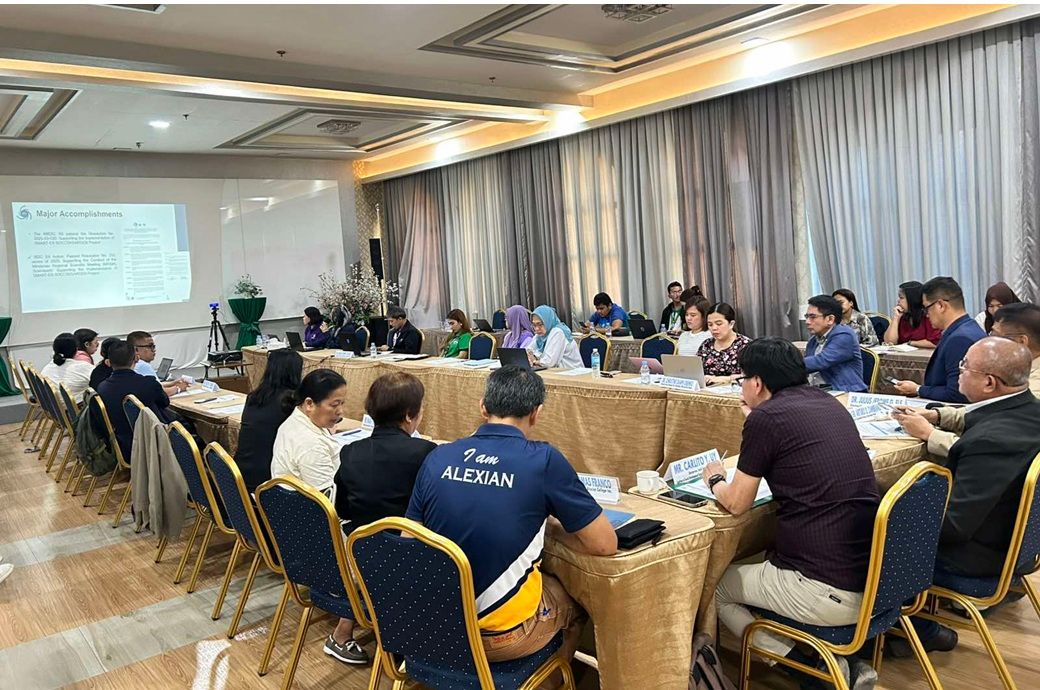
The facility will process natural fibres such as abaca, banana and pineapple into high-quality yarn, addressing long-standing challenges faced by local weavers who have relied on imported materials. This initiative is expected to create new markets for agricultural produce while providing additional income streams for farmers.
The DOST-PTRI, with DOST Region 12, will establish the Regional Yarn Production and Innovation Center in Philippine’s Cotabato to process natural fibres into yarn and support Mindanao’s textile industry.
The facility aims to boost farmer incomes, reduce reliance on imported yarn and strengthen local weaving communities through training, technology transfer and improved supply chain infrastructure.
During the first-quarter meeting of the Regional Research, Development, and Innovation Committee, Evangeline Flor P. Manalang, chief science research specialist of DOST-PTRI’s Technical Services Division, stated “The RYPIC will serve as a key facility to process our natural fibers into yarn and open opportunities for skills training among farmers and local stakeholders.” She also emphasised the project’s role in building a sustainable textile ecosystem in Soccsksargen.
The RYPIC complements existing facilities such as the Natural Textile Fiber Innovation Hub at Sultan Kudarat State University and forms part of broader national programmes including the Clothing and Textile Research Innovation and Investment Agenda (CATRINA) and the FRONTIER initiative. These efforts aim to strengthen the domestic textile value chain, reduce reliance on imports and support the government’s push to expand Telang Pinoy, as highlighted by President Ferdinand R. Marcos Jr. in his fourth State of the Nation Address.
Fibre2Fashion News Desk (JP)


Sri Lanka GDP grows 4.8% in Q4; full-year growth at 5%

Suparco rolls out Space4Climate initiative for climate monitoring

‘Crisis worse than two 1970s oil shocks put together’: IEA chief’s big warning on Strait of Hormuz – The Times of India

Tips and Advice for Buying Used or Refurbished Electronics

UAE savings strategies 2026 explained: Best apps, tools, budget rules and smart money hacks to beat rising cost of living in emirates – The Times of India

Strategic oil stocks to be released ‘immediately’ in Asia and Oceania: IEA

-
 Tech1 week ago
Tips and Advice for Buying Used or Refurbished Electronics
-
Business1 week ago
UAE savings strategies 2026 explained: Best apps, tools, budget rules and smart money hacks to beat rising cost of living in emirates – The Times of India
-
 Entertainment1 week ago
Strategic oil stocks to be released ‘immediately’ in Asia and Oceania: IEA
-

 Entertainment1 week ago
Iran at war
-

 Sports1 week ago
Japan suffers shocking collapse to Venezuela in World Baseball Classic
-

 Politics1 week ago
How can US get out of Iran war?
-

 Sports1 week ago
College Basketball Invitational abruptly cancels 2026 tournament
-

 Entertainment1 week ago
Meet one of the last true paparazzi