

Fashion
India unlocks $30-trn US market for exports; Silk gets 0% duty

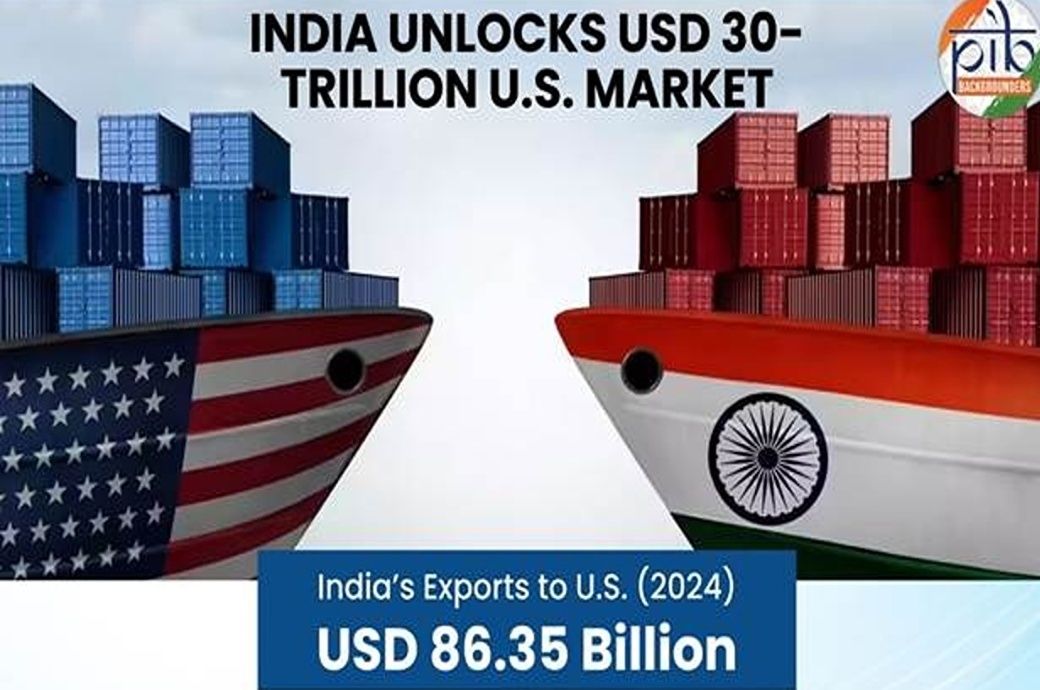
The deal opens enhanced opportunities in the US silk products market valued at $113 billion.
The India-US trade deal has secured sustained preferential access for Indian exports in the US market, with tariffs on export of textiles, leather, footwear and home décor items, and machinery and parts cut to 18 per cent.
Silk gets zero per cent duty access.
RMG, carpets, artificial staple fibres, bedspreads, bleached fabrics, curtains, yarn, baby clothing, bed linen and blankets will benefit.
Major export categories benefiting from the reduced tariff structure include readymade garments, carpets, man-made textiles, cotton textiles, artificial staple fibres, bedspreads, bleached fabrics, curtains, yarn, baby clothing, bed linen, blankets, gloves and related products.
The agreement is expected to provide a significant boost to the textile sector, leveraging economies of scale and strengthening small businesses and production clusters.
Enhanced market access is likely to support job creation and reinforce India’s position as a competitive and reliable supplier in global textile value chains, an official release from the Indian government said.
The agreement delivers significant gains for India’s leather and footwear sector, positioning the country as most-preferred supplier to the US market. It offers better access to a US market for these products valued at $42 billion.
Major export categories in this sector expected to benefit include finished leather, leather footwear and footwear components.
Given the labour-intensive nature of the leather and footwear industry, enhanced market access is expected to support manufacturing growth and employment generation, particularly across micro, small and medium enterprises (MSMEs) and production clusters.
It opens opportunities in the US home décor market valued at $52 billion. Products benefiting from the reduced tariff structure include wood and furniture items, pillows, cushions, quilts, comforters, non-electrical lamps and related furnishing products.
In addition, zero per cent duty access has been secured for products like seats, chandeliers, illuminated signs and parts of lamps covering a US market worth $13 billion.
Tariffs on export of machinery and parts (excluding aircraft components) have also been reduced from 50 per cent to 18 per cent, opening enhanced opportunities in the US machinery market valued at $477 billion. India’s exports in this segment stand at $2.35 billion now, and the reduced tariff structure is expected to strengthen the competitiveness of Indian manufacturers across a wide range of machinery and component categories.
Fibre2Fashion (DS)












According to the informal agreement, there will be a new handling fee for each item entering the EU from non-EU countries and sent directly to EU consumers, to cover the extra cost of handling an ever-increasing number of individual parcels.
This will be paid by the same entity responsible for paying other customs charges for the same parcel, to avoid shifting the cost to consumers.
The European Parliament and European Council have reached a deal on a major reform of the EU Customs Code to address problems relating to e-commerce, safety of goods and efficiency.
A new handling fee will be charged for each item entering the EU from non-EU nations and sent directly to EU consumers.
The European Commission will establish the level of the fee and reassess it every two years.
The European Commission will establish the level of the fee and reassess it every two years. Member states will start collecting it as soon as the necessary information technology (IT) system becomes operational, and in any case no later than November 1, this year.
Under the new rules, sellers and platforms that facilitate distance sales of goods from non-EU countries directly to EU customers will be treated as importers. This will oblige them to provide customs authorities with all the necessary data, pay or guarantee any charges, and make sure that the goods comply with EU laws, an official release said.
These companies must be established in the EU or be represented by an EU-based entity having either authorised economic operator (AEO) or trusted trader status. This should prevent the use of shell companies.
To incentivise bulk shipments that are easier for customs authorities to check, non-EU country sellers and platforms are encouraged to operate warehouses in the EU. Their intra-EU client shipments would benefit from a lower handling fee, provided their goods were imported in collective packaging and large enough quantities to make customs checks more efficient.
Companies that repeatedly ignore EU rules could be punished with a fine of at least 1 per cent (and up to 6 per cent) of the total value of goods imported into the EU in the previous 12 months.
Additionally, customs authorities may suspend, revoke, or annul their trusted trader or AEO status and flag them as high-risk operators.
Import-export companies that follow the rules and agree to cooperate transparently with the customs authorities may benefit from a simplified ‘trust and check’ regime. This would initially require them to go through thorough vetting and grant customs authorities access to their electronic systems.
In exchange, their shipments would be checked less frequently and they would have more flexibility regarding the payment of duties and fees.
The current AEO qualification will remain in place to keep customs status accessible to smaller economic operators.
The reform also establishes a new customs data hub to be managed by the new EU Customs Authority (EUCA). It will be available for optional use by 2031 and mandatory by 2034.
The data hub will replace at least 111 software systems currently used by customs.
The provisional agreement needs to be officially approved by Parliament in plenary as well as by the EU Council, before it will become law.
Fibre2Fashion News Desk (DS)
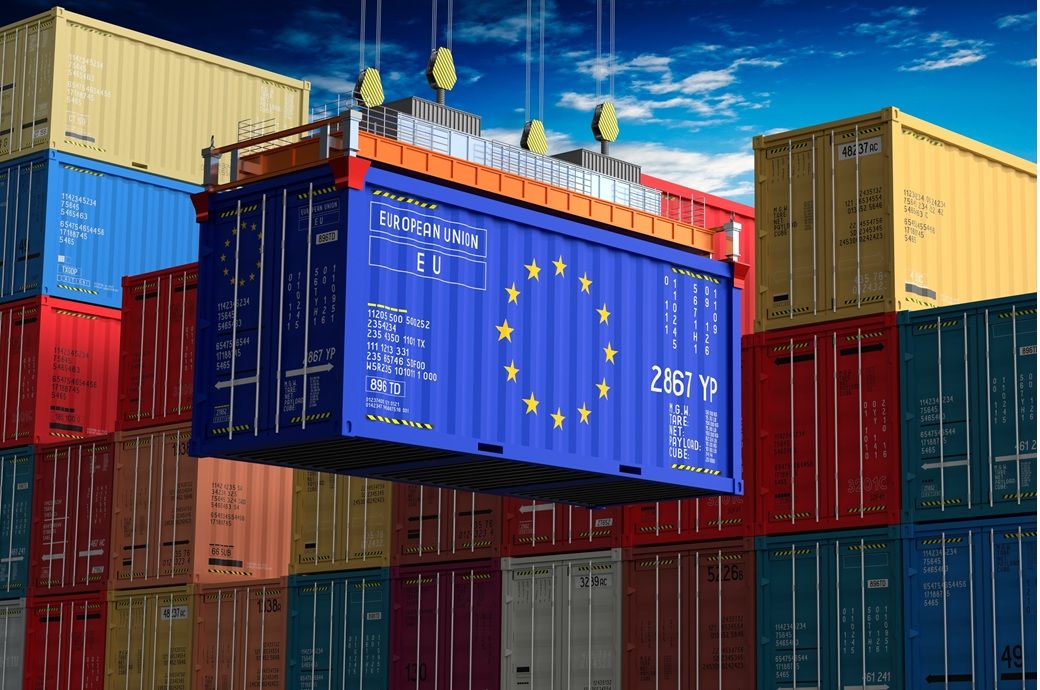
This was driven by an 8.36-per cent YoY decline in import volume and a 7.76-per cent YoY decrease in average unit prices.
The EU’s apparel imports fell by 15.48 per cent YoY in January to €7.03 billion, according to Eurostat.
Bangladesh’s apparel exports to the EU fell to €1.43 billion in January—a 25.25-per cent drop in value.
China remained the top exporter of apparel to the EU (€2.22 billion), but still saw a 6.9-per cent decline YoY in value.
India, Pakistan, Vietnam and Cambodia also remained in negative territory.
Bangladesh’s apparel exports to the bloc fell to €1.43 billion in January—a sharp 25.25-per cent drop in value. It saw a 17.49-per cent YoY decrease in the quantity of goods shipped, coupled with a 9.41 per cent drop in the unit price per kilogram.
China remained the top exporter of apparel to the EU (€2.22 billion), but still saw a 6.9-per cent decline YoY in value. Its unit prices dropped by 8.01 per cent YoY, while its export volume grew a bit by 1.21 per cent YoY.
Turkey faced a severe hit with a 29.12-per cent YoY decrease in apparel export value to the EU in the month, totaling €619.98 million.
Other countries like India, Pakistan, Vietnam and Cambodia remained in negative territory, reflecting a broad-based slowdown in the European fashion retail market.
Fibre2Fashion News Desk (DS)
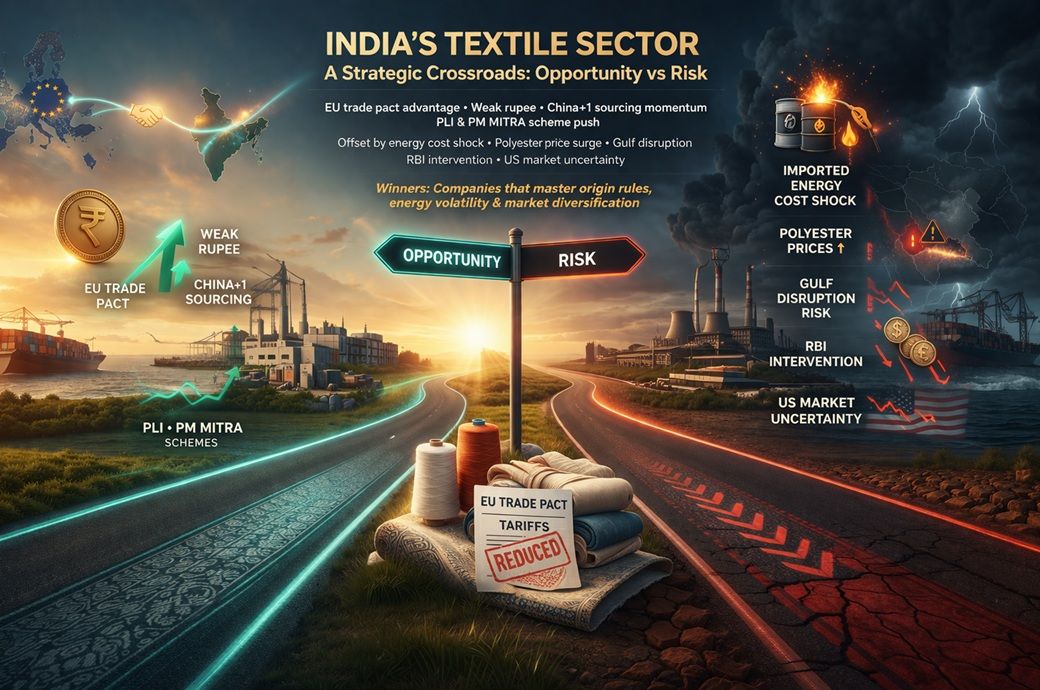
India’s textile outlook is turning structurally complex.
The EU pact targets ~99.5 per cent trade coverage with phased duty relief, while rupee weakness supports exports.
However, crude volatility, >80 per cent import energy dependence, polyester cost inflation and US market softness (≈28 per cent share) are fragmenting performance, reinforcing a shift towards cotton-led, EU-focused exporters.
Source link


Man City show why they are worthy WSL title winners as tired United wilt

USA 2-5 Belgium (Mar 28, 2026) Final Score – ESPN

The unlikely rise of Iowa’s Ben McCollum, Bennett Stirtz: Division II to Elite Eight

-
 Business1 week ago
Flipkart group CFO to leave co amid IPO plans – The Times of India
-

 Fashion1 week ago
China’s textile & apparel exports surge 17% to $50 bn in Jan-Feb 2026
-

 Sports1 week ago
Rating Adidas’ 2026 World Cup away shirts: Argentina, Spain, Mexico and more
-

 Sports1 week ago
American Conference Commissioner Tim Pernetti thanks Trump for Army-Navy game executive order
-
Tech1 week ago
The Corsair 4000D RS PC Case Keeps Your System Cool
-

 Tech1 week ago
Gamers Hate Nvidia’s DLSS 5. Developers Aren’t Crazy About It, Either
-
 Business4 days ago
Property Play: Home flippers see smallest profits since the Great Recession, real estate data firm says
-
 Business1 week ago
‘Marriage penalty’ in Washington state’s new millionaire tax stirs debate