

Business
Indias forex reaches all-time high of $709.413 billion ahead of Budget 2026

New Delhi: India’s foreign exchange reserves increased by $8.053 billion in the week ended January 23 — reaching an all-time high of $709.413 billion, according to data released by the Reserve Bank of India (RBI) on Friday. The previous all-time high for the country’s foreign exchange reserves was $704.89 billion, registered in September 2024.
According to the RBI data, the value of Foreign Currency Assets (FCA), the largest component of the reserves, increased by $2.367 billion to $562.885 billion, in the week ended January 23.
The value of gold held in the reserves increased by $5.635 billion to $123.088 billion. The value of Special Drawing Rights (SDRs) increased by $33 million to $18.737 billion. The Reserve Position with the IMF increased by $18 million to $4.703 billion, as per the Central bank data.
Last week, the foreign exchange reserves had increased by $14.167 billion to reach $701.360 billion. Meanwhile, India remains the world’s largest recipient of remittances, with inflows reaching $135.4 billion in FY25, supporting stability in the external account, according to the Economic Survey 2025-26. India has consistently attracted sizeable gross investment inflows, amounting to 18.5 per cent of GDP in FY25, even amid tightening global financial conditions.
According to UNCTAD data, India remained the largest recipient of gross FDI inflows in South Asia and surpassed major Asian peers such as Indonesia and Vietnam. India ranked fourth globally in Greenfield investment announcements in 2024, with over 1,000 projects and emerged as the largest destination for Greenfield digital investments between 2020-24, attracting $114 billion.
In April-November 2025, gross FDI inflows strengthened to $64.7 billion, compared with $55.8 billion in April-November 2024. In terms of adequacy, the reserves are sufficient to cover around 11 months of goods imports and about 94 per cent of the external debt outstanding at the end of September 2025, providing a comfortable liquidity buffer, the Survey noted.












Business
LPG crisis: Centre pushes states to fast-track switch to PNG amid Hormuz supply disruption – The Times of India
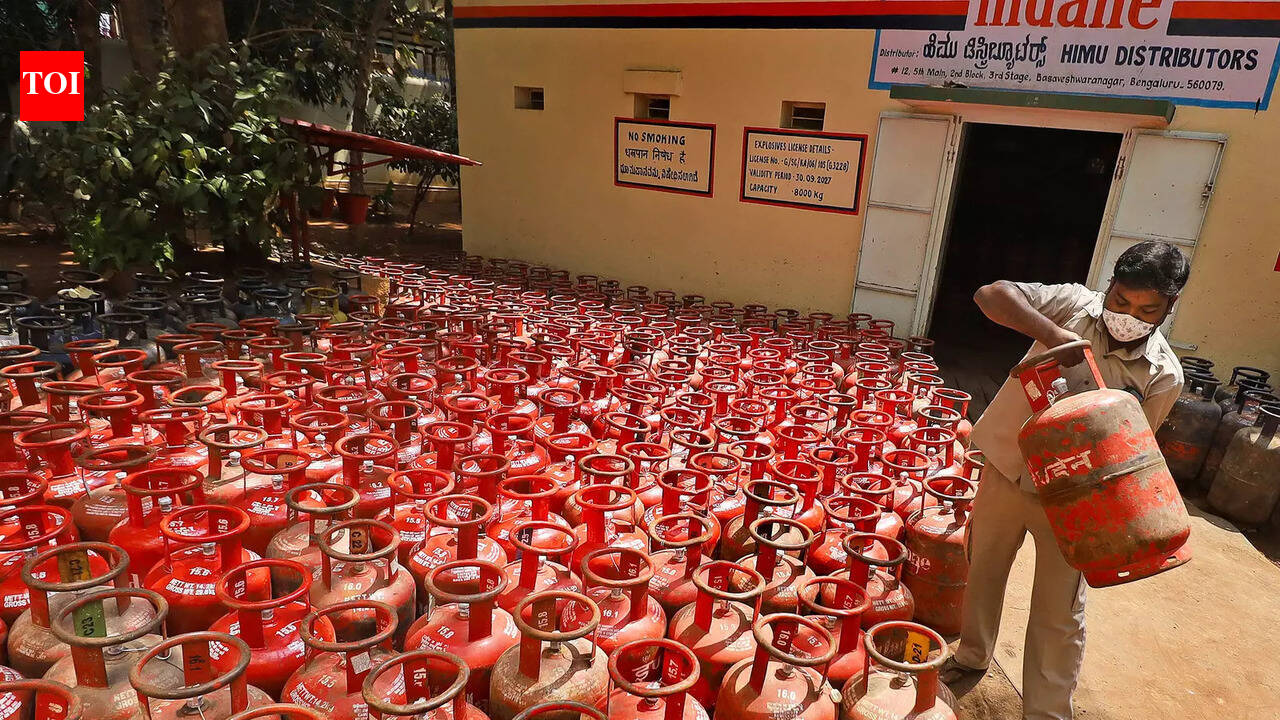
As the Middle East crisis continues to escalate, its impact is now being felt across Indian households and businesses such as eateries and restaurants, with the country relying on imports for 60% of its LPG needs. Amid rising concerns over LPG supply flows, the government is encouraging both households and commercial users to shift towards PNG.It has urged states to fast-track approvals and cut charges so that more homes can shift to piped natural gas (PNG) at a time when liquefied petroleum gas (LPG) supplies remain under stress. According to an official cited by ET, states have been asked to speed up permissions for laying pipelines and to do away with road restoration and related fees imposed by local authorities. The aim is to accelerate infrastructure rollout and make it easier for households to adopt PNG.As part of the relief measures, the petroleum and natural gas regulatory board has waived imbalance charges for city gas companies, shippers and consumers “as a temporary relief measure in light of the extraordinary circumstances” due to ongoing Iran war. These charges are typically imposed when the actual quantity of gas taken or injected by a shipper differs from the amount scheduled on the pipeline network.Officials said the Centre is trying to overcome “structural constraints” that have slowed the growth of PNG connections. Sujata Sharma, joint secretary at the ministry of Petroleum and Natural Gas, outlined a series of steps proposed to states in a presentation shared on Monday.These include directing states to:
- Issuing deemed permission for pending applications for laying city gas distribution (CGD) pipelines
- Mandating approval of all new CGD permissions within 24 hours
- Waiving road restoration and permission charges levied by state or local authorities
- Relaxing working hours and working seasons
- Appointing state nodal officers for support, coordination and faster implementation
Meanwhile, the gap between LPG and PNG usage remains wide. India has around 10 million active PNG consumers, compared with about 330 million LPG users.Hospitality and consumers are already feeling the strain of LPG-related disruptions. The Hotel and Restaurant Association (Western India) (HRAWI) has approached the Maharashtra government seeking an extension or staggered payment of annual licence fees, saying a commercial LPG shortage has forced several establishments to shut. In Patna, residents have flagged delayed deliveries and cases where cylinders are marked as delivered but not received, prompting the district administration to step up monitoring, even as officials maintain there is no shortage. The impact is also visible in other industries. In Gujarat’s Morbi, around 430 ceramic units are set to remain shut for at least three weeks after the West Asia conflict disrupted gas supplies essential for manufacturing, according to an industry representative.

Asian markets mostly rose on Wednesday, and oil prices dipped following another tech-led advance on Wall Street, as the United States hit Iranian missile sites near the key Strait of Hormuz and Tehran struck crude-producing Gulf neighbours.
While the war in the Middle East shows no sign of ending and oil has stuck around $100 a barrel — threatening to fuel a fresh inflation spike — equity traders have shifted back into the market after the steep losses suffered at the outset of the conflict.
However, analysts warned the positive mood could fade if the crisis drags on and energy costs spiral with Hormuz — through which a fifth of global oil and gas flow — effectively closed by Iran.
That comes with central banks increasingly in a bind as the need for lower interest rates to support the economy goes up against the prospect of rising prices, which would need higher borrowing costs.
In a bid to ease traffic through the crucial Strait, US forces dropped several 5,000-pound (2,250 kg) bombs on “hardened Iranian missile sites” near the coast, Central Command said.
Iran has sought to extract a heavy toll on the global economy in retaliation for the US-Israeli attack, including by driving up the cost of oil.
US President Donald Trump on Tuesday fumed that allies, which have largely distanced themselves from his war, were not lining up to help escort tankers through Hormuz.
The attacks came as Israel announced it had killed security chief Ali Larijani, a key force leading Iran since the death of Supreme Leader Ayatollah Ali Khamenei in the first strikes of the war.
Meanwhile, Saudi Arabia intercepted six drones and Kuwait’s air defences responded to a rocket and drone attack, authorities from both countries said Wednesday, while two people were killed by missiles near Tel Aviv.
Israel also hit a central Beirut neighbourhood as it looks to take out the Hezbollah.
Rystad Energy estimated just 12.5 million barrels per day of Middle Eastern oil remains online, down from the 21 million per day pre-war base.
“But the 12.5 million bpd figure is not secure,” Rystad said. “If the (Hormuz) situation persists, the drop in departures could start feeding through into additional export losses in the weeks ahead, as producers face growing difficulty moving crude out of the Gulf.”
Still, oil prices fell, with West Texas Intermediate losing more than one percent to sit around $95, while Brent dipped 0.8%, though it was still holding above $102.
And stocks continued to defy gravity following gains on Wall Street that were helped by tech giants including Apple and Amazon.
Seoul jumped more than three percent thanks to a surge in chip giants Samsung and SK hynix. The Kospi, however, is still well down from the record highs touched before the war broke out.
Tokyo was up more than two percent, while Taipei, Sydney, Singapore and Wellington also rallied. Hong Kong and Shanghai dipped.
“Asia is picking up the baton with a cautiously constructive tone… all of it leaning on the signal from Wall Street where the S&P and Nasdaq have now strung together a second day of gains, suggesting the market is actively choosing to look through the geopolitical noise rather than price it in the fore,” wrote SPI Asset Management’s Stephen Innes.
However, Fawad Razaqzada at Forex.com warned that traders might begin to rethink their positions the longer the conflict rumbles on.
“If the war continues then the US and Israel will have to continue alone, because other NATO members have decided against joining the conflict,” he wrote.
“This may work in favour of Iran keeping the Strait of Hormuz closed for longer.”
Focus is also on the Federal Reserve’s policy meeting that concludes later Wednesday.
The bank is expected to keep borrowing costs on hold but it will release its “dot plot” forecast for rates in the coming months, amid speculation it could be forced to hike again.

Lululemon offered a weak 2026 outlook on Tuesday as tariffs, higher expenses and a dramatic proxy battle with its founder weigh on its bottom line.
The athleisure company’s guidance for both the current quarter and the fiscal year came in lower than expected on the top and bottom lines.
Lululemon is expecting first quarter sales to be between $2.40 billion and $2.43 billion, weaker than estimates of $2.47 billion, according to LSEG. It anticipates earnings per share will range between $1.63 and $1.68, also weaker than estimates of $2.07.
For the full year, Lululemon is expecting sales to be between $11.35 billion and $11.50 billion, below expectations of $11.52 billion. Earnings guidance of $12.10 to $12.30 per share was also far weaker than estimates of $12.58.
“The work is really underway in terms of our action plan, and we’re really focused on the importance of course correcting on a number of fronts,” interim co-CEO Meghan Frank told CNBC in an interview. “We’ve got a new creative director, his first line is hitting in Q1, we are seeing some green shoots, I would say, from the product in Q1 so we’re excited about some of the momentum we have on that line item. We have had some great response from some of our recent product activations, and then we’re also reducing our speed to market timeline.”
During Lululemon’s holiday quarter, the company beat estimates on both the top and bottom lines, though Wall Street had lowered its expectations for the period in recent months.
Here’s how the Vancouver-based retailer performed during its fiscal fourth quarter compared with what Wall Street was anticipating, based on a survey of analysts by LSEG:
- Earnings per share: $5.01 vs. $4.78 expected
- Revenue: $3.64 billion vs. $3.58 billion expected
The company’s net income for the three-month period that ended Feb. 1 was $586.9 million, or $5.01 per share, compared with $748.4 million, or $6.14 per share, a year earlier.
Sales rose slightly to $3.64 billion, up about 1% from $3.61 billion a year earlier.
Lululemon raised its fiscal fourth-quarter guidance during the ICR conference in Orlando earlier this year, so all eyes were on the company’s 2026 guidance following more than a year of underperformance.
The retailer, always considered a premium brand that rarely offered promotions, had been leaning on discounts to drive sales and move inventory. The company is now working to pull back that strategy this year, Frank said. Lululemon expects the move will weigh on sales in the near term, but it will bring the company back to a full-price business over time, she said.
Meanwhile, it’s seeing a number of pressures on its bottom line. Higher tariffs and the end of the de minimis exemption continue to be a major cost for the company.
This year, Lululemon expects tariffs to cost the company $380 million, up from $275 million last year, on a gross basis. Once mitigation efforts are taken into account, the net impact is expected to be $220 million in 2026, up from $213 million in 2025.
Lululemon has been negotiating with suppliers and taking other actions to reduce its exposure to tariffs, but it isn’t increasing prices to offset the added costs, especially as it looked to promotions to drive sales in recent months. The brand was already priced toward the high end of the market prior to President Donald Trump’s tariff hikes last year, leaving it with fewer tools in its arsenal to offset the duties, especially as it faces intense competition and a slowdown in the athleisure market.
Last year, the company raised prices on a select number of items. Shoppers are still responding favorably so far, but there are no plans to build on those increases for now, said Frank.
Beyond tariffs, the company is also seeing higher expenses from marketing, labor, incentives and costs related to its proxy contest with founder Chip Wilson. Wilson, Lululemon’s largest independent shareholder, has been pressuring the company to make changes to its board of directors and has criticized it for losing sight of its creative vision.
Just before releasing earnings, Lululemon announced it was adding former Levi Strauss CEO Chip Bergh to its board of directors. Bergh was not among the candidates Wilson put forward for consideration, but he does have considerable public company experience and spent around 13 years as Levi’s CEO. During his tenure with the company, Levi began pursuing a more profitable direct selling strategy and sales rose by around 30%.
As part of the announcement, Lululemon said board member David Mussafer, managing partner and chairman of private equity firm Advent, will not stand for re-election during the company’s upcoming 2026 shareholder meeting at the conclusion of his current three-year term. The announcement marks a win for Wilson, who has criticized Mussafer publicly. In a letter to shareholders last month, Wilson pointed out that Mussafer was overseeing the board’s interview process for prospective nominees at a time when he was up for election, creating a potential conflict of interest.
A source familiar with the matter said Wilson had called on Mussafer to step down from the board because he lacks independent leadership, among other issues.
Mussafer didn’t immediately respond to a request for comment.
Prior to the earnings announcement, Wilson issued a statement saying shareholders will be “critically evaluating” any claims of success or improvement from Lululemon when it released results.
“The core issue at lululemon is one the Company has struggled with for years: there is a disconnect between the Company’s creative engine and the Board’s understanding for how brand power and product excellence fuel cultural strength, margin durability and long-term shareholder value,” he said.
Lululemon declined to comment.
While parts of Lululemon’s business are still growing, it has primarily seen that expansion in China and in other international regions, which make up a fraction of overall revenue. Same-store sales in its largest region, the Americas, haven’t grown in around two years, and Lululemon is expecting another year of declines in 2026.
The company said it expects sales in the Americas to decline between 1% and 3% in 2026.
Meanwhile, sales in China are expected to grow around 20%, and the rest of the world by a mid-teens percentage.


Suez and Hormuz shut together, triggering global supply shock
LPG crisis: Centre pushes states to fast-track switch to PNG amid Hormuz supply disruption – The Times of India

Bangladesh apparel faces its toughest stress test amid war disruption

Stock market crash today (March 12, 2026): Nifty50 opens below 23,600; BSE Sensex down over 900 points on continuing US-Iran war – The Times of India

Intertextile Shanghai 2026: Fringe events spotlight market trends

What time will NASA’s 600 kg satellite crash to Earth today— 14 years after launch?

-
Business6 days ago
Stock market crash today (March 12, 2026): Nifty50 opens below 23,600; BSE Sensex down over 900 points on continuing US-Iran war – The Times of India
-
 Fashion1 week ago
Intertextile Shanghai 2026: Fringe events spotlight market trends
-
 Entertainment1 week ago
What time will NASA’s 600 kg satellite crash to Earth today— 14 years after launch?
-

 Fashion1 week ago
German brand Adidas posts 13% revenue growth in 2025
-

 Fashion7 days ago
UK’s Topshop unveils Tolu Coker capsule collection
-

 Tech7 days ago
Meta Developed 4 New Chips to Power Its AI and Recommendation Systems
-
 Business7 days ago
8th Pay Commission: How Much Will Central Govt Employees’ Salaries Rise? What We Know So Far
-

 Fashion7 days ago
India’s textile recycling market may reach $3.5 bn by 2030: Report