Art Hu, global CIO at Lenovo, recognises that leading IT for the Chinese technology giant involves significant challenges, particularly in an age of almost constant change. “We seem to always be in transformation, because there’s always the next mountain that we want to go and conquer,” he says.
Previously a consultant at McKinsey, where he’d offered advice to Lenovo, Hu joined the company in 2009. After developing his awareness of technology-enabled change at an advisory firm, Hu relished the opportunity to put his knowledge into practice as an IT executive at a blue-chip firm.
“It was good to be advising people, but I wanted to have the accountability,” he says. “The consultants advise, but the ultimate ownership resides with the people who are executing. I wanted to be part of the team that was doing the work and owning the results.”
Climbing mountains
The mountain Lenovo was attempting to conquer when Hu joined the firm in 2009 was globalisation. The organisation was eager to avoid separate silos for regional entities, such as the Americas, Europe and Asia, and the business transformation was closely tied to IT change and an attempt to ensure the organisation benefited from globalised systems.
“We wanted to be one company,” he says, referring to the link between business and digital strategy. “And in that sense, it’s something that I’ve always believed, which is that the technology is a manifestation of where the business wants to go, and it’s an embodiment of its strategy.”
Hu says this first slice of technology leadership action was exciting because he hadn’t joined Lenovo to work in the back office, run the systems and keep the lights on. However, shifting from advising companies to running IT was a significant transition.
“It was good to be advising people, but I wanted to have the accountability. The consultants advise, but the ultimate ownership resides with the people who are executing. I wanted to be part of the team that was doing the work and owning the results”
Art Hu, Lenovo
“It probably took me the better part of a year to sink in and develop some muscle memory about what it is like to think and do versus just thinking and saying,” he says. “It was a bit of a rocky transition, but luckily, it did work out, and I was able to rotate through various leadership roles in the team.”
During the subsequent seven years, Hu took on other leadership positions, such as overseeing infrastructure, enterprise architecture, security, development and operations, which allowed him to develop a broader view of IT. As a result of his successful transition across these responsibilities, he became CIO in 2016.
As he moved into the role, Hu helped Lenovo climb its second business transformation mountain – diversification. In addition to its successful PC business, Lenovo was eager to expand into other areas, with the business having acquired Motorola Mobility from Google and IBM’s low-end x86 server business in 2014.
Hu helped ensure a smooth diversification across IT hardware divisions before moving to the third mountain – services. “Increasingly, that’s where our customers want us to be,” he says. “And to meet our customers where they are, we started shifting the company to be more services-led, and that, as a CIO, is where I am today.”
Delivering services
Hu says creating a services-led business is equivalent to creating a new organisation. The systems, processes and talent required for this operation differ significantly from a traditional hardware specialist.
“As a CIO, I’m excited because it’s like starting again,” he says. “You have some things that you can reuse, but those are the minority. And so, fundamentally, it’s a business-building process intersected with an awareness of how to manifest the strategy in the technology architecture.”
Hu suggests the digital leadership magic lies in exploring the delicate balance between designing efficient processes and leveraging cutting-edge technologies. He recognises that this magic has become increasingly important in his attempts to create a services-led business and helps explain why he assumed the additional responsibility of chief delivery and technology officer for Lenovo’s Services & Solutions Group (SSG) in April 2023.
“SSG is Lenovo’s approach to being more services-led,” he says. “We want to take the best of our device, intelligent and infrastructure solutions groups, bring that to customers, and surround that expertise with services. The idea is to take the best of the services I deliver internally as CIO for Lenovo to our customers.”
So, as a digital leader who has developed strong solutions to intractable business challenges during his time with Lenovo, is Hu well placed to lead the sharing of this expertise with his company’s customers? The short answer, he suggests, is yes.
“You have to remember our starting point,” he says. “If we had already had 100,000 people doing services, then maybe it’s not the best fit. But given that we were starting from essentially zero, and we had not built the business before, what we’ve learnt is that internal IT is a good accelerator to create services for our customers.”
Applying AI
Hu’s desire to pass lessons on to Lenovo’s customers will depend on his ongoing attempts to maintain a delicate balance between efficient processes and cutting-edge technologies. Right now, his digitally enabled business transformation internally is focused on artificial intelligence (AI).
“One big area is how do we make the entire company intelligent, and how do we, as IT, serve the company in a very different way, where we are not the only ones who can create technology?” he says. “That power is democratised through AI and now goes into the hands of all of our employees, and we have to govern that change, which takes a lot of effort.”
Top-down is a strategy that involves everyone in the company. But at the same time, the exploration of AI has to be bottom-up, because only the people doing the work have the knowledge of AI and are most likely to find and explore the future Art Hu, Lenovo
Hu says Lenovo wants AI to penetrate all parts of its business. To foster this exploration, the company has created a top-down and bottom-up commitment, where employees are encouraged to explore AI in a tightly governed and secure manner.
“Top-down is a strategy that involves everyone in the company,” he says. “There’s no part of the business where AI should not apply. But at the same time, the exploration of AI has to be bottom-up, because only the people doing the work have the knowledge of AI and are most likely to find and explore the future.”
Hu says there are more than 1,000 registered AI projects running across Lenovo, ranging from explorations to tests and deployments. Key use cases include assisting support specialists via conversation summarisation, refining agents to help with enterprise-grade software engineering, and using generative AI to create effective marketing collateral.
“We have projects across the lifecycle, and that’s really important,” he says. “I take heart from that because I think our bottom-up approach is working. We have more demand than we can review. We’re always getting pressure to review faster, but we love that pressure because it means people are generating ideas.”
Growing services
When Hu turns to priorities during the next few years, he focuses on his desire to grow Lenovo’s SSG business. He says the organisation faces an opportunity to take a new digitally enabled approach to services.
“This is a moment that hasn’t been present in the last 30 or 40 years,” he says. “There’s a chance to introduce a different operating model. The services business has been all about labour arbitrage. Labour has been a huge driver of the IT services industry since modern telecommunications enabled remote work in the 1990s.”
Hu said AI makes it possible to move from labour arbitrage-based services to a capital-based approach. “We’re trying to build a tech-led and labour-light model for serving customers because we believe that it can offer superior experiences for customers and better economics for Lenovo,” he says.
Making that transformational shift relies on the implementation of technology platforms. Hu says Lenovo will invest in technology internally across all its practice areas to build these platforms. This process will involve the creation and integration of digital systems and services.
“We’re very clear-eyed on the fact that you can’t build everything,” he says. “The big trends around being able to take in a lot of data that has been ingested, and predict and be proactive around that, and actually have significantly less human intervention, are just going to continue and compound.”
Hu says growing SSG involves assuming a challenger mindset. The technology investments he’ll make in the next two years will help, and he hopes the changes he makes internally will build momentum externally via a strong set of clients and good business results.
“What we would look for is continued growth with superior profitability as we’re able to create this new model,” he says. “We want to continue to take share as we grow the business using this approach with our customers.”
Changing responsibilities
After more than 15 years at the sharp end of technology delivery, Hu reflects on the scale of change that characterises the CIO position. While the responsibilities associated with digital leadership continue to change, he’s confident that a trusted internal IT adviser is still a crucial executive position.
“I’m very positive about that fact, because digital fluency, and the ability to live comfortably at the intersection of technology and what it means for business and also society, will be at even more of a premium in the future,” he says. “The signal-to-noise ratio is a problem. People who understand and can help chart a path will be highly valuable.”
While digital leadership in some guise will remain, Hu says it’s important not to get hung up on job titles. As digital and AI continue their inexorable rise, more people outside IT will develop a strong understanding of technology. He envisages a situation where digital and AI become part of the business baseline, with a consequential impact on IT leadership positions.
“Maybe we won’t need a CIO in the future,” he says. “But if that change means business leaders pick up the fluency and the dexterity needed to make the most of AI and digital, then that might be a good thing as well.”
Trump first teased the release in February in a Truth Social post. The Pentagon coordinated the release in partnership with the White House, Director of National Intelligence Tulsi Gabbard, the Energy Department, NASA, and the FBI. Many of the files in this new drop contain documents that are already publicly available. However, some versions of these known documents in the new files contain more pages, or fewer redactions, than previously released versions.
“If it’s just more blobby photos or redacted documents that don’t have any details in them, it’s more of the same,” Adam Frank, an astrophysicist at the University of Rochester who studies the search for alien life, says of the new files. “What we need are actual scientific results from the investigations that should have been done if the most extraordinary claims being made are true.”
The document drop follows a week of high-profile discussions of aliens, including Stephen Colbert’s interview with former President Barack Obama, released on Wednesday. Obama cast doubt on government cover-ups about aliens by joking that “some guy guarding the installation would have taken a selfie with the alien and sent it to his girlfriend.”
Courtesy of the US Department of Defense
Members of the Artemis II crew also second-guessed the idea of a vast government-wide conspiracy to hide the discovery of extraterrestrial life in a discussion with The Daily this week.
“Do you realize that if we found alien life out there, and we came back and reported on it, NASA would never have a budget issue for the rest of eternity?” said Reid Weisman, the commander of Artemis II. “So trust me.”
Victor Glover, the astronaut who piloted the mission, added: “Why would we hide that from you?”
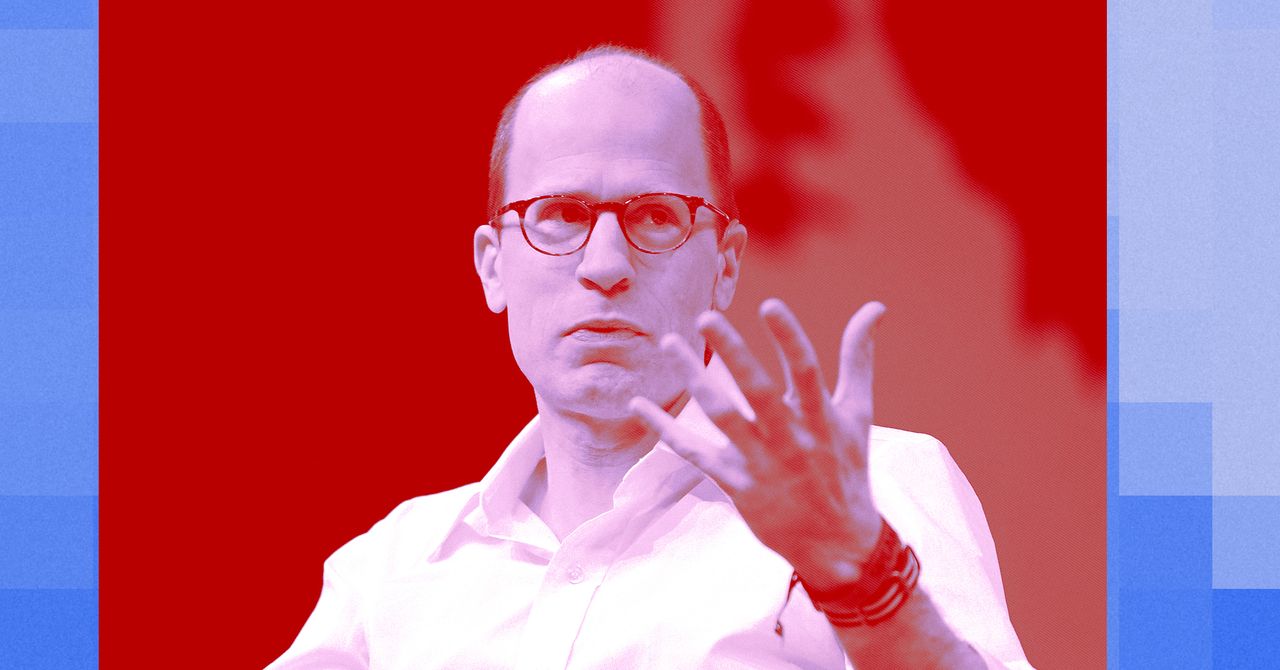
Philosopher Nick Bostrom recently posted a paper, where he postulated that a small chance of AI annihilating all humans might be worth the risk, because advanced AI might relieve humanity of “its universal death sentence.” That upbeat gamble is quite a leap from his previous dark musings on AI, which made him a doomer godfather. His 2014 book Superintelligence was an early examination of AI’s existential risk. One memorable thought experiment: An AI tasked with making paper clips winds up destroying humanity because all those resource-needy people are an impediment to paper clip production. His more recent book, Deep Utopia, reflects a shift in his focus. Bostrom, who leads Oxford’s Future of Humanity Institute, dwells on the “solved world” that comes if we get AI right.
STEVEN LEVY: Deep Utopia is more optimistic than your previous book. What changed for you?
NICK BOSTROM: I call myself a fretful optimist. I am very excited about the potential for radically improving human life and unlocking possibilities for our civilization. That’s consistent with the real possibility of things going wrong.
You wrote a paper with a striking argument: Since we’re all going to die anyway, the worst that can happen with AI is that we die sooner. But if AI works out, it might extend our lives, maybe indefinitely.
That paper explicitly looks at only one aspect of this. In any given academic paper, you can’t address life, the universe, and the meaning of everything. So let’s just look at this little issue and try to nail that down.
That isn’t a little issue.
I guess I’ve been irked by some of the arguments made by doomers who say that if you build AI, you’re going to kill me and my children and how dare you. Like the recent book If Anyone Builds It, Everyone Dies. Even more probable is that if nobody builds it, everyone dies! That’s been the experience for the last several 100,000 years.
But in the doomer scenario everybody dies and there’s no more people being born. Big difference.
I have obviously been very concerned with that. But in this paper, I’m looking at a different question, which is, what would be best for the currently existing human population like you and me and our families and the people in Bangladesh? It does seem like our life expectancy would go up if we develop AI, even if it is quite risky.
In Deep Utopia you speculate that AI could create incredible abundance, so much that humanity might have a huge problem with finding purpose. I live in the United States. We’re a very rich country, but our government, ostensibly with support of the people, has policies that deny services to the poor and distribute rewards to the rich. I think that even if AI was able to provide abundance for everyone, we would not supply it to everyone.
You might be right. Deep Utopia takes as its starting point the postulation that everything goes extremely well. If we do a reasonably good job on governance, everybody gets a share. There is quite a deep philosophical question of what a good human life would look like under these ideal circumstances.
The meaning of life is something you hear a lot about in Woody Allen movies and maybe in the philosophers community. I’m worried more about the wherewithal to support oneself and get a stake in this abundance.
The book is not only about meaning. That’s one out of a bunch of different values that it considers. This could be a wonderful emancipation from the drudgery that humans have been subjected to. If you have to give up, say, half of your waking hours as an adult just to make ends meet, doing some work you don’t enjoy and that you don’t believe in, that’s a sad condition. Society is so used to it that we’ve invented all kinds of rationalizations around it. It’s like a partial form of slavery.
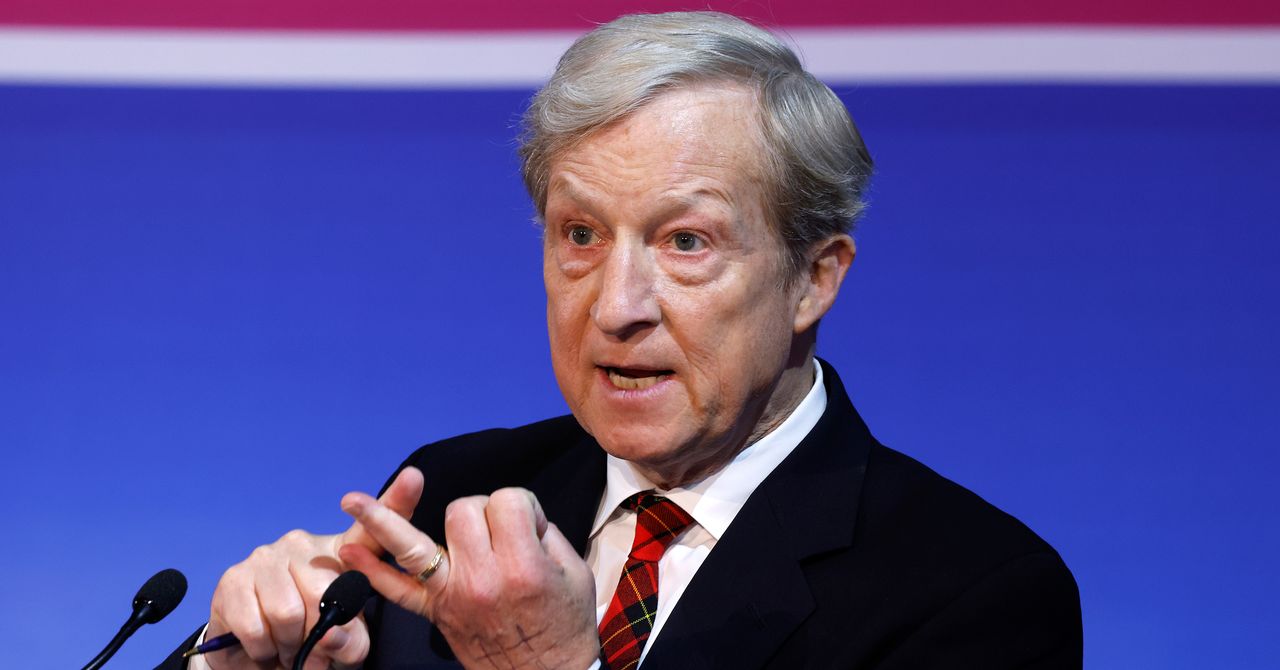
Billionaire California gubernatorial candidate Tom Steyer is rolling out a new proposal that would guarantee jobs with benefits for workers displaced by artificial intelligence. He’s the first state-wide candidate to make such a pledge.
The plan, which builds on a broader AI policy framework Steyer released in March, promises to make California “the first major economy in the world” to ensure “good-paying” jobs to workers impacted by AI. To do so, Steyer tells WIRED he plans to build off a previous proposal to introduce a “token tax” which would tax big tech companies “a fraction of a cent for every unit of data processed” for AI. The funding generated by that tax would go to what Steyer has called the Golden State Sovereign Wealth Fund, with some of that money being earmarked for jobs building housing, health care, and modernizing California’s energy infrastructure.
“The aim of the initiative will be to strengthen the foundation of the state’s economy, invest in our communities, and create beautiful, vibrant public spaces,” states a campaign memo viewed by WIRED. “To support these efforts, Tom will also invest heavily in training and apprenticeship programs across the state.”
The new plan also intends to expand unemployment insurance and establish a new agency called the AI Worker Protection Administration that would include union leaders, academics, and technologists that would adopt rules to protect workers’ rights, the memo says.
“People all over this state are terrified that AI is going to hollow out this whole economy and they’re going to lose their jobs. Young people are worried they’ll never get a job,” Steyer tells WIRED. “We believe this can be an amazing transformational technology in many ways, but we’re not in the business of leaving people in California behind.”
Steyer’s job guarantee comes as lawmakers across the state and federal levels—and even some AI executives—scramble to address the ramifications of widespread AI adoption across the US workforce. In New Jersey, state senator Troy Singleton recently put out a bill that would require companies that replace workers with AI to contribute to a fund that would pay to retrain those workers. In Congress, there are a handful of proposals for grants and tax credits for companies to provide AI training to existing employees.
Dario Amodei, CEO of Anthropic, has previously suggested the concept of a token tax that is now being proposed by Steyer. “Obviously, that’s not in my economic interest,” Amodei told Axios last year. “But I think that would be a reasonable solution to the problem.” In April, OpenAI proposed a similar public wealth fund to what Steyer has rolled out.
Steyer’s announcement comes days after Democratic primary opponent Xavier Becerra—former Health and Human Services secretary under president Joe Biden—offered his own AI plan. In that proposal, Becerra calls for “workforce investment and transition support” but doesn’t provide a specific funding mechanism.
“Displacement without support is abandonment,” Becerra said in a Monday memo outlining his plan. “I will work with the Legislature, the California public education system and industry partners to build accessible, stackable workforce programs that prepare Californians for the AI economy and support workers navigating role changes.”
Over the past few months, the White House has threatened to go after states that choose to regulate AI. In December, President Donald Trump signed an executive order that could revoke federal broadband funding from states that approve “onerous” AI laws. This is happening in local races as well: In New York, a super PAC backed by a number of Silicon Valley powerhouses, including OpenAI cofounder Greg Brockman, has targeted Alex Bores, a Manhattan congressional candidate who has made AI regulation the centerpiece of his campaign.
“Not regulating AI doesn’t seem remotely reasonable,” Steyer says. “But if California wants to lead, we’ve got to have a vision for the future that includes something that is not just about letting entrepreneurs get rich at the expense of everybody else.”










 Politics5 days ago

 Fashion7 days ago
 Fashion1 week ago
 Tech1 week ago
 Tech1 week ago
 Entertainment1 week ago