

Entertainment
Let girls fly

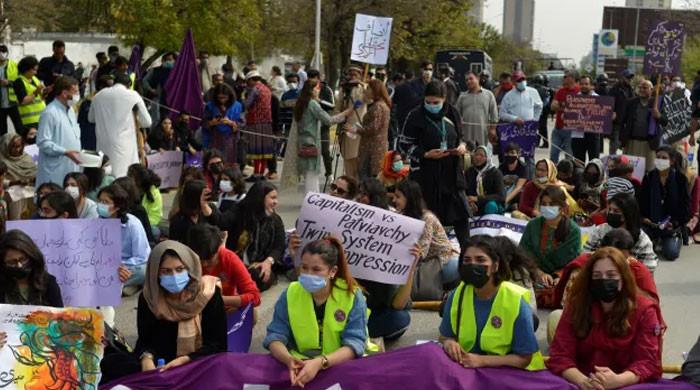
On International Women’s Day 2026, we are reminded that the future of Pakistan and Pakistani women is inseparable from the empowerment of its girls. When we invest in girls, we don’t just change individual lives; we shape the trajectory of economies, societies and nations.
Today, 54 million girls under the age of 18 live in Pakistan, and each day, around 9,200 girls are born into a world where survival, education and protection are far from guaranteed. For too many girls, the journey from vulnerability to opportunity is marked by systemic barriers that begin on day one.
Survival, especially in the early years, is the first barrier.
In Pakistan, 40% of children under five are stunted due to malnutrition, a condition that undermines brain development, weakens immunity and limits lifelong potential. Stunting is linked to nearly three out of four under-five deaths.
Anaemia — affecting over half of adolescent girls and most pregnant women — worsens the consequences of early marriage and pregnancy, increasing the risk of premature and low-birth-weight babies with long-term setbacks for children’s growth and cognitive development. Before many girls ever see the inside of a classroom, their futures are already at risk. The cost of under-investing in maternal and child health is not only measured in lives lost but in potential diminished.
Yet progress is possible. Shabira, a young girl born in Sindh during the devastating 2022 floods, became malnourished and dangerously ill. A mobile health team arrived in her village, screened her and provided essential treatment.
Within two months, her health dramatically improved. Her recovery is proof that timely intervention works. Investing in early childhood health and nutrition is not only lifesaving but also the foundation of human capital and future success.
Once survival is ensured, education becomes the next key to unlocking girls’ futures. Yet, 25 million children in Pakistan remain out of school, half of them are girls, one of the highest rates of educational exclusion in the world.
Even among those who attend, nearly 80% of children cannot read or understand age-appropriate texts by age 10, and many lack opportunities to advance their studies beyond grade 8. This gap reflects entrenched barriers like poverty, gender bias, and underfunded education systems that discourage adolescent girls from attending school.
During a visit to Khyber Pakhtunkhwa, I saw a drawing by an Afghan child: “Let me learn, let me fly”, alongside a white dove of peace. This plea for opportunity resonated deeply as I listened to children, adolescents and parents, all emphasising the central role that education plays in shaping their lives.
Education is not just a right; it is a multiplier. It drives economic growth, creates healthier communities and transforms societies. For Pakistani girls, each additional year of schooling increases their future earnings by up to 10%.
Educated girls marry later, have healthier children, and contribute significantly to their families and communities. Yet, many girls are still denied this fundamental right. Through informal setups, we can expand access to education for those excluded from formal schooling. These flexible, community-based pathways can allow girls to continue their education despite the odds.
But learning alone is not enough. Protection is equally vital.
Nearly one in five girls in Pakistan is married before the age of 18, three times the rate for boys. Early marriage cuts short education, limits economic prospects and traps girls in cycles of poverty.
Adolescence is a critical phase; the right investment can propel girls forward; neglect can leave them permanently behind. Currently, 56% of girls aged 15 to 24 are not in education, employment, or training, a stark contrast to the much lower figure for boys. This disparity represents lost potential at the national level.
The economic case for empowering girls is undeniable. Inclusion is not charity; it is smart economics. As Pakistan’s population is projected to exceed 340 million by 2050, investing in girls is essential to unlocking Pakistan’s demographic dividend. Aligning our policies, budgets and institutions around girls’ health, education and protection is not optional – it is essential for sustainable growth.
Let this decade be remembered not for incremental progress, but for catalytic transformation — systemic, social and sustained. Investing in girls and women is among the most strategic decisions Pakistan can make. It yields returns across generations.
As we mark International Women’s Day, we must move beyond celebration to commitment. The real measure of our resolve will not be in speeches delivered, but in policies enacted, resources allocated, and barriers dismantled. Every girl, regardless of her birthplace or background, deserves the chance to survive, learn, thrive, and lead.
There is reason for hope. Evidence shows that despite systemic barriers, increasing numbers of girls are reaching tertiary education — outperforming expectations and, in many contexts, their male peers. Imagine what would be possible if their potential were matched by equitable investment.
Girls are not born lacking potential; they are born with wings. Too often, it is society that chooses to clip them — through discrimination, neglect and underinvestment. Our task is not to give girls power; it is to remove the barriers that prevent them from using the power they already possess.
The future of Pakistan will be written by the opportunities we choose to create and collectively sustain for girls today. When we give girls the space to soar, we do more than uplift individuals — we elevate a nation.
The writer is the Unicef representative in Pakistan.
Disclaimer: The viewpoints expressed in this piece are the writer’s own and don’t necessarily reflect Geo.tv’s editorial policy.
Originally published in The News
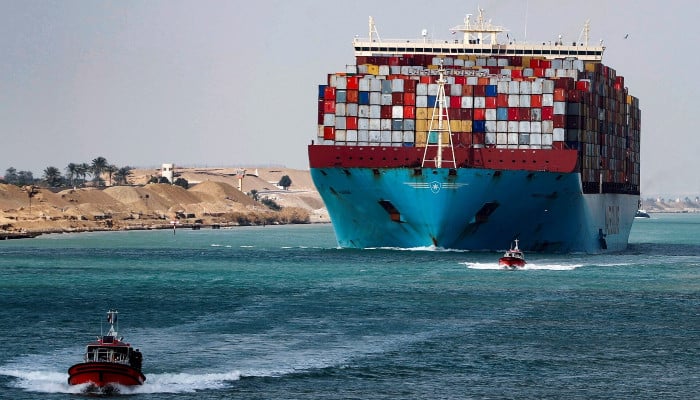
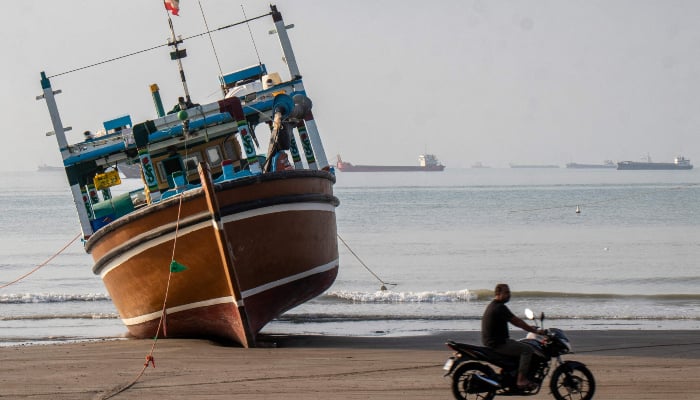
PARIS: The closure of the Strait of Hormuz as well as tensions in the Red Sea are reshaping trade routes, with Africa becoming a hub of global container ship traffic, according to logistics and maritime sources.
Over the past two months, the blockade has also pushed shipowners to find alternative land corridors to deliver foodstuffs and manufactured goods by truck, as they can no longer reach the Gulf’s coastal countries by sea.
What are the alternative routes for delivering to Gulf countries?
The Saudi port of Jeddah on the Red Sea is becoming a new regional “hub”, where ships from maritime giants MSC, CMA CGM, Maersk and Cosco arrive via the Suez Canal.
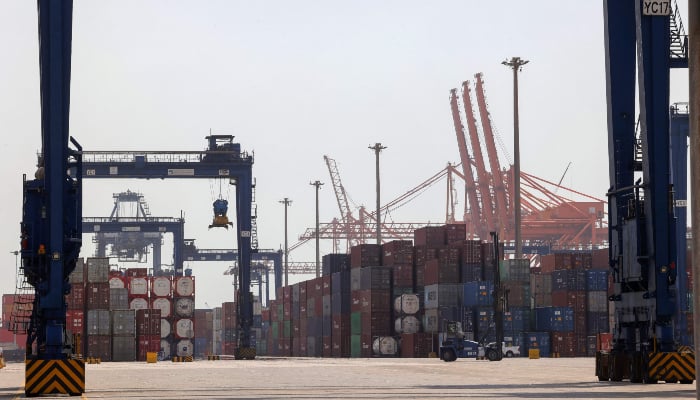
Cargo then leaves by truck along a desert highway to deliver to places such as Sharjah, Bahrain and Kuwait, which have not been served by sea for the past two months.
“The port of Jeddah is not at all sized to handle such import volumes and a port congestion situation is emerging,” Arthur Barillas de The, cofounder of freight forwarder Ovrsea, told AFP.
According to data from Kpler Marine Traffic, 11 container ships were docked in Jeddah on Thursday, with nine waiting, and an average wait of 36 hours before unloading compared to 17 hours the previous week.
Shipowners have said they will use three ports outside the Strait of Hormuz — Oman’s Sohar, and the UAE ports of Khorfakkan and Fujairah, which are connected by land from the United Arab Emirates.
The port of Aqaba in Jordan serves as a base for sending goods to Baghdad and Basra in Iraq, while a Turkish corridor is also allowing goods into northern Iraq.
On international routes, why are Asia-Europe container ships avoiding the Suez Canal?
The situation started well before the war in Iran but is very much connected to the conflict.
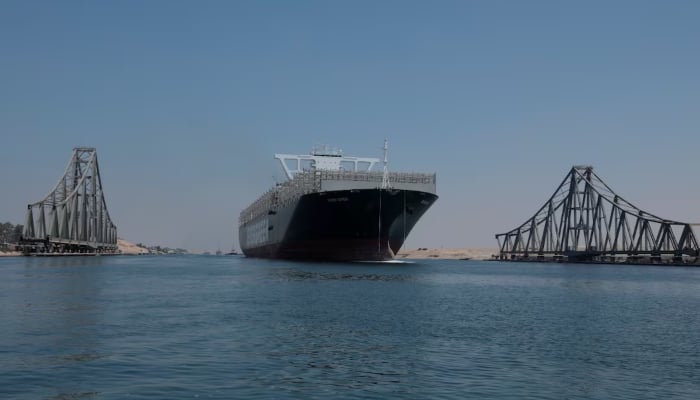
Avoiding the Red Sea from the Bab al-Mandeb Strait to the Suez Canal dates back to November 19, 2023 and the first attack on a container ship by Iran-backed Houthi militias from the coast of Yemen, said CyclOpe, a specialist commodities publication.
The rerouting of ships has now become systematic, said Ronan Boudet, head of container intelligence at Kpler.
They skirt around Africa by following its eastern coast as far as the Cape of Good Hope in southern South Africa before heading back north towards Europe and the Mediterranean.
“With the current situation in the Gulf, we have put several more coins in the machine, it’s not going to get better anytime soon,” Edouard Louis-Dreyfus, chairman of French shipping giant Louis Dreyfus Armateurs, told AFP.
“Today, 70% of the freight traffic that went through the Red Sea in 2023 is being rerouted via the Cape of Good Hope,” added Yves Guillo, a supply chain expert at Efeso, a management consultancy in Paris.
According to data from the International Monetary Fund’s PortWatch platform based on ships’ GPS signals, commercial vessel traffic via the Cape of Good Hope has more than tripled in three years, while traffic through the Bab al-Mandeb Strait has fallen by more than half.
Between March 1 and April 24 this year, an average of 20 commercial vessels went round the Cape of Good Hope every day compared with six in the same period in 2023.
By comparison, traffic in the Red Sea has plummeted: from 18 transits per day through Bab al-Mandeb between March and April 2023, the average fell to five three years later.
What are the consequences?
Transport times have lengthened between Asia and Europe by an average of two weeks and costs have risen because 30 to 50% more fuel is needed and 10 to 20% more ships to ensure the same frequency of service, said Guillo.
The average price to transport a standard 40-foot container on the main shipping routes increased by 14% in April compared to the same period last year, he added, citing changes in the Drewry freight index.
Large differences exist between routes: some African ports are seeing their activity increase. The Tanger Med Port Authority said it handled 11 million standard containers in 2025 — up 8.4%.
But Egypt lost toll revenues from the Suez Canal, which make up a large part of its income. According to CyclOpe, in 2024 it lost $7 billion — a drop of more than 60% compared with 2023.
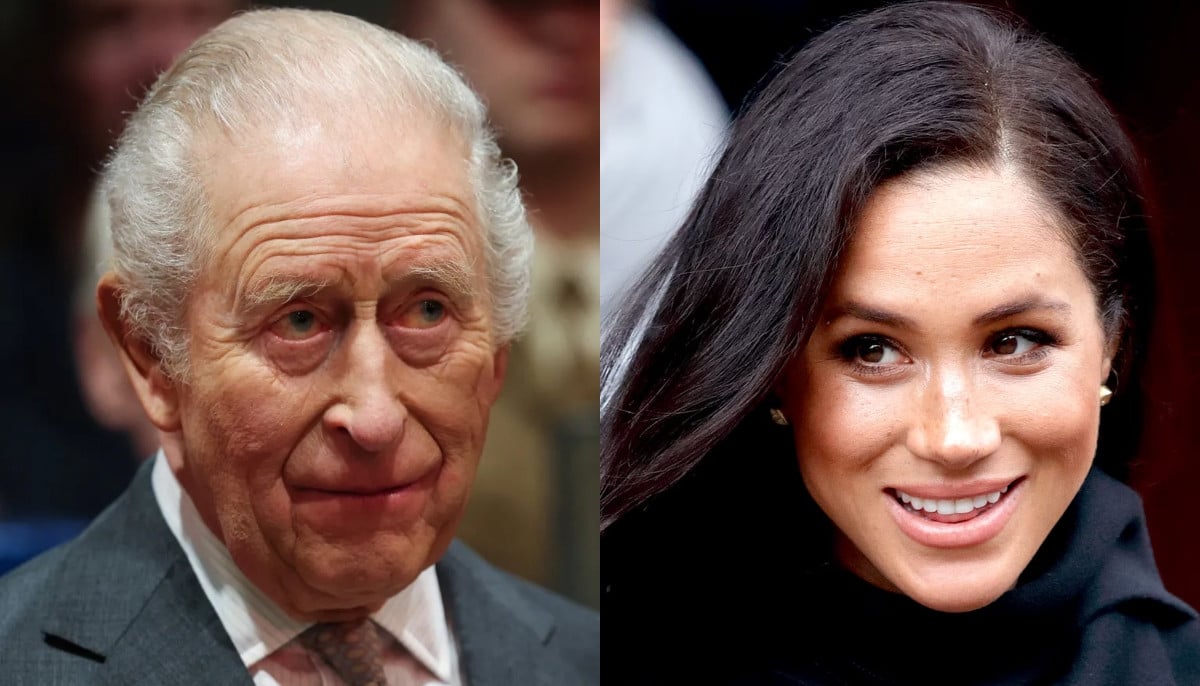
King Charles made a heartfelt confession in his personal message as he bid farewell to the US alongside Queen Camilla.
On April 30, the four-day headline-making US tour of the royal couple came to an end, and to express gratitude towards the Americans for their hospitality, the King and Queen released a statement.
“Farewell and thank you for the warmth of your welcome and the kind support you gave us throughout our first visit to the US as King and Queen, in this, your special anniversary year,” they penned.
The message reads, “We leave a piece of our [heart] behind and take a little of yours back home with us, until the next time… God Bless America. Charles R. & Camilla R.”
It is important to note that it was the British Monarch’s first statement after Meghan Markle was accused of grabbing the spotlight with her unexpected response to the Australia trip.
In conversation with The Australian Women’s Weekly, the Duchess of Sussex said, “My husband and I have such an affinity for Australia. I said to him the day we were flying out. The only thing better than Australia are Australians.”
She also expressed her passion for fashion and discussed making choices that positively impact society.
Notably, King Charles, in his message, also mentioned that he is leaving a piece of his heart behind, as, despite being so close to Archie and Lilibet, the meeting between grandpa and grandsons remains a dream.
It could be a hint towards the Sussexes about his love for them.

Zoë Kravitz is letting the ring do the talking – and fans definitely heard it loud and clear.
Just days after reports confirmed that the actress and filmmaker is engaged to Harry Styles, Kravitz stepped out in New York City casually flashing what might be one of the year’s most discussed celebrity engagement rings.
Wrapped in a brown suede shearling jacket with an oversized black tote in hand, the High Fidelity star looked effortlessly low-key – except for the massive diamond peeking out from under her sleeve.
And according to jewelry experts? That sparkle is doing serious heavy lifting.
Several experts believe the ring features a radiant or cushion-cut diamond set in yellow gold, estimating the stone could weigh anywhere between five and 10 carats.
Translation: Harry did not exactly shop small. Some estimates place the value north of $600,000.
The engagement confirmation comes after months of increasingly hard-to-ignore sightings. The pair first sparked romance rumours in August 2025 after being photographed walking arm in arm through Rome. Soon after, Deuxmoi claimed the two had been spotted kissing at a London hotspot.
At the time, a source told People magazine the former One Direction star was “spending time with Kravitz while she’s been on her [Caught Stealing] press run.”
Since then, the couple’s been spotted bouncing between London and New York, looking very much like two people building a shared life away from the chaos.
“They seem very serious and focused on prioritizing time together,” a source told the outlet in February.
Another insider added the couple shared the engagement news with only “a small circle,” while Kravitz has happily been showing the ring off to friends.


Iran war redraws sea routes with Africa as the pivot

This Indigenous Language Survived Russian Occupation. Can It Survive YouTube?

Germany’s Adidas posts strong Q1 on DTC momentum, broad demand

-

 Sports1 week ago
PSL 11: Hyderabad Kingsmen opt to field after winning toss against Multan Sultans
-
 Business1 week ago
Trump administration in advanced talks for a rescue package for Spirit Airlines, source says
-

 Entertainment1 week ago
Anne Hathaway shares major news about ‘Princess Diaries 3’
-
 Business1 week ago
Gold prices in Pakistan Today – April 23, 2026 | The Express Tribune
-

 Fashion1 week ago
Canada forms new advisory committee to strengthen US trade relations
-

 Entertainment1 week ago
Mike Vrabel to miss Patriots’ final NFL draft day —here’s why
-
 Business1 week ago
Oil surges past 4% as Iran keeps Hormuz locked – SUCH TV
-

 Fashion1 week ago
US CBP to soon launch electronic system for importers to claim refunds