

Sports
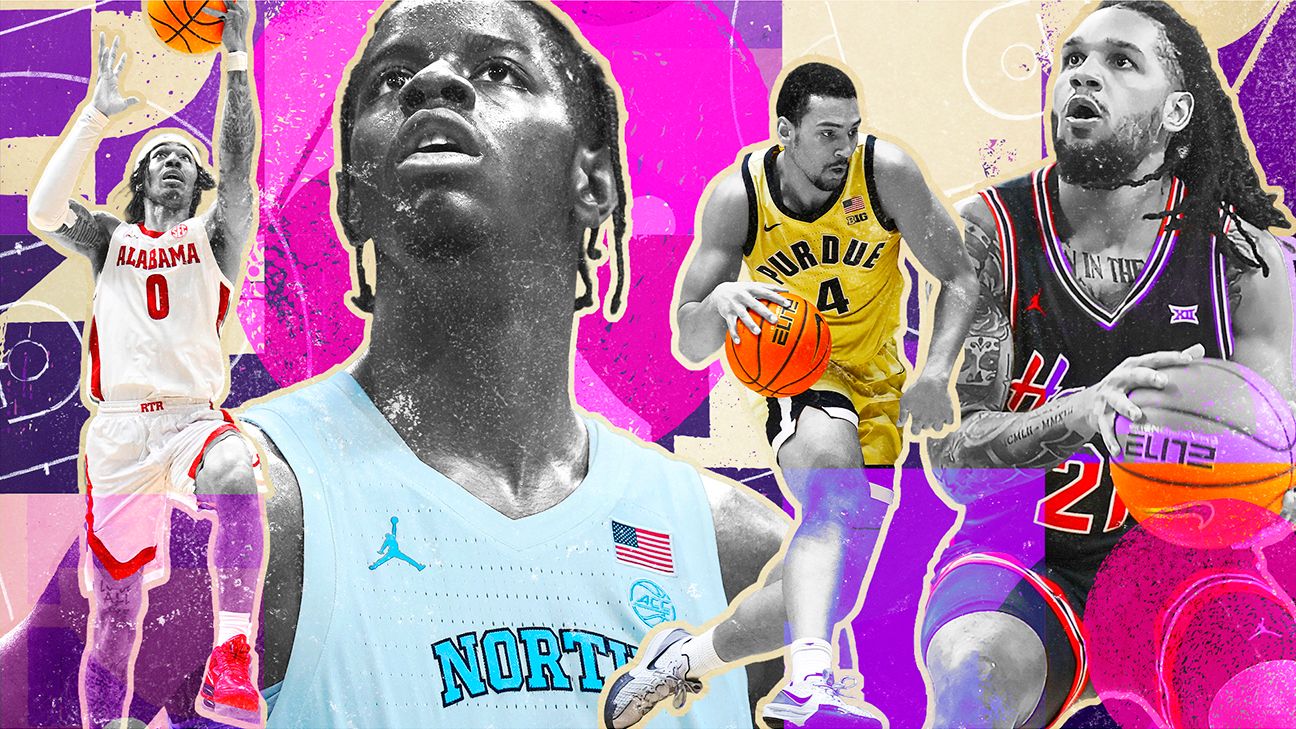
Men’s college basketball tiers: Ranking 47 teams from contenders to Cinderellas

-
Jeff Borzello
-
Myron Medcalf
Close
Myron Medcalf
ESPN Staff Writer
- Myron Medcalf covers college basketball for ESPN.com. He joined ESPN in 2011.
Multiple Authors
The start of the 2025-26 men’s college basketball season feels like years ago. Before it tipped off, we ranked 80 teams based on how we expected them to end the year, including whether they would be real factors in the NCAA tournament.
Some of those projections held strong. UConn still looks like it could capture its third national title in four tries. Duke and Texas Tech have shaped into the Final Four contenders we forecasted them to be. And Nebraska has lived up to its billing as a comeback candidate, following up last season’s 7-13 Big Ten run to win its first 20 games of this campaign. The Cornhuskers have a real chance to be the men’s basketball version of Indiana football — a turnaround champion.
There were also misses. Arizona as just a second-weekend threat? The Wildcats have spent seven straight weeks atop the AP Top 25. We were also low on Vanderbilt, pinning the Commodores as a bubble team; they won their first 16 games.
There was no way to know then what we know now. But we did leverage the information we’ve gathered to this point to take another shot at ranking teams into their proper categories. This time, we’ve reduced the list to just 47.
ESPN’s Jeff Borzello and Myron Medcalf try to make some sense of what has unfolded thus far.
Jump to:
Title favorites | Final Four contenders
Sweet 16 threats | Final Four or first-round exit?
Can win a game | Cinderellas

Tier I: National championship favorites
Arizona Wildcats
Michigan Wolverines
UConn Huskies
Each of these teams cracked this tier at different points during the nonconference stretch of the season.
For Arizona, it was its road win at UConn in mid-November — after already notching wins away from home over Florida and UCLA (Auburn and Alabama would soon join that group). For Michigan, it was the historically impressive performances at the Players Era Festival in Las Vegas during Feast Week, particularly the 40-point win over Gonzaga in the event’s championship game. UConn’s came later, but a string of wins over BYU, Illinois, Kansas and Florida — none at home — combined with a return to full health clearly put the Huskies in the top tier nationally.
Arizona currently sits at 21-0 after beating BYU in Provo on Monday, leading by as many as 19 points and looking utterly dominant for most of the game. Tommy Lloyd has a clear national championship favorite, with an ideal balance of youth and experience, guards and bigs and the best defense he has had since taking over in Tucson — by far. The Wildcats can beat teams in different ways, with Jaden Bradley and Brayden Burries anchoring the perimeter, and Koa Peat, Motiejus Krivas and Tobe Awaka controlling the paint. Ivan Kharchenkov‘s emergence as one of the elite defenders in the Big 12 takes the Wildcats to another level at that end of the floor, too.
Michigan, meanwhile, suffered its first loss of the season in early January after opening the season with 14 straight wins, many of them by 30-plus points. Dusty May has leaned heavily on size, starting three players 6-foot-9 or taller, but the Wolverines are still able to defend as well — and get up and down the floor as fast — as any team in the country. Yaxel Lendeborg, Morez Johnson Jr. and Aday Mara form an elite frontcourt, while Elliot Cadeau has made strides as a shooter and decision-maker.
UConn’s efficiency numbers aren’t quite up to par with the other two teams in this tier, but the Huskies have found a way to win close games throughout Big East play, and they’re already battle-tested from a brutal nonconference schedule. Dan Hurley’s crew took some time to get fully healthy, but now that it is, he has a team much more in line with his two title-winning groups of 2023 and 2024. There’s depth, size, point guard play and plenty of shotmakers on the perimeter with the likes of Alex Karaban, Solo Ball, Braylon Mullins and Silas Demary Jr. — Borzello

Tier II: Final Four contenders
Duke Blue Devils
Houston Cougars
Purdue Boilermakers
Iowa State Cyclones
Gonzaga Bulldogs
BYU Cougars
Illinois Fighting Illini
Nebraska Cornhuskers
Texas Tech Red Raiders
The NCAA tournament is often defined by the performances of players who step up in high-stakes moments, which means success in March depends on talent capable of shifting into a higher gear. The teams in this tier certainly are not without their flaws, but they could close the gap between them and the national championship favorites if their respective stars reach their ceilings in the weeks ahead.
Cameron Boozer is, at least statistically speaking, having a season that rivals those of the greatest Duke players over the past 25 years. His offensive rating is currently higher than the offensive ratings JJ Redick, Zion Williamson and Cooper Flagg had during their National Player of the Year campaigns. Boozer is a household name, in part because his father Carlos Boozer helped Duke to a national title in 2001, but the rest of these teams are here without any of their own thanks to breakout performances by emerging stars.
1:08
Cameron Boozer’s 19-point double-double leads Duke rout of Louisville
Cameron Boozer’s 19-point double-double leads Duke rout of Louisville
After recording a career-high 32 points in a narrow but critical win over Illinois in December, Nebraska’s Pryce Sandfort gave the Cornhuskers a chance at another important victory at Michigan on Tuesday despite being down two starters to injury and ultimately falling 75-72. Illinois’ Keaton Wagler has had similar head-turning performances, having led the Fighting Illini to a road win over Purdue with a program-record 46 points for a freshman, while standout Kylan Boswell was sidelined this past Saturday.
At Houston, Kingston Flemings has emerged as a projected top-five NBA draft pick and had a career-high 42 points in the loss to Texas Tech this past Saturday. He is notably the first freshman whom coach Kelvin Sampson has trusted to act as a catalyst for the Cougars. At Purdue, Braden Smith leads the nation in assists (9.0 per game) as the spark that has kept us believers amid a Boilermakers slump. And at Iowa State, Tamin Lipsey has found Joshua Jefferson — a legit contender for national Player of the Year — for a flurry of buckets as the Cyclones joust for the Big 12 title.
If Graham Ike (ankle) is healthy soon and Braden Huff (knee) returns to form in time for the NCAA tournament, a Gonzaga team that could have one of the best defenses of the Mark Few era will have a chance to enjoy postseason success. And finally, Texas Tech stars JT Toppin and Christian Anderson — who combined for 43 points, 16 rebounds and 12 assists in this past Saturday’s win over Houston — could be a winning combination for the Red Raiders again in March. — Medcalf
1:16
Houston Cougars vs. Texas Tech Red Raiders: Game Highlights
Houston Cougars vs. Texas Tech Red Raiders: Game Highlights
Tier III: Second-weekend threats
Michigan State Spartans
Florida Gators
Arkansas Razorbacks
Kansas Jayhawks
Vanderbilt Commodores
Virginia Cavaliers
Alabama Crimson Tide
This tier is full of teams that have notable strengths but glaring weaknesses that could prevent them from advancing beyond the Sweet 16 or Elite Eight despite being capable of reaching those second-weekend rounds.
We know what Kansas is capable of when Darryn Peterson (21.6 points per game) is available. The Jayhawks are a top-15 defensive team with the luxury of a high-level star, but Peterson’s injury concerns could be an issue if they linger into March (he’s missed 10 of their 20 games so far).
On paper, BYU has arguably all the talent a head coach could want. AJ Dybantsa is in the running for the No. 1 pick in the 2026 NBA draft. Richie Saunders is one of the top shooters in the country. And Rob Wright III is averaging 5.2 assists for a top-10 offense. Yet, the Cougars are also 13th in turnover rate in the Big 12, surrendering the ball on 17% of their possessions.
Tom Izzo loves this Michigan State roster and Jeremy Fears Jr. (8.9 assists per game) is the right leader for a team that’s playing some of the best defense in America. The Spartans have also committed turnovers on one-fifth of their possessions in Big Ten play.
Florida has gotten its act together over the past six weeks in a reversal that has rebooted talk of a back-to-back national championship run for the Gators. But their lineups that include Boogie Fland and Xaivian Lee together are rated 126th in overall efficiency among the two-player lineups in the SEC, per EvanMiya.
Darius Acuff Jr. is a projected NBA draft lottery pick who leads Arkansas and the best offense in the SEC. John Calipari’s problem? Opposing conference opponents have made 57% of their shots inside the arc against the Razorbacks, who rank 15th out of 16 SEC teams in that metric at KenPom.
Vanderbilt had drawn comparisons to Indiana football as an underdog that won at an unexpected rate, and with Tyler Tanner — who wasn’t ranked as a high school recruit by ESPN — evolving into a potential first-round NBA draft pick. But the Commodores, with the worst SEC defense inside the arc, might not have the defensive chops to advance past the Sweet 16 despite having the talent to get there. You could say the same for first-year coach Ryan Odom Virginia or Labaron Philon Jr. (22.2 PPG) and Alabama’s high-powered offense. — Medcalf
Tier IV: Final Four or first-round exit?
St. John’s Red Storm
Kentucky Wildcats
Louisville Cardinals
North Carolina Tar Heels
Tennessee Volunteers
We haven’t quite figured out this group yet, despite being nearly three months into the season. They could lose on the first day of the NCAA tournament, or they could be among the four teams left standing in Indianapolis. Nothing would surprise us.
St. John’s had a rocky first two months, with inconsistent guard play and an atypical Rick Pitino defense. But with six wins in a row entering the week and better role allocation in recent weeks, we’re not counting out this preseason top-five team.
Kentucky was considered the most disappointing team in the country when it was 5-4, and again when it was 9-6; then the Wildcats rattled off five wins in a row prior to Tuesday’s 25-point road loss to Vanderbilt. Injuries have really hindered Mark Pope’s team, but what if Kam Williams and Jayden Quaintance come back? The Wildcats would get an offensive boost from Williams’ shooting while Quaintance would be an immediate upgrade defensively.
Louisville will hope to get things rolling again now that Mikel Brown Jr. has returned from the lower back injury that kept him out for more than a month. The Brown and Ryan Conwell backcourt is as good as it gets. Even with the star freshman available, however, the Cardinals have only one win over a surefire NCAA tournament team.
North Carolina showed its ceiling and floor over the weekend when it trailed by 16 against Virginia and couldn’t guard anyone … and then came back to win, overpowering the Cavaliers with size and shotmaking. Caleb Wilson and Henri Veesaar are an elite post duo, but Hubert Davis needs consistent point guard play and defense.
0:24
Caleb Wilson throws down two-handed slam for UNC
Caleb Wilson throws down two-handed slam for UNC
Under Rick Barnes, Tennessee has typically had elite defenses and been prone to droughts offensively. Not this season’s team — although neither unit has been particularly impressive in SEC play. There’s still potential with Ja’Kobi Gillespie and Nate Ament leading the way, and the Vols showed it at Alabama last weekend. And if the defense turns around to play at the level of previous Barnes-coached teams, suddenly the Vols can go toe-to-toe with most teams in the country. — Borzello
Tier V: Can win a game
Clemson Tigers
Georgia Bulldogs
SMU Mustangs
Iowa Hawkeyes
Auburn Tigers
NC State Wolfpack
Saint Mary’s Gaels
Saint Louis Billikens
Wisconsin Badgers
Villanova Wildcats
Utah State Aggies
Texas A&M Aggies
UCF Knights
Miami Hurricanes
UCLA Bruins
Ohio State Buckeyes
San Diego State Aztecs
This is a deep group, but all of these teams have shown flashes of being able to win a game in the NCAA tournament — even if some find themselves sweating on Selection Sunday.
Some have already shown they can beat high-level teams on a given night: Auburn won at Florida over the weekend and has wins over Arkansas and St. John’s. Wisconsin handed Michigan its lone loss thus far, in Ann Arbor. UCLA has been mostly inconsistent, especially against good teams, but beat Purdue and has won four of five entering the week. And Georgia blew out Arkansas.
Others have elite players who are good enough to carry them to a win: Iowa has Bennett Stirtz, NC State has Darrion Williams. Ohio State has plenty of talent in its starting five, and Bruce Thornton is a bona fide star. Boopie Miller puts SMU in this group as well.
For others, it’s simply a fact of us believing in their talent, coaching or general identity.
Randy Bennett’s Saint Mary’s teams are always a threat in March. Saint Louis is a legitimate top-25 squad and could find itself in position to win more than one game in the tournament. Utah State is annually destined to be in a coin-flip first-round matchup. Villanova, Texas A&M and Miami are all better than expected in Year 1 under new head coaches. UCF owns a win over Kansas and isn’t going away as a competitive Big 12 team. And San Diego State struggled early, but the Aztecs find themselves atop the Mountain West and have March pedigree. — Borzello
Tier VI: Potential Cinderellas
Miami (Ohio) RedHawks
Murray State Racers
McNeese Cowboys
Liberty Flames
Yale Bulldogs
UNC Wilmington Seahawks
Over the past three NCAA tournaments, 10 teams outside the five high-major conferences — that were also double-digit seeds — won at least one game. The teams on this list all have the potential to join them, beginning with Miami (OH), a team that has won its first 21 games of the season. The RedHawks have made 39% of their 3-point attempts and 62% of their shots inside the arc, both top-20 marks nationally.
Under first-year head coach Bill Armstrong, McNeese has forced turnovers on 25% of its opponents’ turnovers, exceeding the tally of last season’s Cowboys team that reached the second round under Will Wade.
Murray State guard Javon Jackson (17.0 PPG) is one of the best mid-major players in America. UNC-Wilmington has seven players averaging at least nine points per game, depth that could make the team dangerous in March. Liberty is shooting 52% from the field, No. 2 in the country. And Yale has made 41% of its 3-point attempts, also second in the nation.
If your favorite team has to go through one of these squads in March, they might go home earlier than anticipated. — Medcalf
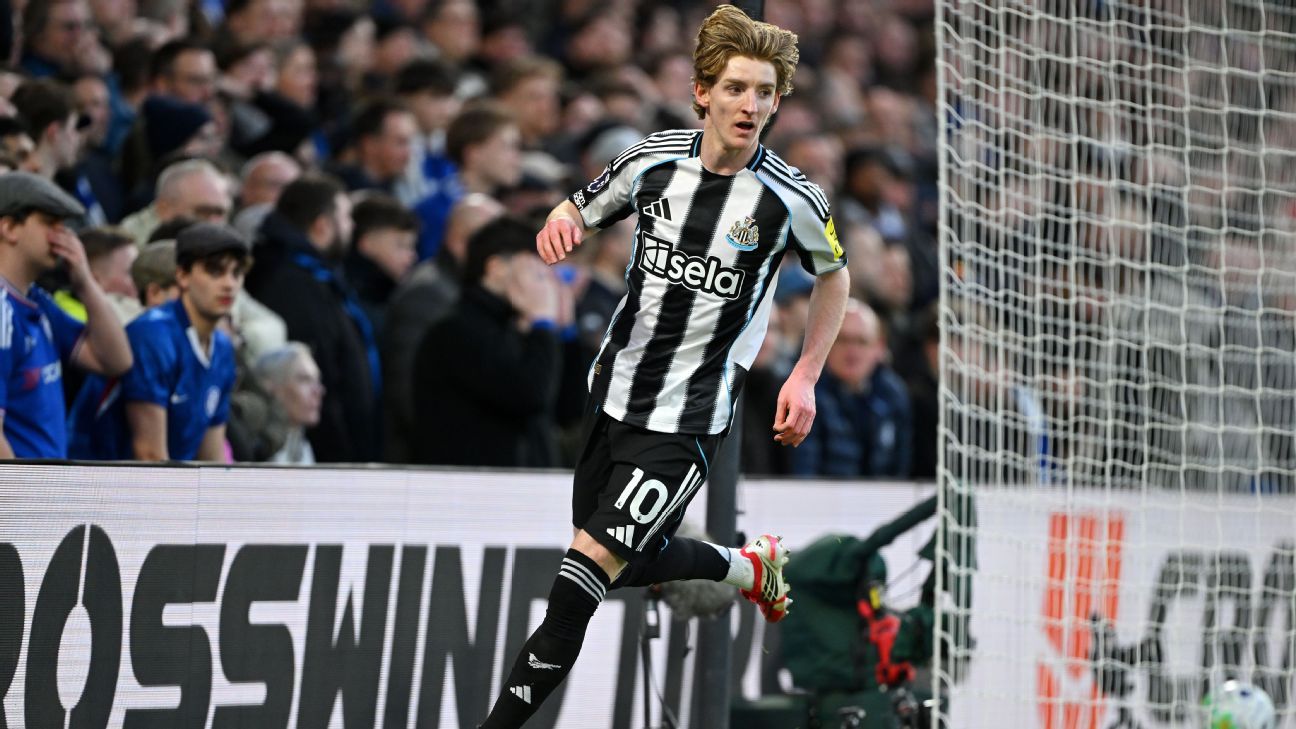
Liverpool are considering Newcastle United‘s Anthony Gordon as an upgrade on Cody Gakpo, while Roma‘s defender Wesley França is a target for Arsenal.
Join us for the latest transfer news and rumors from around the globe.
Transfers home page | Men’s winter grades | Women’s grades
TRENDING RUMORS
– Liverpool could replace Cody Gakpo with Newcastle United winger Anthony Gordon in the summer, according to TEAMtalk. Gakpo has been offered to clubs in the Premier League, including Tottenham Hotspur, and around Europe as Liverpool attempt to gauge interest in the Netherlands international through third-party representatives. Gakpo’s departure could make way Gordon who continues to impress Reds’ officials, though Newcastle have made no secret of their intention to keep the 25-year-old on Tyneside. Gordon spent part of his youth development at Liverpool before joining Merseyside rivals Everton in 2012, where he began his professional career at Everton.
– Arsenal are stepping up their quest for Roma’s in-form defender Wesley França, with Ben White set to make way in the summer, according to TEAMtalk. Brazilian right-back França has been a revelation since joining the Italians from Flamengo last summer, the 22 year old impressing with a four-goal haul. Arsenal scouts have also noted his athleticism, defensive diligence and attacking capabilities. Everton are also interested. The Gunners are also monitoring Newcastle’s Tino Livramento, Eintracht Frankfurt‘s Nnamdi Collins and Monaco‘s Vanderson. Meanwhile, White’s departure has been sanctioned by the club if the right offer comes along.
– Barcelona and Real Madrid are both planning to test the water for Manchester City striker Erling Haaland in the summer, but City are not planning on allowing the 25-year-old to leave, according to Football Insider’s Pete O’Rourke. Haaland is contracted at the Etihad Stadium until 2031, and City are looking to sign players in other positions around him, rather than allow their main striker to leave. Haaland has been out of form by his high standards — scoring just five goals in 18 appearances since the turn of the year — prompting suggestions he may consider a new challenge, and the two Spanish giants remain intent on trying to lure the Norway international to LaLiga as a statement signing. O’Rourke also reports that should manager Pep Guardiola leave the club, City would prefer to replace him with Bayern Munich boss Vincent Kompany, rather than other possible candidates such as Enzo Maresca or Luis Enrique.
– Juventus boss Luciano Spalletti is keen on signing Real Madrid defender Antonio Rüdiger and, in doing, so fend off interest from a number of Premier League clubs, according to Tuttosport. Spalletti and Rüdiger worked together at Roma, and it remains an ambition of the Bianconeri boss to re-sign the 33-year-old, ideally on a two-year deal, to bring some stability to his back line. Spalletti sees the Germany defender as the perfect short-term addition to his squad, with his UEFA Champions League experience and leadership qualities both valuable qualities. Rüdiger is available on a free transfer at the end of the season. However, Diario AS reports that there has been a “radical twist” in the situation, with a contract renewal for the defender now on the cards. Madrid coach Álvaro Arbeloa enthusiastically said on Saturday that he’d “build a statue to Rüdiger and put it in my garden.”
– Atlético Madrid have bid €35 million plus bonuses for Atalanta midfielder Éderson, according to Sportitalia’s Alfredo Pedulla. The Italian club are hoping to recoup closer to €40 million for the Brazilian. Éderson was a key member of the team as Le Dea won the Europa League and finished fourth in Serie A in 2023-24, and since then he has been linked with some of Europe’s biggest clubs for several seasons. The 26-year-old’s contract in Bergamo is due to expire at the end of next season.
EXPERT TAKE
0:53
Nicol: Slot shouldn’t get sacked if Liverpool miss out on a UCL spot
Steve Nicol debates Arne Slot’s future after Liverpool’s 2-1 loss to Brighton in the Premier League.
OTHER RUMORS
– Liverpool are ahead of Chelsea in the race to sign midfielder Eduardo Camavinga. Real Madrid are willing to listen to offers in the region of €50 million. (Caught Offside)
– Despite being heavily linked with a move away from Newcastle, particularly to Manchester United, Bruno Guimarães is committed to the north-east. (Newcastle Chronicle)
– Inter Milan and Juventus are tracking the situation of Chelsea midfielder Andrey Santos, hoping the 21-year-old could form an integral part of their midfield rebuilds in the summer. (Ekrem Konur)
– Arsenal could allow a number of players to leave in the summer as they look to freshen up their squad and build on what they hope will be a title-winning season. (Daily Telegraph)
– Liverpool winger Giorgi Mamardashvili is a target for European clubs and he could be tempted with the promise of more game time. (Football Insider)
– Rangers boss Danny Röhl has expressed his desire to extend Mikey Moore‘s deal beyond the end of the season, whether it’s a loan move or permanent deal. The 18-year-old was on the scoresheet for Rangers against Aberdeen on Saturday. (Daily Mail)
– Xabi Alonso is the leading contender to replace Arne Slot should the Dutchman be relieved of his duties as Liverpool Manager. Slot came under fresh pressure following Saturday’s 2-1 defeat at Brighton & Hove Albion. (Football Insider)
Sports
PSL matches to go ahead without spectators under govt’s austerity drive amid regional crisis: Naqvi

LAHORE: Pakistan Cricket Board (PCB) Chairman Mohsin Naqvi, in a major announcement on Sunday, said that the much-awaited Pakistan Super League (PSL) matches will be held without spectators as part of the government’s austerity measures amid ongoing regional crisis.
Addressing a press conference in Lahore, Naqvi said the tournament will be limited to two venues, Karachi and Lahore. He added that the decision aims to reduce public movement.
This is a developing story and will be updated with more information.
NEWYou can now listen to Fox News articles!
No. 12 High Point put everyone on notice for the second time in as many games this March Madness, but could not find the same success.
After advancing to the Round of 32 following an upset victory over No. 5 Wisconsin, the Panthers’ season ended after No. 4 Arkansas ran away from them late Saturday night.
High Point led by as many as five early in the game, and they were up 56-52 with 14:17 to go after going on a 12-2 run.
Both teams exchanged buckets for several minutes, with no one expanding their respective leads by more than three points for a little while.
CLICK HERE FOR MORE SPORTS COVERAGE ON FOXNEWS.COM
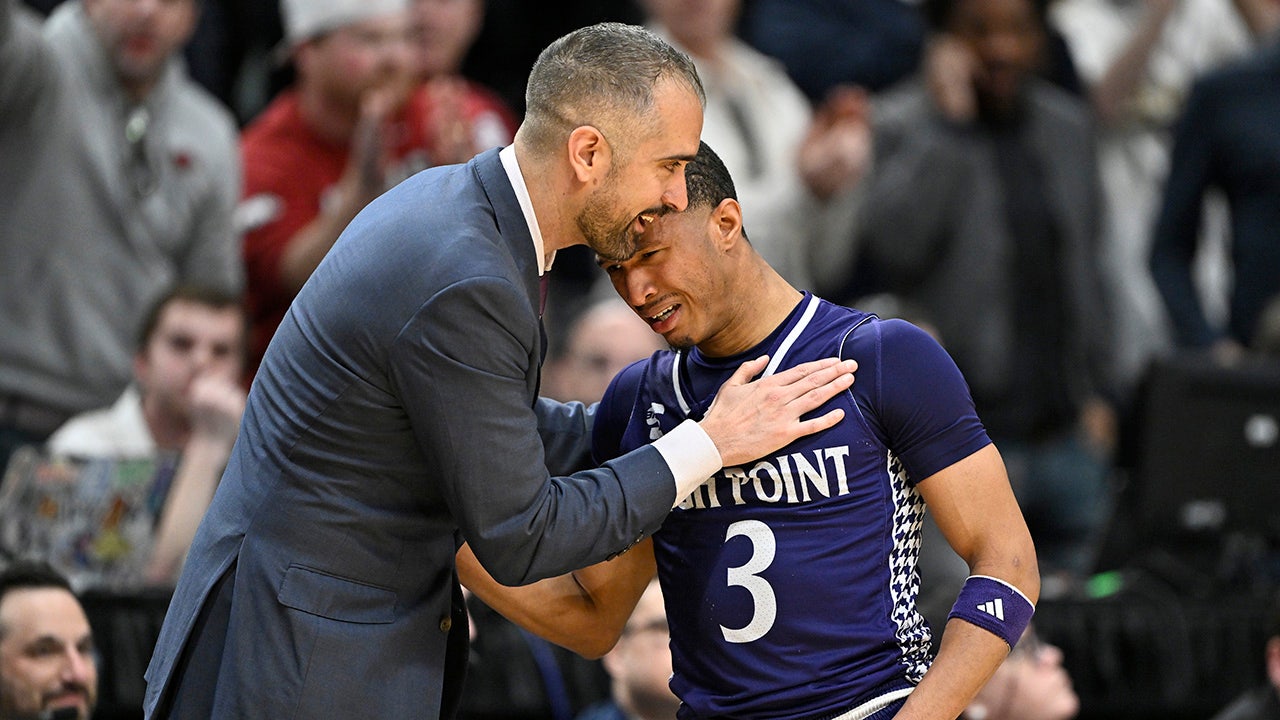
High Point Panthers head coach Flynn Clayman and guard Rob Martin (3) react in the second half against the Arkansas Razorbacks during a second round game of the men’s 2026 NCAA Tournament at Moda Center. (Craig Strobeck/Imagn Images)
With 7:04 to play, the Panthers took a 72-71 lead, to which the Razorbacks responded with a 10-2 run, putting them up by seven and giving them their largest lead of the night.
The game was then quickly tied at 83 after a wild run by High Point, but over the final 3:19, Arkansas outscored High Point, 11-5, to snatch the victory, despite a valiant effort from the Panthers.
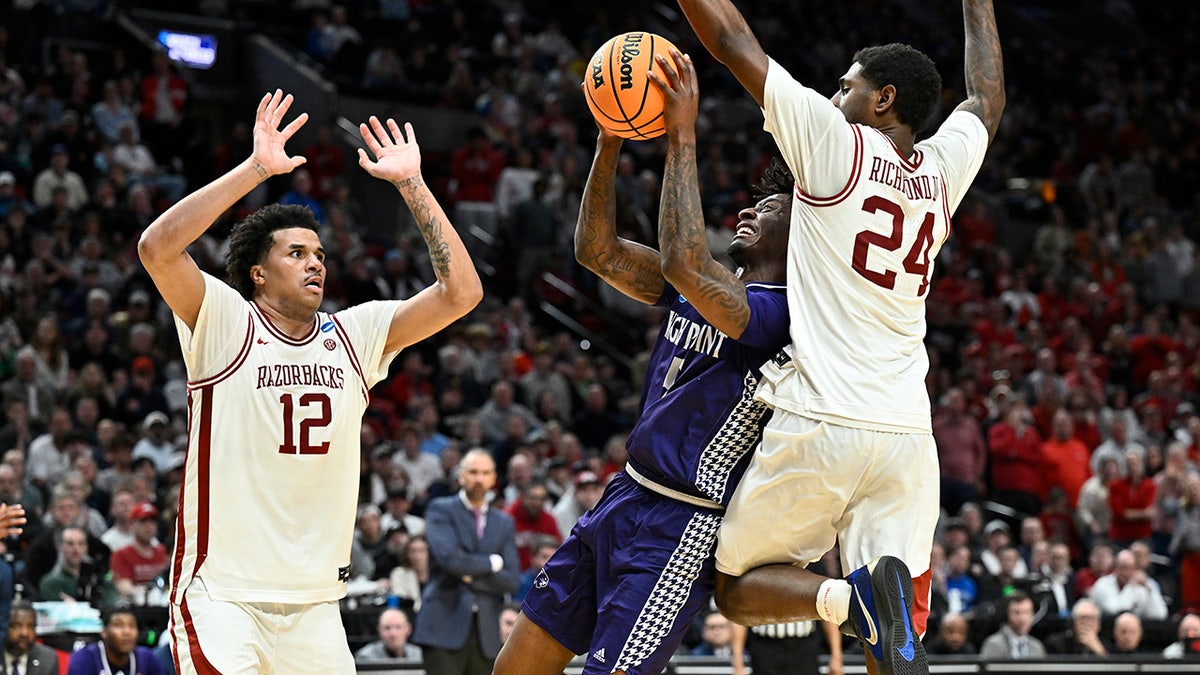
High Point Panthers forward Terry Anderson (5) drives against Arkansas Razorbacks forward Malique Ewin (12) and forward Billy Richmond III (24) in the second half during a second round game of the men’s 2026 NCAA Tournament at Moda Center. (Craig Strobeck/Imagn Images)
Arkansas was favored by 11.5, and while they couldn’t cover, it was another Sweet 16 appearance for legendary head coach John Calipari.
Two Panthers, Rob Martin (30) and Cam’Ron Fletcher (25), combined for 55 points, but Darius Acuff Jr. of Arkansas trumped everyone by dropping 36.
Arkansas will face the winner of No. 1 Arizona and No. 9 Utah State in the Sweet 16.
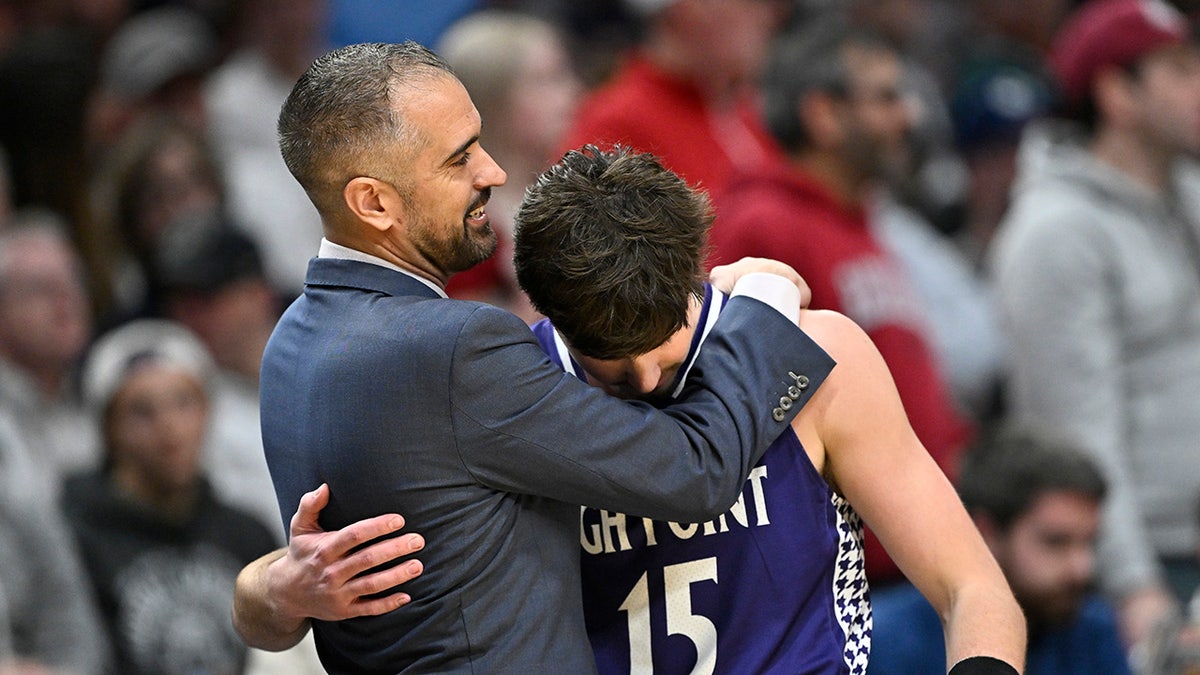
High Point Panthers head coach Flynn Clayman and forward Braden Hausen (15) react in the second half against the Arkansas Razorbacks during a second round game of the men’s 2026 NCAA Tournament at Moda Center. (Craig Strobeck/Imagn Images)
CLICK HERE TO GET THE FOX NEWS APP
High Point’s victory over Wisconsin on Thursday marked their first ever in March Madness after making the tournament last year for the first time.
Follow Fox News Digital’s sports coverage on X, and subscribe to the Fox News Sports Huddle newsletter


Dubai offers departing passengers souvenirs, thanks amid regional tensions

Lisa Kudrow on making “The Comeback”

Lady Amelia Windsor shares private hen photos tied to grandparents’ love story

Tips and Advice for Buying Used or Refurbished Electronics

UAE savings strategies 2026 explained: Best apps, tools, budget rules and smart money hacks to beat rising cost of living in emirates – The Times of India

Iran threatens US-linked oil facilities after Kharg Island bombed

-
 Tech1 week ago
Tips and Advice for Buying Used or Refurbished Electronics
-
Business1 week ago
UAE savings strategies 2026 explained: Best apps, tools, budget rules and smart money hacks to beat rising cost of living in emirates – The Times of India
-
 Politics1 week ago
Iran threatens US-linked oil facilities after Kharg Island bombed
-

 Tech1 week ago
Apple’s New Monitor Does HDR Like It’s Never Been Done Before
-

 Sports1 week ago
Japan suffers shocking collapse to Venezuela in World Baseball Classic
-

 Entertainment7 days ago
Strategic oil stocks to be released ‘immediately’ in Asia and Oceania: IEA
-

 Entertainment1 week ago
Iran at war
-

 Politics1 week ago
How can US get out of Iran war?