

Business
MoITT to build apps for ministries | The Express Tribune

ISLAMABAD:
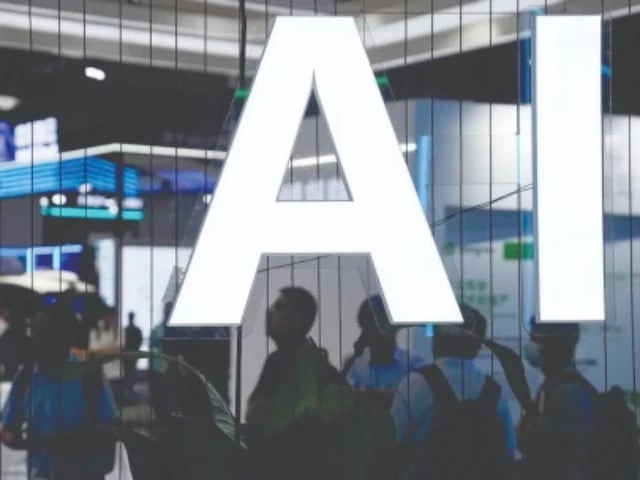
The government has directed the Ministry of Information Technology and Telecommunication (MoITT) to focus on developing commercial applications and stop working on building AI platforms.
It has also instructed the ministry to harness AI technology to create tailor-made applications for ministries and divisions, streamlining work processes, making them more efficient, and enabling better management of government business.
In July, the cabinet approved the National Artificial Intelligence (AI) Policy 2025 and issued several directions for its use.
During the discussion, cabinet members appreciated MoITT’s efforts in devising the policy. Members also gave suggestions to make the framework more robust and meaningful in Pakistan’s social and national context. The prime minister commended MoITT, noting that while change often brings challenges, AI is the need of the time, and the policy is a step in the right direction.
The cabinet directed that the AI Policy should focus on developing commercial applications rather than investing in platforms. It also acknowledged that AI adoption in workplaces could lead to job losses and stressed the need to reskill workers at risk. To meet growing demand for an AI-skilled workforce, the policy should ensure universities produce adequate numbers of AI graduates. AI basics should also be introduced at the school level to orient children from an early age.
The cabinet further asked MoITT to ensure AI benefits are not restricted to the elite and that no rural-urban divide emerges from the adoption of new technologies.
MoITT, in coordination with the Finance and Planning Divisions, was tasked with ensuring resources for meeting the policy’s goals. The ministry was also directed to prioritise work on the Cloud Policy.
MoITT briefed the cabinet that Pakistan’s IT sector is experiencing remarkable growth and has become a key driver of economic development. The industry has consistently shown resilience and innovation, with exports recording strong double-digit growth in recent years.
This trajectory highlights Pakistan’s growing global presence and its potential to contribute further to national prosperity. The country stands at a crucial juncture in the global technological landscape, with emerging technologies showing strong promise and positioning Pakistan as a potential tech destination.
The cabinet was apprised that emerging technologies, including AI, are becoming increasingly critical for the IT sector and carry strategic national importance. AI is rapidly reshaping industries worldwide, with applications in agriculture, logistics, smart cities, manufacturing, energy, and healthcare. While AI offers significant opportunities for growth, it also carries risks. Many countries are developing policies and regulations to maximise benefits while minimising potential downsides.
The cabinet was informed that, according to industry estimates, the global AI market size is expected to surpass $1.8 trillion by 2030. Officials emphasised that this is the right time for Pakistan to adopt an overarching approach to AI. With rapid global advances, Pakistan needs a comprehensive policy to harness AI’s potential while addressing challenges.
MoITT had already initiated work on drafting the National AI Policy to capture opportunities and prepare for risks. As part of an open process, the draft was developed with input from ministries, public sector entities, and provincial governments. It was also published on the ministry’s website for public comment. An inclusive committee, comprising representatives from the public and private sectors, industry, and academia, finalised the draft after reviews and incorporating stakeholder feedback.
The cabinet was informed that the draft National AI Policy is based on six pillars: AI Innovation Ecosystem, Awareness and Readiness, Secure AI Ecosystem, Transformation and Evolution, AI Infrastructure, and International Partnerships and Collaborations.
The policy will act as a guiding framework, coordinating scattered initiatives and fostering new ones across sectors. Current AI development efforts remain fragmented, leading to inefficiencies and missed opportunities.
A unified policy will align investments in research, talent, infrastructure, and ethical guidelines, creating an environment conducive to innovation. It will also encourage collaboration between academia, industry, and government, ensuring AI solutions are tailored to Pakistan’s unique needs and challenges.
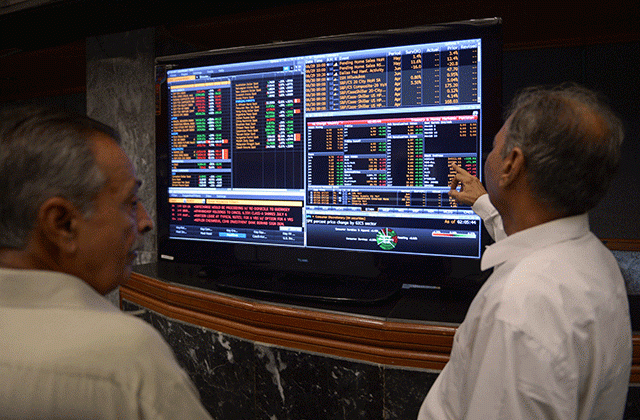




Gold prices in Pakistan have risen again at the start of the business week after several days of decline, according to the All Pakistan Bullion Market.
The price of gold per tola increased by Rs 800, reaching Rs 493,962.
Similarly, the price of 10 grams of gold rose by Rs 686 to Rs 423,492.
In the global market, gold also recorded an increase of $8 per ounce, reaching $4,716.
Experts say global economic uncertainty, currency fluctuations, and investor preference for safe-haven assets are driving the upward trend in gold prices.
They add that changes in international markets directly impact Pakistan’s local bullion rates, leading to continued fluctuations in domestic prices.

Now one of the biggest sportswear firms, Anta’s rise follows a playbook adopted by many Chinese giants.
Source link
Business
Gold price prediction today: Will gold prices continue to be volatile? Key levels to watch out for April 27, 2026 week – The Times of India

Gold price prediction today: Gold prices will closely track movements on the rate decisions by several central banks, including the US Federal Reserve, this week, says Manav Modi, Senior Analyst, Commodity Research at Motilal Oswal Financial Services Ltd.Gold is currently consolidating after sharp swings in a broad range, indicating a pause rather than a reversal. Price action shows a higher-high structure intact, but the recent sideways movement suggests indecision near the upper supply zone around 158,000–160,000. The formation resembles a short-term flag/triangle continuation pattern, where a breakout on either side will define the next directional move. Volume has tapered slightly, reinforcing the consolidation narrative.Gold prices recently moved from the upper band toward the mid-band (20 DMA), and are now attempting to stabilize. The bands have started to contract, signaling a potential volatility expansion ahead. Sustaining above the mid-band (~150,500–151,000 zone) keeps bullish bias intact, while a breakdown below this could trigger a deeper mean reversion toward the lower band.For the week, immediate support for gold prices is placed at around Rs 150,500, which is followed by stronger support near Rs 148,500. On the upside, the resistance stands at around Rs 155,500, and after that the key supply zone is at Rs 158,000. A decisive close for gold above Rs 158,000 levels can then resume the broader uptrend. However, a break in gold prices below levels of Rs 148,500 may shift the momentum to bearish in the near term.The economic docket is filled with data points and events this week as the focus will be on FED, BOJ, ECB and ECB policy meetings. US consumer confidence, GDP, inflation and durable goods orders data will also be in radar.(Disclaimer: Recommendations and views on the stock market, other asset classes or personal finance management tips given by experts are their own. These opinions do not represent the views of The Times of India)


SBP raises policy rate by 100bps to 11.5% as inflation risks mount

Finalise Bangladesh’s textile-RMG circular economy strategy: Experts
Gold prices rise rebound in Pakistan after recent decline – SUCH TV

-

 Sports1 week ago
WWE WrestleMania 42 Night 2: Live match results and analysis
-

 Sports1 week ago
NCAA men’s gymnastics championship: All-time winners list
-

 Fashion1 week ago
UK’s Sosandar returns to profitability amid robust FY26 performance
-

 Politics6 days ago
UK’s Starmer seeks to deflect blame over Mandelson appointment
-

 Entertainment7 days ago
Lee Anderson, Zarah Sultana kicked out of UK Parliament for calling PM ‘liar’
-
 Business1 week ago
No fuel shortage: Govt assures 100% domestic LPG, PNG, CNG supply amid Hormuz energy crunch – The Times of India
-
 Business7 days ago
How Trump’s psychedelics executive order could unlock stalled cannabis reform
-
 Business1 week ago
Exercise to test response to offshore energy threat involving vessels and drones