

Tech
NordProtect Makes ID Theft Protection a Little Easier—if You Trust That It Works


Once I signed up, I had to fill out several online forms. These include information that might personally identify me, like my Social Security number, phone numbers, email addresses, credit/debit cards, and so on. Filling out the information took about 20 minutes. It’s not effortless, but NordProtect’s interface is clean and intuitive. It puts the information you want to see on top, often alongside brief but informative details, with the option to dive deeper. Notifications are rare, too, so you’re not peppered with distracting alerts.
The exception to this was the first time I logged in. I saw dozens of alerts associated with data breaches that occurred over the past two decades. Once those were dismissed, new notifications were uncommon. The interface can seem a bit too simple. I found it easy to forget exactly what the service was doing for me. NordProtect lacks a mobile app. The website works well enough on a smartphone, but a dedicated app would look better.
NordProtect didn’t provide me with any information or take any actions that had an easily quantifiable impact on my privacy. I looked at each of the 48 data breach alerts that appeared and found that none of them contained worrying information. Much of it was out of date (old passwords, ancient addresses, and so on). Some of it was just straight-up wrong.
NordProtect can offer financial safeguards, but I already have a freeze on my credit, and my bank provides free credit monitoring services. I already use a VPN, so NordVPN wasn’t new to me. The most tangible services I gained were identity theft insurance and access to Incogni. On the other hand, I gained less because I’m already somewhat active in monitoring my personal data. NordProtect would be more valuable if I were starting from scratch.
Doing the Math
NordProtect via Matthew Smith
NordProtect offers monthly, annual, and two-year plans, but the pricing pushes you hard toward yearly subscriptions. Silver is $16, Gold is $24, and Platinum is $32 if you pay monthly. That’s pricey! However, the yearly plans are $84, $114, and $144 for the same tiers, respectively, and the two-year plans are $120/$180/$240.












The satellite communications market has expanded rapidly over the past three years or so, and what space consulting and market intelligence provider Novaspace calls the Starlink effect is further accelerating demand and reshaping the satellite connectivity market.
The eighth edition of Novaspace’s High Throughput Satellites (HTS) report offered a strategic look at the evolving HTS landscape, covering capacity supply, demand dynamics across verticals, market drivers and the infrastructure investments shaping the future of satellite connectivity.
In all, it found global demand for capacity reaching 218Tbps by 2034, while service revenues are set to more than double to $76bn over the same period. In addition, the analyst said the findings reflect a market entering a new phase of scale, driven by the rapid expansion of non-geostationary orbit (NGSO) constellations – led by SpaceX’s Starlink – and a step change in performance, pricing and global adoption.
As competition intensifies, differentiation is being increasingly tied to spectrum strategy, security architecture and sovereign capabilities. In a more geopolitically complex environment, secure and resilient connectivity was seen to have become a primary driver of investment, particularly across government and mission-critical use cases.
Moreover, the report highlighted a rapidly evolving competitive landscape across both GEO and NGSO systems. It said GEO operators were adapting to remain competitive, adopting flexible, software-defined payloads and lower-Capex small GEO platforms to improve cost efficiency and throughput.
By contrast, NGSO networks were seen to be redefining performance and pricing benchmarks, driving HTS service revenues up 44% between 2020 and 2025. That is, from $21.5bn to nearly $31bn.
Another key trend was that high-growth applications are emerging, particularly in Land Mobility, MilSatCom and Aero IFC, where demand for high-performance, low-latency connectivity is accelerating. “Starlink’s impact has been catalytic,” said Dimitri Buchs, manager at Novaspace. “Lower-cost capacity, rapid scaling and improved service quality have reset expectations across the market. The entire satcom ecosystem is now being pushed to innovate, differentiate and rethink strategic positioning.”
Going forward, Novaspace observed that scaling this next phase of growth will require greater coordination across the ecosystem. The report underscores the growing importance of multi-orbit interoperability, hybrid terrestrial-satellite architectures, and converged network standards to enable more seamless and cost-effective deployments.
“In this next phase, execution will be critical,” said Buchs. “Operators that can combine scale with flexibility – and deliver high-performance connectivity across multiple domains – will be best positioned to capture this expanding market.”
The release of the study comes just days after Starlink announced it was expanding its Middle East presence by launching operations in the United Arab Emirates (UAE) and Kuwait. The satellite internet provider, already active in Oman, Qatar, Israel and Yemen, said it was now strengthening its position as the world’s largest LEO network.
Since 2020, Starlink has deployed more than 10,000 satellites, serving over 10 million users globally and providing a total capacity of around 450Tbps. The UAE and Kuwait join a growing list of regional markets where Starlink is now available.
In addition, the company has been recently pursuing an aggressive campaign to get its connectivity adopted by the world’s leading airlines. In July 2025, Virgin Atlantic announced plans to introduce Starlink in-flight connectivity across its entire fleet, and months later, arch rival International Airlines Group announced a partnership to implement Starlink connectivity for more than 500 aircraft across its fleet, which includes Aer Lingus, British Airways, Iberia, Level and Vueling. Qatar and Emirates have also inked similar deals.
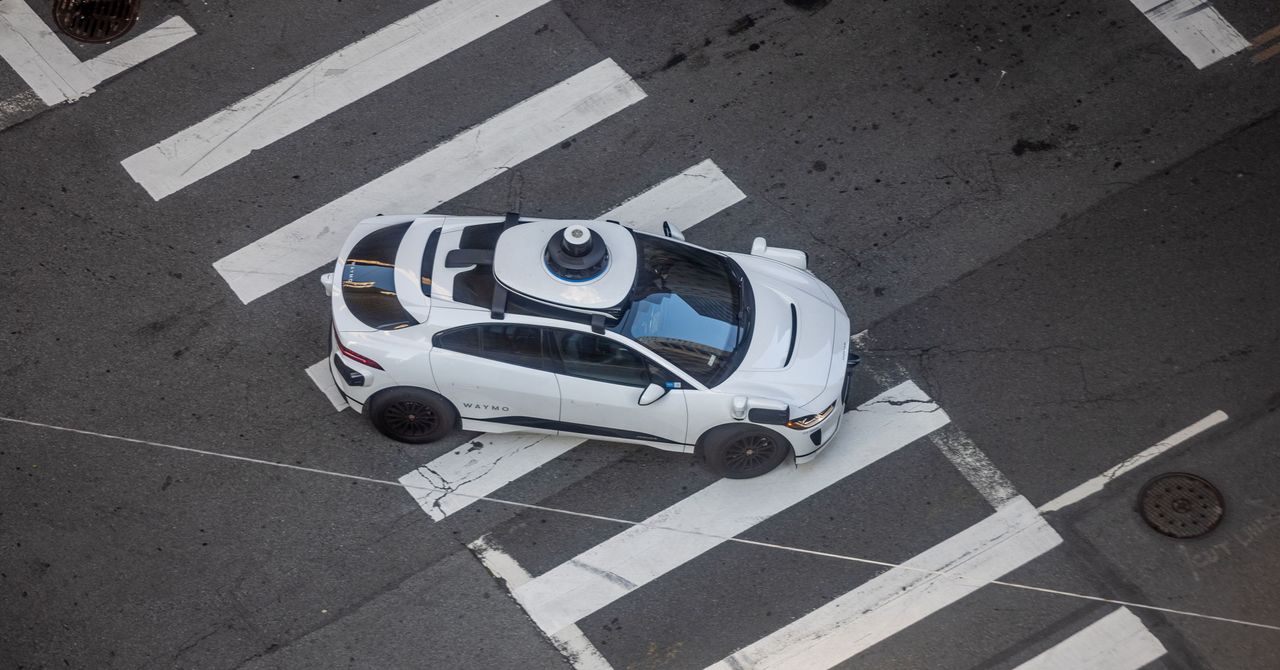
One of the purported advantages of self-driving car tech is that every car can learn from one vehicle’s mistakes. Here’s how Waymo puts it on its website: “The Waymo Driver learns from the collective experiences gathered across our fleet, including previous hardware generations.”
But in Austin, Waymo’s vehicles struggled for months to learn how to stop for school buses as drivers picked up and dropped off children. An official with the Austin Independent School District (AISD) alleged that the vehicles had, in at least 19 instances, “illegally and dangerously” passed the district’s school buses while their red lights were flashing and their stop arms were extended rather than coming to complete stops, as the law requires.
In early December, Waymo even issued a federal recall related to the incidents, acknowledging at least 12 of them to federal regulators at the National Highway Traffic Safety Administration (NHTSA), which oversees road safety. According to federal filings, engineers with the self-driving vehicle company had “developed software changes to address the behavior” weeks before.
But even after the recall, the school-bus-passing incidents continued, according to school officials and a report from the National Transportation Safety Board (NTSB), an independent federal safety watchdog that’s also investigating the situation.
Now, email and text messages between school officials and Waymo representatives, obtained by WIRED through a public records request, show the lengths that the Austin public school district and Waymo went to try to solve the problem. AISD even hosted a half-day “data collection” event in a school parking lot in mid-December, the documents show, with several employees pulling together school buses and stop-arm signals from across the fleet so the self-driving car company could collect information related to vehicles and their flashing lights.
Still, by mid-January, over a month later, the school district reported at least four more school-bus-passing incidents had taken place in Austin. “The data we collected from the beginning of the school year to the end of the semester shows that about 98 percent of people that receive one violation do not receive another,” an official with the school’s police department told the local NBC affiliate that month. “That tells us that the person is learning, but it does not appear the Waymo automated driver system is learning through its software updates, its recall, what have you, because we are still having violations.”
The situation raises questions about the self-driving technologies’ curious blind spots and the industry’s ability to compensate for them even after they’ve been spotted.
Self-driving software has long struggled with recognizing flashing emergency lights and road safety devices with long, thin arms, including gates and stop-arms, says Missy Cummings, who researches autonomous vehicles at George Mason University and served as a safety adviser to the NHTSA during the Biden administration. “If [the company] didn’t fix this a few years ago, the more they drive, the more it’s going to be a problem,” she says. “That’s exactly what’s happening here.”
Waymo did not respond to WIRED’s requests for comment. A spokesperson for the Austin Independent School District referred WIRED to the NTSB while the incidents are under investigation. A spokesperson for the NTSB declined to answer WIRED’s questions while its investigation continues.
Illegal Passing
By midwinter of 2025, AISD officials were frustrated. In one of the 19 incidents alleged by a lawyer for the district in a letter later released by federal road safety regulators, a Waymo passed a school bus letting off children “only moments after a student crossed in front of the vehicle, and while the student was still in the road.”
“Alarmingly,” the lawyer wrote, five of the alleged incidents had occurred after Waymo had assured the district that it had updated its software to fix the problem. Federal regulators with the NHTSA had already launched a probe into the behavior. “Austin ISD is evaluating all potential legal remedies at its disposal and intends to take whatever action is necessary to protect the safety of its students, if required,” the lawyer warned.
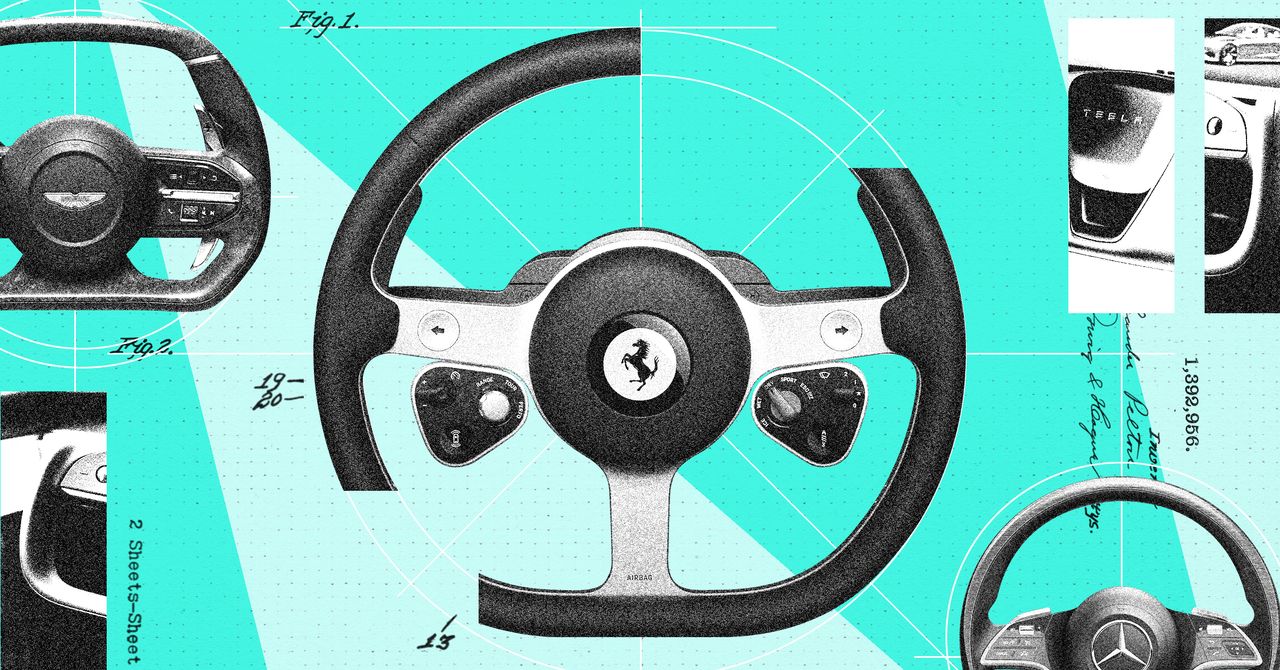
Cars didn’t always have steering wheels. The very first car—the 1885 Benz Patent-Motorwagen, invented by Karl Benz—used a tiller system: a horizontal bar with a handle mounted to a vertical bar. The lever-like handle was similar in many respects to a boat’s rudder. Amazingly, it would be another nine years before French engineer Alfred Vacheron saw sense and fitted the first known steering wheel to his 4-horsepower Panhard for the Paris-Rouen race. Just four years later, in 1898, Panhard made the infinitely preferable and safer steering wheel standard on all its cars. And we’ve been using them ever since.
Hans-Peter Wunderlich is Mercedes’ creative director of interior design. He has been designing steering wheels for 35 years. “I started in 1991 on my first,” he tells me. “A steering wheel is really the most challenging and difficult element to sculpture, to design, to develop in the car.” It is so difficult that Wunderlich has used the wheel as a test on potential recruits.
“When we hire a designer, I have given them the task, after I see a nice portfolio, to draw me a steering wheel,” he says. “The steering wheel is, for me, the proof. Should I hire them or not? If a designer is able to create a perfect steering wheel, even just as a scribble, then they will be a good designer for the total interior of a car.”
It was this challenge, in part, that attracted Ive and his team. “Our starting point was trying to understand the essential nature of the problem to be solved, and that normally means dismissing received wisdom,” Ive tells me. “A car is the aggregation of multiple products, and, in many ways, we’re designing furniture. We’re designing complex and sophisticated input methods. One of the challenges was to try to create cohesion. You don’t get something to be cohesive by a set of rules. That was a wonderful new challenge, and one wrestled with over a number of years.”
For both Ive and Wunderlich, science accompanies the art of design. They talk of the intricacies of the ergonomics, the logic of the switches, factoring in an “exploding element in the center” (the airbag), which is getting more and more complicated, says Wunderlich. “Even the rim is an ergonomic science in itself,” he adds, saying that his team works hand in glove with Mercedes’ in-house ergonomics department on these stages. “It’s almost 50-50. We get requirements data from engineering and ergonomics.”
Spinning Out
Look closely at your steering wheel rim; in cross-section, it won’t be round. Cut it into segments, and each will likely have a different profile, aiming to optimize grip wherever your hands grasp the wheel. Even the padding has to be just right. “It mustn’t be like bone but also not too fat. You need a nice balance,” Wunderlich says. “[It must say] this car is solid, it’s quality, it’s strong, it’s powerful, but it’s not crude.”
“If you hold the wheel on the three and nine o’clock positions, you can carve in with your fingers on the rear of the rim—so you have the hump, the scallop of the rim,” Wunderlich says. “And then we carve into a valley where your fingers could rest. That means your hands can close. You have the feeling you’re holding the car. This is so challenging, because in that area you have such a technical structure to maintain—complex electronics and heating elements. We torture the engineers to keep that area so small so we can sculpt it out.”
Ive tortured Raffaele De Simone, Ferrari’s chief engineer and head development driver. De Simone is sometimes described at the company as “Customer No. 1” because, apparently, no Ferrari road car leaves the factory until he is satisfied with its performance.


Tamil Nadu tops India T&A exports; Haryana fastest-growing major state

Royal family ‘hides’ senior member cancer struggles: Shocking details out

US’ Ralph Lauren unveils ‘Timeless by Design 2030’ sustainability plan

-

 Politics6 days ago
Afghanistan announces release of detained US citizen
-

 Sports6 days ago
Broadcast industry CEO says consolidation is ‘essential’ to compete for NFL soaring media rights prices
-

 Entertainment6 days ago
UN warns migratory freshwater fish numbers are spiralling
-

 Tech6 days ago
Can a Home Appliance Fix the Problem of Soft-Plastic Waste?
-
 Business6 days ago
Property Play: Home flippers see smallest profits since the Great Recession, real estate data firm says
-

 Sports1 week ago
Men’s March Madness live tracker: Updates on Saturday’s games
-

 Sports1 week ago
Arne Slot: Liverpool’s defeat to Brighton ‘hurts a lot’
-
 Business6 days ago
Gold prices soar in Pakistan – SUCH TV