

Sports
Pakistan clears T20 World Cup entry but pulls out of high-stakes India clash on Feb 15 | The Express Tribune

ICC calls on PCB to find a mutually acceptable solution, saying selective participation is ‘difficult to reconcile’
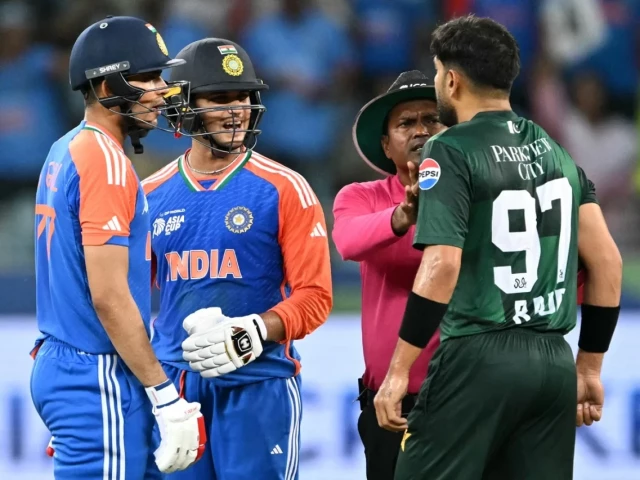
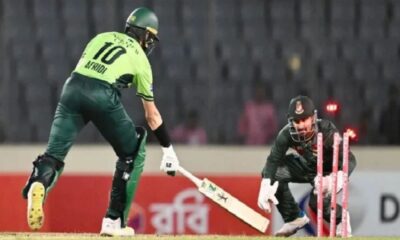
Pakistan and India are set to lock horns in the Asia Cup final for the first time in the tournament’s history. Photo: AFP
Pakistan will participate in the ICC Men’s T20 World Cup 2026 but will not take the field in its scheduled match against India on February 15, the government said on Sunday, confirming a politically sensitive decision ahead of the global tournament.
In a post on the government’s X account, it said: “The Government of the Islamic Republic of Pakistan grants approval to the Pakistan Cricket Team to participate in the ICC World T20 2026, however, the Pakistan Cricket Team shall not take the field in the match scheduled on 15th February 2026 against India.”
The Government of the Islamic Republic of Pakistan grants approval to the Pakistan Cricket Team to participate in the ICC World T20 2026, however, the Pakistan Cricket Team shall not take the field in the match scheduled on 15th February 2026 against India.
— Government of Pakistan (@GovtofPakistan) February 1, 2026
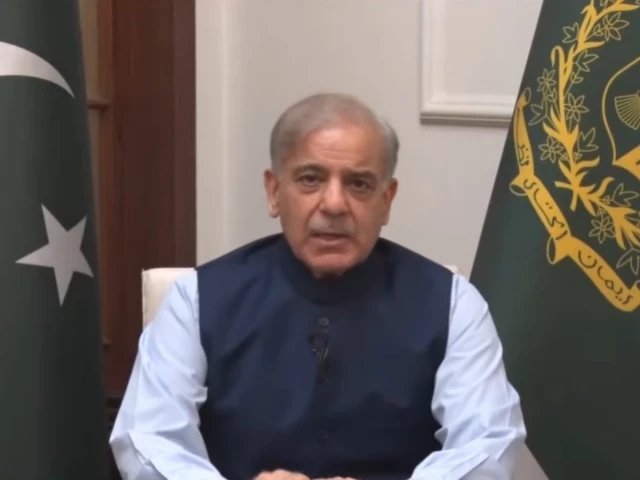
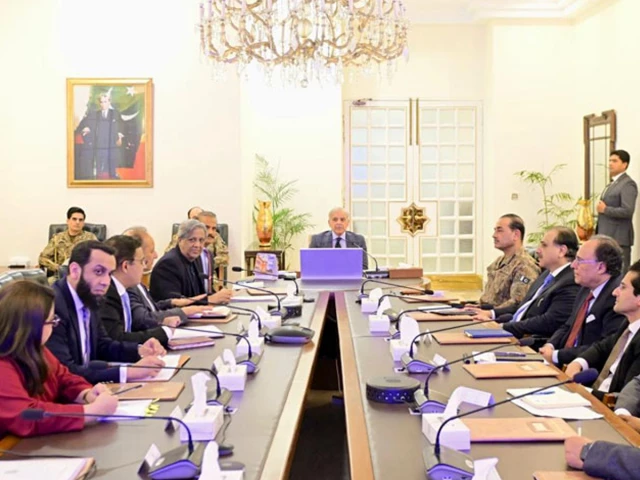
The decision was taken following a meeting between Pakistan Cricket Board (PCB) chairman Mohsin Naqvi and Prime Minister Shehbaz Sharif, according to the statement.
The development comes amid a broader Bangladesh controversy, which has already cast a shadow over the tournament. Bangladesh were removed from the T20 World Cup 2026 and replaced by Scotland in the tournament, a decision that triggered criticism from several quarters, including Pakistan, over what was described as inconsistent treatment by the International Cricket Council (ICC).
The Government of the Islamic Republic of Pakistan grants approval to the Pakistan Cricket Team to participate in the ICC World T20 2026, however, the Pakistan Cricket Team shall not take the field in the match scheduled on 15th February 2026 against India.
— Government of Pakistan (@GovtofPakistan) February 1, 2026
Bangladesh’s replacement — following disputes related to hosting arrangements, security concerns and scheduling under the hybrid model involving India and Sri Lanka — intensified debate over governance and fairness in international cricket, with Pakistan openly expressing solidarity with Bangladesh earlier in the row.
The T20 World Cup 2026, scheduled to be co-hosted by India and Sri Lanka from February 7 to March 8, is now facing renewed uncertainty as political considerations intersect with cricketing commitments. A Pakistan–India clash is traditionally the tournament’s biggest commercial draw, and Pakistan’s refusal could force the ICC to revisit scheduling or points-allocation scenarios.
Pakistan’s T20 World Cup campaign begins against the Netherlands on February 7 in Colombo, followed by matches against the United States on February 10 and Namibia on February 18.
Despite opting out of the India match, Pakistan’s participation in the rest of the ICC Men’s T20 World Cup 2026 signals a calibrated approach rather than a full boycott, following days of speculation linked to the Bangladesh issue and regional tensions.
The ICC has yet to issue an official response on how Pakistan’s decision will impact the tournament structure, while cricket administrators continue to monitor the fallout from both the Pakistan–India match refusal and the Bangladesh replacement controversy, which together have made the build-up to the World T20 unusually fraught.
ICC calls for ‘mutually acceptable solution’
The International Cricket Council has called on the PCB to find a mutually acceptable solution after Pakistan announced it would boycott its match against India in the main event.
In a statement, the ICC said that selective participation “is difficult to reconcile with the fundamental premise of a global sporting event,” where all qualified teams are expected to compete on equal terms according to the tournament schedule. The council also noted that it is still awaiting official communication from the PCB.
“ICC tournaments are built on the principles of sporting integrity, competitiveness, consistency and fairness,” the statement said, adding that selective participation undermines the spirit and sanctity of international competitions.
While respecting the role of governments in matters of national policy, the ICC said the decision is not in the interest of the global game or the welfare of fans worldwide, including millions in Pakistan.
The council emphasised that the PCB should consider the long-term impact of its stance on cricket in the country, noting that such a move could affect the global cricket ecosystem, of which the PCB is both a member and a beneficiary.
The ICC reiterated that its priority remains the successful delivery of the Men’s T20 World Cup and said all members, including Pakistan, share responsibility for ensuring a fair and competitive tournament.
The council urged the PCB to explore a solution that protects the interests of all stakeholders.
India-Pakistan rivalry
In the cricketing world, an India–Pakistan contest is the most anticipated fixture at any ICC tournament, particularly since the suspension of bilateral tours between the two cricket-mad neighbours.
Owing to strained relations, India have not toured Pakistan since 2008, and the rivals now face each other only at multi-team events. Pakistan, however, visited India for the 50-overs World Cup last year, the 2016 T20 World Cup, and a three-match ODI series in 2012.
Pakistan also hosted the Asia Cup in 2023, but eventual winners India played all their matches in Sri Lanka under a hybrid model.
Controversy erupted after India refused to travel to Pakistan for the ICC Champions Trophy, despite Pakistan having toured India for the ODI World Cup. India maintained that its government did not grant permission for the tour — a stance accepted by the ICC at the time, though a similar justification was later rejected when put forward by Bangladesh.
After weeks of deliberations, the International Cricket Council (ICC), the global governing body of the sport, approved the hybrid model proposed by the Pakistan Cricket Board for the ICC Champions Trophy 2025, as well as other ICC events scheduled between 2025 and 2027.
In a formal statement, the ICC said: “India and Pakistan matches hosted by either country at ICC events during the 2024–2027 rights cycle will be played at a neutral venue, the ICC Board confirmed.”
The ICC added that the hybrid arrangement would apply to two major events next year — the men’s Champions Trophy in Pakistan and the women’s ODI World Cup in India. It will also be in place for the men’s T20 World Cup in 2026, co-hosted by India and Sri Lanka, and the women’s T20 World Cup in Pakistan in 2028.
Under this arrangement, all of Pakistan’s matches were shifted to Sri Lanka, as they were to be played at a neutral venue.
The issue appeared to have been resolved but resurfaced when India dropped Bangladesh’s pacer from the Indian Premier League amid rising tensions with Bangladesh, further worsening the already strained relations between the two cricketing nations.
Bangladesh demanded that the ICC shift its matches to Sri Lanka, but the international cricket body refused to comply, forcing Bangladesh to withdraw from the World Cup, with Scotland added as a replacement.
The dispute, centred on hosting arrangements, security concerns and scheduling under the hybrid model involving India and Sri Lanka, intensified debate over governance and fairness in international cricket. Pakistan openly expressed solidarity with Bangladesh earlier during the row.
The Pakistan Cricket Board (PCB) and the government held extensive deliberations over the decision to participate in the World Cup, including the option of a complete boycott in solidarity with Bangladesh and in protest against what they described as the ICC’s unfair treatment. However, it was eventually decided that Pakistan would boycott only the match against their arch-rivals.
India and Sri Lanka are hosting the ICC Men’s T20 World Cup for the second time. Sri Lanka were the hosts of the 2012 edition while India hosted it in 2016, with West Indies winning both the editions.
India (2007 and 2024) and England (2010 and 2022) are the other teams to win the championship more than once while Pakistan (2009), Sri Lanka (2014) and Australia (2021) are the other past winners.





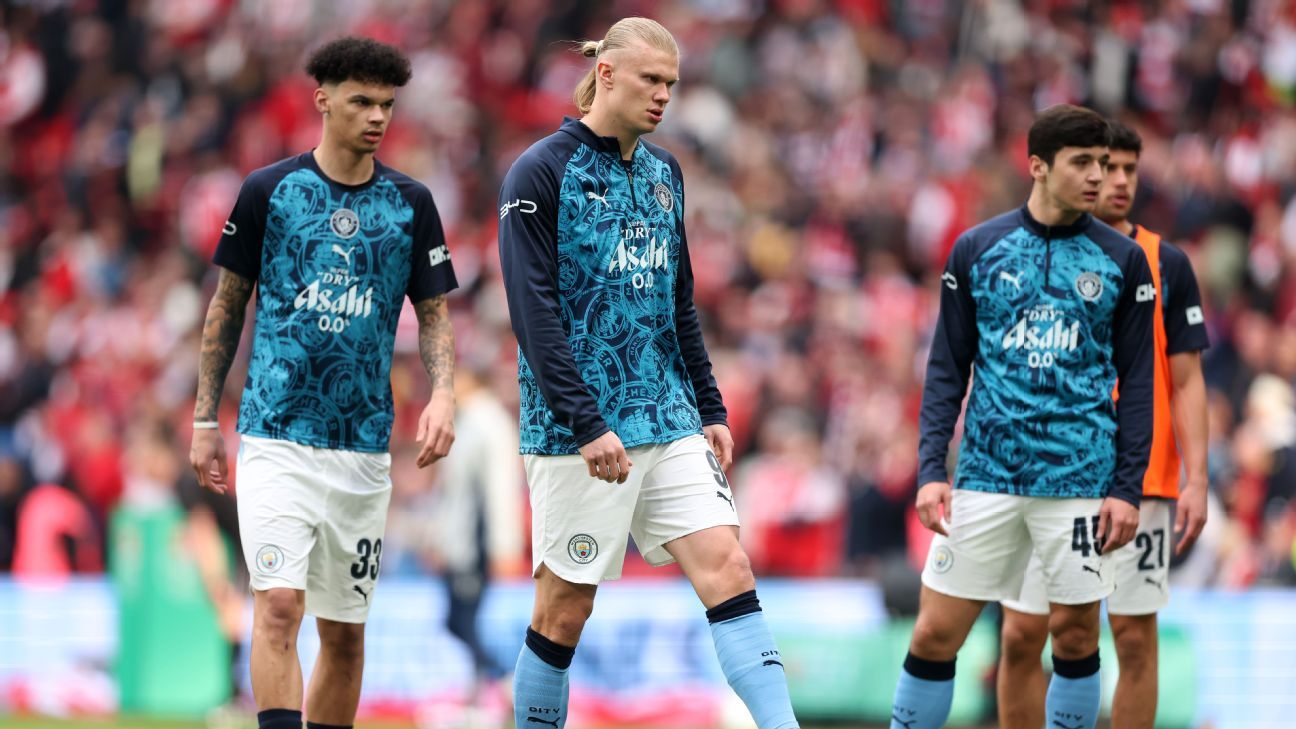
The first trophy of the season is up for grabs and it is Arsenal and Manchester City competing for the Carabao Cup final at Wembley.
The top two teams in the Premier League could well compete for all three domestic trophies and they have the chance to land the first blow in March in front of 90,000 fans.
You can follow every single moment of the game live on ESPN in what is sure to be a massive, tense affair.
Manchester City reached the final after defeating reigning champions Newcastle United 5-1 on aggregate in the semifinals.
They had previously beaten Huddersfield in the Third Round, before advancing past Swansea and and Brentford.
Arsenal meanwhile navigated past Chelsea in the semi-finals with Kai Havertz‘s 90th minute goal seeing them win 4-2 on aggregate.
They defeated Port Vale in the Third Round, before getting past Brighton and Crystal Palace on penalties in the quarterfinals.
City have won the League Cup eight times, most recently in 2021, while Arsenal have won it only twice and not since 1993.
Sports
Tom Brady shines in return to football field despite losses at Fanatics Flag Football Classic
NEWYou can now listen to Fox News articles!
Even three years removed from the game, Tom Brady looks like he could drop back and sling the pigskin for an NFL team.
Brady highlighted the first-ever Fanatics Flag Football Classic on Saturday at BMO Stadium in Los Angeles, and not just because he was back on a football field for the first time since he officially retired.
The 48-year-old was throwing darts.
CLICK HERE FOR MORE SPORTS COVERAGE ON FOXNEWS.COM
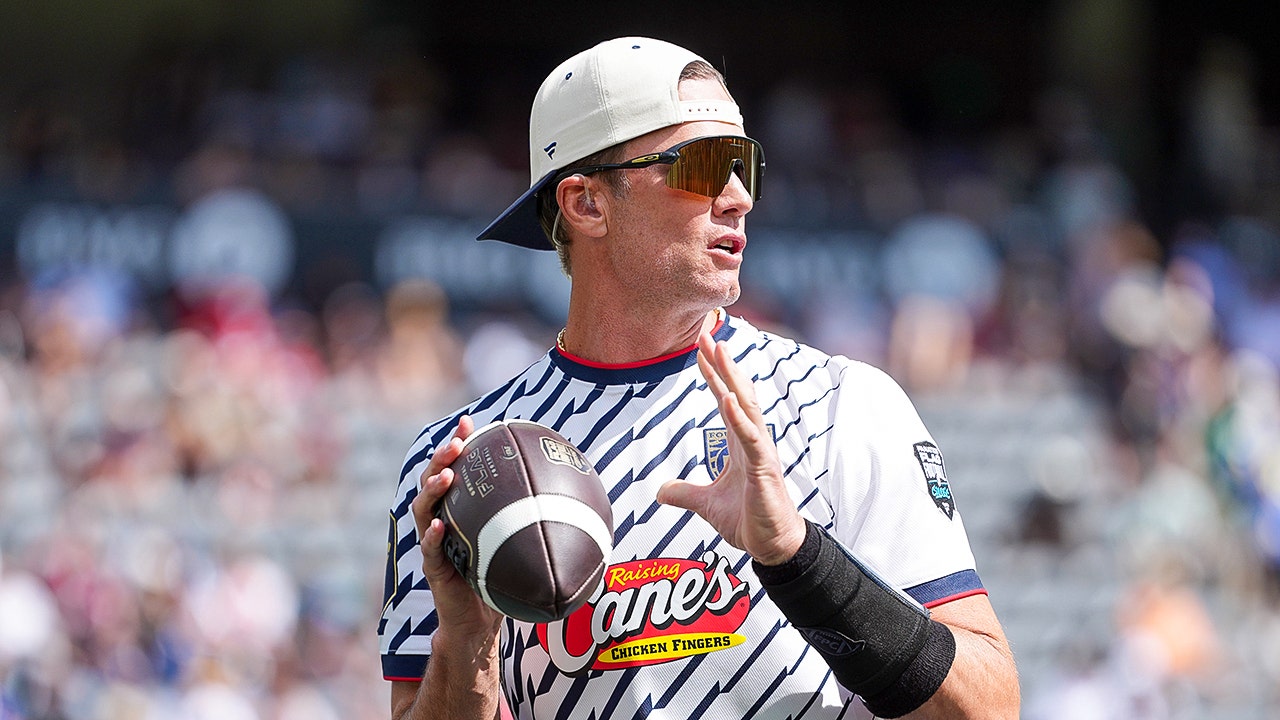
Tom Brady of the Founders FFC warms up before the Fanatics Flag Football Classic at BMO Stadium on March 21, 2026 in Los Angeles, California. (Michael Owens/Getty Images for OBB Media – FANATICS STUDIOS)
Brady, surrounded by current and former NFL players, as well as the U.S. national flag football squad, threw for 85 total yards on the small field with two touchdowns over his two games played in the inaugural event.
Brady’s co-captain, Philadelphia Eagles Super Bowl LIX MVP Jalen Hurts, started for their Founders FFC crew, throwing for 224 yards with two touchdowns and three interceptions. Brady came in after Hurts, and it was like old times as he was throwing all over the field.
BRADY, GRONK, HURTS, BURROW: FANATICS FLAG FOOTBALL CLASSIC DRAFT RESULTS
Of course, Brady couldn’t go without finding his trusty tight end, Rob Gronkowski, who secured a two-point conversion after a touchdown. Gronkowski, though, went out early in the contest due to a hamstring injury.
While Brady performed well, his squad was blown out by Team USA Football, 43-16, in that game. Brady and Founders FFC would have a chance at revenge in the championship game, but the U.S. team, which knew exactly how to take advantage with flag football rules, beat them again, 24-14.
Brady’s competitive edge was in full bloom, saying “my heart is really hurting right now,” between his losses.
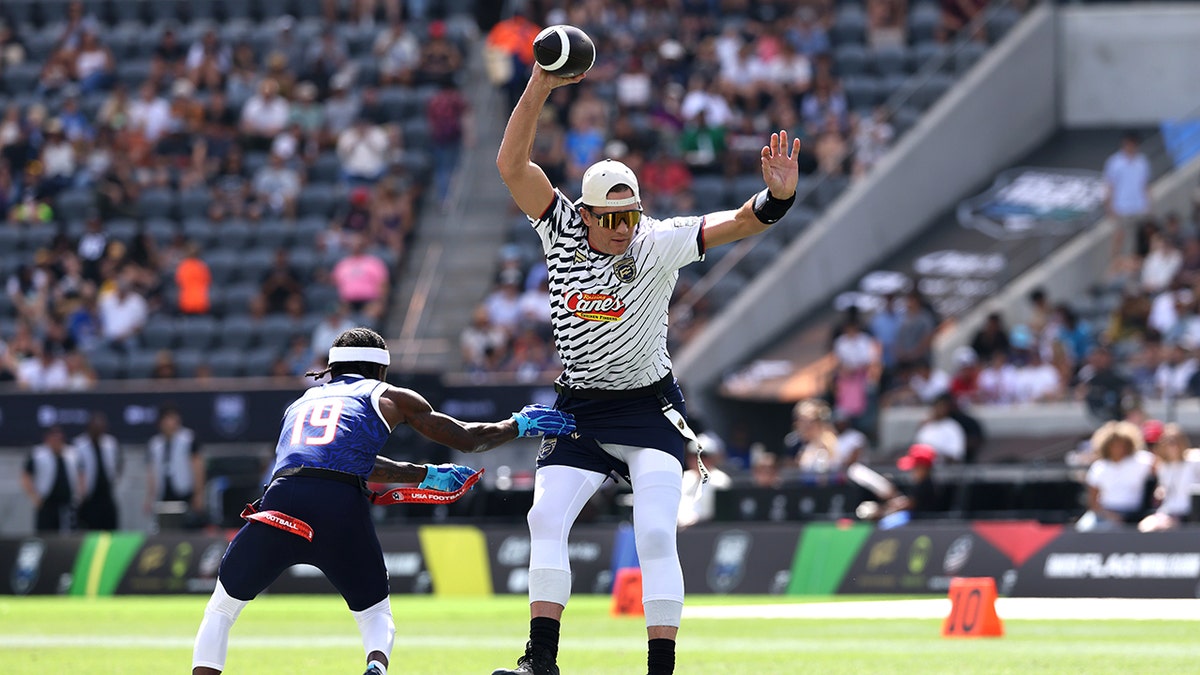
Tom Brady of the Founders FFC avoids a sack by Shawn Theard Jr. #19 of the US Men’s Flag Football Team during the Fanatics Flag Football Classic at BMO Stadium on March 21, 2026 in Los Angeles, California. (Katelyn Mulcahy/Getty Images for for OBB Media – FANATICS STUDIOS)
But he said before the contests that he felt “great” about stepping on the field and running some plays before the big games on Saturday.
“Fortunately, as an athlete, your body is your asset over a period of time and you learn how to take care of it,” Brady said during practice this week. “Even when you retire, I felt like I still wanted to do the same things after football when I was playing. I still want to be active. I want to be outside. I want to continue to live a healthy, active lifestyle.”
For those thinking Brady could take over at quarterback for an NFL squad, he has shown no wish to walk back his retirement for the second time in his future Hall of Fame career.
Brady is a minority owner of the Las Vegas Raiders, which has played a large role in precluding a return. He is invested in seeing the rebuild of the team. At the same time, he has enjoyed being part of the FOX Sports broadcast team during the NFL season alongside Kevin Burkhardt.
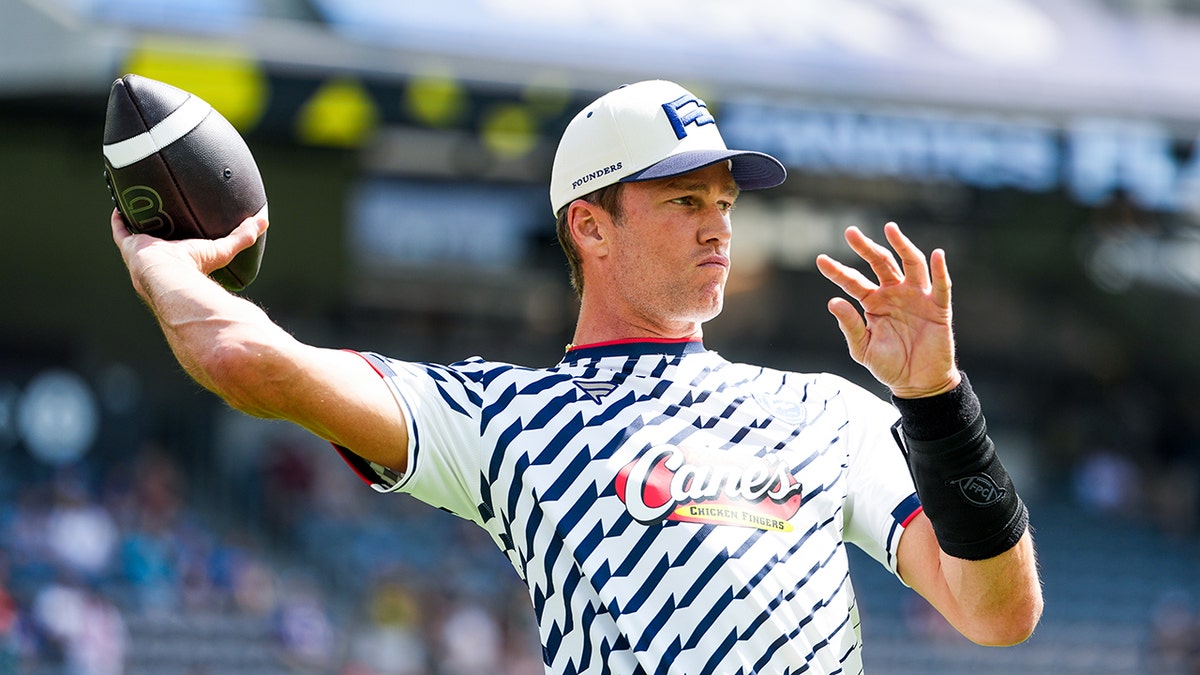
Tom Brady of the Founders FFC warms up before the Fanatics Flag Football Classic at BMO Stadium on March 21, 2026 in Los Angeles, California. (Michael Owens/Getty Images for OBB Media – FANATICS STUDIOS)
CLICK HERE TO GET THE FOX NEWS APP
But who knows when 2028 rolls around what Brady may be doing, when flag football joins the list of the Summer Games in Los Angeles? Team USA, though, proved on Saturday just how different this style of football can be, even for current NFL stars.
The Associated Press contributed to this report.
Follow Fox News Digital’s sports coverage on X and subscribe to the Fox News Sports Huddle newsletter.
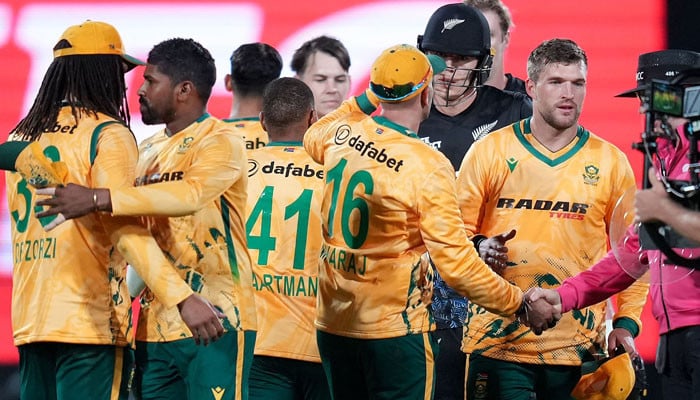
WELLINGTON: South Africa’s spinners played a decisive role as the tourists won the fourth Twenty20 international against New Zealand by 19 runs on Sunday to square the five-match series 2-2.
New Zealand were well placed to clinch the series midway through their chase in Wellington after the Proteas scored 164-5.
However, from 88-3 after 10 overs, they lost wickets in rapid succession to be all out for 145 off 18.5 overs.
It sends the series, played between weakened sides from both countries, to a decider in Christchurch on Wednesday.
The match swung in favour of South Africa when spinners Keshav Maharaj and Prenelan Subrayen turned the screws through the middle stages of the chase.
Captain Maharaj is comfortably the most experienced member of an experimental tour squad and proved hard to score from as he took 2-22 off four overs.
Subrayen, playing his first T20 international, bowled Dane Cleaver for 26 to spark New Zealand’s middle order crumble and finished with 2-13 off three overs.
Maharaj said his side played with more energy than in defeats in Hamilton and Auckland.
“It was a perfect response to two disappointing losses in a row,” he said.
“Coming into this game, you could see there was a little bit more energy and hunger.
“We are a young team, finding our way in international cricket so it takes a little bit of time.”
Opener Tim Robinson top-scored with 32 for New Zealand while Proteas paceman Gerald Coetzee took 3-31.
South Africa’s innings were dominated by 57 off 36 balls from wicketkeeper Connor Esterhuizen.
He was dismissed by a spectacular outfield catch from Katene Clarke, on his international debut, off Ben Sears’ bowling.
Paceman Sears impressed, taking 1-22 off four overs, which included conceding just two runs off the last over of the innings.


Carabao Cup final LIVE: Arsenal and Manchester City battle for first trophy of the season
Coal gasification to boost energy security and cut imports, says G Kishan Reddy – The Times of India

Chappell Roan gets banned from music festival after bizarre altercation

Tips and Advice for Buying Used or Refurbished Electronics

UAE savings strategies 2026 explained: Best apps, tools, budget rules and smart money hacks to beat rising cost of living in emirates – The Times of India

An Air Fryer That Makes Juicy Steak? Yes. It’s Nearly Half Off

-
 Tech1 week ago
Tips and Advice for Buying Used or Refurbished Electronics
-
Business1 week ago
UAE savings strategies 2026 explained: Best apps, tools, budget rules and smart money hacks to beat rising cost of living in emirates – The Times of India
-
 Tech1 week ago
An Air Fryer That Makes Juicy Steak? Yes. It’s Nearly Half Off
-

 Politics1 week ago
Iran threatens US-linked oil facilities after Kharg Island bombed
-

 Fashion1 week ago
US court to review de minimis ban on imports from China & Hong Kong
-

 Entertainment7 days ago
Strategic oil stocks to be released ‘immediately’ in Asia and Oceania: IEA
-
 Entertainment1 week ago
Iran at war
-

 Sports1 week ago
Japan suffers shocking collapse to Venezuela in World Baseball Classic