

Business
Pakistans Economic Crisis Deepens With Sub-3 per cent Growth For 5th Year In Row

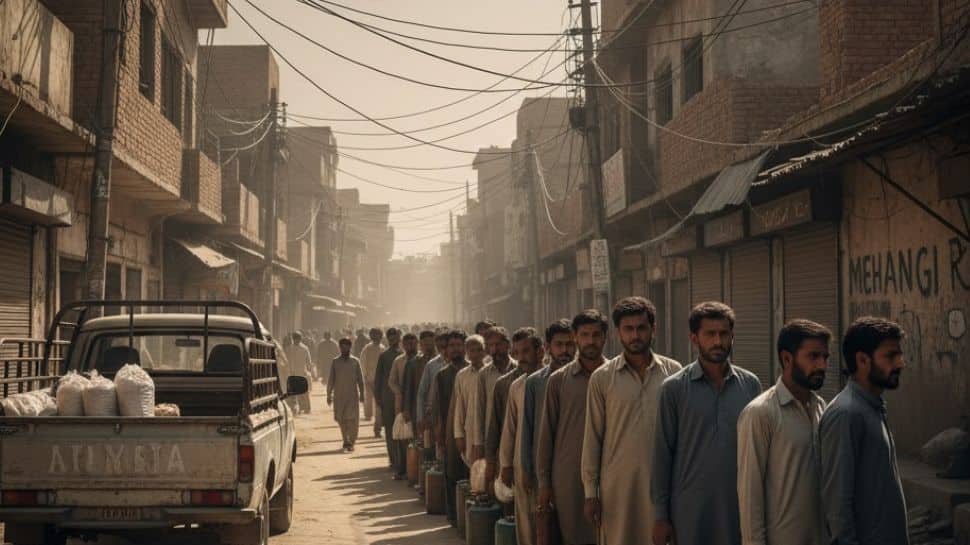
New Delhi: With the World Bank forecasting a mere 2.6 per cent GDP growth for Pakistan in 2025-26, the country appears to be stuck in a phase of economic stagnation that has now entered the fifth year of sub-3 per cent growth with mounting unemployment and rising poverty.
Pakistan risks locking itself into a prolonged phase of economic stagnation, warned economist Asad Ali Shah, as the World Bank’s latest update projects growth at just 2.6 per cent for FY25-26 – following a dismal four-year stretch of weak performance, according to an article in Pakistan’s financial daily Business Recorder (brecorder.com).
Expressing his views on the social media platform X, Asad, the former president of the Institute of Chartered Accountants Pakistan (ICAP), said: “The World Bank’s latest Pakistan Development Update has revised down the FY25-26 growth forecast to just 2.6 per cent, compared to the government’s more optimistic projection of around 4 per cent.”
“This comes after three years of dismal performance — (-) 0.2 per cent in FY23, 2.5 per cent in FY24, and 2.7 per cent in FY25 — marking what is arguably the worst four-year stretch in Pakistan’s economic history, defined by sustained low growth, record inflation and interest rates, and a collapse in investment confidence.”
Pakistan’s economy has been further hit by catastrophic floods, weighing on agricultural output, and inflation pressures have resurfaced, the article states. The report further noted that Pakistan’s inflation rate dropped to single digits in FY 2024/25, as price increases for food and energy eased. “However, disruption to food supply chains, due to ongoing catastrophic floods, is expected to push inflation up through 2027,” it projected.
Former Federal Finance Minister Miftah Ismail also echoed similar views, saying that “in terms of growth, these FY22-23 to FY25-26 are the worst four years in Pakistan’s history”. Miftah criticised the government for avoiding key reforms, including privatisation, downsizing ministries, and strengthening local governance, arguing that authorities are instead “purchasing stability through low growth” by keeping interest rates, taxes, and utility tariffs high.
“The result is: increased unemployment, poverty and political alienation.” Meanwhile, Asad maintained that Pakistan’s economy “may have stabilised — but it has not recovered”. The economist pointed out that industrial output remains weak, whereas “agriculture is in deep crisis amid climate shocks and policy distortions, and job creation has stalled”.
“Stability is not success,” he stressed, warning that without credible reforms to restore investor confidence, strengthen governance, and shift resources toward productivity and exports, Pakistan risks institutionalising stagnation as its new normal”.



Business
India opposes China-led IFD pact’s inclusion; flags risks to WTO framework and core principles – The Times of India
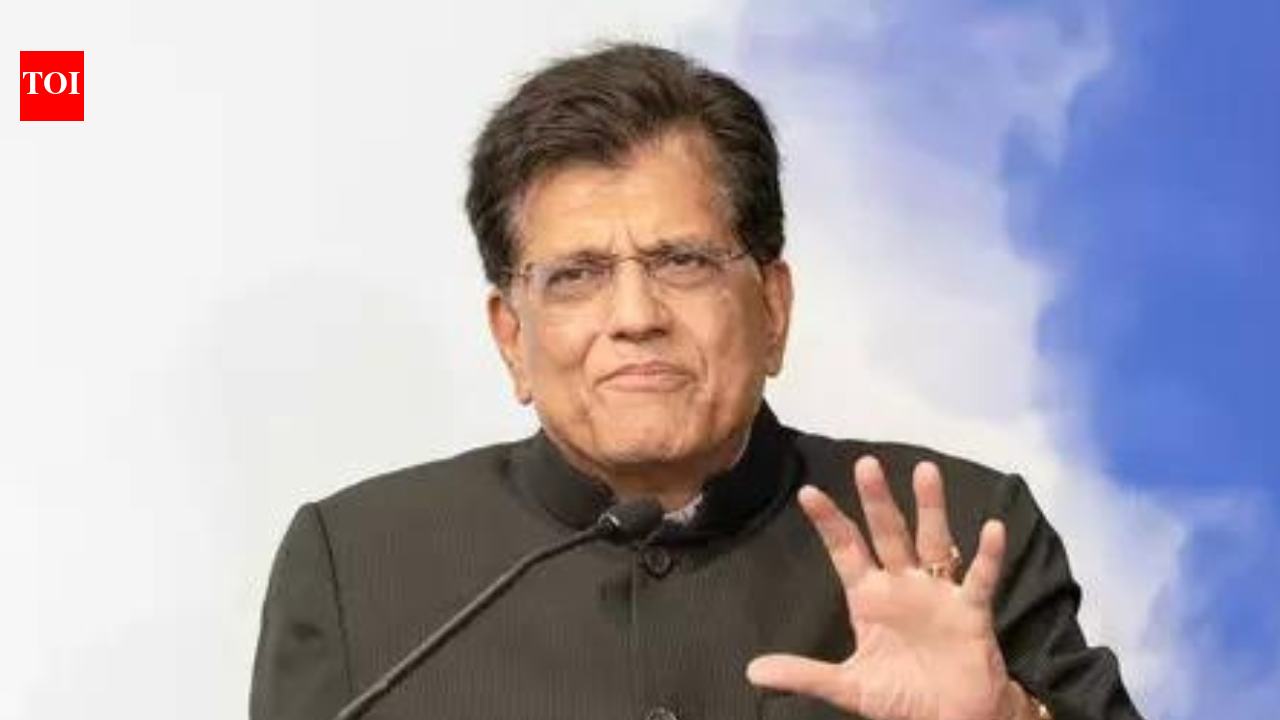
India on Saturday said it has strongly opposed the China-led Investment Facilitation for Development (IFD) Agreement being incorporated into the World Trade Organisation (WTO) framework, flagging concerns over its systemic implications, PTI reported.The issue was raised at the ongoing 14th ministerial conference (MC14) of the WTO in Yaounde, Cameroon, where Commerce and Industry Minister Piyush Goyal said such a move could weaken the institution’s foundational structure.“Incorporation of the IFD agreement risks eroding the functional limits of the WTO and undermining its foundational principles,” Goyal said in a social media post.“At #WTOMC14, drawing inspiration from Mahatma Gandhi ji’s philosophy of Truth prevailing over conformity, India showed the courage to stand alone on the contentious issue of the IFD Agreement and did not agree to its incorporation into the WTO framework as an Annex 4 Agreement,” he said.Annex 4 of the WTO Agreement contains Plurilateral Trade Agreements that are binding only on members that have accepted them, unlike multilateral agreements which apply to all members.Goyal said that as part of WTO reform discussions, members are deliberating on guardrails and legal safeguards for plurilateral agreements before integrating any such outcomes into the framework.“In view of the systemic issue at hand, India showed openness to have good faith, comprehensive discussions and constructive engagement under the WTO Reform Agenda,” he added.India had also opposed the pact during the WTO’s 13th ministerial conference (MC13) in Abu Dhabi.The Investment Facilitation for Development proposal was first mooted in 2017 by China and a group of countries that rely significantly on Chinese investments, including those with sovereign wealth funds. The agreement, if adopted, would be binding only on signatory members.

Vijaypat Singhania, former Raymond chairman, Padma Bhushan awardee and noted aviator, has passed away.He died in Mumbai at the age of 87.His son Gautam Singhania, chairman and managing director of the Raymond Group, announced the death on microblogging platform X.A company spokesperson said Singhania passed away “peacefully” and his last rites will be performed on Sunday, reported PTI.A recipient of the Padma Bhushan, Vijaypat Singhania was known not only for his leadership at Raymond but also for his passion for aviation. He held a world record for achieving the highest altitude in a hot air balloon.He led Raymond as chairman for around two decades until 2000, after which he handed over the reins of the company to Gautam Singhania. He had also transferred his entire 37 per cent stake in the company to his son.Vijaypat Singhania and Gautam Singhania were later involved in legal disputes, which were subsequently resolved.
Business
Middle East crisis: Jubilant FoodWorks reports some Domino’s outlets affected by LPG shortage – The Times of India

Jubilant FoodWorks Ltd (JFL), which operates Domino’s Pizza and Dunkin Donuts in India, has reported constraints in LPG cylinder supplies across parts of its store network due to the ongoing West Asia war, according to ET.In a filing to the BSE, the company said, “Operational impact at this stage is limited and being actively managed. The company is taking several steps to conserve LPG and working overtime to move to alternate energy sources like electricity and piped natural gas (PNG).”It added that it is in continuous touch with oil marketing companies to track developments and respond to the evolving situation. “The company is in constant engagement with oil marketing companies (OMCs) to remain apprised of the latest developments and plan operational responses accordingly, given the rapidly evolving nature of the situation,” the filing said.The company noted that it is closely monitoring the situation as supply disruptions persist.The impact is being felt across the restaurant industry, with several chains facing similar challenges due to LPG shortages.On March 10, the National Restaurant Association of India (NRAI) had advised its five lakh members to consider shorter operating hours, reduce items requiring long cooking times or deep frying, and adopt fuel-saving measures such as using lids while cooking, in view of supply constraints linked to the Gulf war.


USMNT handed reality check by Doku, Belgium ahead of World Cup

Hubert Kós leads Texas men to second straight NCAA swim title

Pakistan rejects India’s remarks on Shia community, calls them ‘cynical, diversionary’

-
 Business1 week ago
Flipkart group CFO to leave co amid IPO plans – The Times of India
-

 Sports1 week ago
Rating Adidas’ 2026 World Cup away shirts: Argentina, Spain, Mexico and more
-

 Fashion1 week ago
China’s textile & apparel exports surge 17% to $50 bn in Jan-Feb 2026
-

 Sports1 week ago
American Conference Commissioner Tim Pernetti thanks Trump for Army-Navy game executive order
-
Tech1 week ago
The Corsair 4000D RS PC Case Keeps Your System Cool
-
 Business5 days ago
Property Play: Home flippers see smallest profits since the Great Recession, real estate data firm says
-
 Business1 week ago
‘Marriage penalty’ in Washington state’s new millionaire tax stirs debate
-

 Tech1 week ago
Gamers Hate Nvidia’s DLSS 5. Developers Aren’t Crazy About It, Either