

Business
Pricey NFL, NBA ownership stakes are pushing investors to smaller leagues and driving valuations higher


Trinity Rodman #2 of Washington Spirit evades Sarah Schupansky #11 of Gotham FC during the NWSL Championship 2025 final between Washington Spirit and NJ/NY Gotham FC at PayPal Park on November 22, 2025 in San Jose, California.
Lyndsay Radnedge/isi Photos | Isi Photos | Getty Images
A version of this article first appeared in the CNBC Sport newsletter with Alex Sherman, which brings you the biggest news and exclusive interviews from the worlds of sports business and media. Sign up to receive future editions, straight to your inbox.
Last week, the National Women’s Soccer League awarded a new expansion franchise — in Columbus, Ohio — to an ownership group led by Haslam Sports Group for a fee of $205 million.
This represents a $40 million jump from the $165 million that billionaire Arthur Blank reportedly paid for the league’s Atlanta franchise in November. And that $165 million itself was a jump of $55 million from the reported $110 million fee Denver paid in January of last year.
Rewind to 2022, and the expansion fee for a new NWSL club was just $2 million.
On the surface, this appears to be a story about the NWSL’s growth. Postseason attendance rose 11% this past season, according to the league. Nearly 1.2 million people watched the NWSL finals, up 22% from a year ago, including a whopping 70% jump in the 18-to-34 demographic, the NWSL said.
It makes sense that investors would want to get in now given the league’s growth trajectory.
But, according to investors and bankers, something else is going on that’s affecting the NWSL’s valuations that has absolutely nothing to do with soccer. It has to do with a trickle-down investment thesis driven by the outsized businesses of the NFL and NBA.
Wealthy investors have long been interested in sports ownership, trophy assets that have also produced outsized returns on investment. The introduction of private equity investment, first adopted in the NFL in 2024, has added to the pool of possible buyers.
This dynamic is welcome news for the entire professional sports industry, which is also benefiting from another strategic investment play — the anti-artificial intelligence trade. Betting on live events is a counter-strategy for those who want less exposure to the tech in a market driven by AI investments.
That’s helped supercharge valuations of the most valuable sports teams in the U.S. According to CNBC Sport, the average NFL team is now valued at $7.65 billion. In 2010, NFL teams were worth, on average, about $1 billion.
The average value of an NBA team is now $5.52 billion, 18% higher than a year ago. Fifteen years ago, the average NBA team was worth $369 million. That’s an increase of 1,396%. The S&P 500 is up about 422% over the same time period.
NBA and NFL ownership stakes are becoming too pricey for a class of buyers who have active interest in being a sports team owner — even at the minority stake level. Former New York Giants quarterback Eli Manning said as much in an interview with CNBC Sport last year.
“It’s too expensive for me,” Manning said of a potential minority stake in his longtime team. “A 1% stake valued at $10 billion turns into a very big number.”
Equity research firm Bernstein wrote in a recent note to clients that NFL team valuations have risen about 17 times in 25 years, “the kind of returns sufficient to give any portfolio manager a legendary status and easily trumping the S&P index or any emerging market index on the planet.”
The main cause of the valuation growth stems from the enormous size of the league’s media rights. The NFL signed an 11-year, $111 billion media rights deal in 2021 — and now wants even more money. The NBA followed with an 11-year, $77 billion deal of its own, starting with the 2025 season.
Splitting national TV dollars among teams allows even the lowest revenue teams — the NFL’s Arizona Cardinals and the NBA’s Memphis Grizzlies — to be valued at $5.9 billion and $3.75 billion, respectively, according to CNBC estimates.
There’s a fear that “second-tier” sports, including MLB and NHL, may be at risk of losing media rights dollars as the NFL flexes its muscle and asks for more from its media partners. The more money that goes to the NFL, the less money there is for everyone else.
One might expect that dynamic to negatively affect the valuations for those sports. But according to these bankers and investors, that’s not happening.
As the NBA and NFL have priced out buyers, there’s now increased demand for sports teams with more affordable valuations. That’s helped drive the recent NWSL surge, they say. There’s more liquidity at NWSL team price points, which has led to bidding wars and soaring valuations.
While the most recent winning buyers — Blank and the Haslams — are already owners of NFL and other sports teams, they’ve had to pay increasingly high prices to fight off other offers. There are far more buying groups willing to write a consortium check for $200 million than pay $1 billion or more for minority stakes in the biggest leagues.
“There’s a lot of demand to get into the sports business but people can’t write the checks to buy into the big four anymore. So what they’re doing is they’re substituting,” said veteran sports banker Sal Galatioto, president of Galatioto Sports Partners. “When supply is fixed and demand goes up, people will bid more to win. The underlying economics are not as important.”
The San Diego Padres are finalizing a sale for $3.9 billion, a record for MLB, despite the team’s regional sports network falling apart a few years ago. While nearly $4 billion is a lot of money, it’s still well below the average value of an NFL or NBA team.
“I’ve got investors coming up to me saying, ‘I can’t afford the NFL and NBA, what do you have for me in MLB, NHL?'” said one prominent sports banker, who asked to speak anonymously because the discussions were private.
The success of the NBA and NFL has funneled all the way down to the bottom of the sports food chain, said Rick Horrow, CEO of Horrow Sports Ventures.
“Major League Cricket was at $5 million. Now the value’s at $30 [million] and going higher. Major League Pickleball two years ago was at $5 million. Now the value is at $15 million or higher,” said Horrow.
Some of this sounds a little like a sports investment bubble, where valuations are divorced from the underlying financials of the leagues themselves.
That’s a real worry for smaller, less established leagues, said Jasmine Robinson, managing partner at Monarch Collective, the largest women’s sports investment fund, with $250 million to invest. It’s why Monarch has focused most of its funds on the WNBA and the NWSL, rather than more emergent leagues, Robinson said.
“Sports has historically been a great investment, but that’s really only for the biggest leagues. It’s not really like you can do any sports deal and you’re going to make money,” Robinson said. “There’s been real scarcity. You do need to be in the leagues that really are going to be leaders to make money. We wouldn’t make a bet on every women’s sports league.”
The big question may be what the threshold is for an established league if there’s an economic downturn that turns off the investment faucet. Monarch is betting the WNBA and the NWSL are above the line, but WNBA franchises have historically never made money, and now they need to pay out far more money to players after this year’s new collective bargaining agreement.



Spirit Airlines check-in Kiosks sit idle at Oakland International Airport on August 13, 2025 in Oakland, California.
Justin Sullivan | Getty Images
Spirit Airlines could shut down as early as 3 a.m. ET Saturday, according to people familiar with the matter. The carrier has failed to secure a financial lifeline to continue operating, though it hasn’t commented on the potential shutdown or its plans.
About 290 Spirit flights are scheduled for Saturday, according to aviation site Flightradar24. Another 381 are scheduled for Sunday.
Travelers with Spirit tickets could be understandably rattled. While there have been some U.S. airlines to shut down in recent years, the budget carrier is larger than most recent airline failures and links major cities like New York, Miami, Detroit and Los Angles — and many others in between — with its Airbus jets.
Here’s what travelers need to know:
You have a Spirit ticket. What should you do?
Immediately? Nothing.
Travelers who are booked on a Spirit flight, like this CNBC reporter is for later this month, are likely to receive a refund if they purchased tickets with a credit card.
If the ticket was bought with a debit card or with loyalty points, however, the chances of recovering funds are slim to none, said Henry Harteveldt, founder of Atmosphere Research Group, a travel consulting firm.
“If you’re holding a reservation for a flight on Spirit don’t proactively cancel it. Wait for the airline to announce it is shutting down,” he said.
Would Spirit be able to help you at the airport?
Don’t count on it.
Spirit has declined to comment on a potential shutdown. If it confirms an end to operations, the carrier will most likely have information on its website about travelers’ next steps.
Harteveldt said travelers shouldn’t go to the airport expecting to find Spirit staff in the event the airline ceases operations. Call centers are likely to be overwhelmed if they are still staffed.
That could leave passengers with fewer answers than they’d like, but other airlines are likely to help assist affected customers.
Airlines that offer last-minute fares, likely with some discounts, will be available to travelers at airport ticket counters.
How can another airline help?
United Airlines, JetBlue Airways, Frontier Airlines and American Airlines are among the carriers that have said they are ready to assist Spirit customers and crews if the carrier shuts down.
That could mean scheduling additional flights to carry the stranded passengers, similar to what they do during a hurricane or other natural disaster.
Why could Spirit shut down?
Spirit, known for bright yellow planes, low fares and fees for everything else, had been successful for years, but this week it’s been on the brink of liquidation after failing to reach a deal with bondholders for a $500 million government bailout from the Trump administration.
Last year Spirit filed for its second bankruptcy in less than a year, though it’s had a host of problems even before then.
A plan to be acquired by JetBlue was blocked. Rising costs upended its business model. An engine defect grounded dozens of its planes. And, more broadly, upscale travel became more popular with consumers, driving airline profits.
At the same time, big, legacy airlines were selling their own basic economy fares that were similar to what Spirit was offering, but with bigger networks.
What does this mean for travel going forward?
Airlines have been adding flights since Spirit’s bankruptcy filing last year on some of its routes and at major airports. They’re likely to keep doing so.
Experts have said they expect fares to rise, at least in some markets, if the discounter goes away, even though the carrier has shrunk substantially.
Business
Middle East crisis: Air India to make food optional, help cut price of tickets – The Times of India
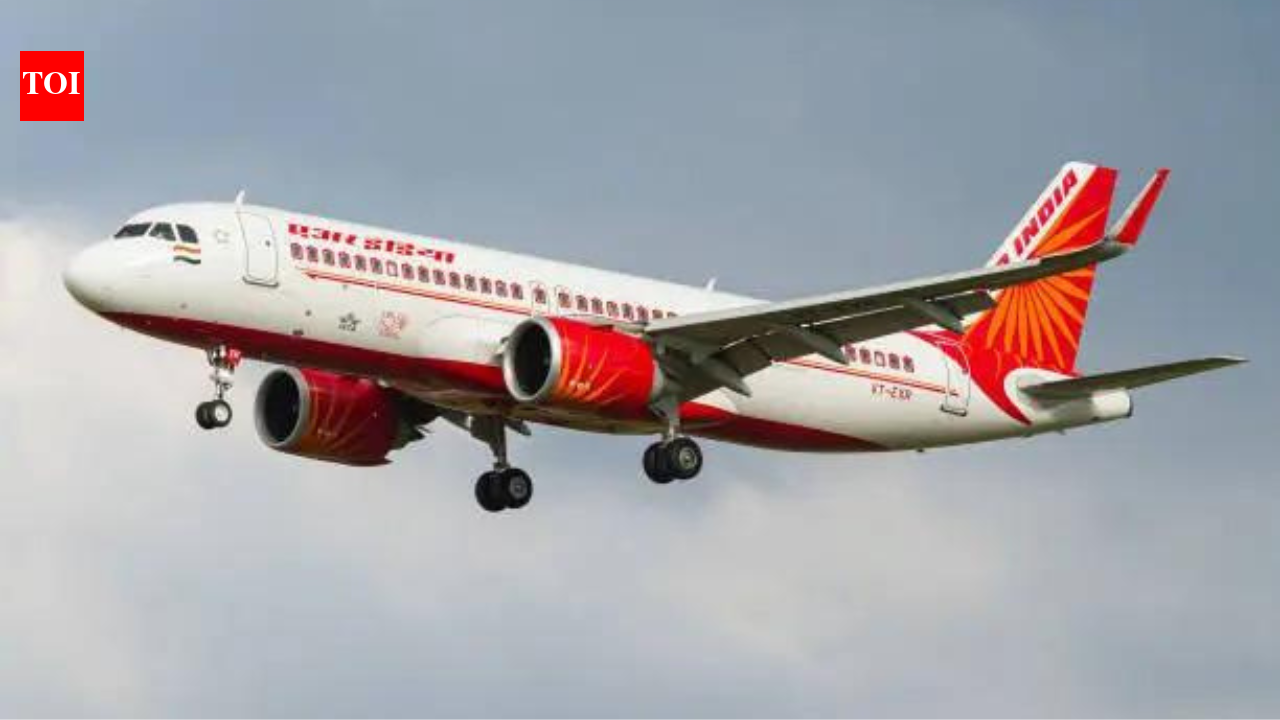
NEW DELHI: Desperate times call for desperate measures. Full service Air India is planning to make meals optional on its domestic and short international (under two hour) flights. Once this “unbundling” rolls out in the next month or two, passengers opting out of meals could have upwards of Rs 250 shaved off their ticket price. While this move, say people in the know, is “on the anvil,” the airline is looking at several other unprecedented measures to fly through the severe cost-revenue turbulence caused by the unending West Asia war.While not opting for meals could lead to slightly cheaper economy tickets, AI is looking at unbundling lounge access for business class passengers because those opting out of this, could get their tickets cheaper. On an average, lounge operators charge Rs 1,100-1,400 per user at metro airports and Rs 600-700 at non metros.The average spend is about Rs 1,000 per lounge. Many business class flyers are frequent travellers who just make it to airports in time for their flight and do not head to the lounge. If unbundled, this could be a saving in their ticket cost. Banks have been reducing lounge access for credit card users for the same reason to cut their costs.“From Day One, Air India has had meals bundled in its ticket price. Now the way aviation turbine fuel (ATF) price is rising and the rupee crashing since Feb 28, ticket prices are going up. India is a price-sensitive market and raising fares beyond a point leads to a fall in traffic with many opting to travel by train or road. This has led to the rethinking to unbundle meals on some flights. Other steps are also being considered,” said people in the know.Several airlines globally have over the past few years unbundled their onboard offerings. Many international full service airlines offer a basic meal in economy while giving the option of buying gourmet meals at an additional cost. Ditto for alcoholic beverages, with cheaper beer and wines being given at no extra cost while the others being charged for. “For passengers, the distinction between full service and low cost airlines is blurring very fast,” said an industry old-timer.

A tree surgeon said he thought he “was going to die” when he suffered a powerful electric shock from an overhead line while clearing hedges in Wiltshire.
Joshua Pocknell was working just after midnight on the A3102 near Royal Wootton Bassett when the mobile lighting tower he was pushing touched an 11,000 volt overhead powerline.
The 26-year-old was seriously injured and taken to hospital, where he spent the next five weeks, workplace watchdog the Health and Safety Executive (HSE) said.
“My whole body locked and I felt hot and cramping,” Mr Pocknell said of the shock.
“I could hear the electricity in my head and thought I was going to die.
“I hit the floor and passed out, still cramping.
“I later discovered a hole had burnt through my arm and hip all the way to the bone.”
More than two years after the incident on January 19 2024, the tree surgeon said he still experiences “considerable pain”.
“My injuries were complex and challenging and there were five or six different surgeons involved in my treatment,” he said.
“I still experience considerable pain and strange bodily sensations, including nerve pain and itching.
“This incident has torn the life from beneath me and I don’t think I will be able to return to the job that I used to love.”
The regulator said it investigated the incident and found Mr Pocknell’s employer, Upton Specialised Tree Services, did not properly plan for or risk assess the dangers posed by overhead power lines.
The firm did not put up barriers or provide training in operating the mobile lighting tower.
Upton Specialised Tree Services pleaded guilty to the charge of breaching Regulation 14 of the Electricity at Work Regulations 1989 by virtue of Regulation 3, the HSE said, and was fined £60,000 and ordered to pay £6,237 in costs at Bristol Magistrates’ Court on Friday.
HSE inspector Tom Preston said: “Joshua is lucky to be alive.
“Overhead electrical power lines present extreme risks to workers, but the risks can and must be controlled.
“Work near overhead power lines should only be carried out where it can be done safely, following a suitable risk assessment, the use of barriers or safety zones, and proper training on the equipment being used.
“In this case, a worker sustained severe injuries in a traumatic incident for all concerned that was entirely preventable.
“HSE will take action against those who fail to take the steps necessary to protect people at work.”


US awards $488m F-16 radar support contract for Pakistan, other countries

Germany urges stronger European defence after US reduces troops

ICE cotton witnesses sharp rise on weaker dollar, strong exports

-

 Tech1 week ago
They Wanted to Join Raya. They’ve Been on the Waiting List for Years
-

 Tech5 days ago
A Brain Implant for Depression Is About to Be Tested in Humans
-

 Tech5 days ago
Almost 90% of women leave tech industry within 10 years | Computer Weekly
-

 Fashion1 week ago
North India cotton yarn steady despite continued push by spinners
-

 Tech1 week ago
Why Do I Like Dyson’s PencilVac So Much?
-

 Entertainment1 week ago
Anne Hathaway makes shocking confession about Taylor Swift’s music
-

 Sports1 week ago
US says Iran can play in Fifa World Cup but IRGC-linked individuals won’t be allowed
-

 Tech1 week ago
US Special Forces Soldier Arrested for Polymarket Bets on Maduro Raid