

Tech
Ransomware resilience may be improving in the health sector | Computer Weekly

In a possibly encouraging sign that cyber messaging is cutting through among healthcare providers, the sector appears to be becoming increasingly resilient to ransomware and cyber extortion, with fewer victims experiencing data encryption, fewer paying up and average time to recovery dropping according to a new Sophos report.
Based on global data collected by Vanson Bourne for a wider study, Sophos found that that this year, just 36% of victims in the healthcare industry paid a ransom, down from 61% in 2022, and over half of those that paid handed over less than what was demanded of them.
Demands from ransomware gangs also plummeted during the observed period, down 91% to $343,000 (£260,800) on average this year, with average payments dropping from $1.47m to just $150,000, the lowest of any sector reported in the wider dataset.
The mean cost of recovery – excluding any ransoms – was also down by 60% to $1.02m. And 58% of healthcare respondents said they recovered within a week, a strong improvement from 21% last year.
“It’s … encouraging to see signs of stronger resilience. In the study, nearly 60% of providers reported they recovered within one week, up from just 21% last year, which reflects real progress in preparedness and recovery planning. In a sector where downtime directly affects patient care, faster recovery is critical, but prevention remains the ultimate goal,” said Alexandra Rose, director at the Sophos Counter Threat Unit (CTU) – formerly a Secureworks unit.
However, improvement against some metrics should not be taken as a sign that the ransomware ecosystem is dwindling or the threat landscape becoming any less volatile; ransomware remains as pervasive a threat as ever and the healthcare sector is no more or less immune than any other.
“Healthcare continues to face steady and persistent ransomware activity. Over the past year, Sophos X-Ops identified 88 different groups targeting healthcare organisations, showing that even moderate levels of threat activity can have serious consequences,” said Rose.
In the past 12 months, the X-Ops team said that the most prominent ransomware gangs targeting the health industry were Qilin, INC Ransom and RansomHub – which it tracks as Gold Feather, Gold Ionic and Gold Hubbard respectively.
The data also reveal that although data encryption from ransomware has dropped to its lowest level since 2020, with only a third of attacks resulting in this scenario, the proportion of healthcare providers hit by extortion-only attacks, where data is not encrypted but rather stolen and a ransom demanded has tripled to 12% of attacks this year, from 4% a couple of years ago. The Cl0p/Clop gang, which last week claimed to have conducted a ransomware attack against an unspecified NHS body, is a great exponent of this tactic.
Root causes
Sophos’ data also reveal some insight into the root causes of cyber extortion and ransomware attacks in the healthcare industry, finding that for the first time since 2022, exploited vulnerabilities were the most common technical cause, seen in 33% of incidents, overtaking credential-based attacks, which topped the list in 2023 and 2024.
Respondents also described “multiple organisational factors” that contributed to their falling victim to such attacks, with 42% describing a lack of suitably qualified cyber security people or overall capacity, and 41% describing known but unaddressed security gaps.
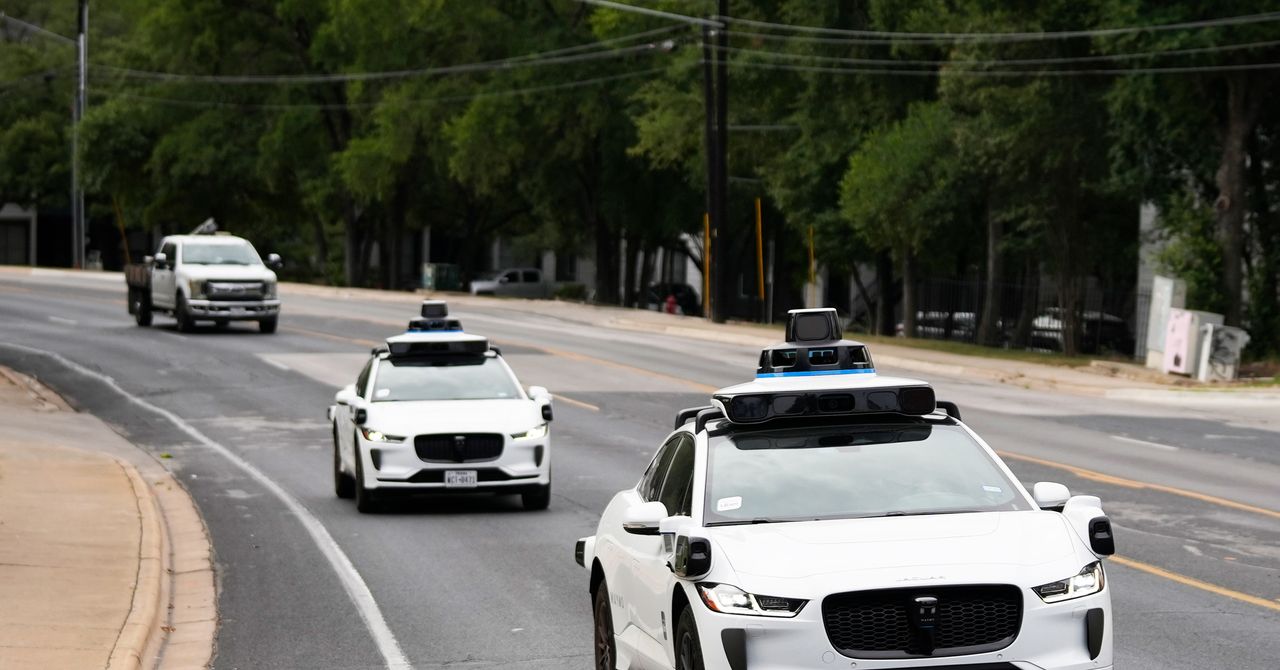
As self-driving car services from Alphabet’s Waymo, Amazon’s Zoox, and Tesla have slowly, quietly expanded across the US, one big, important state has mostly stayed mum: New York.
The union’s fourth most populous state has some of the tightest laws governing autonomous vehicles, requiring companies approved to test in the state to only do so with a driver behind the wheel. There’s no current path for companies to operate the sort of commercial robotaxi services like the sort seen in San Francisco or Las Vegas.
But that could be about to change. On Tuesday, as part of her annual State of State address, Governor Kathy Hochul is set to announce that she is proposing legislation that would expand New York’s current regulations to allow companies to operate limited commercial self-driving car services in cities around the state, her office confirmed Monday. Pilot robotaxi programs would be approved only if the companies submit applications that “demonstrate local support” for their tech’s deployment, as well as robust safety records. The program would exclude New York City.
“This program will make our roads safer and will improve mobility options for communities outside of New York City,” Governor Hochul said in a statement. She said that state agencies would “ensure that these pilots are done in accordance with the highest safety standards.”
If it passes, the legislation would leave one thing unclear: how self-driving-tech developers might jump from providing limited services in New York cities to operating full-scale commercial operations, like the sort Waymo runs in the San Francisco Bay Area. More information about how commercial robotaxi services might fully launch in the state would come “in the future,” Hochul’s office said.
New York City—the nation’s largest metropolis—operates its own autonomous vehicle testing permit program but doesn’t have a path to allow the vehicles to operate without drivers on its busy streets. Waymo holds a permit to test eight vehicles in parts of Manhattan and Brooklyn; that permit will expire at the end of March. The eight vehicles are also not allowed to operate without a safety driver behind the wheel, or to pick up passengers.
If it passes, Hochul’s legislation would mark a serious win for self-driving-car developers, who have viewed large, urbanized states including Illinois, Massachusetts, Washington, and New York as the juiciest targets for legislation allowing the operation of commercial robotaxi services. Other states, including California, Texas, and Arizona, have laws on the books clearly outlining how the technology companies might move from testing to limited pilot programs and then full-blown commercial services.
State records show that Waymo spent more than $370,000 lobbying New York State officials and lawmakers on transportation and telecommunications issues last year. The company currently operates driverless services in five cities—Phoenix, San Francisco, Los Angeles, Austin, and Atlanta—and plans to launch services in some dozen more, including London, this year.
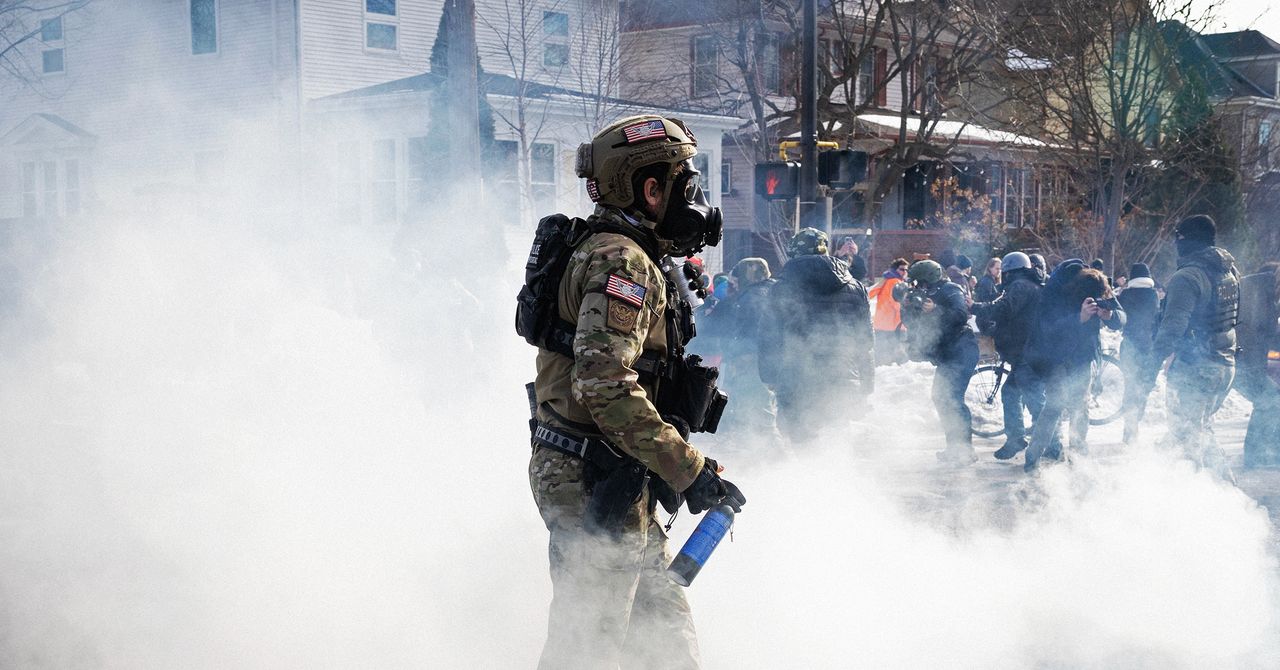
The State of Minnesota and the cites of Minneapolis and St. Paul on Monday filed a sweeping federal lawsuit to halt what they call an unprecedented and unlawful surge of US federal agents in the Twin Cities, arguing the deployment amounts to a constitutional violation and a direct threat to public safety.
The 80-page complaint, filed in US district court in Minnesota, targets the US Department of Homeland Security and senior federal officials, including DHS secretary Kristi Noem. It asks a judge to immediately block what the federal government calls “Operation Metro Surge,” a large-scale immigration operation that plaintiffs say has sent thousands of armed, masked federal agents into Minnesota communities far from the border, overwhelming local infrastructure and law enforcement.
At a press conference Monday afternoon, Minnesota attorney general Keith Ellison said the lawsuit is intended to stop what he described as an unlawful federal escalation. “This is, in essence, a federal invasion of the Twin Cities and Minnesota, and it must stop.” He accused DHS agents of sowing “chaos and terror” across the metro area through warrantless arrests, excessive force, and enforcement actions at schools, churches, hospitals, and other sensitive locations.
Ellison said the surge has forced school closures and lockdowns, hurt local businesses, and diverted police resources away from routine public safety work. He cited more than 20 ICE-related incidents, including reports of people being pulled into unmarked vehicles by masked agents and vehicles left abandoned in the streets, calling it an “unlawful commandeering of police resources.”
The lawsuit also points to the recent fatal shooting of Minneapolis resident Renee Nicole Good by an ICE agent as a turning point that intensified fear and unrest. Ellison said that the killing, along with subsequent federal rhetoric, left families and entire communities feeling unsafe in public spaces.
Good, 37, was a wife and mother of three. She was fatally shot by an ICE officer during a Minneapolis enforcement operation on January 7. The FBI has assumed sole jurisdiction over the investigation, effectively barring Minnesota authorities from accessing evidence or taking part in the probe, a move state officials say undermines transparency and the integrity of law enforcement in the public eye.
Plaintiffs argue the federal operation violates the Tenth Amendment, federal administrative law, and long-standing limits on immigration enforcement. They also accuse the Trump administration of “retaliatory conduct based on Minnesota’s lawful exercise of its sovereign authority.”
Asked by a reporter from PBS Frontline who said his crew had been pepper-sprayed by federal agents earlier in the day whether the litigation sought to curb the use of crowd-control weapons, Ellison urged journalists to file complaints. “Part of what our case is about is First Amendment protection,” he said. “The press is protected by the First Amendment, and it’s vitally important in this moment.”
In a separate lawsuit Monday, the State of Illinois and the City of Chicago sued DHS and senior federal officials, accusing the Trump administration of unleashing a militarized immigration operation that has “rampaged for months through Chicago and surrounding areas, lawlessly stopping, interrogating, and arresting residents, and attacking them with chemical weapons.”

Looking for a wallet-friendly gaming headset with big feature support? The Corsair Void Wireless V2 is currently marked down to just $80 at both Best Buy and Amazon, a healthy $50 discount from its usual retail price. This lightweight yet capable gaming headset was already a great buy before the discount, with wide compatibility and a comfortable design built for long grinds.
It’s one of the more comfortable gaming headsets I’ve had the opportunity to review, thanks to a combination of its super lightweight build and breathable mesh ear cups, and it even fits my oversized noggin. Because there’s no active noise canceling, it has a much more open and natural sound profile, which is nice for anyone who needs to remain aware of their surroundings while deep in a round of Arc Raiders.
One of the big selling points is Dolby Atmos, a spatial audio implementation that’s fairly uncommon at this price point, and basically unheard of at the marked down price. It’s only supported in a handful of games, but even without it the headset has great spatial audio support that I found particularly good for games like Satisfactory, where it’s more of an immersive addition than a mechanical benefit.
Where a lot of headsets will lock you down to one or two consoles, the Corsair Void Wireless V2 is happy to work with a wide variety of systems, thanks to both Bluetooth and low-latency 2.4 GHz via the USB dongle. That means you can game on PC, PlayStation 4 and PlayStation 5, Nintendo Switch, and even iOS/Android for mobile gaming. With a claimed battery life of up to 70 hours in ideal conditions, you won’t need to worry about charging often, although I’m not sure the mesh ear cups would be great for a long flight.
While the Corsair Void Wireless V2 is featured in our best gaming headsets roundup, other headsets undercut it at the same price point. With the discount, I’m very happy to recommend the Corsair over some of the other picks, particularly if you have a bigger head or prefer a less isolating experience than what some of the other headsets provide.


Louis Vuitton marks 10 years of Unicef partnership with limited-edition Silver Lockit

College watchdog group nixed 500-plus NIL deals

Chelsea Handler roasts Tom Brady: ‘So boring’

-
 Entertainment1 week ago
Minnesota Governor Tim Walz to drop out of 2026 race, official confirmation expected soon
-

 Politics5 days ago
UK says provided assistance in US-led tanker seizure
-

 Sports1 week ago
VAR review: Why was Wirtz onside in Premier League, offside in Europe?
-

 Entertainment5 days ago
Does new US food pyramid put too much steak on your plate?
-

 Entertainment5 days ago
Why did Nick Reiner’s lawyer Alan Jackson withdraw from case?
-
 Business1 week ago
8th Pay Commission: From Policy Review, Cabinet Approval To Implementation –Key Stages Explained
-
 Business5 days ago
Trump moves to ban home purchases by institutional investors
-

 Sports1 week ago
FACI invites applications for 2026 chess development project | The Express Tribune