

Tech
Researchers develop hook-and-loop fastener for building components

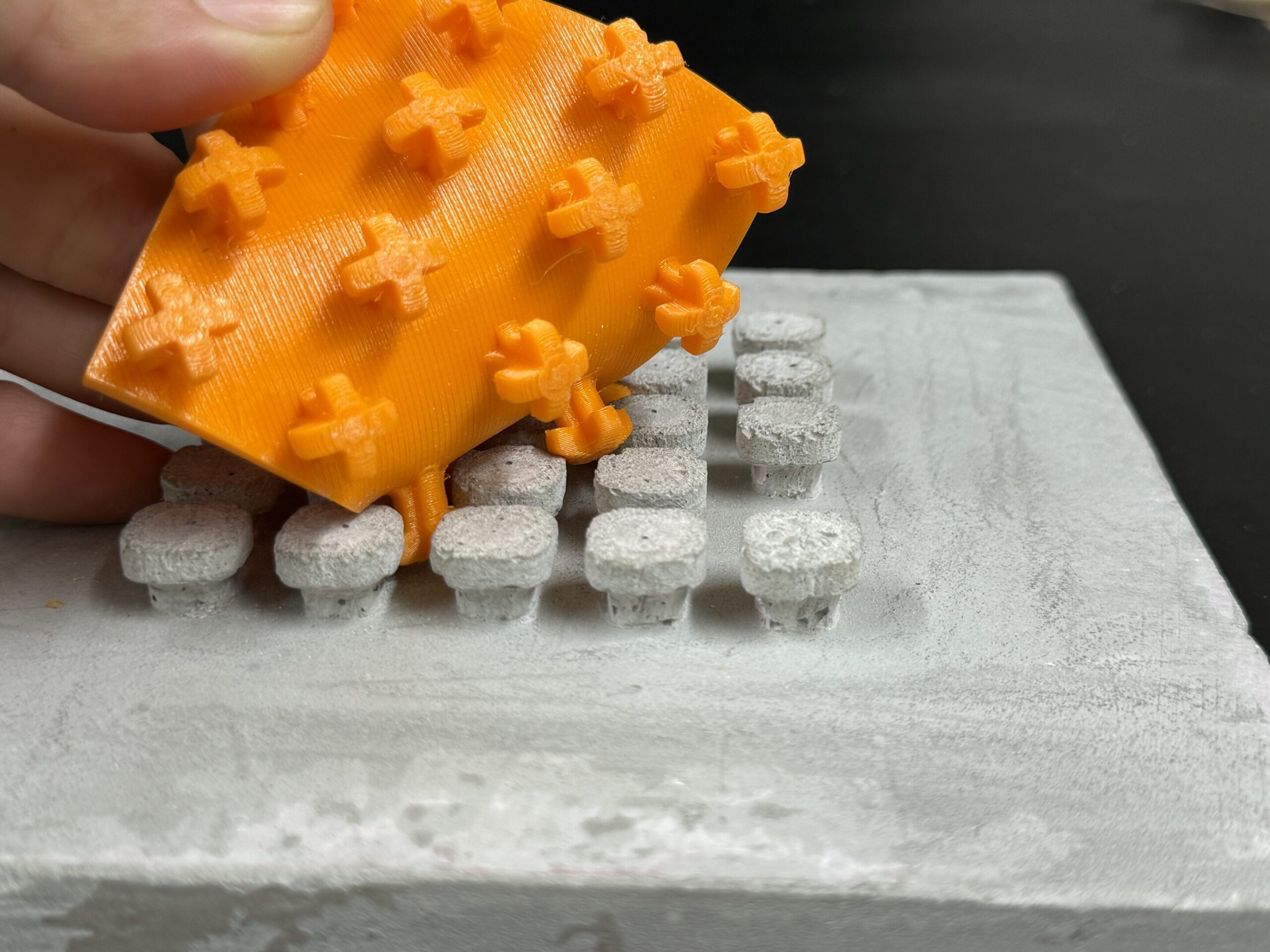
An interdisciplinary research team at Graz University of Technology (TU Graz) has developed a hook-and-loop fastening system for buildings in the ReCon project together with company partners. This allows different parts of a building to be resiliently connected and, if necessary, easily separated from each other.
The project’s focus was placed on the connection of components with different service lives, where irreversible connections usually make replacement difficult.
On the one hand, industrial hook-and-loop components were glued onto conventional concrete or wooden components and, on the other hand, the production of hook-and-loop components from the raw building materials concrete and wood, as well as from paper materials, were investigated.
Such hook-and-loop systems make it possible to properly separate durable load-bearing structures that are intended to last for decades from more short-lived elements such as installations, surfaces, floors or non-load-bearing interior walls.
In the ReCon project, the Institute of Architectural Technology, the Laboratory for Structural Engineering and the Institute of Bioproducts and Paper Technology (BPTI) at TU Graz worked together with the companies Axtesys and NET-Automation.
Replacement of parts instead of demolition
“The central principle of ReCon is that buildings can be dismantled using clearly defined, separable interfaces,” says Matthias Lang-Raudaschl.
“This means that in the event of renovation or new use, only those components that are worn or need to meet new requirements need to be replaced. This considerably extends the overall service life of a building, as a simple replacement of parts is sufficient instead of demolition. This prevents a lot of construction waste and consumption of materials.”
The system developed with hook-and-loop components made from raw building materials works in the same way as a conventional hook-and-loop fastener—only on a slightly larger scale. Mushroom heads or hooks are incorporated directly into the components, in which hook-and-loop elements (specially produced using 3D printing) are firmly hooked.
The fastening systems developed in the project showed good adhesive tensile strength comparable to industrial products in tests in the Laboratory for Structural Engineering at TU Graz.
The hook-and-loop fastener developed is primarily intended for interiors, for example, to replace non-load-bearing wooden or plaster walls or parts with installations. The researchers hope to further increase the adhesive tensile strength by using injection molding or stamped metal for the hook-and-loop element instead of the 3D printing used in the project.
Digitization of parts data
In addition to the hook-and-loop system, the researchers in the ReCon project developed a concept for a digital application to facilitate the re-use of components. The aim was to contribute to an improved circular economy by making component data usable in the long term. There were two approaches here.
Firstly, they integrated RFID chips into the components, which means that the data stored on them—such as composition and installation date—can be read on site.
As an alternative, they investigated the direct writing or insertion of minimum data on the component in the form of QR codes on the respective element. This makes it possible to better assess the condition and potential pollutants of the component during dismantling using an ordinary smartphone, which makes re-use much easier and increases safety. For example, a testing laboratory can evaluate many risks if the year of manufacture of a construction product is known.
Exhibits from the ReCon project are currently on display as part of the special exhibition “More Than Recycling—The Exhibition on the Circular Economy” at the Vienna Museum of Science and Technology. The special exhibition lasts until the end of 2026.
Citation:
Researchers develop hook-and-loop fastener for building components (2025, August 20)
retrieved 20 August 2025
from https://techxplore.com/news/2025-08-loop-components.html
This document is subject to copyright. Apart from any fair dealing for the purpose of private study or research, no
part may be reproduced without the written permission. The content is provided for information purposes only.










OpenAI launched a new image generation AI model on Tuesday, dubbed ChatGPT Images 2.0. This model can generate more than one image from a single prompt, like an entire study booklet, as well as output text, including in non-English languages, like Chinese and Hindi. This release is available globally for ChatGPT and Codex users, with a more powerful version available for paying subscribers.
When any major AI company releases a new image model, it can revive interest and boost usage, especially if social media users adopt a meme-able trend, transforming images of themselves. Last year, Google’s launch of the Nano Banana model was a major moment for the company, especially when users started posting hyperrealistic figurines of themselves online. Earlier this year, ChatGPT Images made waves on social media as users shared AI-generated caricatures.
What’s Different?
Since the new model can tap into ChatGPT’s “reasoning” capabilities, Images 2.0 can search the internet for recent information and generate more than one image at a time. In essence, the bot can use additional steps to output more thorough generations from a single prompt. Images 2.0 also has a more recent knowledge cutoff date: December 2025.
This also means that outputs from the new model are more granular. For example, I generated an infographic with San Francisco’s weather forecast for the next day, as well as activities worth doing. The image ChatGPT generated included accurate weather details for the rainy day, along with accurate-looking drawings of the Ferry Building, Castro Theater, Painted Ladies houses, and Transamerica Pyramid.
Additionally, Images 2.0 is more customizable for users who want unique aspect ratios for image outputs. The new model can generate images, ranging from 3:1 wide to 1:3 tall, and users can adjust the image’s size as part of their prompt to the AI tool.
First Impressions
After a few hours of generating images with the new model, I was generally impressed with the text rendering capabilities, in English at least. Not that long ago, image outputs featuring text, from any of the major models, often included numerous malformed characters or words with errant extra letters. ChatGPT struggled to label images accurately two years prior, so the cleaner, more complex outputs from Images 2.0 are a sign of continued improvement. Google has also focused on improving image outputs featuring text in its recent iterations of Nano Banana.

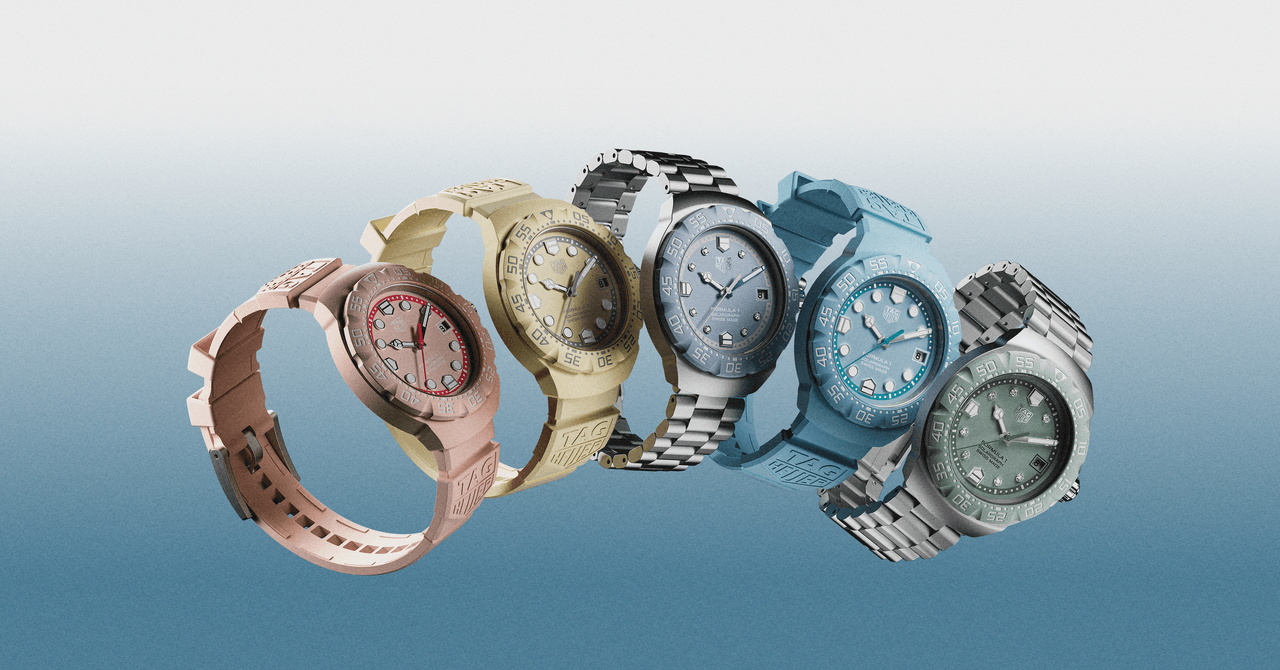
No doubt looking to find some breathing space after the hubbub of Watches and Wonders last week, TAG Heuer has dropped an update to its 2025 revamped collection of the brand’s iconic plastic-cased 1980s watch, the “Formula 1.”
The five new pieces are called the “pastel collection” by TAG, and all are built on the same solar-powered Formula 1 Solargraph 38 mm that launched in March last year. Two models feature a sandblasted stainless steel case, while the remaining three have cases made from TAG’s proprietary bio-polamide plastic, Polylight.
It’s these Polylight versions that, for WIRED, are the stars of the new mini collection. Coming in pastel blue, beige, and pink, and sporting case-matching rubber straps and bidirectional-rotating Polylight bezels, they reference classic F1 designs that made the line iconic in the first place.

The stainless steel models have a 3-link sandblasted steel bracelet and either a “pastel green” or “lavender blue” dial with matching Polylight bezels. The dials on both watches also see eight diamonds replace the circular hour markers. TAG says these models add “a touch of refinement for those seeking sophistication,” but considering these “luxury” F1s will retail at $2,800, as opposed to the already punchy $1,950 full Polylight versions, our pick is most definitely the plastic pieces.
Not only do these blue, beige, and pink versions pleasingly hark back to vintage F1 designs—though now 38 mm in size instead of the original 35 mm—but also, just like all F1 Solargraphs, they come equipped with screw-down crowns and casebacks, making for 100 meters of water resistance and ensuring these will serve well as dive and sports watches. My recommendation? Go for the pink, it looks superb on the wrist. The beige is a very close second.


Now, there’s another class of high-end gaming laptop that focuses more on performance than being thin or portable. The Lenovo Legion 7i Gen 10 is one of my favorites in this class, featuring a beautiful white chassis and glossy OLED display. Unlike some OLED displays, the Legion 7i’s screen can be cranked up to over 1,000 nits of brightness. The result is some really splendid HDR performance that brings games to life. HDR is a powerful way of improving the visuals of your games without a performance cost. The Legion 7i Gen 10 is one of the very best in this regard.
It’s still fairly thin at 0.7 inches thick too, while a lot of the ports are found on the back. It’s the definition of a “clean” gaming laptop. It’s no slouch when it comes to performance either, offering either the RTX 5070 Ti or RTX 5080 for graphics.
Cheap Gaming Laptops That Are Worth It
No gaming laptops worth buying are actually cheap. High-refresh rate displays and discrete graphics will always make them more expensive than standard laptops. But as you get closer to $1,000, there is one laptop I always come back to: the Lenovo LOQ 15. Pronounced “Lock,” this Lenovo subbrand is known for cutting the fluff and focusing on giving gamers the performance they need at an affordable price. No laptop does that better than the LOQ 15. Many laptop manufacturers sell their RTX 5060 configurations for hundreds of dollars more. In reality, if you’re shopping around $1,000, there’s no reason to not buy the LOQ 15. Just do it.
If you do want to save some extra cash, there is another option that is cheaper than the LOQ 15 with a few compromises in key areas. The Acer Nitro V 16 is that laptop, which comes with an RTX 5050. This was as affordable as $600 at one point last year—before prices on laptops have risen due to the ongoing memory shortage—but it remains the only laptop cheaper than the Lenovo LOQ 15 that’s actually worth it. It’s fairly powerful for the RTX 5050, and while the screen is pretty shoddy, it’s not a bad-looking laptop. The one big caveat is that the 135-watt power supply it comes with doesn’t deliver quite enough power to keep it charged in Performance mode. Read more about this issue in my review, as it’s important to know about if you’re planning to buy it.
There are other cheap gaming laptops out there I’ve tested, such as the MSI Cyborg A15, but either the Acer Nitro V 16 or Lenovo LOQ 15 are better, cheaper options. You will also find lots of gaming laptops under $1,000 that use older graphics cards, such as the RTX 4050 or 3050. In general, I’d recommend staying away from these. They’re only one or two generations back, but remember: Nvidia only releases new laptop graphics cards every couple of years. So, an RTX 4050 laptop may be well over two years old already, and an RTX 3050 is over five years old. Not only do you get worse graphics performance, these laptops are much more likely to need to be replaced sooner.
Experimental Stuff
One of the exciting things about the world of gaming laptops right now is the experimentation. While clamshell gaming laptops with a conventional Nvidia GPU are the most standard way to go, there’s a few different ways to take your PC games on the go that stretch the boundaries. You might consider a gaming handheld, for example, like the Steam Deck or Xbox Ally X. These handhelds have their fans, and while you can’t also do your homework on these devices, they’re great on couches, trains, and planes.


OpenAI Beefs Up ChatGPT’s Image Generation Model

Britain ‘mustn’t cut ourselves off from China trade opportunities’, CBI chief warns

Oil prices climb 5% after Trump says he does not want to extend Iran ceasefire

-

 Fashion5 days ago
France’s LVMH Q1 revenue falls 6%, shows resilience amid Iran war
-

 Sports1 week ago
The case for Man United’s Fernandes as Premier League’s best
-

 Entertainment1 week ago
Palace left in shock as Prince William cancels grand ceremony
-
 Business1 week ago
UK could adopt EU single market rules under new legislation
-

 Entertainment6 days ago
Is Claude down? Here’s why users are seeing errors
-

 Fashion1 week ago
Energy emerges as biggest cost driver in textile margins
-
 Business1 week ago
Delta Air Lines unveils first new Delta One suite in premium cabin arms race
-

 Fashion1 week ago
Asia claims largest share of markets on Kearney FDI Confidence Index