

Business
Rivian turns to AI, autonomy to woo investors as EV sales stall


Rivian CEO RJ Scaringe tours the inside of electric auto maker Rivian’s manufacturing facility in Normal, Illinois, U.S. June 21, 2024.
Joel Angel Juarez | Reuters
DETROIT — Rivian Automotive will let artificial intelligence take the wheel to try to convince investors that its future can be more lucrative than its past.
The all-electric vehicle maker is set to host its first “Autonomy and AI Day” on Thursday as its core business of producing and selling EVs hasn’t been as fruitful as expected since its initial public offering in 2021.
Shares of the automaker are off more than 80% since then as internal and external challenges have caused sales and production to be slower than planned. The company also continues to lose billions of dollars annually, despite significant cost reductions and gains in software revenue thanks to a multiyear $5.8 billion joint venture deal with German automaker Volkswagen.
CEO RJ Scaringe has always sold the company as a technology play in varying forms – from initially touting its cloud-based tech and “vertically integrated ecosystem” to more recently highlighting new “zonal” software architecture and AI aspirations.
But the pressure is on for Rivian to deliver. It has tactically brought its software and automation efforts in house to unlock future growth potential for investors and to try to expand its customer base amid slowing sales of EVs and regulatory changes.
“Over the longer term, we believe what will differentiate Rivian’s autonomous capabilities will be our end-to-end AI-centric approach,” Scaringe said last month during the automaker’s most recent quarterly investor call.
Rivian vs. Tesla stock
Rivian is following the strategy of other “pure EV” automakers in the U.S., specifically Tesla.
The U.S. EV leader has promised owners for more than a decade that its cars would be able to get upgraded to autonomous vehicles that can work for them while they sleep or make a cross-country trip with no human intervention. The company launched a pilot robotaxi service in Austin, Texas, this year, with human safety drivers on board, and intends to expand that to new U.S. markets next year.
Fellow EV carmaker Lucid also recently struck a partnership with AV startup Nuro to bring driverless features to its EVs.
But Wall Street isn’t completely buying into the hype.
Morgan Stanley this week downgraded Rivian to underweight, citing the EV deceleration and Rivian not having the “scale or balance sheet to support the capital intensity” of reinvesting in the current “industry hype cycle” around AVs and AI. It also downgraded Lucid and Tesla for one or both of those reasons.
“We are taking a more cautious view on the Auto Industry heading into 2026 after a surprisingly resilient 2025,” Morgan Stanley analyst Andrew Percoco wrote in a Sunday investor note.
Scaringe has said the AI Day will include in-depth looks at the computing power of Rivian’s new vehicles, such as its upcoming “R2” SUV; its autonomous vehicle platform; and data flywheel in which data inputs are used to continuously improve products.
Rivian CEO RJ Scaringe reacts at an event to unveil a smaller R2 SUV in Laguna Beach, California, on March 7, 2024.
Mike Blake | Reuters
The hope is to increase confidence in Rivian’s future vehicles and technologies, which Wall Street analysts believe could be licensed to other companies.
Rivian is currently viewed as lagging Tesla and even legacy automakers such as General Motors, Ford Motor and German luxury brands when it comes to its advanced driver assistance systems, or ADAS. Its features only recently allowed some drivers to have their hands off the wheel while highway driving under certain circumstances, a milestone other automakers have already reached.
Rivian’s AI Day comes more than four years after Tesla became the first automaker to host such an event. While Rivian is regularly compared with Tesla, its AI Day is expected to focus more on vehicles and supporting software initiatives rather than noncore businesses such as humanoid robots like Tesla has done.
Wall Street expectations
Wall Street analysts generally expect Rivian on Thursday to provide more details on the future capabilities of its vehicles.
“Management will likely provide updated timelines on its next generation features and perhaps better dimension the cost/resources required to achieve its ambitions,” Deutsche Bank analyst Edison Yu said in an investor note. “High level, the company has alluded to a vertically integrated, AI-centric autonomy platform that digests raw, multi-modal sensor data to train large models.”
Advanced driver assistance systems and autonomous vehicles have once again become a focus for investors and auto companies as AI technologies have grown over the past year.

The automotive industry has been working toward true AVs for a while, though it has seen little success other than from Google-backed Waymo and, increasingly, Tesla’s ADAS features. But insiders and experts think AI can finally unlock the true potential of the technology.
“We believe RIVN will attempt to show why they should be seen as a serious players in the US AV space, which currently is largely seen as a two player game between Tesla and Waymo,” Barclays analyst Dan Levy said in a Friday investor note.
Wall Street analysts expect Rivian will focus on its in-house software enabling more advanced ADAS features, including the ability for its vehicles to eventually be able to drive themselves in certain circumstances.
Scaringe has said the company expects to broaden the use cases of its hands-free systems to “just about any road” in the short term, followed by eyes-off driving in the years ahead. He has recently voiced support for lidar, or light detection and ranging, systems that allow vehicles to better detect or “see” their surroundings.
“We applaud Rivian for its autonomy pivot especially given our view that level 3 autonomy will be a critical step for all OEMs [original equipment manufacturers]. Its goal of in-sourcing could make autonomy a profit center, which is important especially given the company’s liquidity situation,” RBC analyst Tom Narayan said in a note last week.
Rivian’s current vehicles feature a suite of radar, cameras and other sensors but not lidar.
SAE International, formerly known as the Society of Automotive Engineers, has characterized automated driving for vehicles from level 0 to level 5. The highest level 5, is a fully autonomous vehicle, with each stage from level 0 adding more technologies and allowing human drivers to be more “out of the loop.”

Vehicles on U.S. roadways today have varying levels of autonomy but nearly all are categorized as level 2 — allowing drivers to have their hands off the wheel in certain circumstances — or below, including those with cruise control and “adaptive cruise control.”
More recently, many companies have focused on growing their ADAS systems past level 2, where vehicles can largely drive themselves under certain conditions.
Industry experts have also raised questions about demand for AV technologies. General Motors was the first to offer hands-free driving technologies in 2017, but the rollout was slow and adoption was low following the end of free trials.
Even at Tesla, which is viewed as a software and technology leader in the U.S. with “tech-savvy” buyers, only about 12% of customers paid for its top-end “FSD” system that can control the vehicle under many circumstances, the company recently said.
Stock price
Despite Rivian’s sales being down 14% through the third quarter and the company’s downward guidance revisions, shares of Rivian are up more than 30% this year amid gains in operational profit and investor optimism.
The bullishness is led by the company’s new rollout of technologies and upcoming launch of its new R2 vehicle during the first half of next year.
But given that those are both forward-looking catalysts, Wall Street analysts expect much of the upside potential to already be priced into the company’s stock price.
“We believe investors are less likely to be bullish on the case of RIVN catching up to Waymo/Tesla in AV, and we expect that test drives / an impressive tech stack is less likely to move the stock (with this arguably already embedded in the stock),” Levy said.
Shares of Rivian closed Tuesday at $17.71, up 0.1% ahead of the AI event. The stock is up 33% this year but is a far cry from the company’s IPO of $78 per share.
— CNBC’s Lora Kolodny and Michael Bloom contributed to this report.







From fuel to mortgages, the BBC looks at how oil and gas prices could push up the cost of living.
Source link
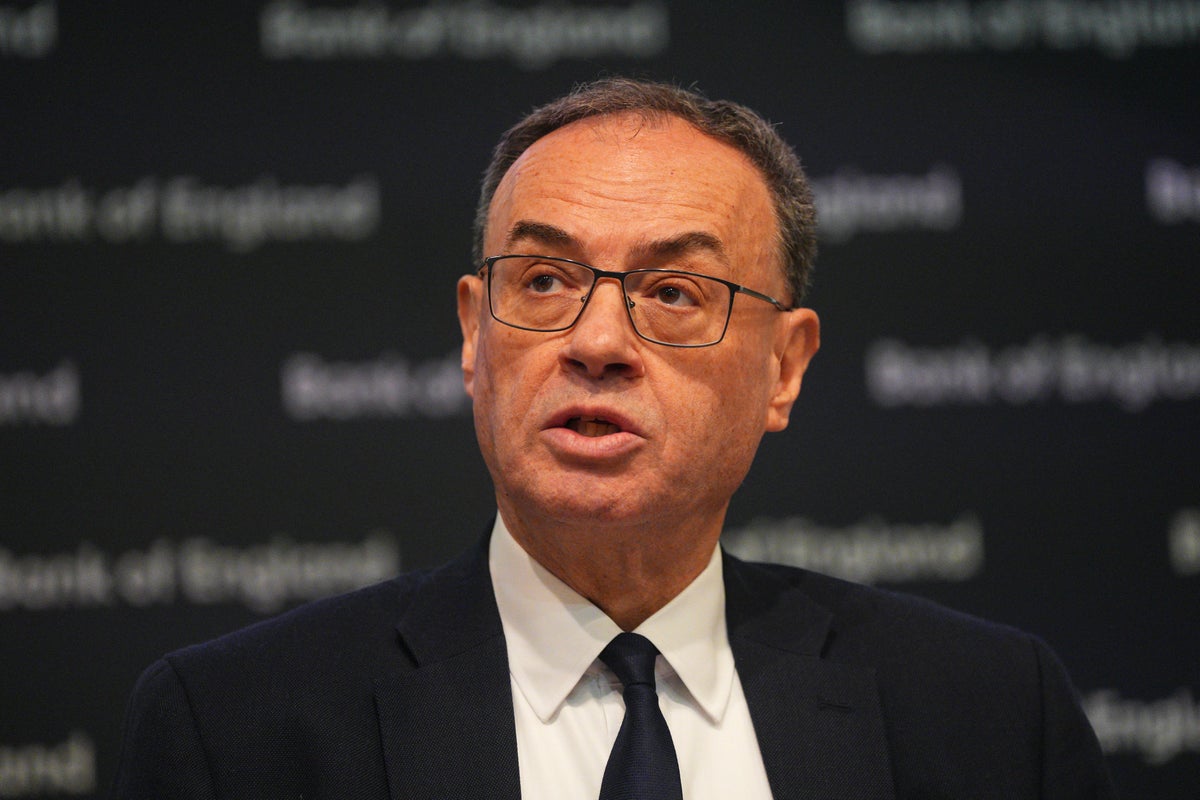
Reopening the Strait of Hormuz is “the best thing to do” to prevent interest rates rising, Bank of England governor Andrew Bailey has said.
In an interview on Thursday evening after the Bank’s Monetary Policy Committee (MPC) voted unanimously to leave the rate unchanged at 3.75%, Mr Bailey said any further cuts are “not on the horizon” as he hinted at possible hikes.
It is the first time that all members have voted the same way since September 2021.
Iran effectively closed the vital oil and gas shipping route after the US and Israel attacked the country, which has pushed up global prices.
Mr Bailey said the war in the Middle East is hitting petrol pumps now, will likely increase household energy costs in summer, and put pressure on food prices.
He told LBC’s Andrew Marr: “The duration of this problem is crucial.
“I would also say very clearly that the best way to solve this situation is not through monetary policy. It is through sorting out at the source of what’s going on.
“Frankly, reopening the Strait of Hormuz is the best thing to do. Get the energy market back on its normal footing, as it were.”
Asked if he has a message for US President Donald Trump, Israeli Prime Minister Benjamin Netanyahu, and “whoever’s in charge in Tehran”, Mr Bailey said: “The best thing we can do actually for the world economy… is to sort out the problem in terms of reopening the energy supply lines, because that is in the best interest of people in the world.”
UK military planners have joined the US Central Command to help formulate proposals for opening the Strait.
The MPC now expects Consumer Prices Index inflation to be around 3% in the second quarter of 2026, up from the 2.1% that had been forecast in February, with a potential rise in inflation up to 3.5% in the third quarter.
Mr Bailey was asked if he foresees, in the final two years of his term, the ambition to reduce inflation to at or below 2% being fulfilled.
He told the programme: “If you’d asked me this question three weeks ago, I was very optimistic on this.”
The governor added: “We are fully committed to the inflation target, and our job, frankly, is to deal with the shocks as they come along.
“I have to do that. I don’t wish them. I wish they were not happening, but they are and we will have to deal with them.”
He said the impact of the war will likely feed through into a higher Ofgem energy price cap from July.
It was put to Mr Bailey that the Middle East crisis comes at a time when the UK economy has already “not been growing strongly”.
He responded: “It is a very difficult time to have this happen, but frankly, any time would be pretty difficult to have this happen.
“This is a major shock to energy prices, and we have to deal with it.”
He said the “sustainable rate of growth” in the UK needs to be raised which could come from investment from pensions and artificial intelligence.
“I’m not starry-eyed about it, but it is probably the most likely area that we’re going to raise the growth rate of the economy and that’s important”, he said of AI.
The MPC signalled that if the conflict persists and has a bigger impact on UK prices, it would need to take a “more restrictive policy stance”, which indicates higher interest rates to control inflation.
The governor added: “The longer it goes on… I’m afraid to say, but it is rather an obvious point, the effect will be larger.”
He said that is why it is “imperative” that “everything is done that can be done to alleviate this effect”, adding: “That is the critical thing.”

new video loaded: The Effects of High Oil Prices
By Ben Casselman, Sutton Raphael, James Surdam, Joey Sendaydiego, Estelle Caswell and June Kim
March 19, 2026


Men’s March Madness live tracker: Updates from Thursday’s first round

Demi Moore pays tribute to Bruce Willis on 71st birthday
Watch: How oil and gas prices are pushing up the cost of living

Stock market crash today (March 12, 2026): Nifty50 opens below 23,600; BSE Sensex down over 900 points on continuing US-Iran war – The Times of India

UK’s Topshop unveils Tolu Coker capsule collection

US ignites Iran war, but Gulf Arab states pay the price | The Express Tribune

-
Business1 week ago
Stock market crash today (March 12, 2026): Nifty50 opens below 23,600; BSE Sensex down over 900 points on continuing US-Iran war – The Times of India
-
 Fashion1 week ago
UK’s Topshop unveils Tolu Coker capsule collection
-
Business1 week ago
US ignites Iran war, but Gulf Arab states pay the price | The Express Tribune
-

 Fashion1 week ago
India’s textile recycling market may reach $3.5 bn by 2030: Report
-
 Tech1 week ago
Meta Developed 4 New Chips to Power Its AI and Recommendation Systems
-
 Business1 week ago
8th Pay Commission: How Much Will Central Govt Employees’ Salaries Rise? What We Know So Far
-

 Sports1 week ago
Bangladesh crush Pakistan in ODI series opener | The Express Tribune
-

 Entertainment1 week ago
Gas, food, household prices explained