

Tech
Solar power cuts electricity bills and carbon emissions—NZ needs to scale up faster

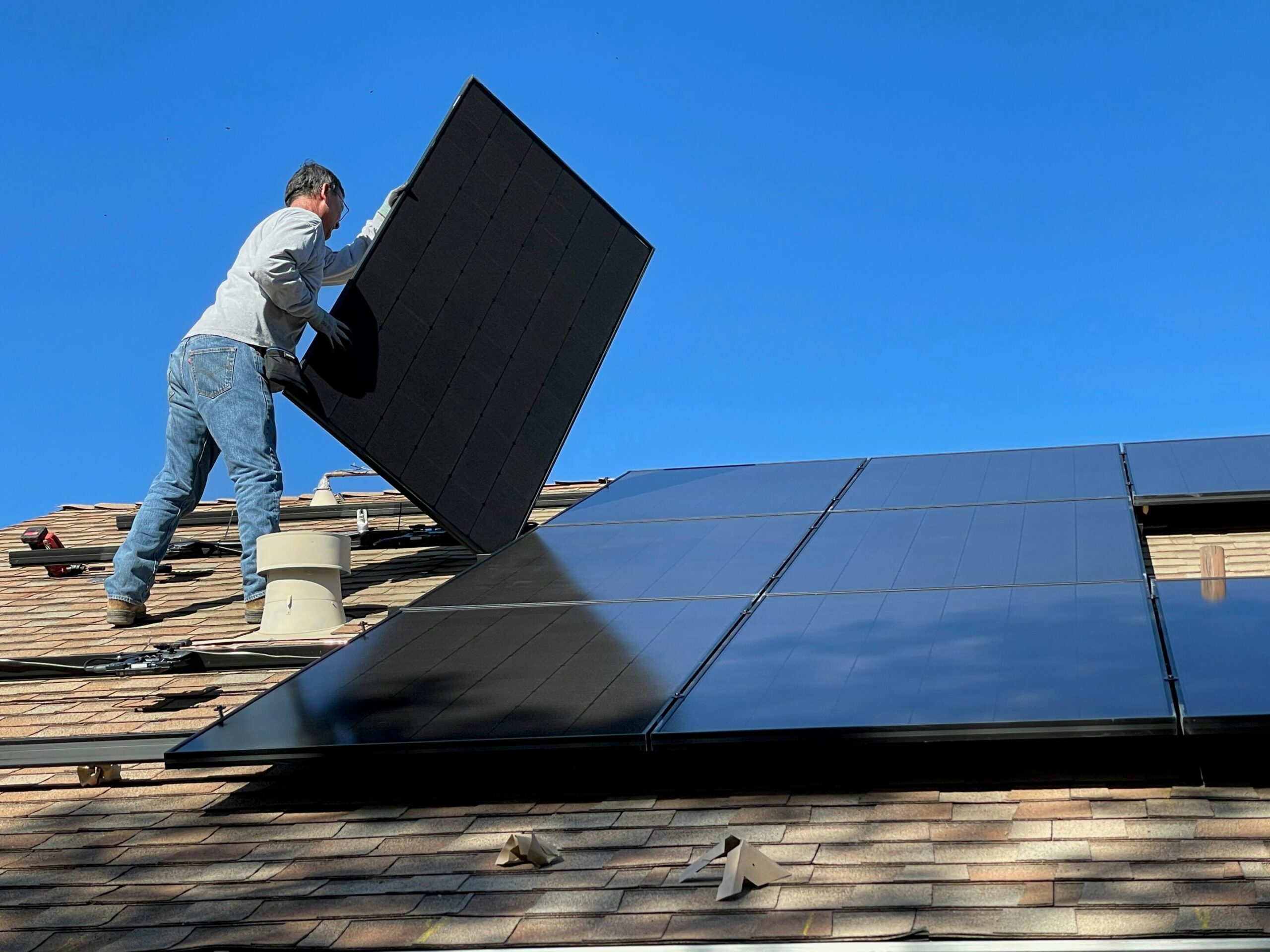
Solar power is now the cheapest form of electricity in most countries, including New Zealand, and its global uptake is growing exponentially.
So far, New Zealand’s adoption of solar electricity generation has been slower than elsewhere, but it is accelerating quickly. Scaling up installation could help reduce high consumer energy prices and meet New Zealand’s emissions budgets.
Based on current policies, New Zealand is at risk of exceeding its emissions budget for the period from 2026 to 2030, and current plans are insufficient to stay within the subsequent five-year budget up to 2035.
The Climate Change Commission estimates solar combined with battery storage could cut 3.9 million tons of carbon dioxide equivalent emissions between 2031 and 2035.
This is important, as a major part of the government’s plan for cutting emissions over the next five years rested on a carbon capture project at the Kapuni gas field, which seems to have fallen through.
New Zealand is also facing an energy shortage, leading to high electricity prices. But solar could be part of the solution because global reductions in the price of panels mean residential solar is now likely the cheapest option for households.
Solar on the rise
The solar energy reaching Earth each hour is roughly equivalent to a year of humankind’s global energy consumption.
This is not to say our current energy demand should be the target. We need to reduce consumption and use energy more efficiently, even as we continue the shift to more renewable power generation.
But a small fraction of sunlight can go a long way and many countries are taking advantage of this. For example, a consumer-led solar revolution is happening in Pakistan in response to longstanding energy supply problems. This year, solar became the largest source of electricity in Pakistan, surging to 25% of generation from about 5% just three years ago.
The uptake of solar electricity generation is also growing in New Zealand, with a significant uptick in projects for both utility-scale solar farms and household installations.
New Zealand has five large-scale solar farms in operation, and many more in the pipeline (nine at delivery stage, 33 under investigation). We also have more than 65,000 residential solar installations, up from about 7,500 a decade ago.
Despite the rapid growth in recent years, this is still a relatively low adoption rate compared to some other countries, with only about 3-4% of homes having solar installed.
A frequent argument against solar electricity generation is that it is intermittent. But solar panels can use hot water cylinders or batteries to store energy for later use.
And while New Zealand may not get quite as much sunshine as other countries, our existing renewable generation and hydro-lake storage mean we don’t have to invest as much in batteries to buffer intermittent generation.
Also, the flip side of intermittent power sources is that they turn back on—fossil fuels can only be used once.
Managing solar at scale
The energy and emissions-cutting benefits of solar generation are well quantified. Solar panels generate the amount of energy required to manufacture them in less than two years, compared with a total lifetime of about 30 years.
It takes slightly longer to pay back the carbon emissions from their manufacture in New Zealand than elsewhere, because we already have a comparatively high proportion of renewable electricity generation. The carbon payback is faster if solar is used in ways that directly displace fossil fuels (for example, electricity from gas or coal) or if the panels are manufactured in places with low carbon intensity (low emissions per unit of economic activity or energy produced).
There is still work to do. We need to address practical challenges such as effective grid integration and storage, as well as social issues such as ensuring that low-income households aren’t disadvantaged.
Globally, the mining of raw materials for solar panels is a key issue, and we need to ensure ethical supply chains and labor practices associated with materials and manufacture. Ultimately, we need to reach a system where solar panels are recycled to avoid the need for indefinite mining, and to keep panels out of landfills.
This goal looks promising. Solar panel recycling is an active area of research and already possible, although not yet profitable.
As the uptake of solar accelerates, New Zealand should make sure suitable policies are in place. In terms of materials, we should require recycling of solar panels. On the social side, we should ensure support for low-income households and consider incentives for solar installations on rental properties.
Researchers are also exploring next-generation solar power with lower energy and material demands in their manufacture. In most commercial solar panels, the dominant contribution to manufacturing emissions is the silicon “active layer.” There are multiple alternatives to silicon and new technologies use different materials for the active layer.
For example, my research focuses on solution-printable organic semiconductors. These materials absorb light very strongly, which means the active layer is about a thousand times thinner than in a silicon solar panel. A kilogram of material can cover more than 5,000 square meters.
It will take time for these new technologies to reach the same level of development as today’s solar panels. They will likely first enter the market as complementary products such as lightweight installations on low load-bearing surfaces (warehouse roofs) and in building-integrated applications.
Economically viable solar energy generation is a triumph of long-term scientific and engineering development that began in the 1950s and is poised to play a key role in decarbonization. New Zealand needs to think about how to manage this technology at scale if we want to make the most of this opportunity.
This article is republished from The Conversation under a Creative Commons license. Read the original article.
Citation:
Solar power cuts electricity bills and carbon emissions—NZ needs to scale up faster (2025, September 18)
retrieved 18 September 2025
from https://techxplore.com/news/2025-09-solar-power-electricity-bills-carbon.html
This document is subject to copyright. Apart from any fair dealing for the purpose of private study or research, no
part may be reproduced without the written permission. The content is provided for information purposes only.


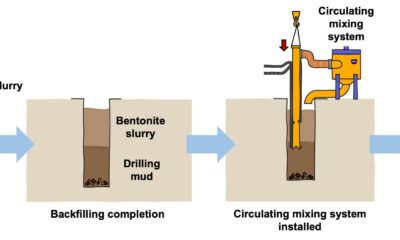









A national housing shortage is straining finances and communities across the United States. In Massachusetts, at least 222,000 homes will have to be built in the next 10 years to meet the population’s needs. At the same time, there are numerous challenges in traditional construction. There’s a shortage of skilled construction workers. Most projects involve multiple contractors and subcontractors, adding complexity and lag time. And the construction process, as well as the buildings themselves, can be a major source of emissions that contribute to climate change.
Reframe Systems, co-founded by Vikas Enti SM ’20, uses robotics, software, and high-performance materials to address these problems. Founded in 2022, the company deploys microfactories that bring housing fabrication and production closer to the regions where the homes are needed. The first homes designed and manufactured in Reframe’s first microfactory have been fully built in Arlington and Somerville, Massachusetts.
Enti’s experiences in MIT System Design and Management (SDM) shaped the company from its start. “Learning how to navigate the system and finding the optimal value for each stakeholder has been a key part of the business strategy,” he says, “and that’s rooted in what I learned at SDM.”
Better tools for system-level problems
Enti applied to SDM’s master of science in engineering and management while he was working at Kiva Systems, overseeing its acquisition by Amazon and transformation into Amazon Robotics. He found that the SDM program’s fundamentals of systems engineering, system architecture, and project management provided him with the tools he needed to address system-level problems in his work.
While he was at MIT, Enti also served as an associate director for the MIT $100K Entrepreneurship Competition, which offers students and researchers mentorship, feedback, and potential funding for their startup ideas. He realized that “there isn’t a single formula for how businesses start, or how long it takes to get them started,” he says, which helped shape his plans to start his own business.
Enti took a leave of absence from MIT to oversee the expansion of Amazon Robotics in Europe. He returned and completed his degree in 2020, writing his thesis on developing technology that could mitigate falls for elderly people. This instinct to use his education for a good cause resurfaced when his daughters were born. He wanted his future business to address a real-world problem and have a social impact, while also reducing carbon emissions.
Growing housing, shrinking emissions
Enti concluded that housing, with immediate real-world impact and a significant share of global carbon emissions, was the right problem to work on. He reached out to his colleagues Aaron Small and Felipe Polido from Amazon Robotics to share his idea for advanced, low-cost factories that could be deployed quickly and close to where they were needed. The two joined him as co-founders.
Currently, the microfactory in Andover, Massachusetts, produces structural panels, with robotics completing wall and ceiling framing and people completing the rest of the work, including wiring and plumbing. Eventually, Reframe hopes to automate more of the building process through further use of robotics. The modular construction process allows for reduced waste and disruption on the eventual home site. And the finished homes are designed to be energy-efficient and ready for solar panel installation. The company is set to start work soon on a group of homes in Devens, Massachusetts.
In addition to the Andover location, Reframe is setting up in southern California to help rebuild homes that were destroyed in the area’s January 2025 wildfires. The company’s software-assisted design process and the adjustability of the microfactories allows them to meet local zoning and building codes and align with the local architectural aesthetic. This means that in Somerville, Reframe’s completed buildings look like modernized versions of the neighboring three-story buildings, known locally as “triple-deckers.” On the other side of the country, Reframe’s design offerings include Spanish-style and craftsman homes.
“Housing is a complex systems problem,” Enti says, explaining the impact SDM has had on his work at Reframe. The methods and tools taught in the integrated core class EM.412 (Foundations of System Design and Management) help him tackle systems-level problems and take the needs of multiple stakeholders into account. The Reframe team used technology roadmapping as they devised their overall business plan, inspired by the work of Olivier de Weck, associate head of the MIT Department of Aeronautics and Astronautics. And lectures on project management from Bryan Moser, SDM’s academic director, remain relevant.
“Embracing the fact that this is a systems problem, and learning how to navigate the system and the stakeholders to make sure we’re finding the optimal value, has been a key part of the business strategy,” Enti says.
Reframe Systems is set to continue learning through iteration as they plan to expand their network of microfactories. The company remains committed to the core vision of sustainably meeting the country’s need for more housing. “I’m grateful we get to do this,” Enti says. “Once you strip away all the robotics, the advanced algorithms, and the factories, these are high-quality, healthy homes that families get to live in and grow.”
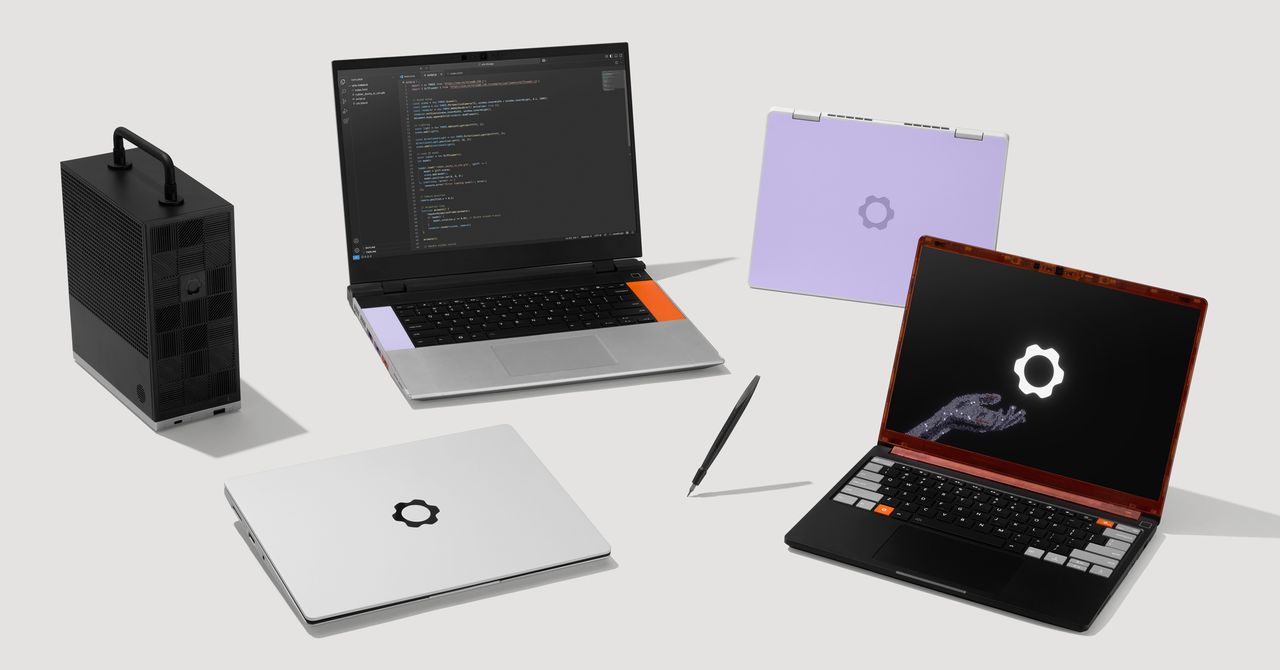
Framework, the company that makes laptops designed for optimal repairability, announced a new version of its main product, a 13-inch screen laptop. It’s called the Framework Laptop 13 Pro, and it has far better battery life, a touchscreen, a haptic touchpad, and is fitted with Intel processors.
At an event in San Francisco today, Framework CEO Nirav Patel showed off the company’s new tech, opening with a joke about making Framework AI—something the company is very much not doing. Framework’s whole thing, after all, is aiming to give users control over the physical tech they use.
“That industry is fighting for you to own nothing, and they own everything,” Patel said about the AI industry. “We’re fighting for a future where you can own everything and be free.”
Framework used the event to detail other updates coming to its 16-inch laptop. It also showed off previews of an official developer kit and a wireless keyboard for controlling your rig from the couch.
Framework 13 Pro
As the name implies, the 13 Pro is a step up from the company’s last version, the Framework 13. It’s also pricier, starting at $1,199 for a DIY Edition that requires assembling the computer yourself. Pre-built units start at $1,499 but can be upgraded with more features. Framework says it will start shipping the 13 Pro in June.
Framework’s signature move for its products is the ability to take the thing apart. The 13 Pro is made with that ethos in mind, so its parts can be easily swapped out, upgraded, or replaced. Four Thunderbolt 4 interfaces let you pick which ports (USB-C, HDMI, etc.) you want and then choose where to place them. Framework says it planned the laptop with cross-generation compatibility in mind, so current Framebook 13 laptop owners will be able to use new 13 Pro parts like the mainboard, display, and battery, and put them into their existing machine.
The big changes in the guts of the 13 Pro come from Framework’s shift away from using an AMD processor to Intel’s Core Ultra Series 3 processors, which Framework described in its press release as “just insanely efficient.” That efficiency, along with a bigger battery, translates to more than 20 hours of battery life while streaming 4K Netflix videos, at least that’s the claim. That’s almost 12 hours longer than the Framework 13.

Courtesy of Framework

Courtesy of Framework

OpenAI launched a new image generation AI model on Tuesday, dubbed ChatGPT Images 2.0. This model can generate more than one image from a single prompt, like an entire study booklet, as well as output text, including in non-English languages, like Chinese and Hindi. This release is available globally for ChatGPT and Codex users, with a more powerful version available for paying subscribers.
When any major AI company releases a new image model, it can revive interest and boost usage, especially if social media users adopt a meme-able trend, transforming images of themselves. Last year, Google’s launch of the Nano Banana model was a major moment for the company, especially when users started posting hyperrealistic figurines of themselves online. Earlier this year, ChatGPT Images made waves on social media as users shared AI-generated caricatures.
What’s Different?
Since the new model can tap into ChatGPT’s “reasoning” capabilities, Images 2.0 can search the internet for recent information and generate more than one image at a time. In essence, the bot can use additional steps to output more thorough generations from a single prompt. Images 2.0 also has a more recent knowledge cutoff date: December 2025.
This also means that outputs from the new model are more granular. For example, I generated an infographic with San Francisco’s weather forecast for the next day, as well as activities worth doing. The image ChatGPT generated included accurate weather details for the rainy day, along with accurate-looking drawings of the Ferry Building, Castro Theater, Painted Ladies houses, and Transamerica Pyramid.
Additionally, Images 2.0 is more customizable for users who want unique aspect ratios for image outputs. The new model can generate images, ranging from 3:1 wide to 1:3 tall, and users can adjust the image’s size as part of their prompt to the AI tool.
First Impressions
After a few hours of generating images with the new model, I was generally impressed with the text rendering capabilities, in English at least. Not that long ago, image outputs featuring text, from any of the major models, often included numerous malformed characters or words with errant extra letters. ChatGPT struggled to label images accurately two years prior, so the cleaner, more complex outputs from Images 2.0 are a sign of continued improvement. Google has also focused on improving image outputs featuring text in its recent iterations of Nano Banana.



Reese Witherspoon breaks silence after AI support controversy

Duke lands John Blackwell, top guard in transfer portal

Tackling the housing shortage with robotic microfactories

-

 Fashion6 days ago
France’s LVMH Q1 revenue falls 6%, shows resilience amid Iran war
-

 Sports1 week ago
The case for Man United’s Fernandes as Premier League’s best
-

 Entertainment1 week ago
Palace left in shock as Prince William cancels grand ceremony
-
 Business1 week ago
UK could adopt EU single market rules under new legislation
-

 Entertainment6 days ago
Is Claude down? Here’s why users are seeing errors
-

 Fashion1 week ago
Energy emerges as biggest cost driver in textile margins
-
 Business1 week ago
Delta Air Lines unveils first new Delta One suite in premium cabin arms race
-

 Fashion1 week ago
Asia claims largest share of markets on Kearney FDI Confidence Index