

Tech
Some major Australian towns still have poor phone reception—it’s threatening public safety

by James Meese, Amber Marshall, Holly Randell-Moon, Jenny Kennedy, Rowan Wilken, The Conversation
Australians rely on their phones and the internet for education, business, socializing and in emergencies. And as Optus’ recent Triple Zero outage highlights, the consequences of a network outage can be fatal.
But the problems go beyond Triple Zero. The latest annual report from the Telecommunications Industry Ombudsman, released earlier this week, shows a spike in complaints about network connection issues compared to last financial year. For example, there was a nearly 70% increase in complaints about “no phone or internet service.” Complaints about “poor mobile coverage” also increased more than 25%.
When it comes to connectivity problems, we often think about remote environments such as inland cattle stations or Indigenous communities in central and far north Australia. Or how language barriers, affordability and age might impact access.
However, across various research projects looking at digital inclusion, we have found a policy blind spot, where populations residing in certain suburban and regional areas have poorer connectivity outcomes than remote areas.
These people experience ongoing problems with network connection despite living in locations that look good on paper. This could be because of local infrastructure gaps or compounding social factors. We call this group “the missing middle.”
Until now, the absence of a clearly defined category has made it difficult to capture or report on their experiences systematically.
What is ‘digital inclusion?’
Digital inclusion is about ensuring all Australians, no matter who they are or where they live, have access to affordable, quality telecommunications and internet, and possess the skills necessary to benefit from these connections.
The issue is even more important as we face a changing climate, with telecommunications playing a crucial role in emergencies and during natural disasters.
Our research from 2023 on emergency preparedness with rural residents showed the importance of ongoing telecommunications connectivity—especially during emergencies.
People participate in online community forums by keeping each other informed about conditions and contacting emergency services such as Triple Zero if they need to during the disaster. Afterwards, they use the internet to apply for financial assistance online.
Of course, natural disasters do not discriminate. Recent cyclones, floods and bushfires have impacted urban areas, as well as the outer edges of cities and key regional centers.
A good location doesn’t equal good connectivity
These combined forces have ensured telecommunications policies consistently focus on access. But access is just one component of Australia’s connectivity needs.
Through various interviews, focus groups and fieldwork across urban, regional and rural Australia from 2021–24 we have found that location alone doesn’t determine how good connectivity is.
In fact, some remote areas fare better than outer regional areas when it comes to telecommunications connectivity. This indicates geography isn’t the only factor affecting people’s level of digital inclusion.
Instead, compounding factors are determining whether or not people are digitally included.
For example, some people may not have enough money to afford appropriate connectivity to meet basic needs, needing two SIM cards to manage two unreliable networks. Infrastructure investment can also be patchy. A major regional town might have excellent coverage, but satellite towns could have a much poorer experience.
Urban networks can also taper off before reaching new builds on the edge of cities. Other people may have simply purchased a house amid inhospitable terrain, which can impact whether satellite internet services such as Starlink can be installed.
Voices from the ‘missing middle’
Experiences of 5G mobile consumers in suburban and regional Victoria we spoke with in 2024 give us some sense of this “missing middle” population.
One participant from Gippsland said, “I can be in the main street of a main regional town and not have reception.”
Another participant said it was “less than ideal” that in the area between two towns “there’s still patches where we don’t get reception.” Echoing this, another participant said they felt it was reasonable to “expect to be able to drive from Gisborne to Kyneton [a distance of 30km] and not drop out on a phone call three times.”
These issues were not the sole preserve of those living in regional areas. Someone from a new housing development on the outskirts of Melbourne told us there was barely any mobile coverage in the area and said their phone was “just not usable.”
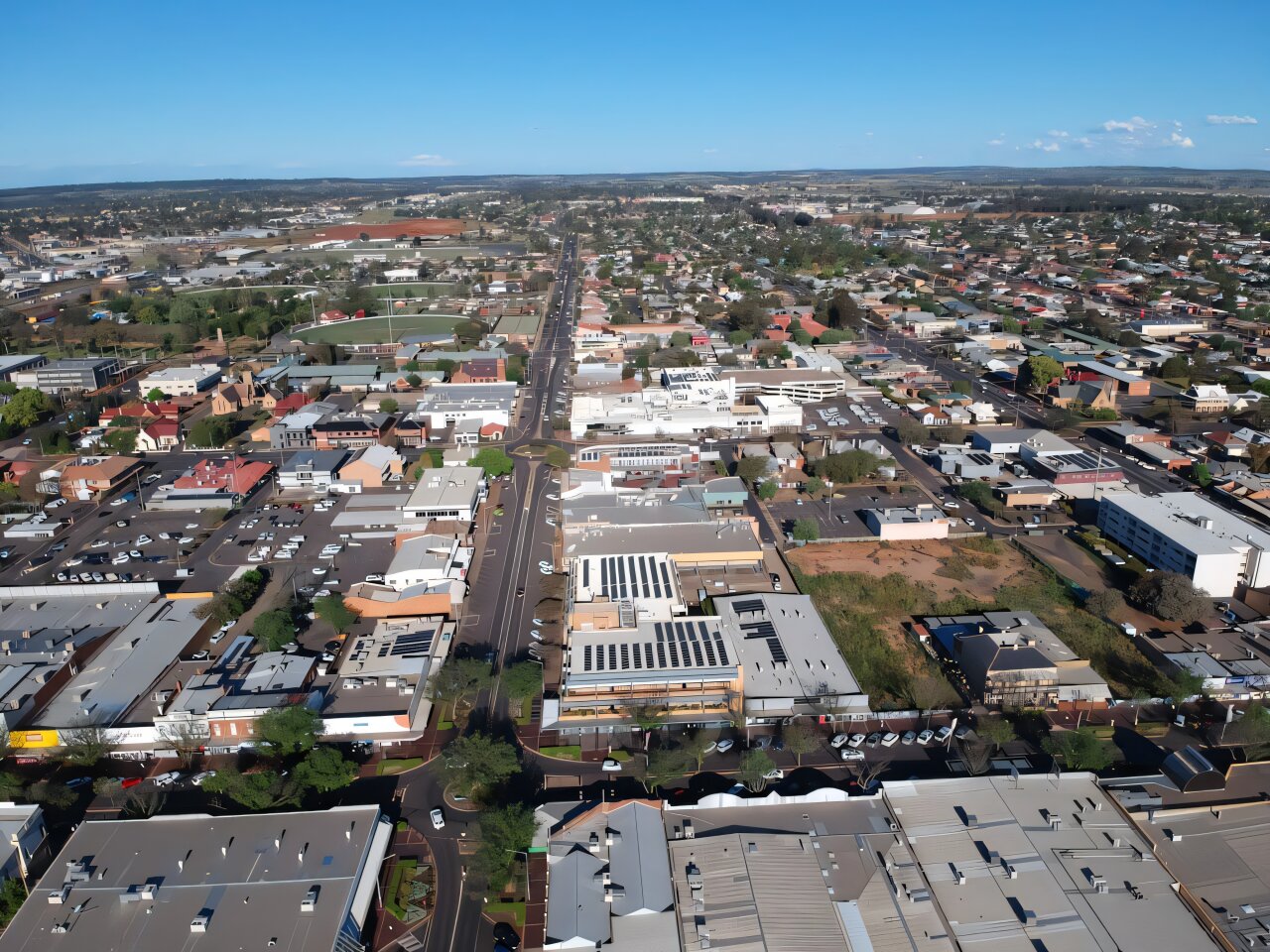
Dubbo is another example. While some major regional cities are well-connected, this major town in the central west of New South Wales is also part of the “missing middle.”
First Nations organizations there experienced slow and unreliable network connection. This impacted their capacity to service the area. Drops in coverage resulted in double handling of work. For example, land surveys would often need to be written by hand on site, then converted to digital forms back in a place with better connectivity.
A targeted approach
Lots of work has been done in recent years to improve connectivity across Australia.
Since the National Broadband Network (NBN) was completed in 2020, more fixed line services—where a connection is installed in the home (like an NBN box)—have been made available in rural towns.
The federal government’s flagship infrastructure projects—such as the Regional Connectivity Program and Mobile Blackspot Program—have also steadily improved digital inclusion in many locations over the last decade. Starlink and the NBN’s satellite internet service SkyMuster are new entrants, providing a new connectivity option for people who live in the right locations (and can afford it).
However, current policy approaches to patching up connectivity gaps minimize the scale of the missing middle.
This is the result of several factors. First, a failure to understand the different needs of the local and visitor populations who use digital services. Second, fragmentation across telecommunications options (NBN, mobile hotspotting and Starlink). Third, a need to account for overlapping disadvantages.
We need to look beyond location or access, and develop a robust account of the “missing middle.”
Doing so requires policymakers and researchers to focus on areas with mixed and complex connectivity needs. Importantly, this kind of shift will help policymakers target the needs of these Australian telecommunication consumers.
This article is republished from The Conversation under a Creative Commons license. Read the original article.
Citation:
Some major Australian towns still have poor phone reception—it’s threatening public safety (2025, October 18)
retrieved 18 October 2025
from https://techxplore.com/news/2025-10-major-australian-towns-poor-reception.html
This document is subject to copyright. Apart from any fair dealing for the purpose of private study or research, no
part may be reproduced without the written permission. The content is provided for information purposes only.












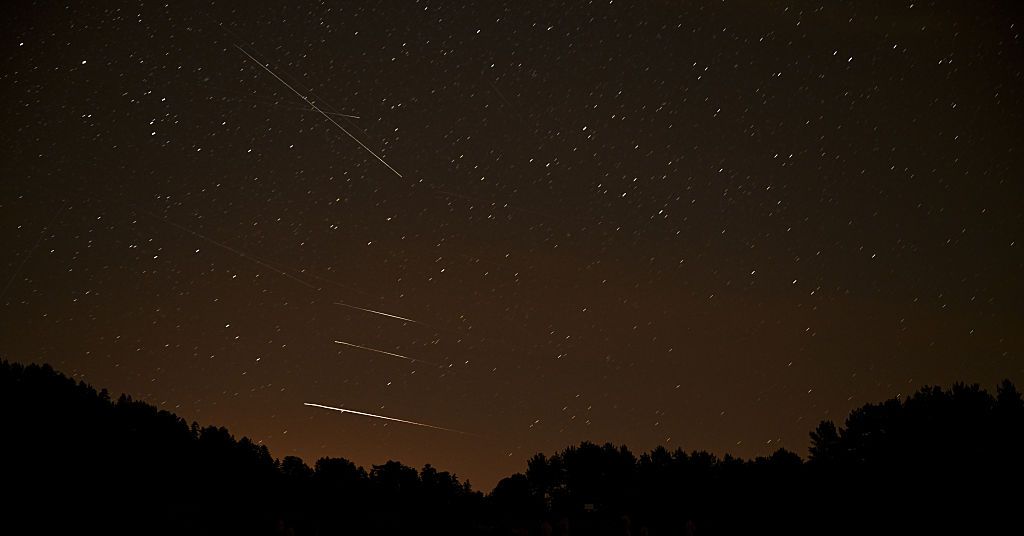
In mid-April, astronomy enthusiasts will be able to enjoy one of the classic celestial spectacles. The meteor shower known as the Lyrids will illuminate the sky, especially in the northern hemisphere, and anyone will be able to see it with the naked eye, weather permitting—if they know where to look.
The Lyrids began to appear as early as April 14, but their activity peaks between the night of April 21 and the early morning of April 22, according to NASA. During those hours, the shower will show 15 to 20 meteors per hour under dark skies.
The shower gets its name because the meteors appear to emerge from the constellation Lyra. Locating the radiant is simple if you use an astronomical mapping app: Just find Vega, the fifth brightest star in the sky, surpassed only by Sirius, Canopus, Alpha Centauri A, and Arcturus. Once you locate it, look around it; the luminous traces of the Lyrids will seem to be projected from that point due to a perspective effect. Keep in mind that it takes 20 to 30 minutes for the human eye to adjust to darkness.
The moon will be in early crescent phase during the peak, so its light will interfere very little. With a dark sky, meteors should stand out easily. The shower is usually visible from 10 pm to dawn, although early morning offers the best conditions. It is best to stay away from light pollution and, if possible, to observe from high ground. An outing to the mountains works well.
Each meteor shower has a different origin. In April, Earth crosses the cloud of fragments left by comet C/1861 G1 (Thatcher) in its orbit around the sun. This comet, discovered in 1861, takes about 415 years to complete its journey. The grains of ice and rock that it released centuries ago enter the atmosphere at high speed and produce the flashes we know as the Lyrids.
After the Lyrids, the calendar still holds several spectacles for those who follow the night sky. The Eta Aquarids will arrive in May with debris from Halley’s Comet. The Perseids will appear in August, the Orionids will return in October, and the year will close with the Leonids in November and the Geminids in December. The latter is considered the most intense and reliable shower on the calendar.
This story originally appeared on WIRED en Español and has been translated from Spanish.
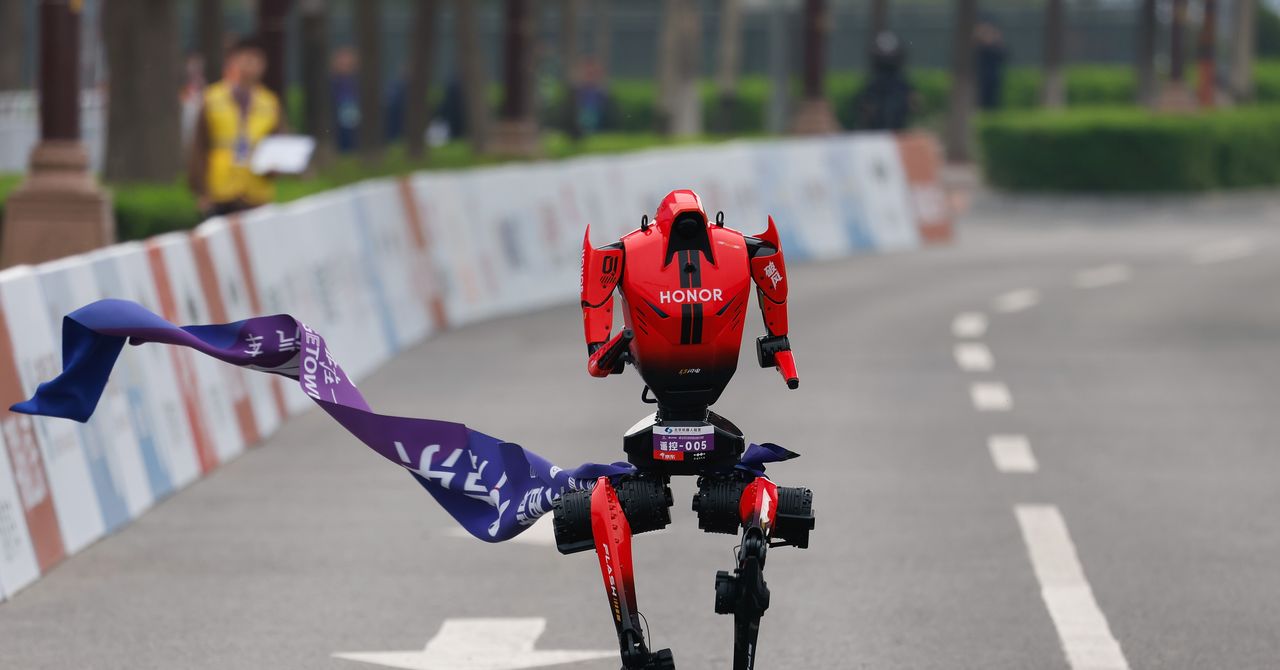
Over the weekend in China, a humanoid robot shattered world half-marathon record—the human record—by seven minutes.
The star performer was a robot developed by the Chinese company Honor (the smartphone maker), which finished the 13.1-mile race in 50 minutes, 26 seconds. The human record, set by Ugandan Olympic medalist Jacob Kiplimo, is 57 minutes, 20 seconds. The result marks an impressive milestone especially considering that, just a year earlier, the fastest robot at this half-marathon event took two and a half hours to complete the same distance.
But Honor’s robot was not the only participant. The event consisted of more than 100 humanoid robots from 76 institutions across China. The robots lined up alongside 12,000 human runners in Beijing’s E-Town, albeit on separate courses to avoid accidents. The contrast in performance between humans and robots was more than evident.
Run, Robot, Run
A humanoid robot is designed to mimic the structure and movement of the human body, with legs, arms, and sensors that allow it to interact with its environment. In this case, the winning robot incorporated features inspired by elite runners: long legs (almost a meter), advanced balance systems, and a liquid cooling mechanism, similar to that of smartphones, to prevent overheating during the race.
In addition, many of the participating robots operated autonomously, meaning without direct human control. Thanks to artificial intelligence algorithms, they could adjust their pace, maintain balance, and adapt to the terrain in real time. Notably, the Honor robot that achieved the 50-minute mark operated autonomously. The Chinese manufacturer presented another robot, operated by remote control, that ran the same stretch in even less time: 48 minutes, 19 seconds.
As expected, there were some accidents in the race. Some robots fell down, others veered off the path, and several needed technical assistance along the way. While the physical performance of humanoid robots has advanced rapidly, their reliability is still developing. Of course, the laughter and jeers are no longer as frequent as they used to be, replaced by applause and exclamations of surprise.
Robot Superiority
Just like the robots that went viral for their impressive martial arts display a few weeks ago, this long-distance race is part of a broader strategy by China to show off its leadership in the development of advanced robots.
You don’t need to be a robotics expert to see that this achievement demonstrates that machines can outperform humans at specific physical tasks under controlled conditions. (It’s hard to imagine that the winning robot could achieve the same result, for example, if it started to rain during the race.) But humans still have a few tricks up their sleeve: Running in a straight line is very different from performing complex real-world activities, such as manipulating delicate objects or interacting socially.
However, it’s understandable that the image of a robot crossing the finish line in record time, ahead of human athletes, raises several questions. Is this the beginning of a new era in which machines redefine physical limits?
One could argue that a car is a machine, and those have always been faster than humans. But a humanoid robot is designed to mimic humans. It’s more alarming to see one beat humanity at its own game—even if so many of them are still tripping over themselves.
This story originally appeared in WIRED en Español and has been translated from Spanish.

As ceasefire announcements between the US and Iran—and separately between Israel and Lebanon—dominated headlines over the past two weeks, they also prompted a look back at how war spread online: through memes.
There were jokes about conscription. Captions about getting drafted, but at least with a Bluetooth device. The song “Bazooka” went viral, with users lip-syncing to: “Rest in peace my granny, she got hit by a bazooka.” Military filters followed. So did posts about Americans wanting to be sent to Dubai “to save all the IG models.”
Across the Gulf, the tone was different but the instinct was the same. Memes joked that Iran was replying to Israel faster than the person you’re thinking about. Delivery drivers were shown “dodging missiles.” “Eid fits” became hazmat suits and tactical vests.
Dark humor is one of the oldest responses to fear, a way of reclaiming control, however briefly, over events that offer none. Variations of that idea appear across psychology and philosophy, including Freud’s relief theory, which frames humor as a release of tension.
But social media changes the scale and speed of that instinct.
A joke once shared within a small community can become a global template in minutes. Algorithms do not reward depth or accuracy; they reward engagement. The memes that travel fastest are usually stripped of context, easy to recognize and simple to remix.
Middle East scholar and media analyst Adel Iskandar traces political satire back centuries, from banned satirical papyri in ancient Egypt to cartoons during revolutions and gallows humor in modern wars. “Where there is hardship, there is satire,” he says. “Where there is loss of hope, there is hope in comedy.”
That tradition still exists online. But today it is fused with recommendation systems designed to keep attention moving.
Memes Spread Faster Than Facts
The word “meme” was coined by Richard Dawkins in his 1976 book The Selfish Gene, where he described how ideas replicate like genes. On today’s internet, replication follows platform logic.
Fitness means generality. A meme does not need to be accurate. It needs to feel familiar. It needs the right format, paired with trending audio and the right emotional shorthand.
“A meme is like a virus,” Iskandar says. “If it doesn’t travel, it’ll die.”
The most visible response online is not always the truest one. It is often just the easiest to spread. And once context disappears, one crisis can start to resemble any other.
Geography shapes humor too, and adds another level of tension. “If you live far away from the threat, you’re capable of producing content that ridicules it with an element of safety,” says Iskandar. “Whereas if you happen to be within close proximity, it is more of a fatalism.”
That divide matters. For some users, war exists mainly as mediated spectacle: clips, edits, graphics, headlines, and reaction posts. For others, it is sirens, uncertainty, disrupted flights, rising prices, and messages checking who is safe.
The same meme can function as entertainment in one country and emotional survival in another. Take the American experience of violence, which Sut Jhally, professor of communication at the University of Massachusetts Amherst, says “is very mediated.”
What much of the Western world has consumed instead is what cultural critic George Gerbner called “happy violence”: spectacular, consequence-free, and detached from the aftermath.
Jhally argues that the September 11 attacks remain the defining modern American experience of war-adjacent political violence. Much else has been cinematic: distant invasions, blockbuster destruction, video-game logic, apocalypse franchises.
The teenager from the Midwest joking about being drafted is drawing from zombie films and superhero apocalypses. “There is almost no discussion about what an actual Third World War would look like,” he says. “People do not have a perception of what that really looks like.”

Gadkari urges shift to 100% ethanol blending, flags energy security and import risks – The Times of India

Global energy growth slows to 1.3% in 2025: Report

UK’s Starmer seeks to deflect blame over Mandelson appointment

-

 Fashion5 days ago
France’s LVMH Q1 revenue falls 6%, shows resilience amid Iran war
-

 Sports1 week ago
The case for Man United’s Fernandes as Premier League’s best
-

 Entertainment1 week ago
Palace left in shock as Prince William cancels grand ceremony
-
 Business1 week ago
UK could adopt EU single market rules under new legislation
-

 Entertainment6 days ago
Is Claude down? Here’s why users are seeing errors
-

 Fashion1 week ago
Energy emerges as biggest cost driver in textile margins
-
 Business1 week ago
Delta Air Lines unveils first new Delta One suite in premium cabin arms race
-

 Tech1 week ago
A Lot of Shops Won’t Fix Electric Bikes. Here’s Why