Connect with us

Business

Stock market on Diwali 2025: What is Muhurat trading & what is it’s significance? Explained – The Times of India


Published

on

Stock market on Diwali 2025: What is Muhurat trading & what is it’s significance? Explained – The Times of India


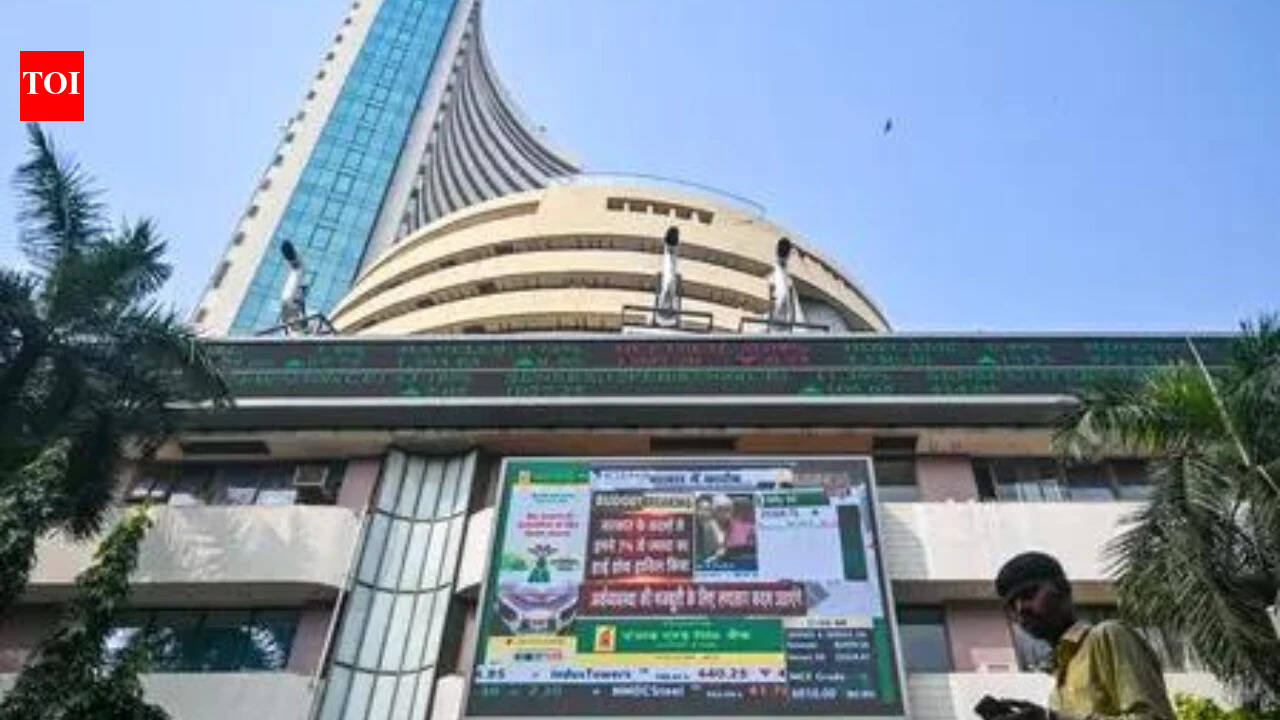
This is a representative image

Muhurat Trading: As Diwali 2025 approaches, the BSE and NSE will remain closed on Tuesday, October 21, for Lakshmi Puja. The only market activity on October 21 will be the one-hour Muhurat Trading session, a traditional ritual marking the start of the Hindu financial year. This year, the session will run from 1:45 PM to 2:45 PM.Though many households will celebrate Lakshmi Puja on the evening of October 20, the stock exchanges will officially observe the holiday the next day. Markets will also remain closed on Wednesday (October 22) for Balipratipada, Dhanteras (October 18) and the weekend (October 19).

What is Muhurat Trading?

Muhurat Trading, literally meaning “auspicious hour,” is a symbolic trading session held annually during Diwali. It is considered a favourable time to begin new investments or business ventures, reflecting optimism and faith in prosperity. It is a special one-hour session on the stock market, during which trading is permitted across equities, futures and options, currency and commodity derivatives, and securities lending and borrowing (SLB). This year, unlike recent years, the session will take place in the afternoon rather than the evening, with trade modifications allowed until 2:55 PM.

What is the significance of Muhurat Trading?

The session marks the start of Hindu New Year (Samvat 2082), symbolising renewal, prosperity, and good fortune for investors. Historically, the session has been positive for markets: in 14 of the last 18 Muhurat Trading sessions, the BSESensex closed higher. Even during turbulent periods, such as the 2008 financial crisis, the Sensex rose 5.86% during Muhurat Trading, ET reported.Experts note that while the session is short and often volatile due to thin trading volumes, it is more symbolic than profit-driven. However, investors typically view the session scheduled on October 21, 2025, from 1:45 PM to 2:45 PM, as both a cultural and financial ritual, with many believing that investments made during this auspicious hour can bring prosperity and good fortune for the year ahead.




Source link

Business

Pensioners in Walsall see energy bills ‘quadruple overnight’

Published

on

Pensioners in Walsall see energy bills ‘quadruple overnight’


Rachel AlexanderLocal Democracy Reporter

LDRS Three men are sitting on a brown sofa in a room with cream-coloured walls. There are tables with lamps on them either side of the sofa. There is a pot plant in the right hand side of them image.LDRS

Residents in Woodall and Hamilton House, both in Bloxwich, Walsall, are seeing a large rise in their energy bills

Pensioners living in two tower blocks said they felt like “second class citizens” after a social landlord quadrupled their heating and hot water bills overnight.

It was now cheaper to boil a full kettle than it was to fill a washing up bowl with warm water, according to residents in Woodall and Hamilton House, in Bloxwich, Walsall.

On 1 October, tenants in Woodall House saw their prices go from 4p per kWh to 13.75p, while the unit price in Hamilton House increased from 4p to 17.67p per kWh.

The landlord Walsall Housing Group (WHG) said it could no longer afford to subsidise “low rates” and that customers with concerns could contact them for help.

The firm removed individual gas boilers from flats in 2021 for safety reasons, and installed a central heat network at both blocks.

Although the firm covered a “large part” of the cost, bosses said it was no longer sustainable to continue subsidising energy rates.

According to energy price comparison website Uswitch, the average cost of gas in the UK is 6.29p per kWh and 26.35p per kWh for electricity.

Resident David Turner, 73, said he was “very frugal” with his heating, adding that he only had the heating on in one room.

“Even then I’m using £3 a day,” he said. “It is really astronomical. I wouldn’t expect everybody else to do what I’m doing. I’ve got arthritis so I do feel the cold.”

Kathleen Haughton, 96, said she could not understand the new prices.

“We had a meeting in the community room and they’d already put it up,” she said.

“We’d like to see the prices go down. You’ve got to have your heating on sitting in your flat.”

‘Second class citizens’

LDRS A tower block, with a blue car parked in front of it. There is an Asda supermarket behind the building, to the left of the image, and an outbuilding and a set of green industrial bins on the right hand side of the image.LDRS

Individual boilers were removed from flats and a central heat network installed in the tower blocks

WHG said the average user was still paying less than the national average for hot water and heating.

Bloxwich East councillor Mark Statham criticised the housing provider for the difference in prices between the two blocks.

“The only way you can get to the blocks being different prices is if they analyse how much they make from each block and divide it by how much it costs to run it,” he said.

Compounding the issue, the heating went off in Hamilton House for about 16 hours over the weekend, which residents claimed was almost a monthly occurrence.

“I think it’s bordering on an insult,” Mr Turner said. “It’s treating us as second class citizens to a degree.”

He added: “We know inflation increases but this is more than inflation.”

‘Not sustainable’ to subsidise energy bills

Rob Gilham, a director at WHG, said the firm would never plan to make a profit from heat supply.

“For several years we’ve kept charges far below the true cost by covering a large part of the expense ourselves,” he said.

“Customers have been paying around £200 per year on average for heating and hot water, well below expected energy costs for these types of properties.

“It was not sustainable to continue subsidising these low rates for a small number of customers.”

Mr Gilham said the increase meant customers were now paying the “full and fair” cost of the energy they use.

An average user would pay between £412 and £530 he said compared to the national average of £1,266, according to regulator Ofgem.

“We understand that some people are making careful choices about how they use energy, and we urge anyone who is struggling to contact us.

“We offer confidential money advice and one-to-one support, and no customer will ever be disadvantaged for raising a concern.”


Source link

Continue Reading

Business

New electric car market suffers smallest growth since December 2023

Published

on

New electric car market suffers smallest growth since December 2023


November was the new electric car market’s weakest month of growth in nearly two years, figures show.

Some 39,965 new pure battery electric cars were registered last month, the Society of Motor Manufacturers and Traders (SMMT) said.

That was up 3.6% from November 2024, which was the smallest year-on-year increase since December 2023, when registrations declined by 34.2%.

That sharp fall was attributed to supply chain issues and a stronger than usual December 2022.

The overall new car market fell by 1.6% last month, with 151,154 new cars registered.

The SMMT said this sixth monthly fall in registrations this year was driven by a 5.5% decline in demand from private buyers.

Purchases for fleets owned or leased by businesses or other organisations edged up 0.2%.

SMMT chief executive Mike Hawes said: “Even in a fragile market, zero emission vehicle uptake continues to rise, which is exactly what we need.

“But the weakest growth for almost two years – ahead of Government announcing a new tax on EVs (electric vehicles) – should be seen as a wake-up call that sustained increase in demand for EVs cannot be taken for granted.

“We should be taking every opportunity to encourage drivers to make the switch, not punishing them for doing so, else the ambitions of Government and industry will be thwarted.”

In last week’s Budget, Chancellor Rachel Reeves announced that drivers of battery electric cars will be charged 3p per mile for electric Vehicle Excise Duty from April 2028.

This is in response to a huge reduction in revenue from fuel duty as more drivers switch from petrol or diesel cars to EVs.

She also extended grants for the purchase of new EVs until 2030.

Battery electric vehicles took a market share of 22.7% during the first 11 months of the year.

Under the Government’s zero-emission vehicle mandate, at least 28.0% of new cars sold by each manufacturer in the UK in 2025 are required to be zero emission, which generally means pure electric.

But green consultancy New Automotive said its analysis shows this year’s EV sales target is 21.7% once flexibilities are taken into account.

A Department for Transport spokesperson said: “We’re supporting the transition to EVs with £7.5 billion of investment, including £1.3 billion announced in the Budget to extend the (new EV purchase) grant, and a further £200 million to support the roll out of new chargepoints.”


Source link

Continue Reading

Business

Markets End 4-Day Losing Streak, Sensex Closes At Points 85,265; Rupee Gains

Published

on

Markets End 4-Day Losing Streak, Sensex Closes At Points 85,265; Rupee Gains


Mumbai: Snapping a four-day losing streak, Indian stock markets ended higher on Thursday, helped by buying in IT shares as the rupee traded positive with gains against the US dollar.  

Gains, however, stayed modest as investors turned cautious ahead of the RBI Monetary Policy Committee’s decision scheduled for Friday.

The Sensex closed at 85,265.32, rising 158.5 points or 0.19 per cent. The Nifty also moved up, finishing at 26,033, higher by 47.75 points or 0.18 per cent.

Add Zee News as a Preferred Source


“The index mostly remained below the 21 EMA on the hourly chart, reflecting sustained selling pressure during the session,” analysts said.

“Technically, the 26,100–26,150 zone is expected to act as crucial resistance, while support is placed at 25,900–25,950,” they added.

“A fall below 26,000 may trigger a quick correction towards 25,950–25,900, as the chart setup appears weak on the hourly timeframe,” market watchers stated.

Broader market performance remained weak. The Nifty MidCap 100 index ended almost flat with a slight negative bias, while the Nifty SmallCap 100 slipped 0.24 per cent.

Among sectoral indices, Nifty IT was the biggest mover, jumping 1.4 per cent. Realty, FMCG, Auto, Pharma, Metal, and Chemical indices also saw buying interest.

On the other hand, Nifty Media dropped 1.45 per cent, and Bank, Financial Services, Consumer Durables, and Oil & Gas sectors also declined.

On the Sensex, the top gainers included TCS, Bharat Electronics, Tech Mahindra, Infosys, and HCL Tech.

Major laggards were Reliance Industries, Maruti Suzuki, Kotak Mahindra Bank, Titan, and Eternal.

Analysts said that the market managed a positive finish but stayed cautious as investors awaited key policy cues from the RBI.

“IT stocks outperformed, buoyed by renewed optimism around potential Fed rate cuts and favourable currency tailwinds, which strengthened investor appetite for the sector,” experts added.

Rupee traded positive with gains of 0.28 paise at 89.91 as markets await the RBI policy on Friday, especially after the currency hit all-time lows this week.

“Rupee range is seen between 89.80–90.25, with a breakout potentially taking it toward 89.25 on the upside or 90.75 on further weakness,” analysts said.


Source link

Continue Reading

Trending