

Fashion
Switzerland’s Richemont closes Q3 FY26 strong as sales rise 11%

All geographic regions recorded growth at constant exchange rates, with particularly strong double-digit performances in the Americas, Japan, and the Middle East and Africa. Sales in the Americas climbed 14 per cent at constant rates, supported by robust local demand across all business areas and major markets. Europe recorded 8 per cent growth, underpinned by local demand and supportive tourist spending, especially from North American and Middle Eastern visitors, with the UK and Italy delivering notable performances.
Richemont SA has posted a strong Q3 FY26, with sales reaching €6.4 billion (~$7.424 billion), up 11 per cent at constant exchange rates, led by retail strength and broad regional growth.
The Americas, Japan, and Middle East & Africa delivered double-digit gains.
Nine-month sales rose 10 per cent at constant rates, while disciplined investment supported growth amid currency and cost pressures.
The Middle East and Africa emerged as the fastest-growing region, with sales up 20 per cent, led by strong momentum in the United Arab Emirates and double-digit growth across all business areas. Asia Pacific sales increased 6 per cent at constant rates. Sales in China, Hong Kong and Macau combined rose 2 per cent, largely driven by solid activity in Hong Kong, while South Korea and Australia posted robust growth. Japan delivered a standout performance, with sales rising 17 per cent, Richemont said in a press release.
By distribution channel, retail continued to lead growth, with sales up 12 per cent at constant exchange rates and accounting for 72 per cent of group sales. Online retail sales rose 5 per cent at constant rates.
The ‘Other’ business area of the group remained broadly stable. Within this segment, Fashion and Accessories Maisons posted a 3 per cent increase in sales.
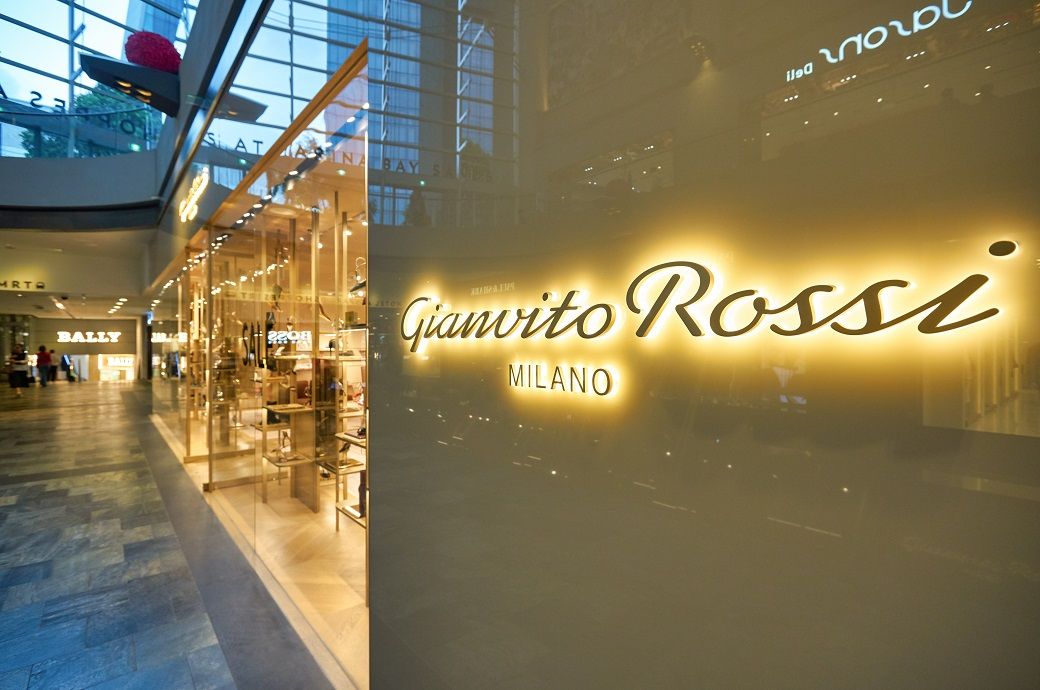
During the quarter, the group benefited from new product launches and impactful communication, with Peter Millar and Gianvito Rossi posting solid momentum within the Fashion and Accessories segment.
For the nine-month (9M) period of FY26, Richemont reported sales of €17 billion, representing growth of 10 per cent at constant exchange rates and 5 per cent at actual rates. Growth over the period was broad-based across regions, channels and business areas.
The group continued to invest consistently in nurturing the long-term growth prospects of its Maisons amid a complex macroeconomic environment characterised by weaker major trading currencies and rising material costs, which continued to weigh on margins. Richemont ended the period with a robust net cash position of €7.6 billion, compared with €7.9 billion a year earlier.
Fibre2Fashion News Desk (SG)








The operating profitability improved during the year, with EBIT rising 8 per cent to €391 million (~$453.56 million), while EBIT margin increased by 80 basis points (bps) to 9.2 per cent. Net income grew 16 per cent to €259 million, and earnings per share rose 17 per cent to €3.61.
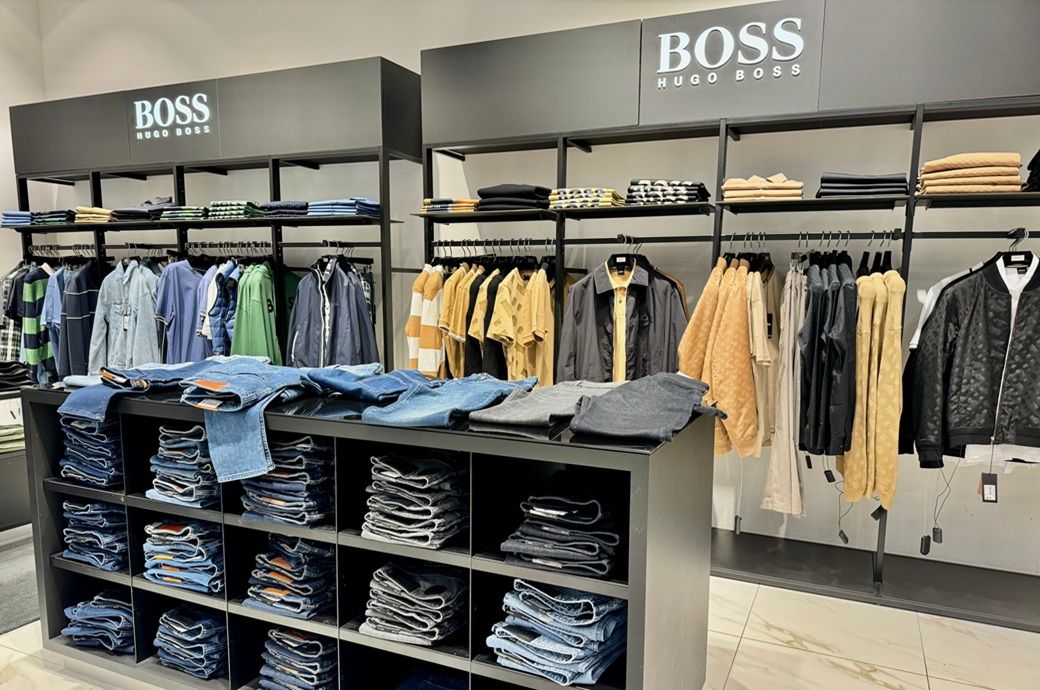
Hugo Boss has reported sales of €4.27 billion (~$4.95 billion) in FY25, down 1 per cent YoY.
EBIT rose 8 per cent to €391 million (~$453.56 million), while net income increased 16 per cent to €259 million.
Growth in EMEA and the Americas offset weaker Asia demand.
Strong Q4 sales and profitability supported results, though 2026 is expected to see a temporary sales decline.
Regionally, Europe, the Middle East and Africa (EMEA) recorded 2 per cent currency-adjusted growth, supported by strong demand in key European markets including Germany and France. The Americas grew 3 per cent, reflecting improving momentum in the US and double-digit gains in Latin America. In contrast, Asia/Pacific sales declined 5 per cent, largely due to subdued consumer demand in China, Hugo Boss said in a press release.
By brand, Boss Menswear remained the strongest contributor, with sales rising 3 per cent currency-adjusted during the year.
The company highlighted brand initiatives such as global campaigns, the Beckham x Boss collections and the Boss fashion show in Milan.
Meanwhile, Boss Womenswear and Hugo recorded declines of 5 per cent and 4 per cent respectively, as the company streamlined assortments and refined distribution to improve long-term brand positioning.
Channel-wise, brick-and-mortar retail sales remained broadly stable YoY, reflecting softer store traffic in markets such as China and the UK. Wholesale sales increased 2 per cent, while digital revenues rose 7 per cent, driven largely by strong performance from digital partner platforms.
The gross margin declined slightly to 61.5 per cent, down 20 bps from the previous year, due to currency effects, promotional market conditions and channel mix changes. However, Hugo Boss managed to offset some of these pressures through improved sourcing efficiency and lower freight costs.
Operating expenses fell 3 per cent, improving to 52.4 per cent of sales, reflecting the company’s focus on cost discipline and productivity improvements across sales, marketing and administrative functions.
The company also strengthened its balance sheet during the year. Inventories declined 10 per cent currency-adjusted, helping reduce inventory as a share of group sales to 21.5 per cent. Capital expenditure (capex) dropped 32 per cent to €195 million, following major investments in prior years.
Meanwhile, free cash flow before leases reached €499 million, broadly stable compared with €497 million in 2024. Hugo Boss ended the year with a net financial position of €48 million excluding lease liabilities, improving significantly from negative €78 million in the previous year.
Fourth quarter (Q4) sales rose 7 per cent currency-adjusted, with reported revenues increasing to €1.281 billion from €1.249 billion in the same period of 2024.
Growth was supported by improvements across several business channels. Brick-and-mortar retail returned to growth, rising 2 per cent, supported by a successful holiday season and strong consumer response to brand campaigns and product launches.
Brick-and-mortar wholesale recorded strong growth of 14 per cent, partly due to higher deliveries to selected partners and a timing shift of some shipments originally planned for early 2026. The digital business grew 12 per cent, benefiting from stronger performance from digital partners.
Regionally, EMEA delivered strong growth of 9 per cent in Q4, while the Americas increased 6 per cent, supported by a solid US performance and strong demand in Latin America. Asia/Pacific remained slightly negative at 1 per cent, although this represented a sequential improvement compared with earlier quarters as Southeast Asia and Pacific markets helped offset weaker demand in China.
EBIT in Q4 rose 22 per cent to €154 million, while EBIT margin increased to 12.0 per cent, up from 10.1 per cent a year earlier. However, gross margin declined 160 bps to 60.8 per cent, mainly due to increased promotional activity in the wholesale channel aimed at improving inventory levels.
The company said 2026 will be a transitional year, as it executes a deliberate brand and distribution realignment under its Claim 5 Touchdown strategy. These measures include selective store closures, a more targeted distribution approach, and further streamlining of product assortments, particularly for Boss Womenswear and Hugo.
As a result, currency-adjusted group sales are expected to decline in the mid-to high-single-digit range in 2026, while EBIT is projected between €300 million and €350 million.
Daniel Grieder, chief executive officer of Hugo Boss, said, “2025 once again highlighted the rapid transformation of our industry, shaped by technological innovation, evolving consumer preferences, and ongoing macroeconomic and geopolitical uncertainty. At Hugo Boss, we focused on what we can actively shape—further strengthening our brands, elevating our products, and deepening our global consumer engagement.”
“2026 will be a decisive year of targeted brand and channel realignment. While these deliberate actions will temporarily impact top- and bottom-line development, they are essential to position Hugo Boss for long-term success. I have absolute confidence in the strength of our brands, our strategy, and our global team as we unlock the full potential of Hugo Boss and take the company to the next level,” added Grieder.
Fibre2Fashion News Desk (SG)
The value added of manufacturing went up by 6.6 per cent YoY in the period, a release from National Bureau of Statistics of China said.
China’s economy got off to a promising start in the first two months this year, with the total value added of industrial enterprises above the designated size growing by 6.3 per cent YoY.
The value added of manufacturing rose by 6.6 per cent YoY.
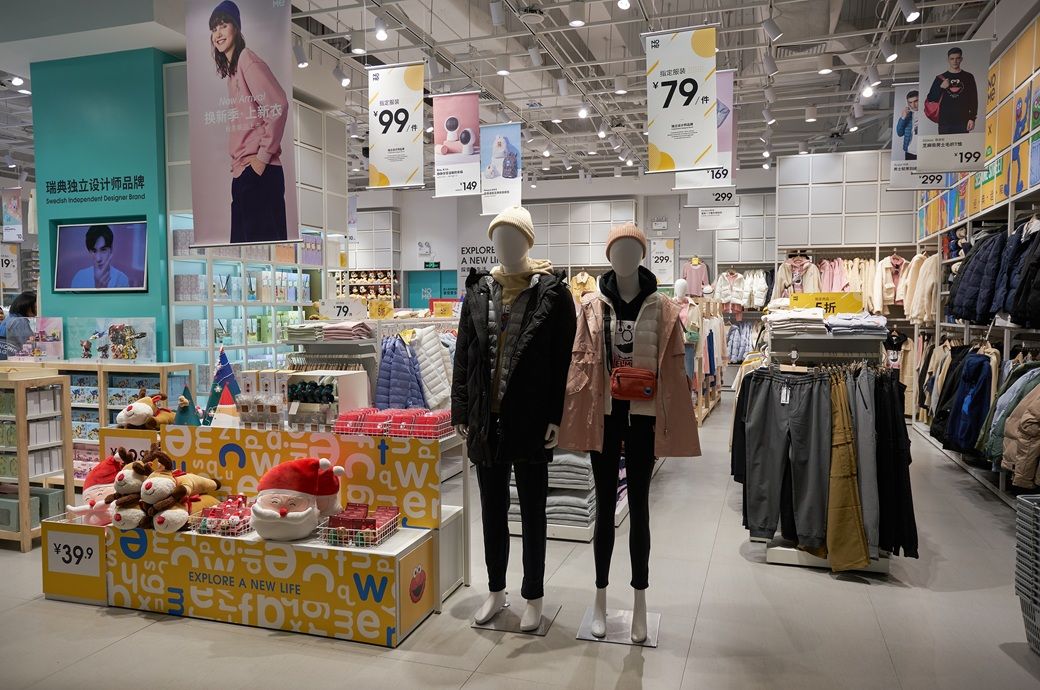
The retail sales of clothes, shoes, hats and textiles went up by 10.4 per cent YoY, while the total value of foreign trade in goods was up by 18.3 per cent YoY.
The value added of state-owned enterprises increased by 4.2 per cent YoY during the period, while shareholding enterprises recorded a 6.9 per cent YoY rise. Enterprises funded by foreign investors, including those from Hong Kong, Macao and Taiwan, grew by 4 per cent YoY, whereas private enterprises posted the highest growth of 7.4 per cent YoY.
In February, the total value added of industrial enterprises above the designated size went up by 0.83 per cent month on month (MoM).
The manufacturing purchasing managers’ index stood at 49 per cent in the same month and the production and operation expectation index was 53.2 per cent—0.6 pp higher than that in January.
In January-February 2026, the total retail sales of consumer goods reached 8,607.9 billion yuan—up by 2.8 per cent YoY—1.9 pps faster than that in last December.
The retail sales of clothes, shoes, hats and textiles went up by 10.4 per cent YoY in the two months.
In February, the total retail sales of consumer goods increased by 0.81 per cent MoM.
In the first two months this year, the online retail sales of goods were worth 2,081.2 billion yuan ($312.18 billion)—up by 10.3 per cent YoY and accounting for 24.2 per cent of the total retail sales of consumer goods.
In the first two months this year, the total value of foreign trade in goods was 7,732.1 billion yuan—up by 18.3 per cent YoY—13.4 pps faster than that in December 2025. The value of exports was 4,617.8 billion yuan—up by 19.2 per cent and the value of imports was 3,114.3 billion yuan—up by 17.1 per cent YoY.
Imports and exports with Belt and Road partner countries grew by 20 per cent YoY during the two months, while the same by private enterprises went up by 22.8 per cent YoY during the two months.
The country’s consumer price index (CPI) in January-February 2026 went up by 0.8 per cent YoY. It increased by 0.2 per cent YoY in January and by 1.3 per cent YoY in February.
The CPI went up MoM by 0.2 per cent in January and 1 percent in February.
In the first two months, the producer prices for industrial products went down by 1.2 per cent YoY. In January, these went down by 1.4 per cent YoY and went up by 0.4 per cent MoM. In February, these decreased by 0.9 per cent YoY and rose by 0.4 per cent MoM.
In the first two months, the purchasing prices for industrial producers dropped by 1.1 per cent YoY.
Fibre2Fashion News Desk (DS)

Founded to represent and promote the interests of Azerbaijan’s textile and apparel industry, ATA plays a key role in sector development, policy dialogue, capacity building, and international cooperation. By joining ITMF, ATA reinforces its commitment to fostering sustainable growth, innovation, and global competitiveness within the national textile ecosystem.
The Azerbaijan Textile Association has joined the International Textile Manufacturers Federation, marking a step towards deeper global integration for the country’s textile sector.
The membership provides access to global industry data, networking platforms, and best practices, supporting export growth, while strengthening Azerbaijan’s presence within the international textile value chain.
ITMF members are responsible for approximately 90 per cent of global textile and apparel production and represent the entire textile manufacturing value chain. Through its membership, ATA and its member companies gain access to a unique global platform for information exchange, dialogue, and industry networking.
Mr. Christian Schindler, Director General of ITMF, stated: “Welcoming the Azerbaijan Textile Association as a new Member Association further strengthens ITMF’s global network. Azerbaijan’s textile sector has significant development potential, and ATA’s participation in ITMF will contribute to deeper international collaboration, knowledge sharing, and integration into the global textile value chain.”
Through ITMF membership, ATA members will benefit from exclusive access to global statistics, reports, surveys, webinars, and industry insights. In addition, ITMF conferences, workshops, and networking events provide valuable opportunities for Azerbaijani textile companies to expand their international partnerships, enhance export potential, and adapt best global practices.
Ms. Farida Akhundova, Executive Director of ATA, stated: “Joining ITMF marks an important milestone for Azerbaijan’s textile industry. It is a strategic step toward deeper integration into global markets and the adoption of international standards and innovations. ITMF membership opens new opportunities for our member companies to strengthen their competitiveness, expand exports, and build long-term international partnerships.”
This membership represents a significant achievement for Azerbaijan’s textile sector and reflects ATA’s strategic vision to position the country as an increasingly competitive and reliable partner in global textile trade.
Note: The headline, insights, and image of this press release may have been refined by the Fibre2Fashion staff; the rest of the content remains unchanged.
Fibre2Fashion News Desk (SG)


Texas vs. NC State (Mar 17, 2026) Live Score – ESPN

Minnesota fires women’s hockey coach Frost after 19 seasons

Justice Department Says Anthropic Can’t Be Trusted With Warfighting Systems

Stock market crash today (March 12, 2026): Nifty50 opens below 23,600; BSE Sensex down over 900 points on continuing US-Iran war – The Times of India

Intertextile Shanghai 2026: Fringe events spotlight market trends

What time will NASA’s 600 kg satellite crash to Earth today— 14 years after launch?

-
Business6 days ago
Stock market crash today (March 12, 2026): Nifty50 opens below 23,600; BSE Sensex down over 900 points on continuing US-Iran war – The Times of India
-
 Fashion1 week ago
Intertextile Shanghai 2026: Fringe events spotlight market trends
-
 Entertainment1 week ago
What time will NASA’s 600 kg satellite crash to Earth today— 14 years after launch?
-
 Business1 week ago
Crude oil surpasses $100: WTI up 30%, brent crude reaches $118; what it means? – The Times of India
-

 Fashion1 week ago
German brand Adidas posts 13% revenue growth in 2025
-

 Tech7 days ago
Meta Developed 4 New Chips to Power Its AI and Recommendation Systems
-

 Fashion7 days ago
UK’s Topshop unveils Tolu Coker capsule collection
-
 Business7 days ago
8th Pay Commission: How Much Will Central Govt Employees’ Salaries Rise? What We Know So Far