

Business
Take a look inside Target’s new fashion-focused store in New York’s SoHo neighborhood


Target has turned its store in New York City’s SoHo neighborhood into a unique concept store. Inside of an area that resembles the company’s Bullseye logo, the company has “The Drop,” a rotating display of seasonal styles and curated items.
Courtesy of Target
In one of New York City’s most fashion-forward neighborhoods, Target is unveiling its latest effort to keep up with trends and lead the way on style.
The Minneapolis-based retailer, which is in the middle of a turnaround effort and on the cusp of a CEO change, gave a makeover to its big-box store in SoHo at 600 Broadway.
The one-of-a-kind concept store, which opens Tuesday, will have rotating merchandise, curated displays chosen by celebrities and influencers, and other kinds of special programming, Chief Guest Experience Officer Cara Sylvester said.
The SoHo store is part of a broader push by incoming CEO Michael Fiddelke to win back Target’s reputation for style and sharp merchandise. When he was named Target’s next leader in August, he said that would be one of his top three priorities, along with improving the customer experience and rolling out technology to make Target faster and more efficient. He will start the role in February, succeeding longtime CEO Brian Cornell.
Target is trying to get back to growth after roughly four years of stagnant annual sales due to self-inflicted challenges and a more difficult economic backdrop. Store foot traffic and sales have fallen as shoppers have responded to sloppier stores, out-of-stock and locked-up items, and the company’s decision to roll back key diversity, equity and inclusion programs. Consumers across the country have also become more selective about buying discretionary merchandise, which has long been Target’s sweet spot, as they pay more for necessities like groceries, electricity and housing.
At an event previewing the store on Monday night, Fiddelke described the SoHo location as “a punctuation point” for Target’s sense of style and its plans for the future.
In an interview with CNBC, Sylvester said the store’s merchandise has completely changed. The location, which opened about seven years ago, drew many shoppers and had strong sales, but sold mostly items found in drug and convenience stores, she said. It didn’t carry any of Target’s clothing or home decor, which felt both out of step with the neighborhood and like a missed opportunity for Target, she said.
“We said, ‘This is the style and fashion capital. We have to be able to showcase the best,'” she said, recalling the inspiration for the project.
From start to finish, the store’s redesign took four months as the company raced to get the project done ahead of the holidays, Sylvester said. It has redone the store’s first floor and plans to redesign the basement floor in the coming year, she added.
The SoHo store is reopening at a time when holiday shoppers and tourists flock to the major shopping district for holiday gifts and party outfits — and as Target chases sales across the country during the critical shopping season. It is one of 42 stores that the retailer has in New York City and nearly 2,000 that is has in the U.S.
“The world looks at New York to see what’s new and what’s next,” Sylvester said in remarks at the launch event. “And we want them to look at Target when they see what’s new and what’s next.”
A look inside Target’s SoHo store
Inside of a merchandise area that resembles Target’s Bullseye logo, the store will have rotating merchandise that’s organized around a theme.
Melissa Repko, CNBC
When customers step inside of Target’s SoHo store, they will enter a long, red hallway that resembles the inside of Target’s Bullseye logo. The area of the store is called “The Drop,” and Target will display merchandise there chosen around themes that feel relevant for the time of year, Sylvester said.
Like most of the store, the rotating area will swap out about every four to six weeks, she added.
As the store opens, The Drop is themed around the holidays — including outfits and items that a shopper may need for going out, lounging at home or giving a gift to a party host. The store displays range across categories, mixing in clothing, home decor, beauty items and more. For example, The Drop currently includes a table of products that a shopper might want if they’re hosting a night at home with friends, such as card games, an espresso martini mix and eye-catching glassware for the cocktails.
Sylvester said the company’s merchants are already working on the next two themes for The Drop, which will be focused on wellness in January, the season of New Year’s resolutions, and Valentine’s Day in February.
Target’s SoHo store has an eye-catching “Beauty Bar” that shows off fragrances, makeup items and more.
Courtesy of Target
Customers can step inside of Target’s “Broadway Beauty Bar,” which is designed for selfies and social media posts. It will have a rotating assortment of Target’s beauty merchandise, including fragrance brands like Fine’ry that are exclusive to Target, and trendy mini versions of face washes, lip glosses and more from national brands.
At launch, Target is featuring items chosen by celebrity makeup artist Katie Jane Hughes.
Along with the “Beauty Bar,” the store sells items typically found at the big-box retailer, including large shampoos, body washes and cotton balls.
Near the beauty area, shoppers can also press a button and snap a black-and-white selfie.
Though the store’s layout is new, it shares a similarity with some of Target’s other New York City locations — some items are locked behind glasses cases that an employee needs to open.
Target will tap celebrities and influencers to pick their favorite Target items for its “Curated By” display.
Courtesy of Target
In the back of the store’s first floor, Target will have a rotating “Curated By” display of items from across the retailer’s beauty, fashion and home categories, picked by celebrities and other creators known for their sense of style. Shoppers can browse and buy that person’s favorites or scan a QR code to see a list of them.
Target’s first Curated By features favorites from Megan Stalter, an actress and comedian who is in HBO’s “Hacks.” Some of her picks include a throw pillow, a pair of hot pink slippers, metallic water bottles and Universal’s “Wicked: For Good” movie-themed clothing items.
Inside of the “Gifting Gondola,” Target will show off exclusive merchandise like plushes from its toy brand, Gigglescape, and items themed around its dog mascot, Bullseye, such as special edition Haribo candies.
Courtesy of Target
Also at the store, shoppers can find Target’s “Gifting Gondola,” which features merchandise exclusive to Target.
Currently, the display includes holiday-themed plush penguins, bears and other products from Target’s toy brand, Gigglescape. It also includes some giftable items themed around the retailer’s bull terrier, Bullseye, including special edition Haribo gummy candies and a Bullseye Pez dispenser.
Over time, Sylvester said Target may introduce some items that are unique to the SoHo store and can only be bought there.
Disclosure: Comcast is the parent company of NBCUniversal, which owns CNBC. Versant would become the new parent company of CNBC upon Comcast’s planned spinoff of Versant.


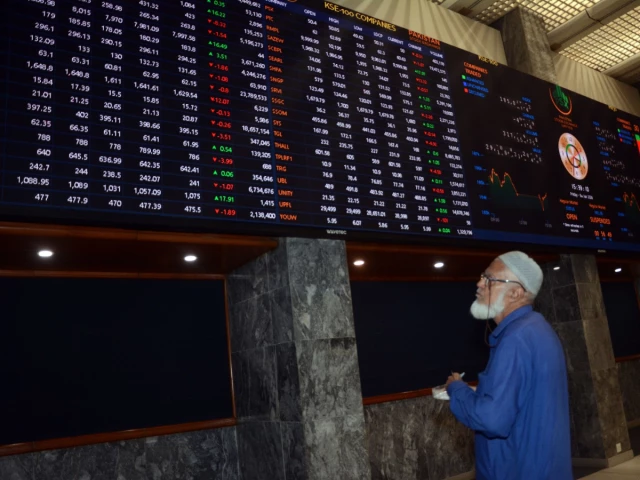
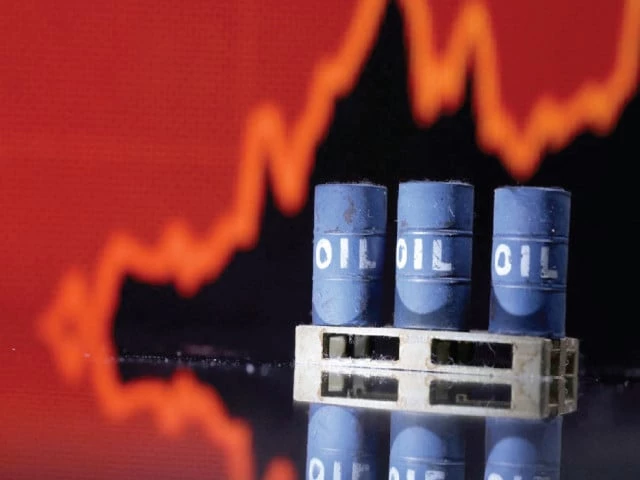

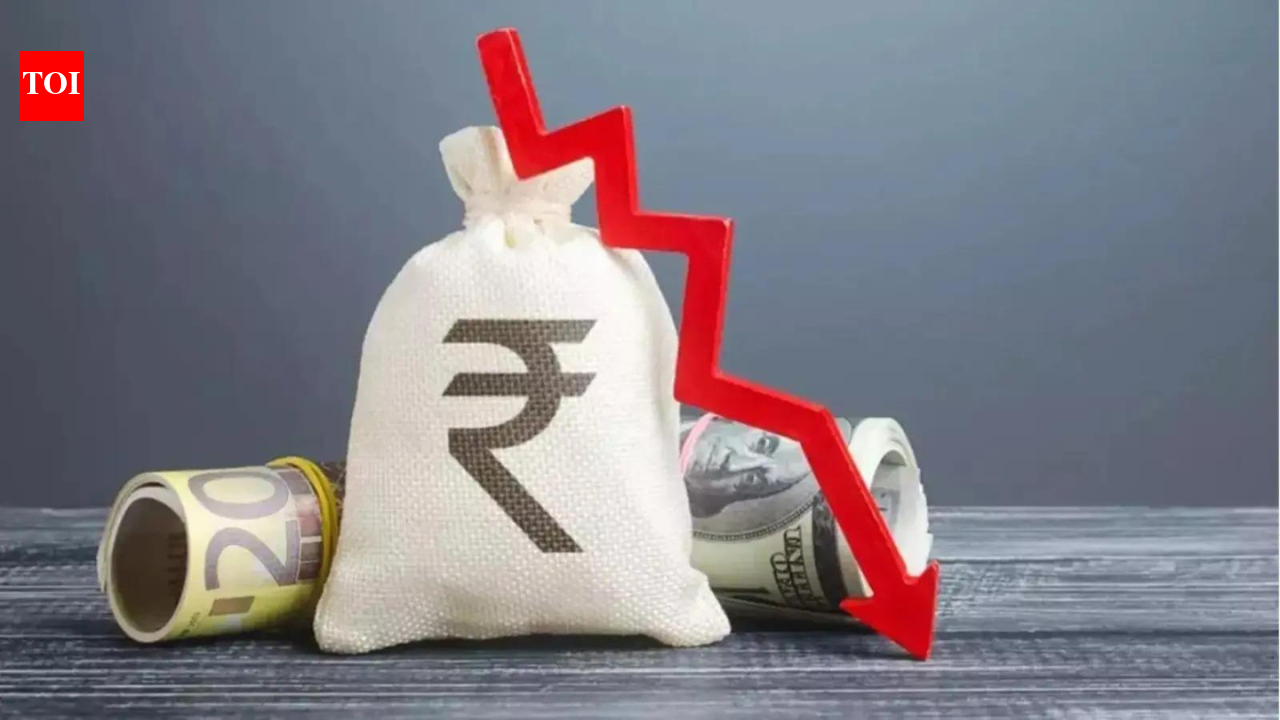
The rupee slipped to a fresh all-time low against the US dollar on Wednesday, extending its recent losing streak as rising oil prices, overseas debt repayments and importer demand for hedging continued to weigh on the currency.The rupee weakened 0.1% to 95.7450 per dollar, moving past its previous record low of 95.7375 touched on Tuesday.Analysts said the pressure on the rupee has intensified since the outbreak of the US-Iran conflict earlier this year, which has sharply pushed up global crude oil prices and strained India’s external sector.Brent crude prices have risen nearly 50% since the Iran conflict began on February 28, while the rupee has weakened by more than 5% during the same period.
Oil shock weighs on India’s economic outlook
Economists have lowered India’s growth forecasts and raised inflation projections amid concerns over persistently high energy costs.“A collapse in oil prices or a resumption in portfolio flows are prerequisites for a durable turnaround in the rupee’s bearish run,” Radhika Rao, senior economist at DBS, said in a note quoted by Reuters.Traders and analysts told Reuters that the rupee’s losses would likely have been much steeper without regular interventions by the Reserve Bank of India and the use of regulatory measures to stabilise the currency.Prime Minister Narendra Modi over the weekend urged measures to conserve foreign exchange reserves, while the government on Tuesday increased import duties on precious metals in an effort to curb demand and support the rupee.
Markets speculate on possible RBI response
Markets are increasingly pricing in the possibility of interest rate hikes to defend the currency and contain inflationary pressure.“Markets are pricing in rate hikes to defend the rupee and address potential inflationary pressures, although we do not expect policy tightening to be the immediate response,” Rao said.Speaking at a conference in Switzerland on Tuesday, RBI governor Sanjay Malhotra said monetary policy could look through temporary supply shocks but may need to respond if inflation pressures become persistent.Malhotra also indicated that while India has so far avoided raising domestic fuel prices despite higher global crude rates, prolonged tensions in the Middle East may eventually force price hikes.Global financial markets remained cautious amid uncertainty over the Iran conflict and persistent inflation concerns in the United States.Foreign exchange markets were largely range-bound globally, while technology-focused equities gained on renewed optimism surrounding artificial intelligence despite stalled negotiations between Washington and Tehran.

Tui has assured holidaymakers that their peak summer flights will go ahead, despite fears of aviation fuel shortages caused by the Iran conflict.
Mathias Kiep, CFO of Tui Group, told The Independent: “I’m very much convinced that we will see no shortage in the next 10 weeks. There’s definitely enough fuel.”
Speaking as Europe’s biggest holiday company reported its financial results for October 2025-March 2026, he said: “We think that the discussion on fuel is a little bit artificial as we do see no shortages for the next few weeks.
“I would also see no impact in the summer at all except prices – and for the higher prices, we are luckily hedged.
“We do see that Europe now gets more oil from other countries like Nigeria because the increased prices made the production there profitable. We see that consumption is significantly lower than a year before and refinery capacity is also up.”
He said that even if the Strait of Hormuz remains closed in the long term, there will be no shortage.
The firm reported a “very successful” first half of its financial year between October 2025 and March this year. But it has warned that the second half “will require great dedication and flexibility”.
The war in Iran delivered a €40m (£35m) hit to profits – due to a combination of lost sales and the extra costs of bringing back holidaymakers from the Middle East and Asia.
In addition, Hurricane Melissa in Jamaica cost the company €5m (£4.3m).
Sebastian Ebel, chief executive of the Tui group, said: “We offer our customers a high level of security and quality, especially in turbulent times. The package holiday remains the gold standard.”
The occupancy rate on Tui cruises fell from 97 to 93 per cent due to the war in Iran. Two ships from the German cruise operation were stuck in the Gulf for 10 weeks.
Air bookings for the summer are 7 per cent below last year. The firm said people were happy to book two or three weeks in advance, but not two or three months.
Tui has seen no decline in the intention to travel, and no shift from air to surface transport. The hantavirus scare has had no impact on cruise demand.
Read more: Britons ditching Spain after rival destination drops EU biometric requirement
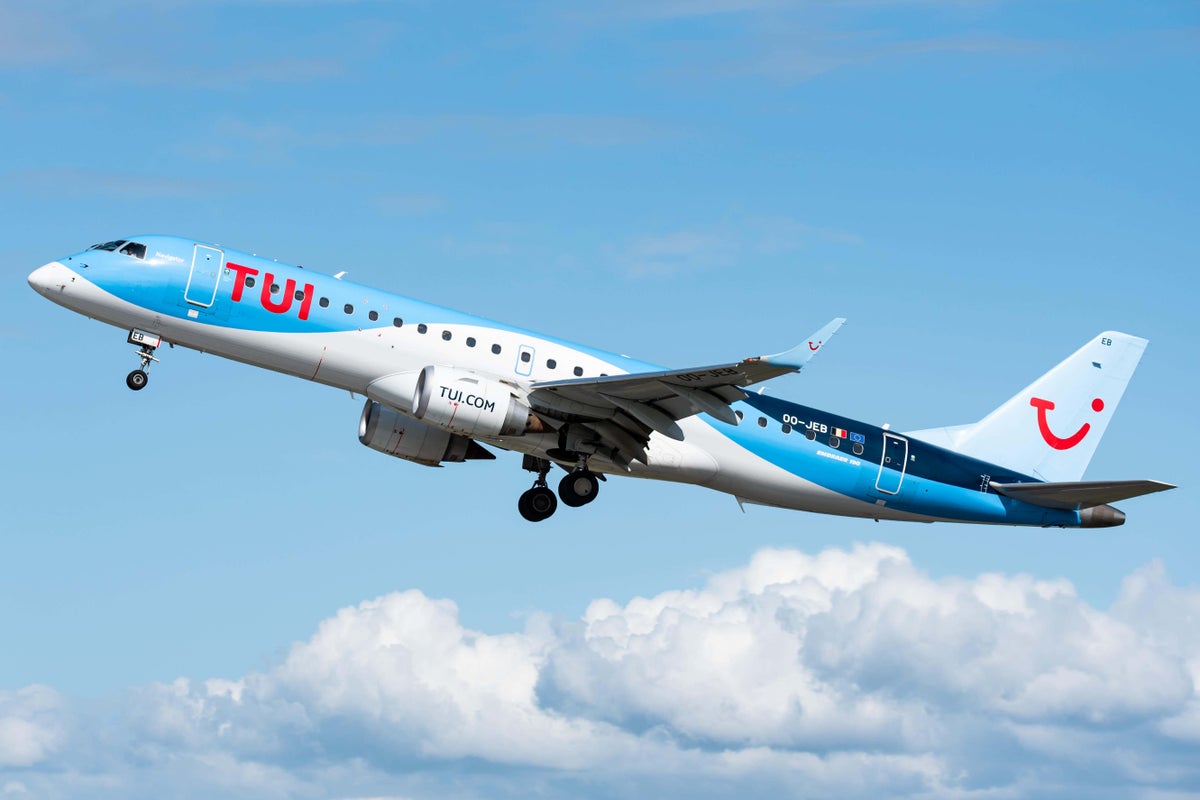
Tui has revealed a 10% drop in UK summer bookings as consumers hesitate to make bookings and switch destinations, while the holiday firm took a 61 million euro (£39 million) hit from the Iran war and hurricanes in Jamaica.
Europe’s largest travel operator is one of several firms to be impacted by the conflict in the Middle East, which began at the end of February.
It said booked revenues for summer were down 7% compared with 2025 for its tours and airline, falling to 10% for the UK market alone.
The US and Israel’s war with Iran has led to a shift in demand from eastern to western Mediterranean destinations, while customers were displaying greater caution and making bookings closer to departure dates, Tui said.
The company also pointed to a “competitive” market for travel.
Nevertheless, Tui said it was expecting Spain, including the Balearics and the Canary Islands, and Greece to be top destinations over the summer.
The German business revealed last month that the Iran war cost it around 40 million euros (£34.7 million) after it was forced to repatriate around 5,000 passengers from two cruise ships anchored in ports in Abu Dhabi.
Tui said on Wednesday that the cruise ships had now departed safely, during a pause in the hostilities, and will commence their summer season itineraries in the Mediterranean from mid-May.
It also said it took a roughly 21 million euro (£18 million) hit during the first half of the financial year from the impact of hurricanes that swept across Jamaica in October last year.
Tui reported an underlying loss before interest and tax, and at constant currencies, of 111 million euros (£96 million) for the first half – an improvement on the 156 million euro (£135 million) loss reported the year before.
It is on track to deliver a full-year operating profit of between 1.1 and 1.4 billion euros, down from previous targets of roughly between 1.5 and 1.6 billion euros.
Sebastian Ebel, Tui’s chief executive, said: “The very strong results give us confidence for the second half of the year.
“Due to geopolitical challenges and dynamic market conditions, it will require great dedication and flexibility.
“We offer our customers a high level of security and quality, especially in turbulent times.
“Package holidays remain the gold standard.”


Canada, Vietnam seek broader trade cooperation
Rupee at 95.74: INR hits all-time low as oil prices pressure economy – The Times of India

Fans come out in Italy to welcome Princess Kate

-

 Tech1 week ago
DHS Demanded Google Surrender Data on Canadian’s Activity, Location Over Anti-ICE Posts
-

 Tech5 days ago
A new frontier: Identity stack evolves for agentic systems | Computer Weekly
-

 Tech5 days ago
‘Orbs,’ ‘Saucers,’ and ‘Flashes’ on the Moon: Pentagon Drops New UFO Files
-
 Sports5 days ago
Shaheen Afridi achieves landmark feat during opening Test against Bangladesh
-

 Tech5 days ago
What Microsoft Executives Really Thought About OpenAI in 2018
-
 Business1 week ago
India among most resilient large EMs, better placed for future global shocks; policy reforms & strong buffers help: Moody’s – The Times of India
-
 Fashion5 days ago
New orders in German manufacturing up 5% MoM in Mar 2026: Destatis
-

 Tech5 days ago
Nick Bostrom Has a Plan for Humanity’s ‘Big Retirement’