

Politics
Top US Counterterrorism Official Resigns in Protest, Asserts Iran Posed No Immediate Threat

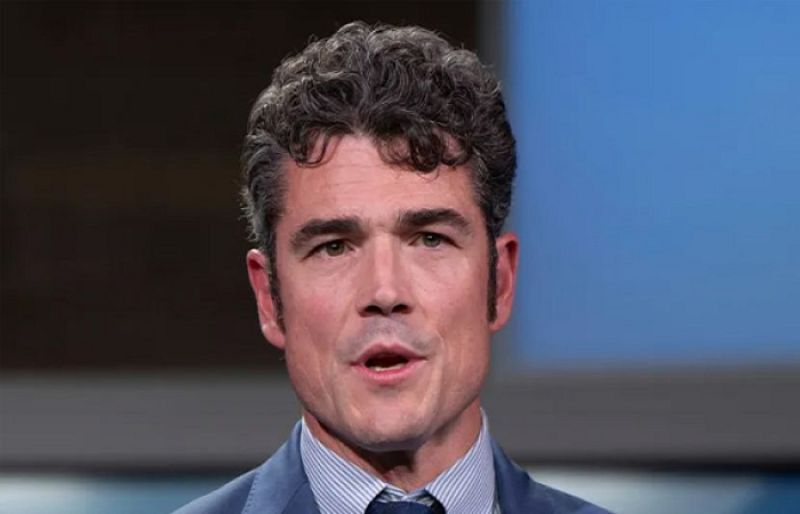

A top security official in U.S. President Donald Trump’s administration resigned over the war in Iran on Tuesday, saying the country had posed no imminent threat to the United States.Joe Kent, who headed the National Counterterrorism Centre, is the first senior official in Trump’s administration to resign over the conflict, now in its third week.
“I cannot in good conscience support the ongoing war in Iran. Iran posed no imminent threat to our nation, and it is clear that we started this war due to pressure from Israel and its powerful lobby,” Kent wrote in a letter posted to social media.
Some experts have said an imminent threat would be required for the United States to launch a war under the international law of war.
Kent and the White House did not immediately respond to requests for comment.
The Office of the Director of National Intelligence, which oversees the counterterrorism centre, also did not immediately respond.
KENT KNOWN FOR OPPOSING MILITARY INTERVENTIONS
Kent has long been known for his “America First” beliefs and has said he opposes U.S. military interventions abroad.
Still, the announcement came as a surprise, one U.S. official said.
Kent is close with Director of National Intelligence Tulsi Gabbard, who has kept a low profile since the Iran war began.
Gabbard has not issued any public statements and has only appeared in public during the dignified transfer of American soldiers killed earlier this month during the conflict with Iran.
The National Intelligence Council, which is overseen by Gabbard’s office, issued several assessments both before and after the U.S. strikes began that highlighted the risks of U.S. intervention.
Those reports indicated the Iranian government was unlikely to collapse and Iran would likely retaliate against U.S. outposts in the region and Gulf allies, as Reuters previously reported.
Kent has been criticised by Democrats for his associations with far-right figures, and Senator Mark Warner of Virginia, the top Democrat on the Intelligence Committee, said he should never have been confirmed to head the counterterrorism office.
“But on this point, he is right: There was no credible evidence of an imminent threat from Iran that would justify rushing the United States into another war of choice,” Warner said in a statement.
Last year, Kent pushed intelligence analysts, opens new tab to rework an assessment on Tren De Aragua, a Venezuelan gang, that did not support the White House’s argument that Venezuelan President Nicolas Maduro was directing its operations. The administration had portrayed the gang as a security threat to justify its immigration crackdown.
Politics
With Larijani no more, Iran loses legacy of strategic leadership in its national security, diplomacy
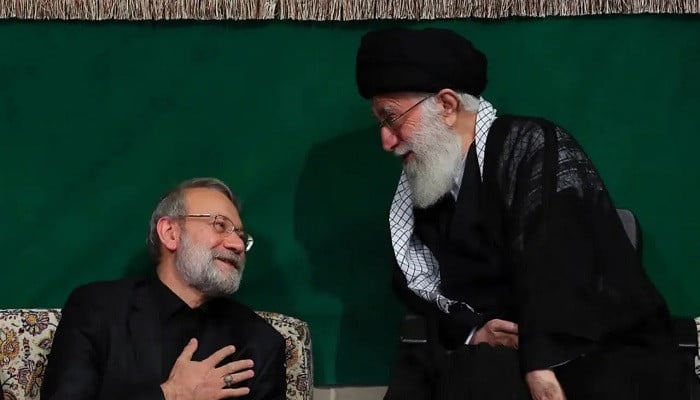
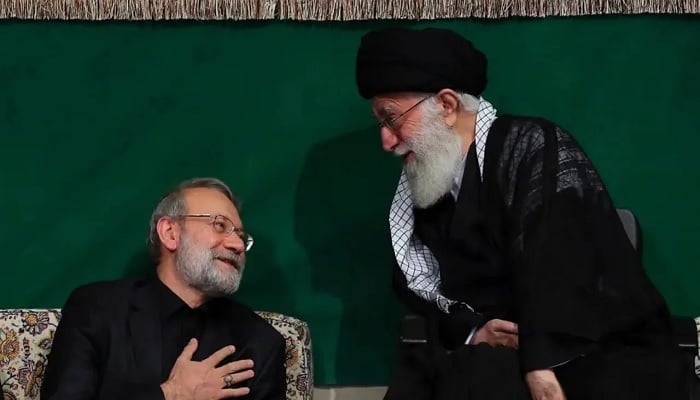
- Top adviser to Khamenei, shaping Iran’s security and foreign policy.
- Chief nuclear negotiator, advancing Iran’s programme diplomatically.
- Parliament speaker for 12 years, bridging hardline, moderate factions.
Veteran Iranian politician Ali Larijani was one of the most powerful figures in the Islamic Republic, an architect of its security policy, and a close adviser to Ayatollah Ali Khamenei until the supreme leader died in an airstrike last month.
He was martyred at the age of 67, Iranian media said on Tuesday. Israel’s Defence Minister, Israel Katz, said earlier on Tuesday that he had been assassinated in an Israeli strike.
The scion of a leading clerical family with brothers who rose to high positions after the 1979 Islamic Revolution, Larijani was seen as canny and pragmatic but always fiercely determined to uphold Iran’s theocratic system of government.
A Revolutionary Guards commander during the Iran-Iraq war, he became head of Iran’s national broadcaster before stints running the Supreme National Security Council on either side of his membership of parliament, where he was speaker for 12 years.
His role as the ultimate insider in Khamenei’s Iran gave him responsibilities across a wide portfolio that included critical nuclear negotiations with the West, managing Tehran’s regional ties and the suppression of internal unrest.
After the US-Israeli strikes began on February 28, he was one of the first major Iranian figures to speak, accusing Iran’s attackers of seeking to disintegrate and plunder the country. He also issued stern warnings against any would-be protesters.
The strikes represented the ultimate failure of a nuclear policy he had helped design, which attempted to build atomic capability at the boundary of international rules without provoking an attack.
In pursuing that policy, he projected the voice of the supreme leader, using his abilities as a communicator to build a rapport with Western negotiators and lay out Khamenei’s vision in frequent television interviews.
Even if he had survived the current war, that role may have been curtailed. In the jostling for control after Khamenei’s death, it was the Guards who took an ever greater part, leaving fewer decisions to political powerbrokers like Larijani.
Rise after revolution
Ali Larijani was born in 1958 in Iraq’s great Shi’ite Muslim shrine city of Najaf, the home of many major Iranian clerics like his father who had fled what they saw as the oppressive rule of the shah.
He moved to Iran as a child, later focusing on his studies and earning a philosophy PhD. But the clerical milieu of his family would have made him keenly aware of the revolutionary religious currents surging through his homeland in the 1970s.
When Larijani was 20 years old, the Islamic Revolution overthrew the shah and installed Ayatollah Ruhollah Khomeini as the supreme leader.
When Iraq invaded Iran along a 500-mile (800 km) front months after the revolution, Larijani joined the Islamic Revolutionary Guards Corps, a new, ideologically driven military unit devoted to Khomeini.
As the war with Saddam Hussein’s Iraq became the great crucible testing the mettle of a new generation of Iranian leaders, Larijani rose to become a staff officer, a commander focused on the organisational duties behind the front that dictated the war effort.
His success in that role, alongside his family connections, helped spur his rise in the new Islamic Republic. They also ensured his close ties to the Guards, a military institution whose importance would continue growing throughout his life.
After the war, Larijani became culture minister and then head of Iran’s state broadcaster, IRIB, a critical role in a country where ideological messaging has always been central to the exercise of internal power.
Larijani was appointed to the cabinet by the mercurial president Ali Akbar Hashemi Rafsanjani, in office from 1989 to 1997. Khamenei, meanwhile, became the supreme leader in 1989, upon the death of Khomeini.
Larijani would have a ringside seat for the years-long power struggle between Rafsanjani and Khamenei – an unrivalled lesson in high Iranian politics.
His time at IRIB was followed by a stint as head of the Supreme National Security Council, Iran’s top foreign and security policy body. A failed presidential bid followed in 2005, before his election to parliament two years later.
Two of his brothers were enjoying high office, too – the signs of a family on the make.
His eldest brother, Mohammad-Javad, was a member of parliament before becoming a senior adviser to Khamenei. A younger brother, Sadiq, had become a cleric and risen to head the judiciary.
Chief nuclear negotiator
As chief nuclear negotiator from 2005 to 2007, Larijani was responsible for defending what Tehran says is its right to enrich uranium – a process required to make fuel for a nuclear power plant but which can also yield material for a warhead.
Pressure on Iran over its nuclear programme had ratcheted up after the discovery in 2003 that the country had enrichment facilities it had not disclosed to international inspectors, prompting fears it was seeking a bomb and leading to sanctions.
It has always denied wanting a bomb.
Larijani likened European incentives to abandon nuclear fuel production to “exchanging a pearl for a candy bar”. Though he was widely regarded as a pragmatist, he said that Iran’s nuclear programme “can never be destroyed”.
“Because once you have discovered a technology, they can’t take the discovery away,” he told PBS’s Frontline programme in September 2025. “It’s as if you are the inventor of some machine, and the machine is stolen from you. You can still make it again.”
Larijani made repeated visits to Moscow and met President Vladimir Putin, helping Khamenei manage a key ally and world power that acted as a counterweight to pressure from the first and second administrations of U.S. President Donald Trump.
He was also tasked with advancing negotiations with China, which led to a 25-year cooperation agreement in 2021.
As parliament speaker from 2008 to 2020, he had a role in ensuring that a nuclear deal with six world powers in 2015 would meet the requirements of Iranian leaders. Trump withdrew the US from the hard-negotiated agreement during his first term in 2018.
Larijani was again appointed head of the Supreme National Security Council last year, after a 12-day air war launched by Israel. He was working to avert an attack on Iran until shortly before the war began.
“In my view, this issue is resolvable,” Larijani told Oman state television early this year, referring to the talks with the US. “If the Americans’ concern is that Iran should not move toward acquiring a nuclear weapon, that can be addressed.”
But Washington also denounced him for the council’s role in dealing with mass anti-government protests in January, even after he and other senior politicians had initially said that demonstrations over the economy were permissible.
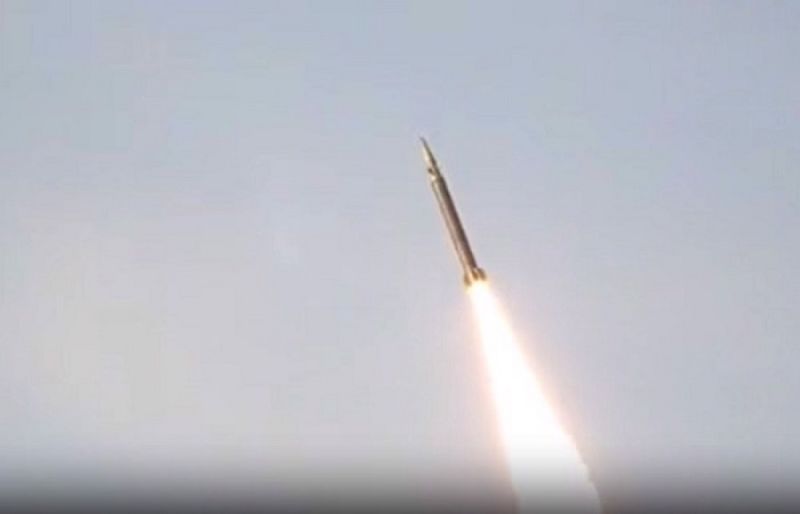

The Islamic Revolutionary Guards Corps (IRGC) has launched a new barrage in the 59th wave Operation True Promise 4, deploying the advanced “Haj Qassem” missile for the first time.
In a Tuesday statement, the IRGC said that its “effect-based” strike targeted Israeli positions in Beit Shemesh, Tel Aviv, and occupied al-Quds.
The devastating strikes simultaneously pounded regional bases belonging to the US “terrorist army,” directly targeting installations in Al Udeid, Ali Al Salem, Fujairah, Sheikh Isa, and Erbil, added the statement.
Dedicated to Iran’s aerospace martyrs and launched under the sacred code “Ya Heidar Karrar,” the operation utilized suicide drones alongside pinpoint-accurate Ghadr, Emad, Fattah, and Haj Qassem missiles.
Meanwhile, the IRGC announced the dawn of a “new phase of effective and heavy blows” across the region against the American-Zionist enemy.
Promising an inevitable defeat for the aggressors, the military force issued a stark warning: “The bones of arrogance will be broken in the streets and squares.”
This fierce retaliation serves as continuation of Iran’s legitimate response to the unprovoked, large-scale war launched by the US and Israel on February 28.
Despite ongoing indirect nuclear negotiations, the enemy conducted extensive aerial strikes across Iranian civilian and military installations, causing significant casualties and assassinating former Leader Ayatollah Seyed Ali Khamenei alongside high-ranking military commanders.
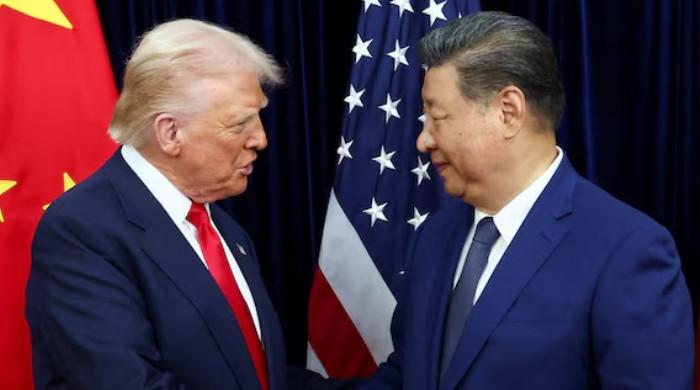
- Trump says China fine with trip rescheduling.
- Trip postponed as Iran war upends US foreign policy.
- Postponed visit heightens uncertainty for markets.
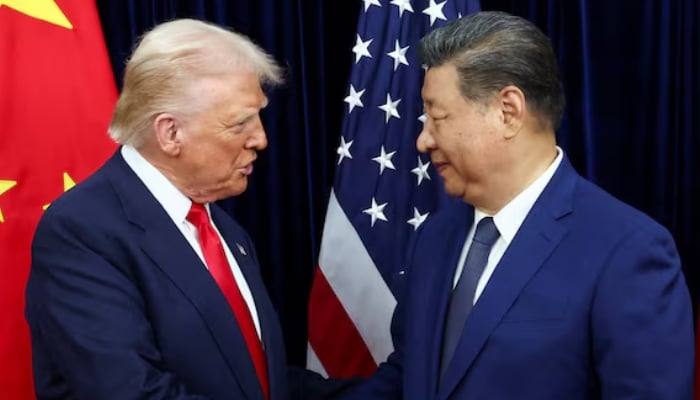
President Donald Trump on Tuesday said he is postponing a highly anticipated trip to Beijing to meet Chinese President Xi Jinping as the war with Iran upends US foreign policy and delays an effort to ease tensions between the world’s two biggest economies.
“We are resetting the meeting … We’re working with China. They were fine with it,” Trump told reporters in the Oval Office.
Trump had been set to travel to Beijing from March 31-April 2 for the first trip there of his 14-month-old second term. The trip will now take place in about five or six weeks, Trump said.
The postponed visit heightens uncertainty for markets and diplomacy alike, as the war with Iran has driven oil prices higher, threatened shipping through the Strait of Hormuz and sharpened investor focus on energy security.
Trump’s campaign in Iran has unleashed a wave of military and economic consequences and commanded attention from across his administration.
Visit at odds with US economic struggles
The image of Trump on a lavish state visit was increasingly seen at odds with a struggling US economy and the return of American service members killed in the Middle East, said a person briefed on planning for the Beijing meetings.
Iran has responded to joint US-Israeli attacks by threatening to fire on vessels moving through the Strait of Hormuz. Trump has called on numerous nations, including China, to help ships safely transit the strait, where one-fifth of the world’s oil transits on a daily basis.
Trump’s request for assistance so far has largely been rebuffed. China, which imported around 12 million barrels of oil daily in the first two months of 2026, the most in the world, has not directly responded to his request.
Beijing never officially announced dates for Trump’s visit and normally does not detail Xi’s schedule far in advance.
Early preparations for the meeting included talks this week in Paris between US Treasury Secretary Scott Bessent and Chinese Vice Premier He Lifeng.
Those talks focused on potential additional purchases of US agricultural goods, including poultry, beef and non-soybean row crops. They also discussed increasing the flow of rare earth minerals largely controlled by China and new approaches to manage trade and investment between the countries, according to people familiar with the talks.
“Head of state diplomacy plays an irreplaceable role in providing strategic guidance to China-US relations,” said Lin Jian, a Chinese Foreign Ministry spokesperson, earlier this week.


Minnesota fires women’s hockey coach Frost after 19 seasons

Kanye West makes new request to judge in Malibu mansion trial

Meta Is Shutting Down Horizon Worlds on Meta Quest

Stock market crash today (March 12, 2026): Nifty50 opens below 23,600; BSE Sensex down over 900 points on continuing US-Iran war – The Times of India

Intertextile Shanghai 2026: Fringe events spotlight market trends

What time will NASA’s 600 kg satellite crash to Earth today— 14 years after launch?

-
Business6 days ago
Stock market crash today (March 12, 2026): Nifty50 opens below 23,600; BSE Sensex down over 900 points on continuing US-Iran war – The Times of India
-
 Fashion1 week ago
Intertextile Shanghai 2026: Fringe events spotlight market trends
-
 Entertainment1 week ago
What time will NASA’s 600 kg satellite crash to Earth today— 14 years after launch?
-
 Business1 week ago
Crude oil surpasses $100: WTI up 30%, brent crude reaches $118; what it means? – The Times of India
-

 Fashion1 week ago
German brand Adidas posts 13% revenue growth in 2025
-

 Fashion7 days ago
UK’s Topshop unveils Tolu Coker capsule collection
-
 Tech6 days ago
Meta Developed 4 New Chips to Power Its AI and Recommendation Systems
-
 Tech1 week ago
Nvidia Is Planning to Launch an Open-Source AI Agent Platform