

Entertainment
What about the spirit of the game?

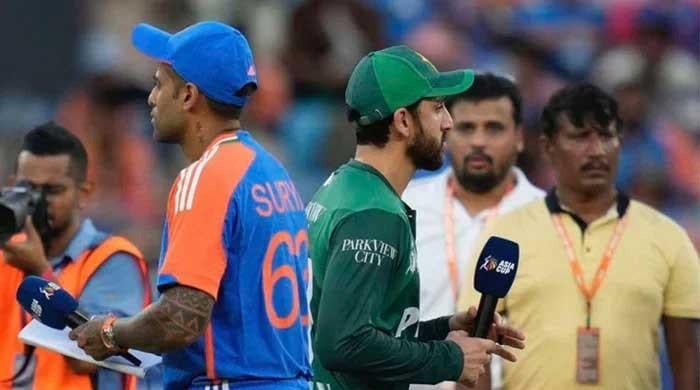
Hold your breath. India and Pakistan are playing cricket in Dubai today. This somewhat rare display of one of the most intense sports rivalries in the world is being staged for the second time in eight days. And a third encounter during the T20 Asia Cup is very possible.
But what the two teams of the belligerent South Asian countries are playing is not cricket. In a sense, it is politics through other means. That is how their match on Sunday last had triggered a bitter feud on the issue of the Indian players, who had won the match, refusing to shake hands with the Pakistani players.
From Sunday night to Wednesday evening, when the match was set between Pakistan and the UAE, a fierce controversy surrounded the handshake. Pakistan protested against the match referee Andy Pycroft, who — as the Pakistan Cricket Board (PCB) claimed — had conveyed to the Pakistani captain at the time of the toss that there would be no handshakes between the players of the two sides before or after the match.
This was something the PCB was not willing to tolerate. Hence, it threatened that it would pull the Pakistani team out of the Asia Cup if the match referee was not removed from the panel of officials. Eventually, after the suspense had risen to a breaking point, an apology by match referee Andy Pycroft led to Pakistan showing up for the match that had to be delayed for an hour. Pakistan’s not very victory has set the match with India.
Now, respect for and courtesy towards the adversary is the essence of the sportsman’s spirit. Whether it is an expression of greeting, farewell or agreement, a handshake is a part of social etiquette in most civilised communities.
There are many instances in political history when old adversaries shook hands while attending an event. A cricket match between India and Pakistan is certainly a major event that involves the emotions of hundreds of millions.
So, what will it be like this evening, when India and Pakistan come together to play the game in Dubai? Obviously, the match will be held against the backdrop of the diplomatic relations between India and Pakistan. One cannot ignore the four-day war between the two countries in May, which can also be seen as a military match.
Because of how India fared in that confrontation, a show of frustration and anger on its part would not be unexpected. After all, relations between the two countries are exceptionally tense at this time, and a surge of patriotic, even xenophobic, passions is evident on both sides.
Ideally, it should have been possible for cricket to help lower the temperature. This has happened way back in the past. But bilateral cricket has now been suspended since 2013.
The two countries have only played each other in multi-team tournaments, and these matches have been played on neutral grounds. It so happens that a cricket match between India and Pakistan is the biggest draw in the game, and for this reason, tensions between the two countries would affect how major cricket tournaments are planned and played.
When I suggest that cricket could actually play a positive role in reducing tensions, I have in mind two specific examples. In February 1987, the then-president of Pakistan, Gen Ziaul Haq, decided to visit India without being officially invited. It was called an unannounced visit. His pretext was that he wanted to watch a cricket match between India and Pakistan, being played in Delhi.
This was termed as Gen Zia’s cricket diplomacy. He had a meeting with the then-Indian prime minister, Rajiv Gandhi. That visit, it was noted, led to a troop withdrawal from the borders and helped avert a war.
I remember the great excitement in the country that was instigated by the Pakistan visit of the Indian cricket team in 2004. It was a historic and successful tour and the Indian team’s first visit to Pakistan in nearly 15 years. It was viewed as a means to foster peace and improve diplomatic relations between the two countries.
What cricket means in India and Pakistan, and how it governs the imagination of the people, is a part of South Asia’s political history.
I was the editor of this newspaper when Pakistan won the World Cup in 1992 and we had this big, eight-column headline: ‘We rule the world’. Imran Khan earned his charisma as the captain of this side and it paved his path to becoming prime minister, though not without the help of the referee of Pakistan’s politics, India won the World Cup in 1983, with Kapil Dev as the team’s captain.
In 2021, a Bollywood film titled ’83’ was released, with the focus on Kapil Dev. There have been major biopics on the lives of MS Doni and Sachin Tendulkar. But how has this great game fallen to a point where an Indian captain refuses a handshake with his Pakistani counterpart and then proudly defends his lack of manners on a false pretence of national honour? Where will cricket, as well as relations between the countries, go from here?
Finally, I must confess that I am not really a cricket enthusiast. I do not understand many of the game’s rules and other features. However, I often get involved in an India-Pakistan game and love to watch its live transmission.
Another confession I should make is that I am not pleased with my lack of knowledge of the game. I am aware of so many learned and sophisticated individuals who have a great passion for the game. Cricket has been celebrated in literature and poetry. There are so many examples that I can cite.
Reading about cricket and hearing some friends talk about a match or an individual performance or even a particular shot makes me feel that I am missing something. Will cricket between India and Pakistan lessen my regret for not being a big fan of cricket?
Disclaimer: The viewpoints expressed in this piece are the writer’s own and don’t necessarily reflect Geo.tv’s editorial policy.
The writer is a senior journalist. He can be reached at: [email protected]
Originally published in The News
Entertainment
American Music Awards airing tonight with performances from Billy Idol, Keith Urban, Teyana Taylor and more
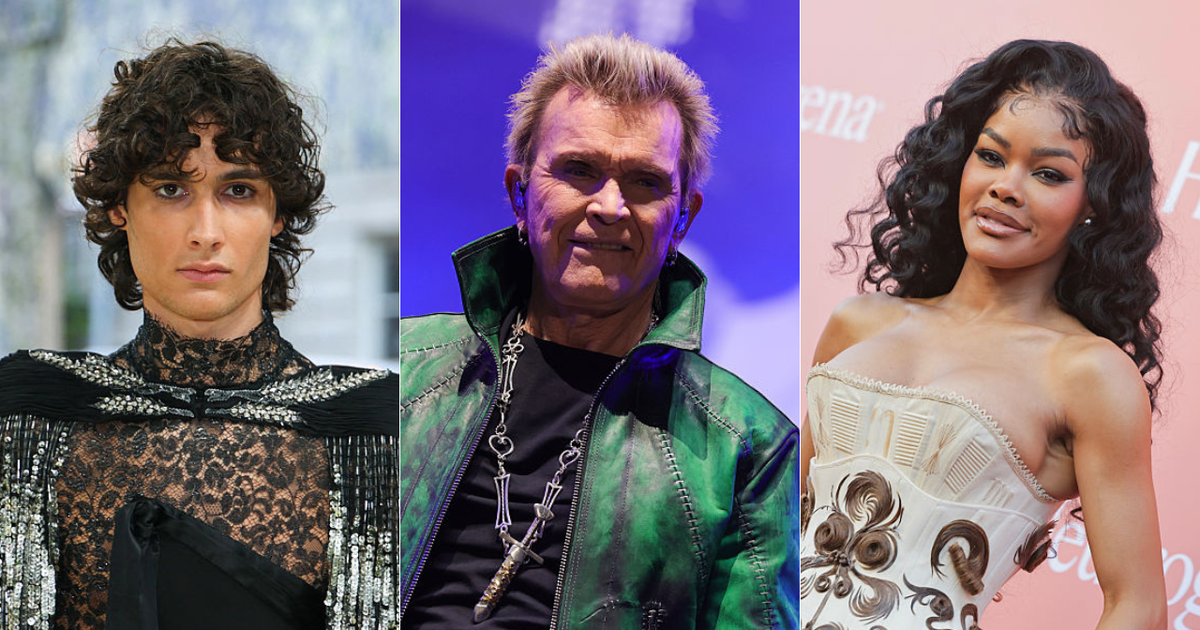
The American Music Awards kick off the unofficial start of summer tonight, celebrating the best in music and featuring performances from such artists as Billy Idol, Keith Urban, Teyana Taylor and others.
The show airs on CBS television stations and streams on Paramount+ starting at 8 p.m. ET/5 p.m. PT.
The AMAs boast of being the world’s largest fan-voted awards show. Voting for most of the categories closed earlier this month, but people can still vote online or on Instagram for social song of the year and tour of the year through the first half hour of the show.
Queen Latifah serves as host this year, returning to the AMAs stage after co-hosting in 1995 and performing over the years.
Taylor Swift leads the nominations with eight following last year’s release of “The Life of a Showgirl,” which is up for album of the year and best pop album. Two songs from the album also received nods: “The Fate of Ophelia” for song of the year, best music video and best pop song, and “Elizabeth Taylor” for song of the summer.
Swift has already won 40 times at the AMAs, which is more than any other artist. She’s also up for artist of the year and best female pop artist this year.
Morgan Wallen, Olivia Dean, Sabrina Carpenter and Sombr were right behind Swift with seven nominations each.
But the awards are only part of the show. Billy Idol, who’s known for such hits as “Dancing With Myself,” “Rebel Yell” and “White Wedding,” will receive a lifetime achievement award and perform a medley of some of his hits on the AMAs stage.
Scott Dudelson/Getty Images for Coachella
Keith Urban will perform a track from his upcoming yacht rock album “Flow State.” Teyana Taylor, who won a Golden Globe in January for her performance in “One Battle After Another” and is up for best female R&B artist at the AMAs, will perform a medley from her album, “Escape Room.”
There will also be performances by some groups that have amassed huge followings over the years, with Hootie and the Blowfish, New Kids on the Block and The Pussycat Dolls taking the stage.
K-pop superstars BTS will also make a special appearance. Following a nearly four-year hiatus for the members to fulfill their mandatory military service, the group began a world tour in March and will appear at their first awards show in four years at the AMAs. They are nominated for three awards as well.
Who’s performing at the 2026 American Music Awards?
Here’s a list of all the announced performers at the American Music Awards:
- Billy Idol
- Hootie and the Blowfish
- Karol G
- Katseye
- Keith Urban
- Maluma
- New Kids on the Block
- The Pussycat Dolls, with a guest appearance by Busta Rhymes
- Riley Green
- Sombr
- Teddy Swims
- Teyana Taylor
- Twenty One Pilots
How to watch the 2026 American Music Awards
- What: The 2026 American Music Awards show
- Date: Monday, May 25, 2026
- Time: 8 p.m. ET/5 p.m. PT
- Location: MGM Grand Garden Arena in Las Vegas
- On TV: Live on CBS television stations. Find your local station here.
- Online stream: Live on Paramount+
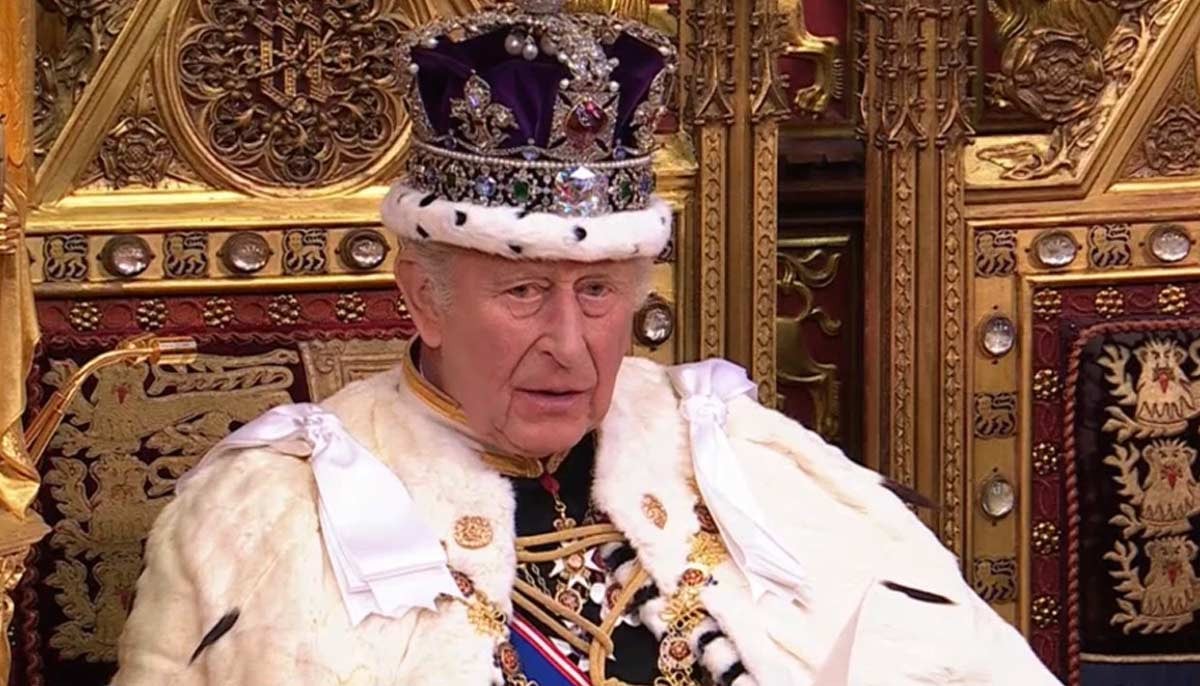
The royal family’s famouse show faces serious calls to conduct a review of its safety protocols after a heartbreaking loss.
The British monarch, 77, has reportedly taken an action to ensure safety meassure after a young soldier’s detah during a King’s Troop, Royal Horse Artillery performance earlier this month.
Lance Bombardier Ciara Sullivan, 24, lost his life after falling from her horse on May 15.
Heartbroken Britons urged officials to take notice of their concerns. They questioned whether traditional ceremonial practices, including the use of historic headwear rather than modern protective helmets, should continue in public displays.
She had been wearing the regiment’s ceremonial busby hat as part of the King’s Troop full dress uniform.
The insider claimed: “The organisers need to adopt smart strategy to save lives.
“We may face the same situation in the future if the measures are nt taken.”
The First World War-era QF 13-pounder field artillery, constructed from steel and wood with large spoked wheels, is pulled at speed by six horses arranged in three rows.
During performances, riders guide the heavy weaponry through complex arena manoeuvres and sharp turns.
“These carriages were invented centuries ago, before modern safety measures. They are not fit for purpose and nor are the hats. There should be a serious review of horse displays like this,” one source told the Mail.
Another said: “The continued use of traditional headwear that offers only limited protection has to be reviewed in an activity where serious head injuries are an ever-present risk.”
It announced the following morning: “The Royal Windsor Horse Show is continuing as planned, with the omission of The King’s Troop, Royal Horse Artillery display.”
After the shocking incident, Chief Superintendent Michael Loebenberg said: “We are appealing for anyone with information or material relating to the sad death of a military rider at Royal Windsor Horse Show yesterday to please get in touch.”
“At this stage, we have not found any suspicious circumstances. We are working with the Ministry of Defence, the Defence Accident Investigation Branch and Royal Windsor Horse Show organisers HPower to gather as much information as possible to understand how this happened.”
Buckingham Palace released a statment, saying that the King was “greatly shocked and saddened” by the tragedy.
The monarch also conveyed his condolences privately to her family.
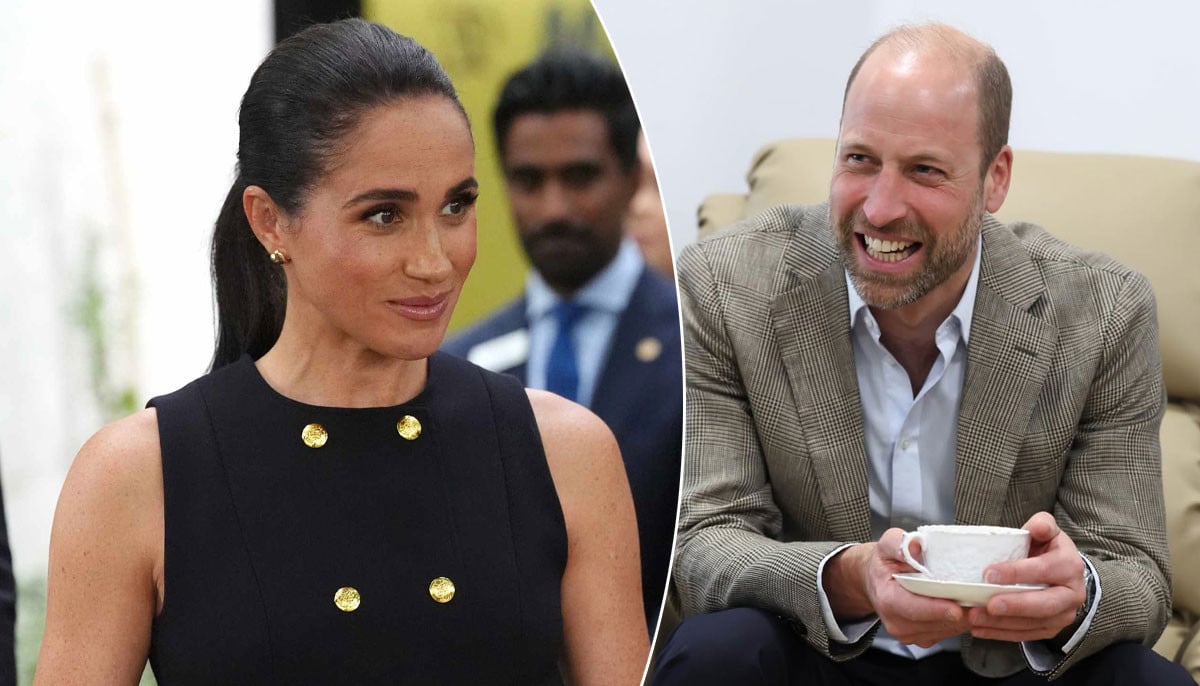
Meghan Markle took a coy approach as she appeared to have doubled down on her stance after a new debate was triggered involving Prince William.
It was believed that the Duchess of Sussex had made a direct attempt to get the future King’s attention with a bold move, knowing fully-well how critical the dynamics are between Prince Harry and William.
The discussion, on the surface, seems to be merely about scones, but experts believes there is something more to it. Eagle-eyed royal watchers noted that only hours after William shared his preferred method to eat the famous British tea-time snack, Meghan’s As Ever had shared a post about scones.
As the debate made headlines over the weekend, Meghan seemed to have reacted to the whole thing with a statement, somewhat confirming suspicions.
“Inspired by the jams Meghan has created in her own kitchen and shared over the years, each spread reflects a small-batch, carefully balanced approach to flavour,” a message read on As Ever alongside a video of the founder.
“Bright and fruit-forward with just a hint of tartness and a whisper of lemon, these spreads are crafted to highlight each fruit’s natural essence without overpowering it.”
In the brief video clip, Meghan shared her family’s preferred jams – Harry likes raspberry, Lilibet likes strawberry and Archie likes both.
The relations between the Sussexes and the Waleses are still at an impasse even though King Charles has begun warming up to his younger son.
Meghan’s move has earned mixed reactions, where some believe this is her usual tactic to steal the spotlight from the royals, other suggest this could be an icebreaker to get a conversation moving between them.


US govt formally implements extension of AGOA till 2026 end

Stock market today: Which are top gainers and losers on NSE & BSE on May 25? Check list

These Privacy-Conscious Gay Dating Apps Want to Dethrone Grindr

-

 Entertainment1 week ago
Where Pete Davidson, Elsie Hewitt stand after breakup: Details revealed
-

 Politics1 week ago
Rising diesel costs from Iran war strain US school budgets
-

 Tech1 week ago
Why Is Your Grill So Dumb? The Best Grills Set Temp Like an Oven
-

 Tech1 week ago
This Solar-Powered Smart Sprinkler Keeps My Lawn Watered Without Any Power Cables
-

 Fashion5 days ago
US cotton planting advances to 41%, concerns persist in Texas
-

 Fashion7 days ago
Turkiye’s current account deficit expected to widen in 2026: Minister
-

 Fashion4 days ago
ICE cotton sees mixed trend as rain forecasts weaken sentiment
-

 Fashion6 days ago
Nigeria Kwara Garment Factory, KWS Garment Production Village ink pact