

Business
Who owns TikTok now and how could it change for US users?

Liv McMahonTechnology reporter
 Getty Images
TikTok has announced a deal allowing it to continue operating in the US.
But with the platform’s future in the country seemingly secured, its 200 million American users are expected to see some changes.
What is the US TikTok deal?
A majority-American board now owns and operates a separate entity controlling TikTok in the US.
Backed by mostly US investors, the newly established TikTok USDS Joint Venture LLC is governed by a board of seven directors.
TikTok chief executive Shou Zi Chew is among them, and its Chinese owner ByteDance will retain a 19.9% stake in the business.
The content recommendation algorithm at the heart of TikTok – determining which videos show up on the app’s For You feed – has been licensed to tech firm Oracle.
Headed by Trump ally Larry Ellison, Oracle already oversees TikTok US user data under a previous arrangement set up over security concerns called Project Texas.
But the company will now secure more of the app, including by retraining and updating its recommendation algorithm based on US user data.
TikTok says both the algorithm and US user data will be protected in “Oracle’s secure US cloud environment”.
The deal may be done, but it is likely to receive continued scrutiny. Some Democrats have already voiced concern that the ties between Trump and TikTok’s new investor group could end up limiting what gets shared on the platform.
“Americans won’t be any better off if a TikTok sale ends up with the company in the hands of Trump cronies backed by foreign funding,” Democrat Senator Ron Wyden said in December ahead of the deal being finalised.
Meanwhile Senator Ed Markey reportedly said on Friday Congress should investigate the agreement, citing a “lack of transparency” and detail.
Will I have to download a new app?
Something TikTok and those behind its new US joint venture will be keen to avoid is too much disruption – so making users download a new app seems unlikely.
The US is believed to be the platform’s largest global market, with 200 million users, according to TikTok.
It faces growing competition from Instagram and its short form video feature Reels – which parent firm Meta has boosted within its apps used by billions.
And experts and analysts have warned changing TikTok too much or requiring users to move to a new app could put users and advertisers off.
“Behind the scenes, TikTok is likely working hard to assure advertisers it will remain business as normal,” says Jasmine Enberg, co-CEO of Scalable, a media company and podcast focused on the creator economy.
“While the need for users to download a new app seems unlikely, brand partners will want to know that their TikTok strategies won’t be disrupted.”
Have TikTok US terms and conditions changed?
TikTok updated its terms of service for US users as the deal closed on Thursday.
It says the contract users agree to is now between themselves and the platform’s new US entity, TikTok USDS Joint Venture.
There are several changes. One new rule says children under the age of 13 cannot use TikTok outside of its specific “Under 13 Experience”.
Another point says the new US entity “does not endorse any content” on the platform, nor does it reflect its views.
US users who continue to use TikTok from 22 January also must agree to the limitations of generative AI – such as its potential to generate inaccurate, misleading, inappropriate or unlawful content.
“By using the platform, including its generative AI-enabled features, you recognise and assume this risk,” it says.
Will the algorithm get worse for US TikTok users?
Exactly what changes US users will see to their TikTok app and feeds, as a result of the deal, remains unclear.
The BBC has asked TikTok what will change in its American experience, and when.
But we know its recommendation algorithm will be retrained on US user data – sparking concern for some over whether highly personalised content it serves could change.
Enberg says algorithm tweaks could affect what people see or even create, potentially “leading to a different look and feel” for US users.
Dr Kokil Jaidka of the National University of Singapore previously said while the app is “unlikely to suddenly feel different” for most, “changes are plausible”.
Differences that do appear to US users are likely to be “subtle and gradual” – such as weaker personalisation.
But locally-controlled, user-facing features such as TikTok’s short videos, influencer culture and livestream shopping may not change, she said.
“There is a big incentive here to keep what works,” social media expert Matt Navarra told the BBC.
He said changes to an algorithm can bring “short-term tuning issues” such as less reach, repetitive content or random recommendations, and TikTok would want to maintain its algorithm as its “crown jewel”.
“What’s important here is you’re still using the same app, the same account and broadly the same recommendation engine,” he said
“I think the goal is continuity not reinvention.”
Will I see less global content on TikTok?
Using a licensed version of TikTok’s algorithm to power its US version could also present “constraints around data access, update frequency, and integration with TikTok’s global systems,” Jaika said.
But she said changes could impact the For You feed – which “learns from massive, cross-regional feedback loops” to surface relevant content – as well as how videos are ranked and moderated.
However she said many unknowns remain, with much depending “on how ByteDance tweaks the weaker links – such as data separation, update frequency, and oversight mechanisms – without degrading performance”.
TikTok meanwhile says the joint venture will be able to make the app compatible with other apps and regions to give US users “a global experience”.
Its press release claims US creators will still be discoverable and businesses will be able to maintain global reach.
“It’s not that the world disappears, more that domestic content could crowd out international content over time,” Navarra said.
“In other words, global content stays – but the balance may suddenly shift.”
What about CapCut and Lemon8?
CapCut and Lemon8 are two other popular apps owned by ByteDance accessed by US users.
Previously, it was slightly unclear what the law requiring TikTok’s sale or ban in the US could mean for its sister apps and their users.
But both “went dark” in the US alongside TikTok when the ban briefly took effect in January 2025.
Their future in the US now appears to be secured, with TikTok saying “safeguards provided by the Joint Venture will also cover CapCut, Lemon8, and a portfolio of other apps and websites in the US”.


Business
Armageddon scenario! Why Iran’s missile strikes on Qatar’s LNG spell nightmare for Europe, Asia – The Times of India

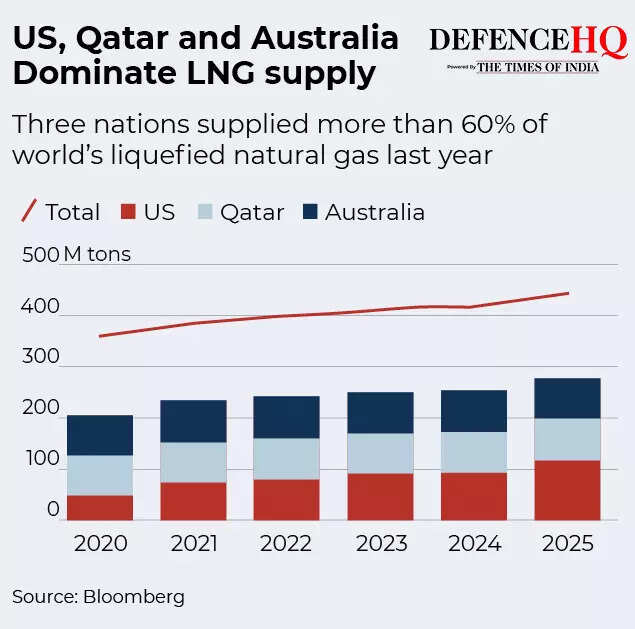
Is an Armageddon scenario about to play out? Europe and Asia are facing a nightmare scenario with the escalating crisis in the Middle East now increasingly impacting key energy infrastructure. The latest shockwave for the market has come in the form of a big hit to Qatar’s Ras Laffan complex on Thursday morning by Iran.LNG or liquefied natural gas facilities rank among the most intricate and large-scale industrial structures ever built, and Ras Laffan stands as the biggest of them, converting Qatar’s vast gas reserves into super-cooled fuel for global transport—until the Iranian missile strikes disrupted operations.This has led to markets across Europe and Asia confronting a new energy shock. Under normal conditions, roughly one-fifth of the world’s LNG supply originates from Ras Laffan, which is a sprawling industrial hub developed over three decades at a cost of hundreds of billions of dollars and covering an area nearly three times that of Paris.To understand the scale of LNG operations at the facility, sample this: Ras Laffan operates 14 liquefaction trains that process gas into 77 million tonnes of LNG annually, sufficient to meet Japan’s entire yearly demand or exceed the combined needs of the UK and Italy!
Armageddon scenario plays out for Europe, Asia
The immediate impact of the latest strikes was evident across global energy markets. Brent crude prices briefly surged by over 10 percent, crossing the $119-per-barrel mark before easing from those highs.
In Europe, gas prices spiked as much as 35 per cent and later stabilised at around 70 euros per megawatt hour, still reflecting a gain of about 28 per cent. This rise is expected to feed through to electricity costs, as power prices in the region are largely linked to gas rates.Analysts at EnergyScan told AFP, “We are not yet in the worst-case scenario we described in our last monthly report, but we are getting closer.”European gas prices have more than doubled since the US-Israel-Iran conflict began, as traders assessed the implications of a prolonged disruption to Qatar’s LNG exports. “I woke up this morning and thought, ‘No, please no,’”Anne-Sophie Corbeau, former head of gas analysis at BP and now with Columbia University’s Center on Global Energy Policy, told the Financial Times. “This has always been my nightmare scenario, my Armageddon scenario, the one I didn’t want to happen,” the report quoted the expert saying.Two gas traders said they were still trying to absorb the scale of the incident after Iran carried out a two-stage attack, launching ballistic missiles at the facility late Wednesday and again in the early hours of Thursday. “This is unprecedented,” one of them said.QatarEnergy, the state-owned operator of Ras Laffan, told Reuters that damage to two LNG units—developed in partnership with ExxonMobil—could take between three and five years to repair. The disruption is expected to result in annual revenue losses of $20 billion and force the cancellation of long-term supply agreements with Italy, Belgium, Korea and China.The disruption has effectively removed about 17 per cent of Qatar’s overall gas output for the foreseeable future. Prior to the strike, market participants believed LNG shipments from Ras Laffan would quickly resume once tensions in the Middle East subsided and the Strait of Hormuz became secure for tanker movement. Although prices had climbed last week, they had steadied at levels well below those recorded during Russia’s invasion of Ukraine in 2022.That outlook has now been overturned!
Years of repair to drive up prices
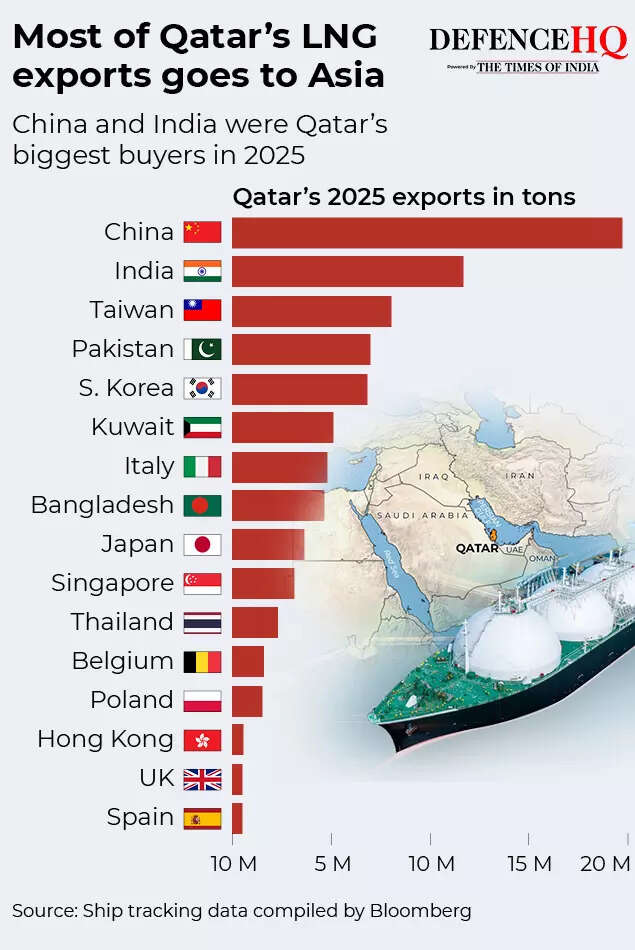
One trader told Financial Times that European gas prices are likely to remain elevated “through 2027,” while the region could struggle to replenish storage levels over the summer as Asian buyers turn to US LNG to offset the shortfall. Asia was already dealing with constrained supply and rationing following disruptions from the Gulf. Europe, increasingly dependent on LNG after Russia curtailed pipeline exports during its war with Ukraine, now faces intensified competition with countries such as Japan and South Korea for limited LNG cargo availability.
Laurent Segalen, a clean energy investment banker, was quoted as saying: “It is apocalypse now. The coming months for gas importers are going to be a bloodbath.” The infrastructure required to cool gas into LNG is highly complex and cannot be replaced quickly. Repairs will involve a meticulous process that can only begin once Qatar is assured that the site is secure and personnel can return without the threat of further attacks.Tom Marzec-Manser, an LNG specialist at energy consultancy Wood Mackenzie, said it is already clear that a return to normal output levels in Qatar will not happen quickly, regardless of how soon the conflict ends. “What we can conclude immediately is that regardless of when the conflict now ends, a resumption of normal production from Qatar is not going to happen in a matter of weeks,” he told FT.The expert noted that earlier projections had suggested production at Ras Laffan could resume within about 40 days, but that timeline is no longer realistic. He also indicated that Qatar’s ambitious expansion plans for the facility, which include adding six new liquefaction units over this year and next, are now likely to face delays. “There is an element of uncertainty, but we know now this is a months-long reduction in supply,” he added.Although some LNG projects in the United States are expected to come online soon, Corbeau said replacing Qatari supply is far from straightforward and involves significant political challenges. She pointed out that some policymakers have already begun advocating for easing restrictions on Russian gas imports.At the same time, several countries have started reverting to coal-based power generation, while industrial operations in parts of Southeast Asia are being forced to scale back or suspend production due to limited energy availability. “The world of energy is going to fracture between the haves and the have-nots,” said Segalen.
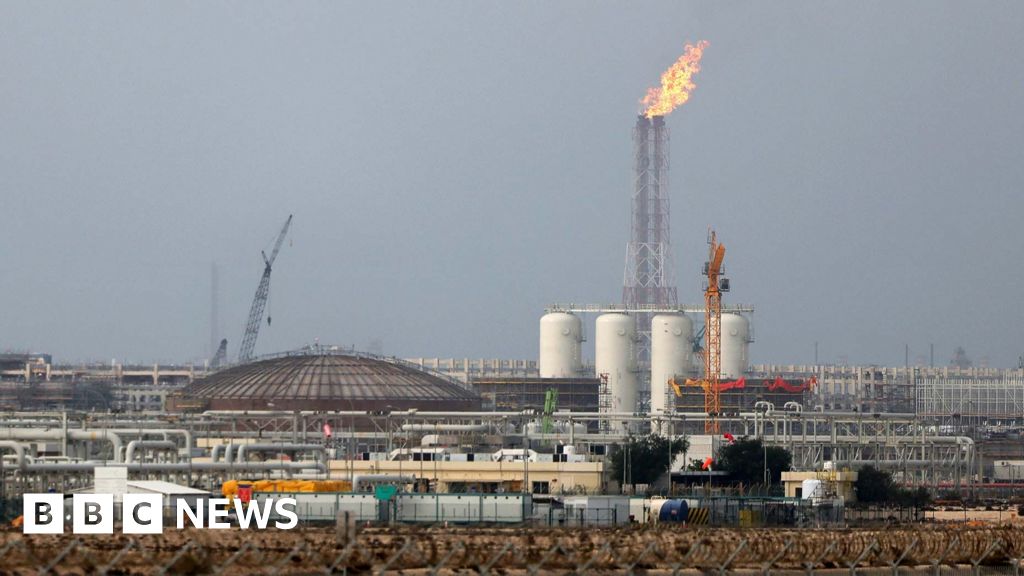
Analysts fear the disruption to supply could continue for longer than initially thought.
Source link
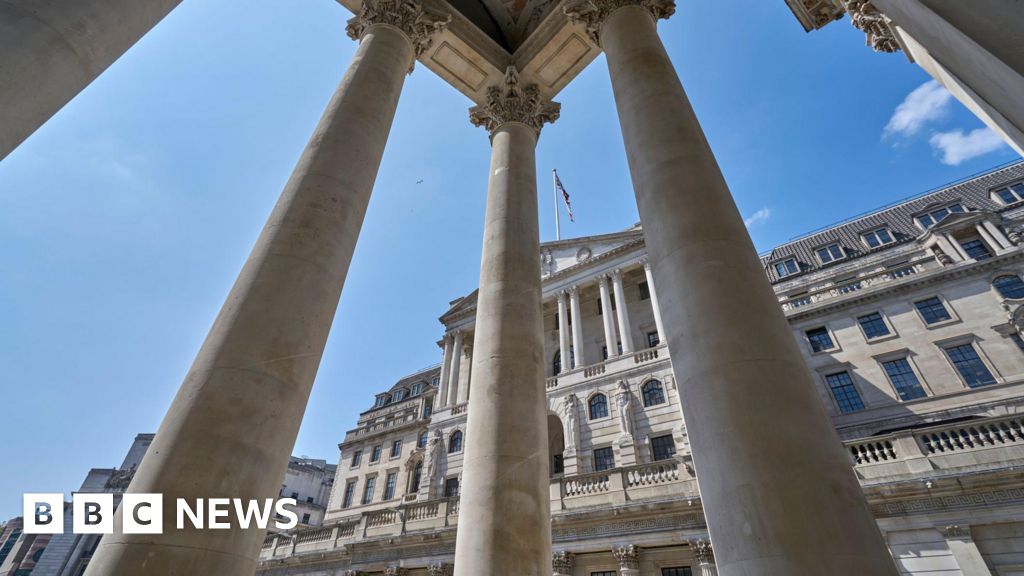
Policymakers vote unanimously to hold rates at 3.75% after the Iran war prompts a sea-change in the debate over borrowing costs.
Source link


A New Game Turns the H-1B Visa System Into a Surreal Simulation

British journalist narrowly escapes Israeli missile strike on live camera

How assistant managers handle players, personal ambition

Stock market crash today (March 12, 2026): Nifty50 opens below 23,600; BSE Sensex down over 900 points on continuing US-Iran war – The Times of India

UK’s Topshop unveils Tolu Coker capsule collection
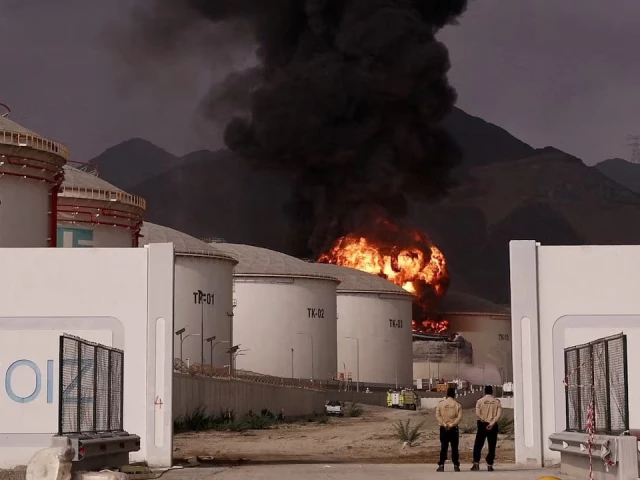
US ignites Iran war, but Gulf Arab states pay the price | The Express Tribune

-
Business1 week ago
Stock market crash today (March 12, 2026): Nifty50 opens below 23,600; BSE Sensex down over 900 points on continuing US-Iran war – The Times of India
-
 Fashion1 week ago
UK’s Topshop unveils Tolu Coker capsule collection
-
Business1 week ago
US ignites Iran war, but Gulf Arab states pay the price | The Express Tribune
-

 Fashion1 week ago
India’s textile recycling market may reach $3.5 bn by 2030: Report
-

 Tech1 week ago
Meta Developed 4 New Chips to Power Its AI and Recommendation Systems
-
 Business1 week ago
8th Pay Commission: How Much Will Central Govt Employees’ Salaries Rise? What We Know So Far
-

 Sports1 week ago
Bangladesh crush Pakistan in ODI series opener | The Express Tribune
-
 Entertainment1 week ago
Gas, food, household prices explained