Business
Currency watch: Rupee falls 13 paise to all-time low of 88.81 against US dollar; FII outflows, dollar strength weigh – The Times of India
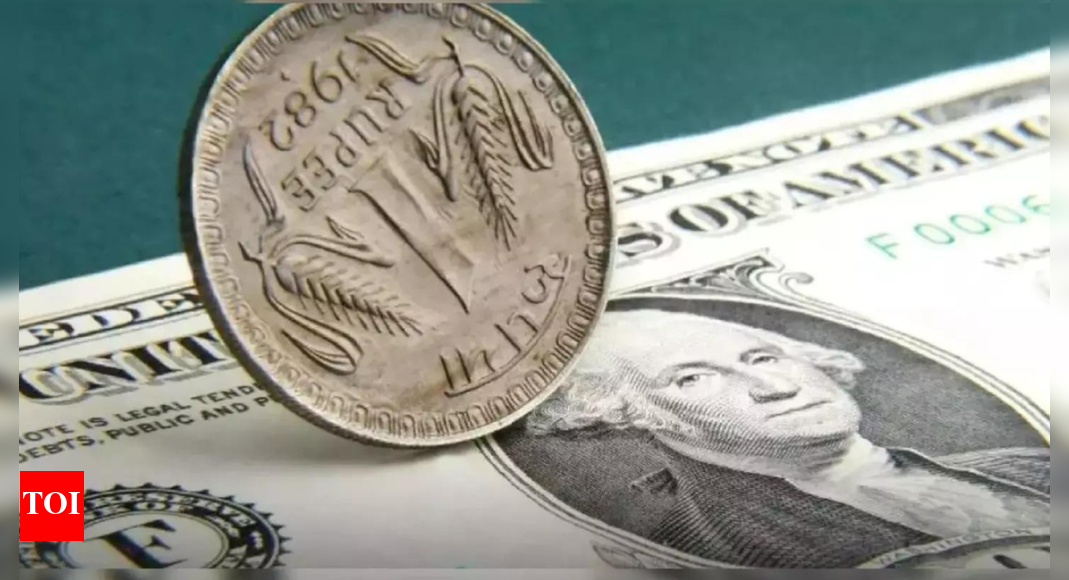
The Indian rupee fell 13 paise to close at an all-time low of 88.81 against the US dollar on Tuesday, pressured by weak domestic equities and a firm dollar amid global risk-off sentiment, according to market sources.Forex traders said foreign fund outflows amid risk-averse global conditions further dented investor sentiment. However, a drop in crude oil prices and reports of Reserve Bank of India (RBI) intervention supported the local unit and curtailed sharper losses, PTI reported.At the interbank foreign exchange, the rupee opened at 88.73 against the greenback, touched an intraday low of 88.82, and a high of 88.73 before settling at 88.81, down from the previous close of 88.68. On September 30, the rupee had touched 88.80, its previous all-time low.“The rupee… [was] pressured by broad-based dollar strength and weaker regional currencies. Sentiment remains fragile amid US-China trade uncertainty and risk-averse moods. However, the rupee has demonstrated resilience, consolidating in a narrow range over the past two weeks due to central bank intervention and foreign fund inflows. Near-term, spot USD/INR finds support at 88.50 and faces resistance at 89.10,” said Dilip Parmar, Senior Research Analyst, HDFC Securities.The dollar index, which tracks the greenback against a basket of six currencies, was trading 0.10 per cent higher at 99.36. Brent crude futures fell 2.15 per cent to USD 61.99 per barrel.Experts noted that US-India trade tariffs remain a concern for investor sentiment. A senior official said a team of Indian officials will visit the US this week for trade talks, with the first tranche of a proposed Bilateral Trade Agreement (BTA) aimed for conclusion between October and November 2025. Five rounds of negotiations have been completed so far.“A weak tone in global crude oil prices and FII inflows may favour the rupee. The US government shutdown and rising odds of a rate cut by the US Federal Reserve may further weigh on the US Dollar. USD/INR spot price is expected to trade in a range of 88.50 to 89,” said Anuj Choudhary, Research Analyst, Currency and Commodities, Mirae Asset ShareKhan, PTI quoted.On the domestic data front, India’s Consumer Price Index (CPI) inflation eased to an eight-year low of 1.54 per cent in September from 2.07 per cent in August, falling below the RBI’s 2 per cent target. Wholesale Price Index (WPI) inflation also cooled to 0.13 per cent in September from 0.52 per cent in August.Domestic equities also fell, with the Sensex dropping 297.07 points to 82,029.98 and the Nifty declining 81.85 points to 25,145.50. Foreign Institutional Investors sold equities worth Rs 1,508.53 crore on Tuesday, exchange data showed.

Business
Top 3 Firms Add Rs 75,855 Crore In Market Valuation Last Week
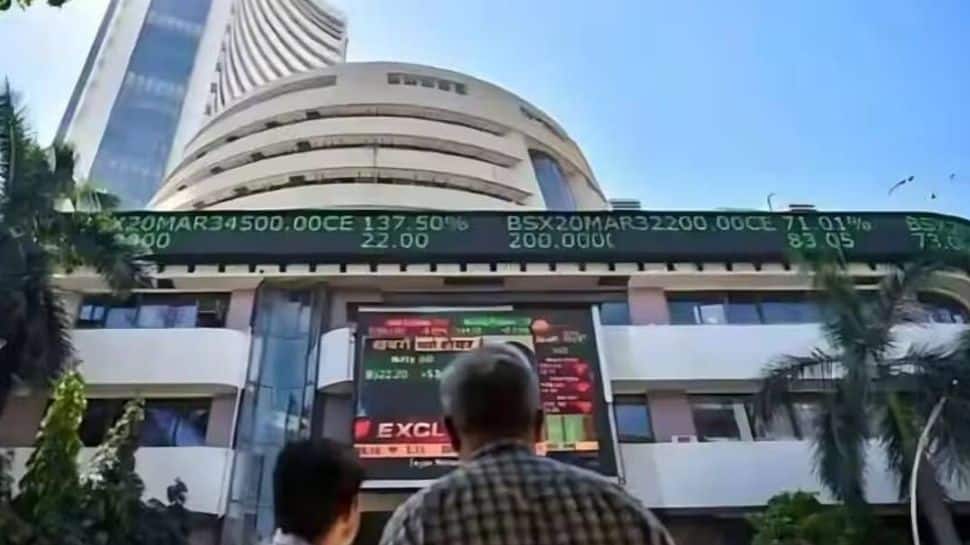
New Delhi: The combined market valuation of three of India’s top companies surged by Rs 75,855.43 crore last week, even as the overall stock market showed a sluggish trend during the holiday-shortened week.
State Bank of India (SBI) and Infosys were the biggest gainers among the top firms. While the Sensex slipped 5.89 points, the Nifty inched up by 11.05 points over the week.
Commenting on Nifty technical outlook, an expert said that “immediate resistance is placed at 25,875, followed by 26,000 and 26,100 levels. On the downside, support is seen at 25,600 and 25,450.”
“A breakdown below 25,300 could intensify downside pressure and accelerate corrective moves. Given the prevailing volatility, a cautious approach with strict stop-loss discipline is advised,” an analyst stated.
Among the top companies, ICICI Bank, SBI, and Infosys recorded gains, while HDFC Bank, Tata Consultancy Services (TCS), Bharti Airtel, Bajaj Finance, Hindustan Unilever, and Larsen & Toubro faced a combined erosion of Rs 75,549.89 crore in their market value.
Interestingly, the total loss of these seven companies was still slightly less than the total m-cap addition of the three gainers.
SBI emerged as the biggest gainer, with its market valuation jumping by Rs 39,045.51 crore to reach Rs 9,62,107.27 crore.
Infosys also saw a strong increase, with its m-cap rising by Rs 31,014.59 crore to Rs 7,01,889.59 crore.
ICICI Bank added Rs 5,795.33 crore, taking its market value to Rs 10,09,470.28 crore.
On the other hand, Larsen & Toubro’s market valuation fell by Rs 23,501.8 crore to Rs 5,30,410.23 crore, while HDFC Bank’s valuation dropped by Rs 11,615.35 crore to Rs 14,32,534.91 crore.
Bharti Airtel’s m-cap declined by Rs 6,443.38 crore to Rs 11,49,544.43 crore, Bajaj Finance saw a dip of Rs 6,253.59 crore to Rs 5,91,447.16 crore, Hindustan Unilever lost Rs 3,312.93 crore to stand at Rs 5,54,421.30 crore, and TCS’s valuation slipped by Rs 470.36 crore to Rs 11,60,212.12 crore.
After these movements, HDFC Bank remained the second most valued domestic company, followed by TCS, Bharti Airtel, ICICI Bank, SBI, Infosys, Bajaj Finance, Hindustan Unilever, and Larsen & Toubro.
Business
Gold and Silver Prices Outlook: What Investors Should Watch This Week
Last Updated:
Gold and silver hit new records in 2025, with silver crossing 90 dollars per ounce. Experts highlight silver’s industrial demand and gold’s role as a hedge.
Gold and Silver outlook this week
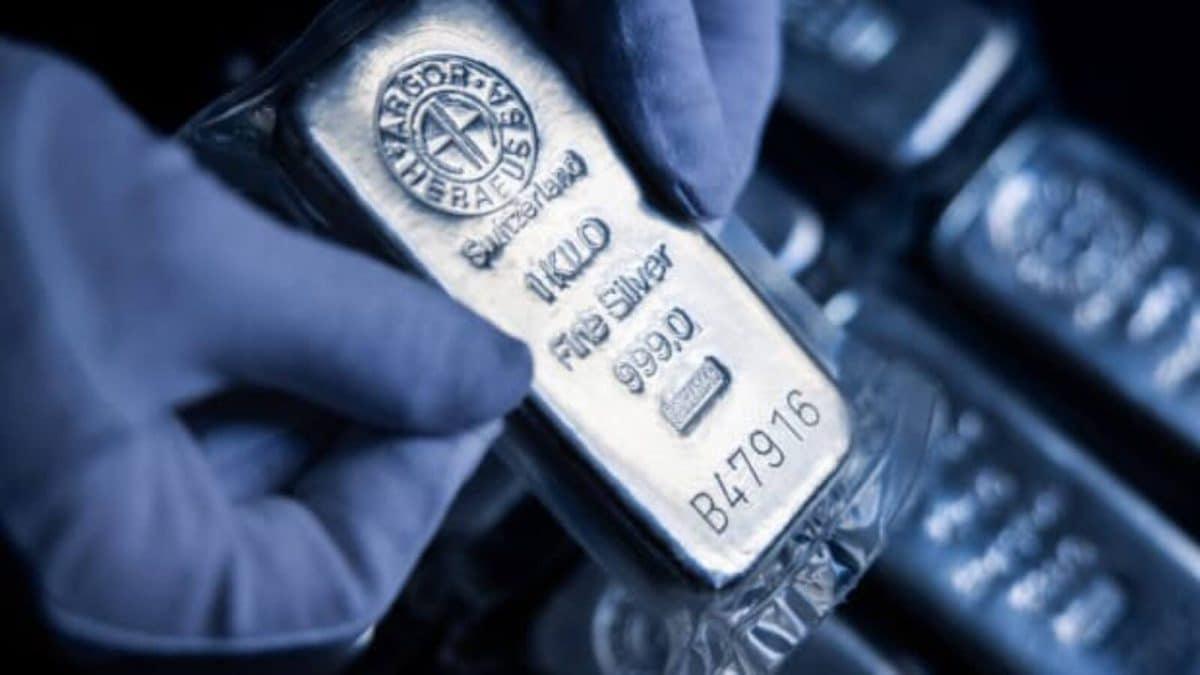
Gold and Silver Prices Outlook: Gold and silver prices saw a marginal dip after a record-breaking rally. Continuing the upward momentum of 2025, gold and silver made new records with silver crossing $90 per ounce-mark for the first time in history. Meanwhile, gold hovered in the range of $4,596-$5,600 per ounce.
COMEX Silver has seen a relatively sharper correction to the $89–$90 region after peaking above $93.7, reflecting short-term profit-booking following an extended rally.
In India, gold futures with expiry on February 05, 2026, stood at Rs 1,42,474 per 10 grams as on January 16, 2026. Silver futures with expiry in March were at Rs 2,87,701 per kg.
The tussle between European Union and the United States of American will be watched closely across the world this week. Trump administration has put fresh tariffs on the European Union following his demand to acquire Greenland, an autonomous region under Denmark, prompting the EU to halt the trade deal with the US with immediate effect.
“The 0 per cent tariffs on US products must be put on hold,” Weber said in a post on X, citing concerns over Washington’s latest actions.
European Commission President Ursula von der Leyen warned that the new tariffs risk damaging transatlantic ties.
“Tariffs undermine transatlantic relations and risk a dangerous downward spiral,” she said, stressing that Europe would uphold its sovereignty and remain united.
Gold, Silver Outlook
The long-term appeal of silver and gold will remain. Chronic supply shortages, especially in silver, sustained central bank gold purchases, accelerating demand from green energy, EVs, AI, and electronics, and ongoing macro and geopolitical uncertainties continue to support the long-term bullish narrative, said Ponmudi R, CEO – Enrich Money.
While near-term volatility may persist due to profit-taking, dollar movements, and key U.S. macro data, any corrective phases are expected to remain shallow and attract buying interest, added Ponmudi R.
“Silver continues to offer relative outperformance potential due to its higher industrial leverage, while gold remains a reliable hedge against macro and geo-political uncertainty,” he said.
Prasenjit Paul, Equity Research Analyst & Fund Manager at 129 Wealth Fund said one of the biggest mistakes investors can make is treating gold, silver, and debt as one broad “defensive” allocation.
“Doing so masks overlapping risks and can lead to a situation where supposedly safe assets decline at the same time as equities,” he said.
For gold he added that it should be viewed purely as catastrophe insurance—largely independent of the business cycle and the most reliable hedge against systemic stress.
Adding for silver, Paul said, Silver does not belong in the defensive category at all. Its demand is heavily linked to industrial activity, particularly in areas like solar energy and electric vehicles.
“As a result, silver behaves more like a cyclical asset and should be treated as a tactical satellite allocation,” Paul added.
Disclaimer: The views and investment tips by experts in this News18.com report are their own and not those of the website or its management. Users are advised to check with certified experts before taking any investment decisions.
January 18, 2026, 14:54 IST
Read More
Business
Slowdown in rising cost-of-living set for December pause, say economists
UK inflation could have ticked higher last month, as Christmas getaways helped fuel price rises at the end of the year, economists have said.
Some economists are expecting the rate of Consumer Prices Index (CPI) inflation to have risen in December after falling sharply the previous month.
Rob Wood and Elliott Jordan-Doak, economists for Pantheon Macroeconomics, said they were forecasting CPI to rise to 3.3% in December, from 3.2% in November.
A hike to tobacco duties, which was announced at the autumn budget in November, is set to have pushed up overall inflation during the month.
The price of plane tickets and hotels are also expected to have soared amid stronger demand for Christmas travel.
Analysts forecast that airfares could have jumped by about 30% between November and December.
But economists stressed that the choice of date for the Office for National Statistics (ONS) to collect the latest inflation data would be crucial, as prices would have differed throughout the month.
If it was collected later in the month, travel prices could have been much higher in line with the school holidays, pushing up the overall rate of inflation.
Andrew Goodwin, chief UK economist for Oxford Economics, said he thought the slowdown in the rising cost of living was “temporarily halted” in December.
He said: “Some of November’s downward pressure came from volatile categories, including clothing, airfares, and accommodation services, and this is likely to have unwound in December, although the choice of date for collecting the data will likely have a crucial bearing on the outturn for airfares.”
He is predicting a much sharper increase of CPI inflation to 3.6% in December.
On the other hand, analysts for Barclays said they thought inflation would remain unchanged at 3.2% in December.
They forecast energy price inflation to have slowed, while food and drink price rises to have steadied at the end of the year.
But experts said they thought inflation was still heading downwards this year.
Victoria Scholar, head of investment for Interactive Investor, said that “longer term, the trajectory for inflation is still on the downside, heading back towards the 2% target later this year”.
“November’s budget from the Chancellor was largely viewed as disinflationary owing to its contractionary fiscal measures, including tax increases and spending cuts,” she said.
“Plus, there are growing signs of slack in the labour market, also easing inflationary pressures in the UK economy.”
-
Tech6 days agoNew Proposed Legislation Would Let Self-Driving Cars Operate in New York State
-
Sports1 week agoClock is ticking for Frank at Spurs, with dwindling evidence he deserves extra time
-
Sports1 week ago
Commanders go young, promote David Blough to be offensive coordinator
-
Entertainment5 days agoX (formerly Twitter) recovers after brief global outage affects thousands
-
Fashion1 week agoSouth India cotton yarn gains but market unease over US tariff fears
-
Fashion1 week agoChina’s central bank conducts $157-bn outright reverse repo operation
-
Business1 week agoSoftBank reduces Ola Electric stake to 13.5% from 15.6% – The Times of India
-
Sports1 week agoUS figure skating power couple makes history with record breaking seventh national championship