

Tech
Battery-equipped kitchen stove makes it easy to switch from gas to electric


As batteries have gotten cheaper and more powerful, they have enabled the electrification of everything from vehicles to lawn equipment, power tools, and scooters. But electrifying homes has been a slower process. That’s because switching from gas appliances often requires ripping out drywall, running new wires, and upgrading the electrical box.
Now the startup Copper, founded by Sam Calisch SM ’14, Ph.D. ’19, has developed a battery-equipped kitchen range that can plug into a standard 120-volt wall outlet. The induction range features a lithium iron phosphate battery that charges when energy is cheapest and cleanest, then delivers power when you’re ready to cook.
“We’re making ‘going electric’ like an appliance swap instead of a construction project,” says Calisch. “If you have a gas stove today, there is almost certainly an outlet within reach because the stove has an oven light, clock, or electric igniters. That’s big if you’re in a single-family home, but in apartments it’s an existential factor. Rewiring a 100-unit apartment building is such an expensive proposition that basically no one’s doing it.”
Copper has shipped about 1,000 of its battery-powered ranges to date, often to developers and owners of large apartment complexes. The company also has an agreement with the New York City Housing Authority for at least 10,000 units.
Once installed, the ranges can contribute to a distributed, cleaner, and more resilient energy network. In fact, Copper recently piloted a program in California to offer cheap, clean power to the grid from its home batteries when it would otherwise need to fire up a gas-powered plant to meet spiking electricity demand.
“After these appliances are installed, they become a grid asset,” Calisch says. “We can manage the fleet of batteries to help provide firm power and help grids deliver more clean electricity. We use that revenue, in turn, to further drive down the cost of electrification.”
Finding a mission
Calisch has been working on climate technologies his entire career. It all started at the clean technology incubator Otherlab that was founded by Saul Griffith SM ’01, Ph.D. ’04.
“That’s where I caught the bug for technology and product development for climate impact,” Calisch says. “But I realized I needed to up my game, so I went to grad school in [MIT Professor] Neil Gershenfeld’s lab, the Center for Bits and Atoms. I got to dabble in software engineering, mechanical engineering, electrical engineering, mathematical modeling, all with the lens of building and iterating quickly.”
Calisch stayed at MIT for his Ph.D., where he worked on approaches in manufacturing that used fewer materials and less energy. After finishing his Ph.D. in 2019, Calisch helped start a nonprofit called Rewiring America focused on advocating for electrification. Through that work, he collaborated with U.S. Senate offices on the Inflation Reduction Act.
The cost of lithium-ion batteries has decreased by about 97% since their commercial debut in 1991. As more products have gone electric, the manufacturing process for everything from phones to drones, robots, and electric vehicles has converged around an electric tech stack of batteries, electric motors, power electronics, and chips. The countries that master the electric tech stack will be at a distinct manufacturing advantage.
Calisch started Copper to boost the supply chain for batteries while contributing to the electrification movement.
“Appliances can help deploy batteries, and batteries help deploy appliances,” Calisch says. “Appliances can also drive down the installed cost of batteries.”
The company is starting with the kitchen range because its peak power draw is among the highest in the home. Flattening that peak brings big benefits. Ranges are also meaningful: It’s where people gather around and cook each night. People take pride in their kitchen ranges more than, say, a water heater.
Copper’s 30-inch induction range heats up more quickly and reaches more precise temperatures than its gas counterpart. Installing it is as easy as swapping a fridge or dishwasher. Thanks to its 5-kilowatt-hour battery, the range even works when the power goes out.
“Batteries have become 10 times cheaper and are now both affordable and create tangible improvements in quality of life,” Calisch says. “It’s a new notion of climate impact that isn’t about turning down thermostats and suffering for the planet, it’s about adopting new technologies that are better.”
Scaling impact
Calisch says there’s no way for the U.S. to maintain resilient energy systems in the future without a lot of batteries. Because of power transmission and regulatory limitations, those batteries can’t all be located out on the grid.
“We see an analog to the internet,” Calisch says. “In order to deliver millions of times more information across the internet, we didn’t add millions of times more wires. We added local storage and caching across the network. That’s what increased throughput. We’re doing the same thing for the electric grid.”
This summer, Copper raised $28 million to scale its production to meet growing demand for its battery-equipped appliances. Copper is also working to license its technology to other appliance manufacturers to help speed the electric transition.
“These electric technologies have the potential to improve people’s lives and, as a byproduct, take us off of fossil fuels,” Calisch says. “We’re in the business of identifying points of friction for that transition. We are not an appliance company; we’re an energy company.”
Looking back, Calisch credits MIT with equipping him with the knowledge needed to run a technical business.
“My time at MIT gave me hands-on experience with a variety of engineering systems,” Calisch. “I can talk to our embedded engineering team or electrical engineering team or mechanical engineering team and understand what they’re saying. That’s been enormously useful for running a company.”
He adds, “I also developed an expansive view of infrastructure at MIT, which has been instrumental in launching Copper and thinking about the electrical grid not just as wires on the street, but all of the loads in our buildings. It’s about making homes not just consumers of electricity, but participants in this broader network.”
This story is republished courtesy of MIT News (web.mit.edu/newsoffice/), a popular site that covers news about MIT research, innovation and teaching.
Citation:
Battery-equipped kitchen stove makes it easy to switch from gas to electric (2025, October 30)
retrieved 30 October 2025
from https://techxplore.com/news/2025-10-battery-equipped-kitchen-stove-easy.html
This document is subject to copyright. Apart from any fair dealing for the purpose of private study or research, no
part may be reproduced without the written permission. The content is provided for information purposes only.











Tech
I Tested Garmin Watches for a Decade While Hiking, Biking, and Climbing. Here’s What You Should Buy
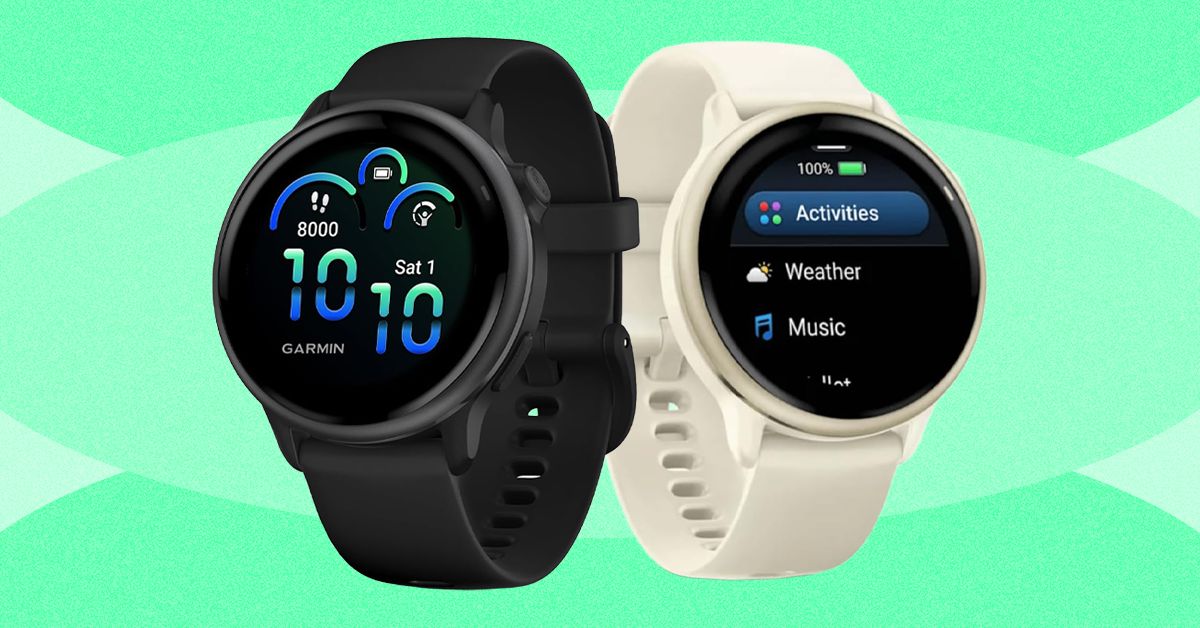
Last year, Garmin introduced a Pro version that incorporates the inReach’s satellite communications savvy. Not only does it cost at least $400 more than the Apple Watch Ultra and $200 more than the regular Fenix 8, but you also have to pay for the inReach subscription plan, which has several tiers and ranges from $8/month to $50/month depending on whether you want features like unlimited texting or sending photo messages.
What you get for this mind-boggling price is a sports watch that can do anything and everything. It has best-in-class battery life (every Fenix can last for weeks on a single charge, and up to a month with solar charging) and features like the depth sensor from Garmin’s Descent line, which means this watch works as a full-on dive computer for scuba and free diving. It has a microphone and speaker for basic voice commands (although no onboard cellular connectivity), the surprisingly useful built-in LED flashlight, and Garmin’s signature built-in topographic maps, 24/7 health monitoring, and tracking for over a hundred different activities.
I’ve taken the 51-mm version on pretty much every outdoor sport—snowboarding, trail running, mountain biking, and rock climbing. Every time I use it, its capabilities far outclass my own. I have irritated many a fellow climber by attempting to track route difficulty, duration, and falls while integrating my Body Battery metrics and so on. The danger is always that you’ll spend more time fiddling with your Garmin Fenix 8 than you do with your actual sport. I have the version with the sapphire glass face and the titanium bezel, and have smashed it into rock faces with nary a scratch. If you’re up for paying the price and want a good-looking watch that will last forever (I have friends who are still wearing their Fenix 5s and 6s, and honestly, they’re fine), this is the one to get.
Best Running Watch
The Garmin Forerunner series launched in the early 2000s and has become the quintessential runner’s watch. Like all Garmins, the Forerunner comes in a range of price points, each offering different features. Last year, Garmin released the Forerunner 570 ($550), a midrange model with no LED flashlight or onboard maps, and the Forerunner 970 ($750), which is the premium version. Before I go into detail about why the Forerunner 970 is the best option, I should also say that I have tested many previous Garmin Forerunners at various price points. If you’re not a triathlete, the older Forerunners are still worth considering, and the entry-level $200 Forerunner 165 is aimed explicitly at runners, instead of including triathletes as the more expensive models do.

Acer is one of the top largest PC manufacturers in the world, perhaps best known for its gaming line and budget-friendly options. If you’ve already got your eye on an Acer product like a laptop or monitor, and are shopping at the company’s online storefront, you should be using one of these Acer promo codes and coupons to save some cash on your purchase.
Save 40% on Accessories When You Build an Acer Bundle
If you’re buying from Acer, you’re most likely shopping for either a desktop PC or laptop. With this discount, you can get a really solid deal on accessories if you bundle it with a mouse, laptop bag, or headset. When you go to purchase a PC, just click “Build Bundle” and you’ll see some of the eligible options, all of which are reduced by 40%. The Nitro Mechanical Keyboard, for example, goes from $50 to just $30. That 40% is a real discount, too, as that same keyboard costs $50 on Amazon when I checked.
Beyond peripheral add-ons, you can also save 10% off Acer Care Plus extended service plans or McAfee LiveSafe antivirus subscriptions. You can bundle up to five products together to save the most money. If you’re headed off to college (or have a kid in the family), a bundle like this can get you everything you need for a gaming or studying setup on the go.
Shop Rotating Weekly Deals on Monitors and Gaming Gear
Acer’s PC gaming offerings come in either the flagship Predator brand or the budget-tier Nitro. Acer offers rotating weekly deals on everything from monitors to gaming laptops, some of which are my favorites that I’ve tested in their given category. The Acer Nitro V 16, for example, was a budget gaming laptop that I recommended quite a lot last year because of its incredible price. The one I tested was the entry-level version with an Nvidia RTX 5050 inside, but Acer has the RTX 5060 model in its own storefront. It’s $100 off right now at $1,200, which comes with 16 GB of RAM and a terabyte of storage. In fact, it’s only $30 more than the RTX 5050 model, despite offering a significant jump in gaming performance. These discounts are reflected right on the product pages, so there’s no promo code, discount code, or coupon code required.
Acer has a wide selection of monitors available, too, whether that’s a massive 49-incher or a more modest 27-inch gaming workhorse. One of my favorite discounts I saw right now was the Acer Nitro XV2, a 27-inch 1440p display with a 300 Hz refresh rate. It’s 44% off at the time of writing, bringing the price down to just $250. Because these discounts are swapped out on a weekly basis, it’s worth checking back to see if the product you’re eyeing has a new discount.
Select Customers Can Get 15% Off Their Purchase
Acer also offers a number of added discounts at checkout, including 15% off for students. Students will need to verify through Student Beans or SheerID. Because a lot of the devices Acer offers are budget-friendly, they can be attractive for students, and the extra 15% off is the icing on the cake.
We tested the Acer Swift 16 AI last year and really enjoyed the high-resolution, OLED screen and impressively quiet performance. Acer has the smaller version of this same laptop available, the Swift 14 AI, which is currently $150 off. You also might check out the Acer Chromebook Plus 514, a laptop we liked quite a bit when we reviewed it in 2024.
Acer offers this same 15% discount for active duty military, veterans, and their families. It also applies to healthcare professionals, which can be verified through its healthcare discount portal.

The world’s top AI research conference, the Conference on Neural Information Processing Systems—better known as NeurIPS—became the latest organization this week to become embroiled in a growing clash between geopolitics and global scientific collaboration. The conference’s organizers announced and then quickly reversed controversial new restrictions for international participants after Chinese AI researchers threatened to boycott the event.
“This is a potential watershed moment,” says Paul Triolo, a partner at the advisory firm DGA-Albright Stonebridge who studies US-China relations. Triolo argues that attracting Chinese researchers to NeurIPS is beneficial to US interests, but some American officials have pushed for American and Chinese scientists to decouple their work—especially in AI, which has become a particularly sensitive topic in Washington.
The incident could deepen political tensions around AI research, as well as dissuade Chinese scientists from working at US universities and tech companies in the future. “At some level now it is going to be hard to keep basic AI research out of the [political] picture,” Triolo says.
In its annual handbook for paper submissions, issued in mid-March, NeurIPS organizers announced updated restrictions for participation. The rules stated that the event could not provide services including “peer review, editing, and publishing” to any organizations subject to US sanctions, and linked to a database of sanctioned entities. It included companies and organizations on the Bureau of Industry and Security’s entity list and those on another list with alleged ties to the Chinese military.
The new rules would have affected researchers at Chinese companies like Tencent and Huawei who regularly present work at NeurIPS. The database also includes entities from other countries such as Russia and Iran. The US places limits on doing business with these organizations, but there are no rules around academic publishing or conference participation.
The NeurIPS handbook has since been updated to specify that the restrictions apply only to Specially Designated Nationals and Blocked Persons, a list used primarily for terrorist groups and criminal organizations.
“In preparing the NeurIPS 2026 handbook, we included a link to a US government sanctions tool that covers a significantly broader set of restrictions than those NeurIPS is actually required to follow,” the event’s organizers said in a statement issued Friday. “This error was due to miscommunication between the NeurIPS Foundation and our legal team.”
Before they reversed course, the conference organizers initially said that the new rule was “about legal requirements that apply to the NeurIPS Foundation, which is responsible for complying with sanctions,” adding that it was seeking legal consultation on the issue.
Immediate Backlash
The new rule drew swift backlash from AI researchers around the world, particularly in China, which produces a large quantity of cutting-edge machine learning papers and is home to a growing share of the world’s top AI talent. Several academic groups there issued statements condemning the measure and, more importantly, discouraging Chinese academics from attending NeurIPS in the future. Some urged Chinese academics to contribute instead to domestic research conferences, potentially helping increase the country’s influence in relevant science and tech fields.
The China Association of Science and Technology (CAST), an influential government-affiliated organization for scientists and engineers, said Thursday that it would stop providing funding for Chinese scholars traveling to attend NeurIPS and would use the money instead to support domestic and international conferences that “respect the rights of Chinese scholars.”
CAST also said it will no longer count publications at the 2026 NeurIPS conference as academic achievements when evaluating future research funding. It’s unclear if the organization will reverse course now that NeurIPS has walked back the new rule.


Patriots’ Super Bowl appearance was no fluke, team legends say: ‘They’re for real’

Middle East crisis: Jubilant FoodWorks reports some Domino’s outlets affected by LPG shortage – The Times of India

Alex Vesia, Dodgers pitcher who lost infant daughter, gets standing ovation after scoreless return to mound

-
 Business1 week ago
Flipkart group CFO to leave co amid IPO plans – The Times of India
-
 Business1 week ago
Video: The Effects of High Oil Prices
-

 Fashion1 week ago
China’s textile & apparel exports surge 17% to $50 bn in Jan-Feb 2026
-

 Sports1 week ago
Rating Adidas’ 2026 World Cup away shirts: Argentina, Spain, Mexico and more
-

 Sports1 week ago
American Conference Commissioner Tim Pernetti thanks Trump for Army-Navy game executive order
-
Tech1 week ago
The Corsair 4000D RS PC Case Keeps Your System Cool
-

 Tech1 week ago
‘Uncanny Valley’: Nvidia’s ‘Super Bowl of AI,’ Tesla Disappoints, and Meta’s VR Metaverse ‘Shutdown’
-

 Tech1 week ago
Gamers Hate Nvidia’s DLSS 5. Developers Aren’t Crazy About It, Either