

Entertainment
Iran at war

Ages ago, when our war with India in 1965 began, I had just become a young reporter in an English eveninger. It so happened that I was asked to write a column on the war for the group’s Urdu daily, ‘Hurriyet’. And the directive was to find historical examples to raise people’s morale and promote their patriotism.
I had read a review of a new book titled ‘Russia at war 1941-45’, written by Alexander Werth, who had been a BBC correspondent in the Soviet Union during the Second World War. I was able to get it and was fascinated by its contents. Based on his personal experiences, Werth had described and explained the great resistance of the Soviet people. He told the story of the Russians in startling human terms.
That has remained one of the books that I cherish. I still have it, though it is now in poor condition. I searched it out this week from the chaos that my collection has become and have been browsing through it while mentally and emotionally preoccupied with the war that is raging in Iran and the Middle-East.
Naturally, I am also reminded, with a touch of nostalgia, of what I had picked from this book to write my Urdu columns. I found so much material in the book that only a few references were possible. The most touching was the story of Leningrad, now renamed Saint Petersburg, and how its citizens braved the siege and the famine.
One column that I fondly recall was on a poem: ‘Wait for me’. A soldier, leaving for the front, tells his beloved: “Wait for me, and I will return, only wait very hard”. To quote Werth: “It is difficult at this distance, except for those who were in Russia at that time, to realise how important a poem like this was to literally millions of Russian women; no one could tell how many hundreds of thousands had died at the front or had been taken prisoner or were otherwise missing”.
As an aside, I want to point out this astounding fact that the Soviet Union suffered the highest number of casualties in the Second World War, with total deaths estimated to be around 24 to 27 million people.
Now, this may seem like a distraction. But I thought of it as a point of departure to underline the importance of the morale of a people during a war or a time of deep crisis. A nation is to be judged by the quality of its people. That is how some nations are stronger than others. The patriotic strength of the Russian people was demonstrated during the Great War, even though they were ruled by an authoritarian system, with Joseph Stalin at the helm.
Initially, I was thinking of reviewing the state of the people of Pakistan in this context. We, as a country, are certainly in a very difficult situation because of the complexity of our relations with Iran and the US and the Gulf countries. Specifically, we are bound by a security pact with Saudi Arabia. In addition, we are at war with Afghanistan. It is a critical situation and anything can happen at any time.
So, what kind of social capital does Pakistan have? Are its citizens capable of bearing hardships in a disciplined manner? One may refer to the significant rise in petrol prices and the austerity measures announced by Prime Minister Shehbaz Sharif, both relevant from an economic point of view. But the real strength of a society lies in its civilisational and moral values, and in the people’s spirit of sacrifice in the national interest.
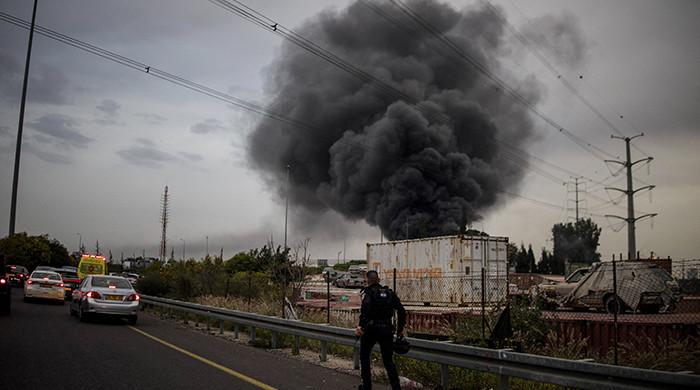
Considering the increasing tempo of the war and the intensity of American and Israeli attacks on Iran, it is the resilience of the Iranian forces that has surprised the world. One expects that some historians and journalists are documenting the human stories of this monumental encounter between Iran and the most powerful military in the world.
Already, a number of social media analysts are meaningfully exploring the reasons why Operation Epic Fury is not able to bring about a regime change in Iran or achieve whatever goals that have confusedly been articulated by President Trump. Meanwhile, the cost of this war is becoming unbearable for the world, mainly due to the energy crisis.
Actually, Iran at war is a spectacle that has baffled many in the world. One aspect of this has perceptively been explained by noted Iranian writer and scholar of religion, Reza Aslan, in a longish piece published last week in The New York Times. Based in Los Angeles, he belongs to the Iranian diaspora. But he rejects the thought that an American president can be Iran’s liberator. Hence the title of his article: ‘The mistake that Iranians make about America’. I also heard him repeat his views in an interview with Christiane Amanpour on CNN on Friday.
Reza Aslan concedes that when American leaders speak of helping Iranians to take over their government, they are tapping into “a powerful longing”, but recent history confirms that regime change delivered from outside “rarely produces the democracy imagined in the inside”.
One excerpt from his article: “Here is what I know for certain: Iran is older than any regime that has ruled it – older than the revolution, older than the shahs, older than the foreign powers that have sought to shape its fate. Across three millenniums of poetry, philosophy, empire and renewal, this civilisation has outlasted conquerors and kings, clerics and generals. It has done so not because a saviour from abroad intervened but because its people endured – sustained by a fierce pride in their language and heritage, by a literary and intellectual tradition that has survived invasion and upheaval, by a collective memory shaped as much by resistance as by rule”.
The ongoing war is a manifestation of Iran’s resistance. A time will come when other battles are fought in another arena.
The writer is a senior journalist. He can be reached at: [email protected]
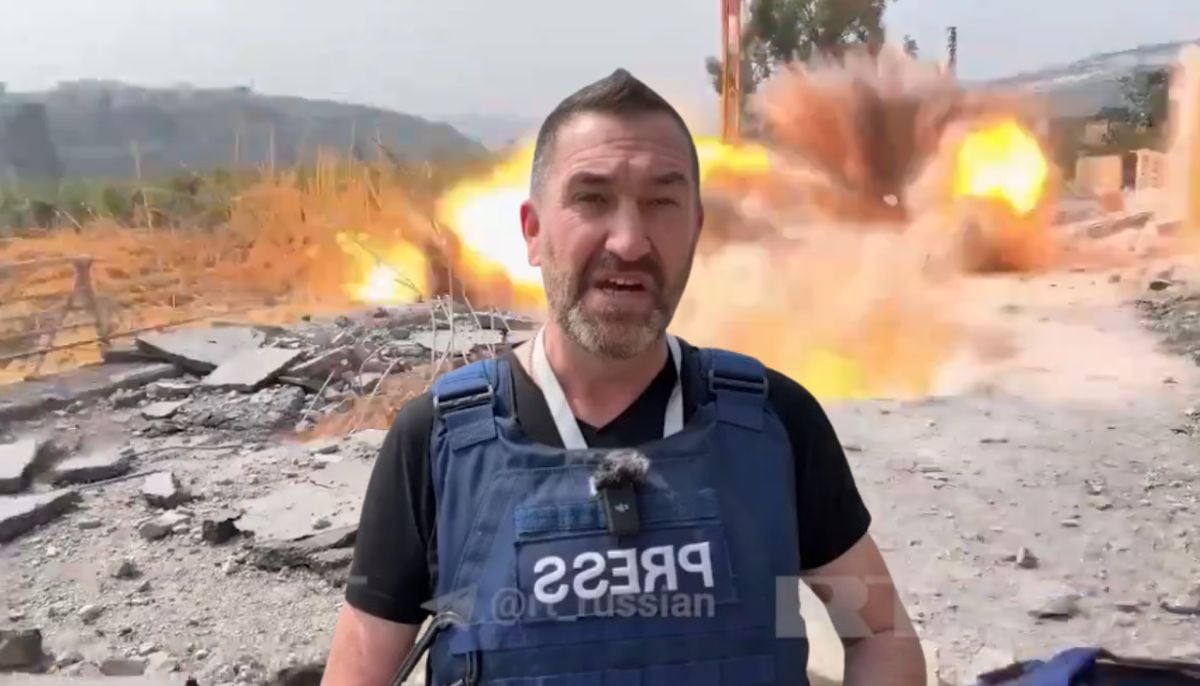
A terrifying moment was recently caught on camera as an Israeli missile targeted a British journalist associated with Russia Today (RT) during live reporting in Lebanon.
Steven Sweeney, who works for the Russian state funded broadcaster, was filming destruction of a bridge and talking about missile attacks from Israel when one targeted him and hit just a few feet away.
Sweeney said yesterday that targeting journalists was a war crime and today he himself got injured in an attack. He was treated at a hospital for his injuries.
The video footage of the incident shows the exact moment when the missile hit near the journalist, both cameraman and the reporter sustained injuries.
RT posted a video of journalist Ali Rida, also injured in the attack, reporting from Southern Lebanon. Ali said that Israeli forces DELIBERATELY targeted them.
About three hours after the attack, the outlet shared a video message of Sweeney. He said: “It was a precision strike from an Israeli fighter jet. If they think that they are going to silence us, they are very, very much mistaken.”
Israel has intensified its unprovoked, illegal military strikes on Southern Lebanon and had repeatedly targeted civilian infrastructure.
Sweeney also accused Israel of attempting to ethnically cleanse southern Lebanon.
Royal women adorn themselves with tiaras – weaving a narrative of tradition, elegance and diplomatic charm – as they welcome dignitaries with poise and sophistication.
Princess Kate’s strategic tiara choices revealed her future ambitions and plans, alonside her grace and elegance.
Royal commentators belive Princess Catherine’s choices prioritise continuity and reinforce her ‘steady and reliable’ image during crucial time for royal family.
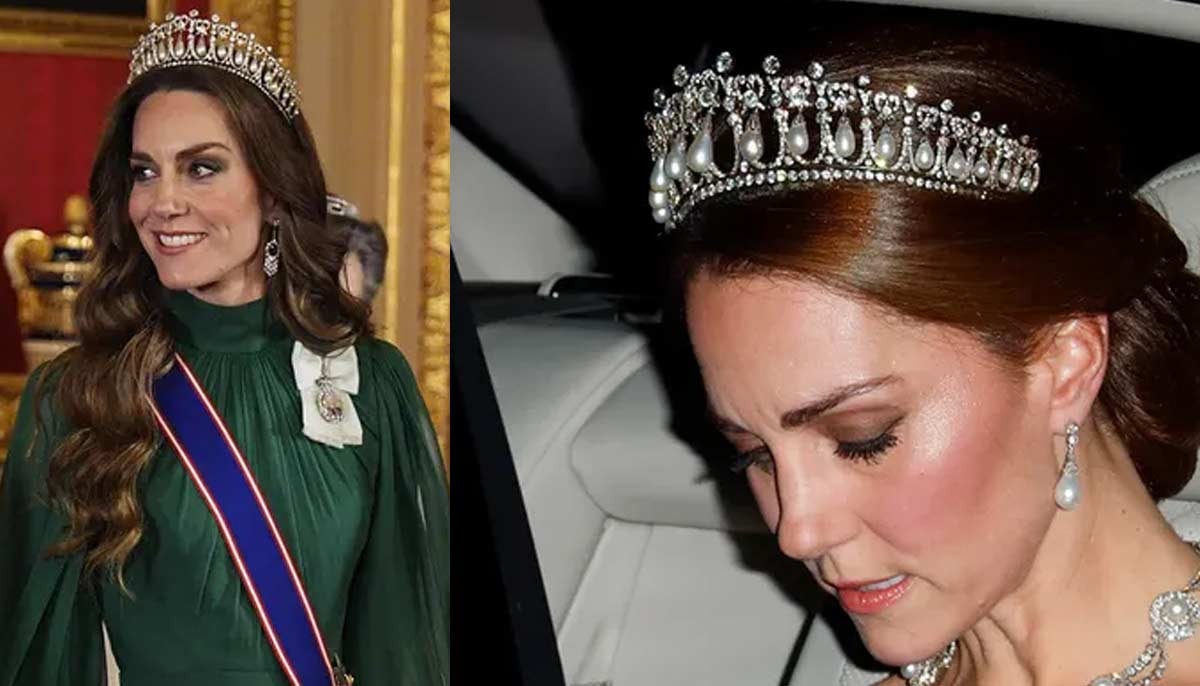
Kate Middleton, 44, showed off her elegance she wore her first tiara of the year for the Nigerian state visit on Wednesday, March 18.
The British royals hosted a lavish banquet at Windsor Castle. For the occasion, the princess wore her go-tiara, Queen Mary’s Lover’s Knot Tiara.
“Kate’s tiara choices tend to prioritise messages of continuity, usually indicating that she’s taking up the legacy of royal women who came before her,” royal commentator Amanda Matta told Fox News Digital.
The expert went on to describe Princess Catehrine’s dynamic personality after being impressed of her tiara selection, saying: “Her choices remind the public that her royal role, and its symbolism, carry forward from her predecessors.”
Kate’s choice wear Tolu Coker for the lavish dinner explained by the expert, saying: “Coker’s work is rooted in Nigerian diasporic identity, her mother’s migration history, and a pointed critique of Western waste economies. Wearing it for this visit goes well beyond the ‘flag dressing’ we’ve come to expect from Kate’s diplomatic appearances!”
She said that the Queen Mary’s Lover’s Knot is “Kate’s most-reached-for piece these formal occasions,” adding: “It tells us that she understands her role in the institution, respects its weight, and isn’t trying to make it about herself.”
Kate is called a positive force for the royal family. Justine Picardie, author of “Fashioning the Crown,” suggested that Kate’s carefully curated public image reflects her growing role in shaping the future of the monarchy.
She explained, “A historical royal tiara visually puts Catherine in the line of history about what came in the past, but it also represents her future.”
Entertainment
Demi Lovato reveals how she found joy in cooking after recovering from eating disorders


Lionel Messi scores 900th goal, but Miami bounced from CCC
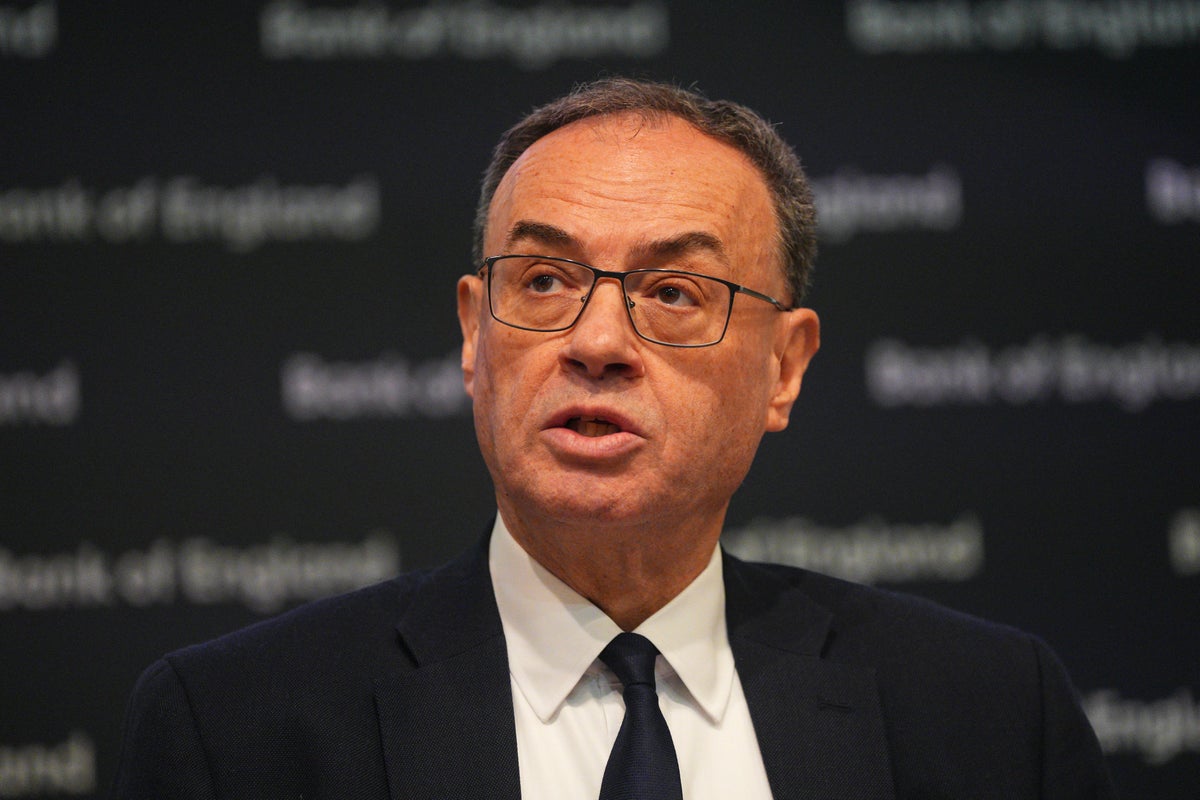
Interest rate cuts not on the horizon, Bank of England governor says

Iran will never compromise on its people’s security: FM Araghchi

Stock market crash today (March 12, 2026): Nifty50 opens below 23,600; BSE Sensex down over 900 points on continuing US-Iran war – The Times of India

UK’s Topshop unveils Tolu Coker capsule collection
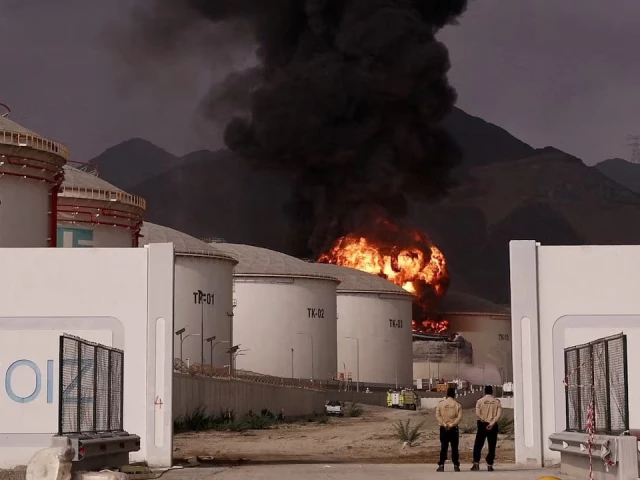
US ignites Iran war, but Gulf Arab states pay the price | The Express Tribune

-
Business1 week ago
Stock market crash today (March 12, 2026): Nifty50 opens below 23,600; BSE Sensex down over 900 points on continuing US-Iran war – The Times of India
-
 Fashion1 week ago
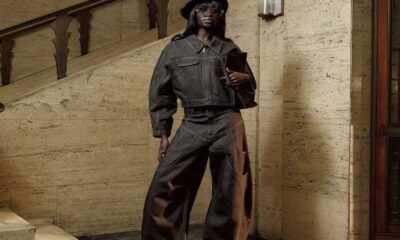
UK’s Topshop unveils Tolu Coker capsule collection
-
Business1 week ago
US ignites Iran war, but Gulf Arab states pay the price | The Express Tribune
-
 Fashion1 week ago
India’s textile recycling market may reach $3.5 bn by 2030: Report
-
 Tech1 week ago
Meta Developed 4 New Chips to Power Its AI and Recommendation Systems
-
 Business1 week ago
8th Pay Commission: How Much Will Central Govt Employees’ Salaries Rise? What We Know So Far
-
 Sports1 week ago
Bangladesh crush Pakistan in ODI series opener | The Express Tribune
-

 Entertainment1 week ago
Ed Sheeran makes surprising Benny Blanco confession after hygiene uproar