

Business
Rivian’s crucial R2 EV launch to begin with $58,000 model in spring


Rivian CEO RJ Scaringe reacts at an event to unveil a smaller R2 SUV in Laguna Beach, California, on March 7, 2024.
Mike Blake | Reuters
Rivian Automotive will launch sales of its crucial R2 all-electric vehicle this spring with a roughly $58,000 special edition model, the company announced Thursday.
The first of the R2 midsize vehicles will be a performance model with a “Launch Package” that includes a 330-mile range, dual motors, special attributes and “lifetime” access to its Autonomy+ advanced driver-assistance system. The vehicle will have 656 horsepower and 609 foot-pounds of torque, and is capable of accelerating from 0-60 mph in as quick as 3.6 seconds.
Rivian has been touting a less expensive, entry-level version of the vehicle, starting at $45,000, but it said that model, which is expected to be less profitable, won’t be available until late 2027. Its current vehicles start at more than $70,000
The R2 is considered a make-or-break moment for Rivian after the company has lost billions of dollars and seen waning demand for its current vehicles: the R1 SUV and pickup and an electric delivery van. The R2, from an exterior perspective, is essentially a smaller version of the R1 SUV, but the company has reworked the vehicle’s software, electrical system and parts in an attempt to make it more efficient and profitable.
Rivian founder and CEO RJ Scaringe has promised investors that the R2 will be a turning point for the company’s profits, sales and technologies. The EV maker is also aiming to launch hands-free, eyes-off driving to better compete against U.S. EV industry leader Tesla.
“R2 is the key transition vehicle for Rivian to transform into a scaled auto manufacturer, which in turn helps drive operating leverage across the business (including R1),” said Morgan Stanley analyst Andrew Percoco.
Morgan Stanley noted that while it’s bullish on long-term demand for the R2, it remains more “cautious in the near-term” as the company transitions to its third-generation electrical architecture that will debut on the new vehicle.
Others, such as Barclays, have questioned the demand for the R2, which Rivian has said is expected to anchor its current plant in Normal, Illinois, as well as an upcoming, multibillion-dollar plant in Georgia that’s expected to be capable of producing up to 400,000 vehicles a year.
“There is increasing uncertainty on R2’s volume outlook following the recent negative policy developments (i.e. $7.5k IRA credit expiration, reduced reg credits, tariff costs), with R2 likely launching in a period of weak US EV demand,” Barclays analyst Dan Levy said in an August investor note analyzing potential demand for the vehicle.
In addition to changing federal regulations, such as the end of up to $7,500 in federal tax credits, the R2 comes to market as many automakers are pulling back their EV plans or writing off billions of dollars in losses amid slower-than-expected adoption of the vehicles. Analysts have also significantly lowered expectations for market share growth in the years ahead.
Scaringe has said the company expects the R2 to not only compete with EVs such as the Tesla Model Y — the bestselling EV globally — but also traditional gas-powered vehicles.
The R2 is comparable to the Model Y in many key areas. It’s similar in size, mile range and its acceleration time. The Model Y, however, starts at roughly $40,000 and already offers many of the driving technologies Rivian is attempting to accomplish with the R2.
“R2 is an exceptional vehicle and I believe will be a game changer for our customers, our company and the industry,” Scaringe said last month during a call with investors on the company’s quarterly earnings results. “R2 is an extension of the experience we delivered in R1 with design elements and performance to inspire adventure but in a smaller form factor and, importantly, at an attractive lower price point.”
Shares of Rivian have been higher ahead of details of the R2 being released, buoyed by an upgrade by TD Cowen to buy based on a recent deep dive on demand trends for the new EV.
Scaringe described 2025 to investors last month as a “foundational year” for Rivian, while saying 2026 will mark “an inflection point” for the company.
Rivian’s 2026 guidance includes adjusted pretax losses of between $1.8 billion and $2.1 billion and capital expenditures between $1.95 billion and $2.05 billion. That compares with nearly $2.1 billion in adjusted pretax losses and $1.7 billion in capital expenditures last year.
Here are additional details Rivian released Thursday on its planned R2 lineup:
- Spring 2026: R2 Performance and “Launch Package,” starting at $57,990. Features all-wheel-drive, up to 330-mile range, and 656 horsepower and 609 foot-pounds of torque.
- Late 2026: R2 Premium, starting at $53,990. Includes a dual-motor AWD setup that produces 450 horsepower and 537 foot-pounds of torque and up to 330 miles in range.
- First half of 2027: R2 Standard, starting at $48,490. Features rear-wheel drive with 350 horsepower and 355 foot-pounds of torque and up to 345-mile range.
- Late 2027: R2 Standard, starting at around $45,000. The company has released limited other details about the model other than that it’s expecting to offer a more than 275-mile range.



Business
‘Crisis worse than two 1970s oil shocks put together’: IEA chief’s big warning on Strait of Hormuz – The Times of India
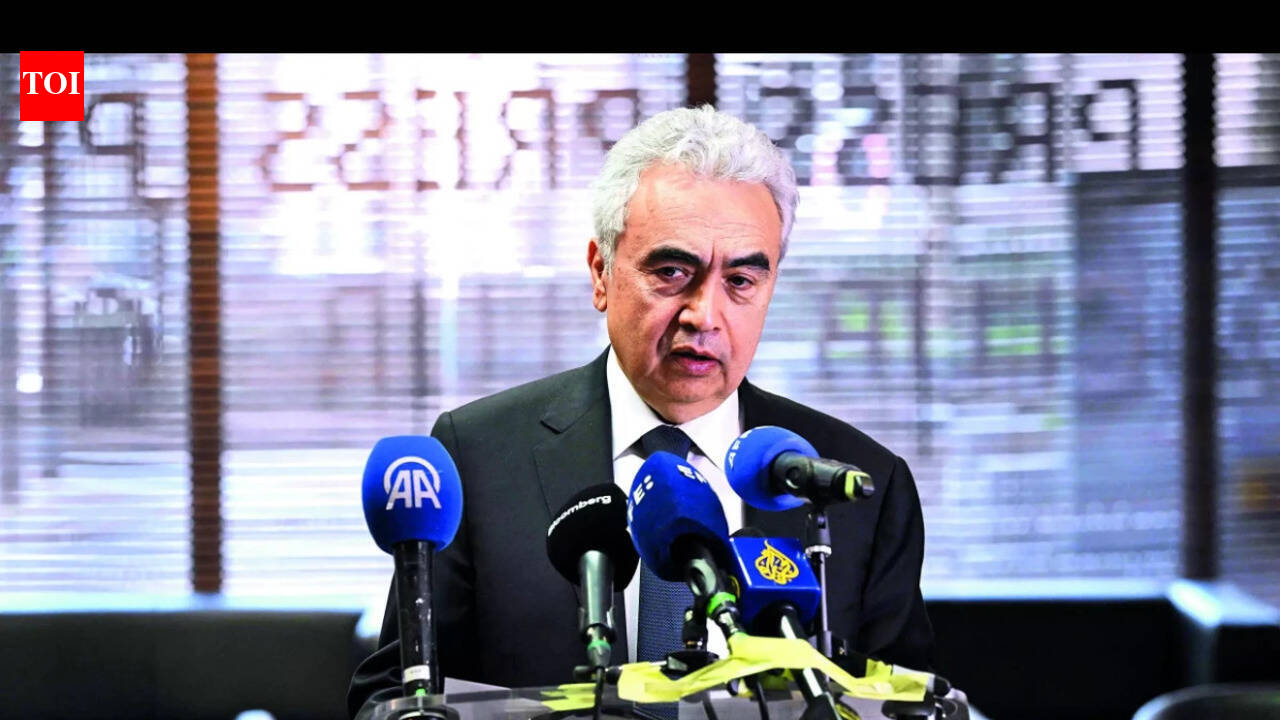
The ongoing war in the Middle East has triggered an energy crisis for the world and “no country is immune” to its shockwaves, the International Energy Agency (IEA) warned on Monday. Addressing the National Press Club in Australia’s capital, Birol said the current situation has evolved into an unprecedented disruption, combining multiple shocks to oil and gas supplies.“This crisis as things stand is now two oil crises and one gas crash put all together,” he said. He also drew comparisons with the oil shocks of the 1970s and the fallout from Russia’s 2022 invasion of Ukraine.Highlighting the broader economic risks, Birol said, “The global economy is facing a major, major threat today, and I very much hope that this issue will be resolved as soon as possible.”Commenting on the fallout of the energy crisis, Fatih Birol said, “no country will be immune to the effects of this crisis if it continues to go in this direction,” adding, “so there is a need for global efforts.”The conflict has already caused extensive damage to energy infrastructure, with Birol noting that at least forty facilities across nine countries in the region have been “severely or very severely damaged”.“At least forty… energy assets in the region are severely or very severely damaged across nine countries,” he said.The disruption was intensified by the near shutdown of the Strait of Hormuz, a key transit route for roughly one-fifth of global oil and gas shipments. The standoff has deepened as the war entered its fourth week, with Donald Trump and Tehran issuing repeated threats, including Washington’s demand for the reopening of the waterway.Birol identified the reopening of the Strait of Hormuz as the most critical step towards stabilising the situation, while also flagging rising fuel shortages in Asia as a growing concern. Oil markets reflected the strain, with US benchmark crude briefly touching the $100-per-barrel mark early on Monday. As fuel prices continue to rise, he added that there would not be any specific crude level to trigger another release.He added that the agency is currently consulting governments worldwide and remains prepared to release additional oil from emergency reserves if needed, though he clarified that no specific price level would automatically trigger such a move. Meanwhile, US President Donald Trump issued an ultimatum to Iran to reopen the strategically critical Strait of Hormuz within 48 hours, warning of military consequences if it failed to comply. He said, “If Iran doesn’t fully open, without threat, the Strait of Hormuz, within 48 hours from this exact point in time, the United States of America will hit and obliterate their various power plants, starting with the biggest one first! Thank you for your attention to this matter.” In response, Tehran warned, signalling that any attack on its energy infrastructure would prompt retaliation beyond conventional military targets. The message was conveyed by Ebrahim Zolfaghari and carried by Islamic Republic of Iran Broadcasting. He said any strike on Iran’s fuel and energy sector would trigger action against a broader range of targets linked to the United States and its regional allies.Earlier this month, 32 member nations of the IEA agreed to release 400 million barrels of oil from their emergency reserves to the market, to deal with the ongoing energy supply disruption.
A major beauty brand is enticing all its UK employees to earn a cut of any sales they drive on TikTok Shop in a bid to cash in on the rapid rise of the influencer-led beauty market.
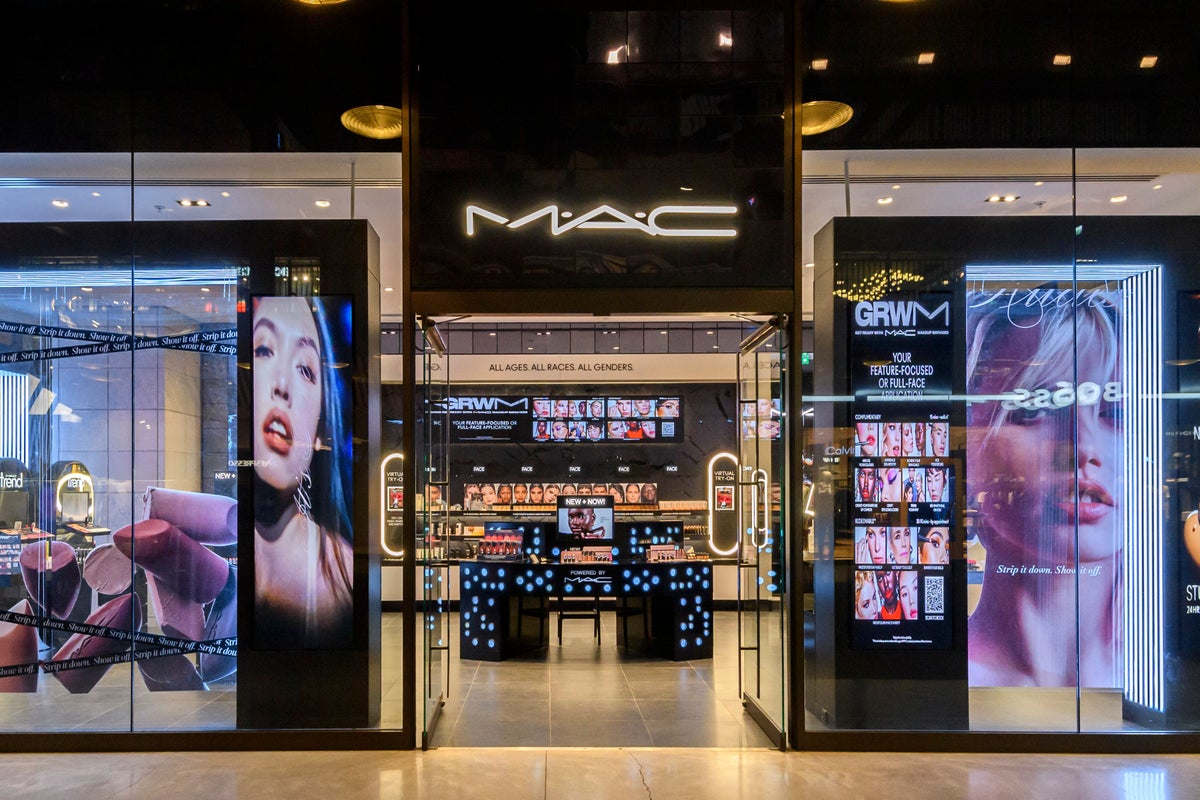
MAC Cosmetics is kitting out shops with mini studios for its makeup artists to host live shopping shows when it launches on TikTok Shop on April 2.
It says it is the first major beauty brand in the UK to give every member of staff the opportunity to opt in as an affiliate and sell on the social media platform.
Those who become faces of the live channel will be offered a percentage of any sale that they drive on TikTok Shop.
The makeup artists will be encouraged to host tutorials and product demonstrations, with items available to buy directly through the app.
MAC, which is part of the Estee Lauder group of beauty brands, said the first live shopping show will stream from its Carnaby Street store in London.
It is hoping that tapping into social media shoppers will also bring more people into its more than 230 standalone shops and concessions.
TikTok Shop burst onto the UK’s retail scene in 2021 and, in recent years, has become a significant force in the world of e-commerce, reaching millions of people who use the video-sharing app and converting many into shoppers with a few taps.
Many content creators can earn a commission on products that they sell through the app when they co-operate with a brand or retailer.
Major retailers like Marks & Spencer and Sainsbury’s are now selling products on the marketplace alongside thousands of smaller businesses and brands.
The app has particularly been part of a boom for the beauty market, with beauty sales on the platform soaring by 60% year-on-year in 2025, fuelled by trends such as Korean skincare.
But the spread of in-app shopping has also prompted concerns about so-called impulse buying, particularly among younger consumers who are often targeted by influencer-led marketing.
Sara Staniford, the vice president and general manager of MAC in the UK and Ireland, said: “MAC has always been driven by our artists and the communities they create.
“TikTok Shop gives us an exciting new way to celebrate that creativity and connect with beauty lovers in real time.
“It puts our artists exactly where they belong, at the centre of the conversation.”
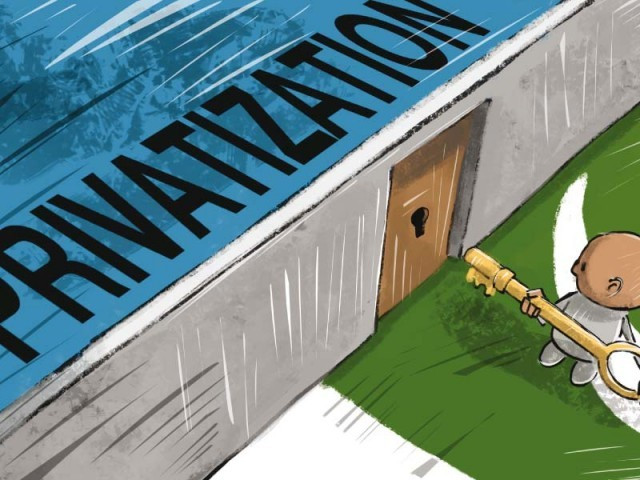
Answer to dilemma is sure-fire sale of bankrupt SOEs in unchaotic and transparent manner
BRUSSELS:
Rule number one is that the role of government is to govern and not run a business. State-owned enterprises (SOEs) have been a huge drain on Pakistan’s fiscal solvency since decades. Staggering losses over the years and the accumulated liabilities absorbed by the national exchequer (read: taxpayers) through subsidies, guarantees and debt have suffocated Pakistan.
Total SOEs’ liabilities have climbed to Rs9.6 trillion, roughly half of the annual federal budget. Unfunded pension obligations alone stand at Rs2 trillion. Out of the Rs13 trillion collected in federal taxes, about Rs2.1 trillion was redirected towards SOEs in 2025 just to keep them afloat. With mounting losses and negative equity of these white elephants, a comprehensive plan for wholesale privatisation of SOEs needs to be developed and, more importantly, implemented on an urgent basis. Yet the current government, like those before it, keep procrastinating the urgent need to privatise these entities.
So, the question to ask is why? The most obvious answer is “retaining control” not for economic rationalisation but for political control. It is the political leadership and state bureaucracy that “throw a monkey wrench” into any plans for privatisation.
Their combined objective is not to increase their economic value but to use them as tools to maintain a patronage system to reward loyalists to SOE boards that exist in name but lack authority, a management that has never run a private business, a bloated employment with excess wages and benefits.
The subordination of economic efficiency to their self-interests inevitably means an incentive to “drag their feet” and/or backtrack on reforms. Bureaucratic inertia and political reluctance, coupled with resistance from vested interests, continues to stall meaningful change, adding to the burden of taxpayers.
The annual report on the federal SOEs (2024-2025) by the Central Monitoring Unit (CMU) in the Ministry of Finance highlights the deep-rooted problems of the public sector to the poor leadership that is unable to run it as a viable commercial enterprise. The CMU recommendations – stronger boards, timely audits, better disclosure and performance-based accountability – are not new.
The CMU fails to understand the nature of business. SOEs cannot function as a sustainable business, any effort to restructure with half measures or cosmetic changes will only give the same results and be an arduous exercise in futility. Private sector businesses with their boards, management and employees are beholden and answerable to their shareholders. Financial health of these companies are annually scrutinised to improve performance and increase economic value.
SOEs on the other hand are beholden and answerable to politicians and bureaucrats, who care less about financial health because it’s not their money on the line, it’s the taxpayers’ money and it is they who “bear the brunt” of these massive losses.
So, what’s the answer to this dilemma? Nothing but a sure-fire sale of these bankrupt SOEs must be done urgently in an unchaotic and transparent manner. Questionable opaque methods of transferring the assets of struggling or bankrupt SOEs to private entities, foreign or domestic, must be avoided. The exit of these SOEs will create opportunities for the private sector to eclipse the state sector as the most important engine of growth, productivity, and job creation in finance, energy, utilities, transport, manufacturing and mining.
Revenues from the privatisation sales will go a long way to help Pakistan’s fiscal quandary, but even more. So the removal of these businesses from Pakistan’s ownership ledgers eases the headache for the government to oversee their operations so that it can focus on governance and utilise a significant portion of public resources on development, education and healthcare rather than keeping these loss-making state entities alive.
The writer is a philanthropist and an economist based in Belgium

‘Crisis worse than two 1970s oil shocks put together’: IEA chief’s big warning on Strait of Hormuz – The Times of India

Nation marks Pakistan Day without parade amid Middle East-linked austerity measures

EU regulatory tsunami hits war-distracted textile industry now

Tips and Advice for Buying Used or Refurbished Electronics

UAE savings strategies 2026 explained: Best apps, tools, budget rules and smart money hacks to beat rising cost of living in emirates – The Times of India

Iran threatens US-linked oil facilities after Kharg Island bombed

-
 Tech1 week ago
Tips and Advice for Buying Used or Refurbished Electronics
-
Business1 week ago
UAE savings strategies 2026 explained: Best apps, tools, budget rules and smart money hacks to beat rising cost of living in emirates – The Times of India
-
 Politics1 week ago
Iran threatens US-linked oil facilities after Kharg Island bombed
-
 Politics1 week ago
How can US get out of Iran war?
-
 Entertainment1 week ago
Strategic oil stocks to be released ‘immediately’ in Asia and Oceania: IEA
-
 Entertainment1 week ago
Iran at war
-

 Sports1 week ago
Japan suffers shocking collapse to Venezuela in World Baseball Classic
-
 Entertainment1 week ago
Meet one of the last true paparazzi