

Business
Big US tech stocks swing as investors probe AI spending

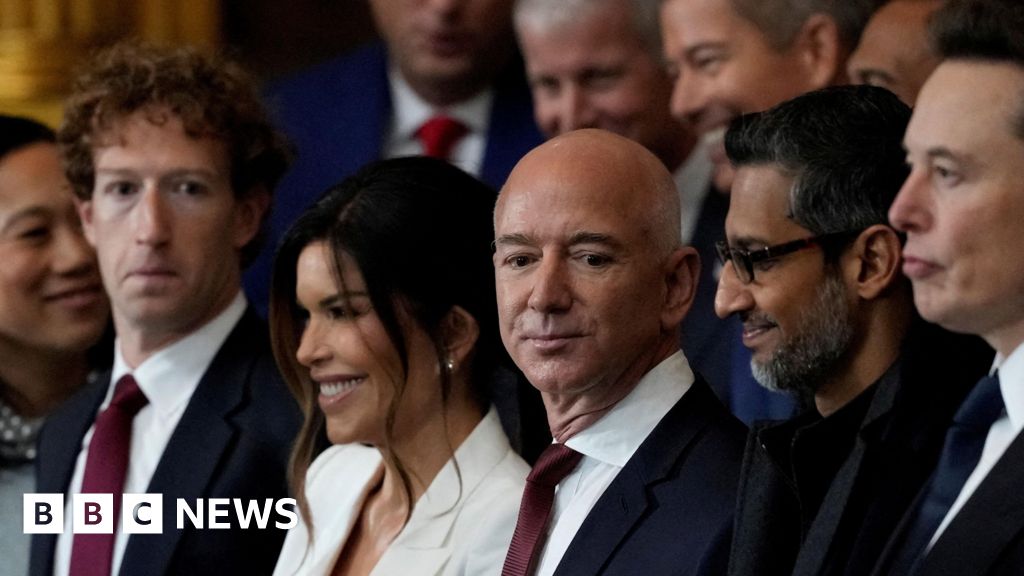
Lee Sustar, an analyst at Forrester, said there is still anxiety “about the sustainability of the AI boom” given the high cost and so far unrealised gains. Yet, tech companies are pushing forward with plans, for this year and next, to pour billions into its development.

Chennai: Indian Overseas Bank’s annual net profit crossed Rs 5,000 crore for the first time, with the public sector lender reporting FY26 profits at Rs 5,209 crore, up 56% from Rs 3,335 crore in FY25, driven by higher income and lower provisions and tax expenses. The bank’s operating profit also crossed Rs 10,000 crore for the first time.
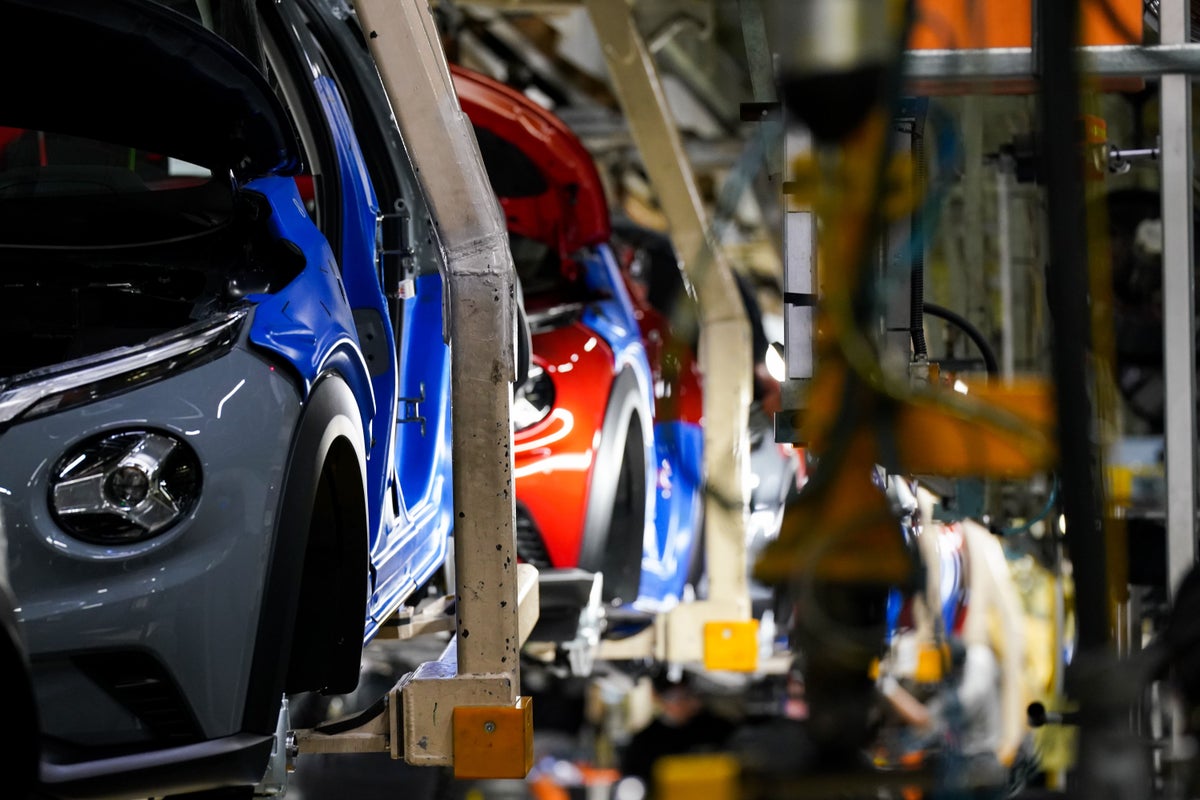
Car and commercial vehicle production fell last month amid issues including weak exports, model changeovers and restructuring, new figures show.
Vehicle production fell by 8.2% in March compared to a year ago, with 72,511 units leaving factories, according to the Society of Motor Manufacturers and Traders (SMMT).
The number of cars built was 69,755, down by 0.8%, while 2,756 commercial vehicles (CV) were produced, 68% fewer.
The SMMT said car output was affected by a parts supply challenge temporarily pausing production at a large plant, weak exports to Asian and US markets, and model changeovers, while commercial volumes continued to reflect restructuring.
Exports of cars and CVs fell, down by 4.3% and 54%, to 49,339 and 1,602 units respectively.
Despite this, production for overseas buyers still accounted for 70% of vehicle output, with the EU remaining the UK’s largest global market, taking 91.6% (1,467 units) of CV exports and 62.6% (30,899 units) of car exports.
EU demand for UK-built cars rose for a fourth consecutive month, said the SMMT.
Chief executive Mike Hawes said: “Car production stabilising in March is welcome news for both assembly and the wider supply chain.
“Government’s recent intervention to bring down electricity costs will provide a major and long-called for boost, but the scheme’s benefits must be delivered urgently as the geopolitical situation offers little optimism.
“We must ensure any ‘Made in Europe’ proposals from the European Commission do not exclude the UK as the two industries are integrated such that both would suffer if the free trade provisions enshrined in the Brexit deal were undermined.
“The EU and UK must work together to avoid that scenario – and the looming threat of tariffs arising from stricter rules of origin on electrified vehicles – to ensure a positive outcome for industry, economies and consumers on both sides of the Channel.”

Ford signage at the New York International Auto Show in New York City on April 2, 2026.
Danielle DeVries | CNBC
DETROIT – Ford Motor raised its 2026 guidance on Wednesday after beating Wall Street’s first-quarter expectations and reporting a $1.3 billion tariff refund benefit after the U.S. Supreme Court ruled that some of President Donald Trump’s tariffs were illegal.
Ford stock rose more than 6% in after-hours trading.
Here’s how the company performed in the first quarter compared with average estimates compiled by LSEG:
- Earnings per share: 66 cents adjusted vs. 19 cents expected
- Automotive revenue: $39.82 billion vs. $38.82 billion expected
The first-quarter results significantly outperformed Ford’s performance from a year earlier, despite a 4% decline in wholesale units during the time period. Its overall revenue increased 6% to $43.3 billion and its adjusted earnings before interest and taxes more than tripled from $1 billion to $3.5 billion. Net income jumped to $2.5 billion, or 63 cents a share, up from $500 million, or 12 cents a share, a year earlier.
Automakers commonly exclude “special items” or one-time charges from their adjusted financial results to provide investors with a clearer picture of their core, ongoing business operations. Excluding special items but including the tariff reimbursement, Ford earned 66 cents a share.
The company’s updated full-year 2026 guidance includes adjusted EBIT of $8.5 billion to $10.5 billion, up from $8 billion to $10 billion. It maintained adjusted free cash flow of between $5 billion and $6 billion and capital expenditures of $9.5 billion to $10.5 billion.
Ford noted the guidance does not include potential impacts of a sustained conflict in the Middle East or a significant downturn in the U.S. economy.
Ford CFO Sherry House said the earnings increase was not strictly because of the tariff reimbursement. The company has not received that refund yet but said it is helping to offset an expected $1 billion incremental increase in commodity costs, specifically aluminum, for the year.
“The rest of the beat came from strong product mix in net pricing and growth in software and physical services,” House said during a media call Wednesday.”Even with the one-time tier of benefit, the underlying business came in around $2.2 billion ahead of expectations.”
Ford already expected an additional $1 billion in increased commodity costs amid higher prices and as it sources aluminum from different suppliers following fires that have affected production at a key Novelis aluminum plant last year in New York. The automaker has said the supplier isn’t expected to be operational again until between May and September.
House said the company decided to book the tariff refund during the first quarter because that’s when the Supreme Court’s decision was made. Trump last week told CNBC that he would gratefully “remember” U.S. companies that do not seek refunds for the tariffs.
House said the company did not raise its automotive free cash flow guidance along with the earnings outlook due to uncertainty about the tariff refund process and timing.
The International Emergency Economic Powers Act tariff benefit was largely expected by Wall Street analysts, but the exact amount Ford would receive was unknown. It is part of $160 billion in potential refunds expected to be returned to companies after the levies were ruled illegal in February by the Supreme Court in a 6-3 decision.
From a business unit basis, Ford’s traditional “Blue” operations led the way for the company with $1.9 billion in earnings during the quarter, followed by its “Pro” commercial business earnings at about $1.7 billion.
Ford’s “Model e” electric vehicle business narrowed its losses from $849 million a year ago to $777 million during the first quarter of this year. That smaller loss corresponded with a 70% decline in year-over-year EV sales for the first quarter.
Ford’s results come a day after crosstown rival General Motors raised its 2026 guidance and significantly beat Wall Street’s first-quarter earnings expectations. GM reported a roughly $500 million benefit from the U.S. Supreme Court IEEPA decision.

IOB profit up 56% at Rs 5,200 crore in FY26 – The Times of India

Christoper Nolan reveals which is ‘shorter’
Big US tech stocks swing as investors probe AI spending

-

 Politics1 week ago
UK’s Starmer seeks to deflect blame over Mandelson appointment
-

 Fashion1 week ago
India, US to resume BTA talks today
-
 Business1 week ago
Us-India Trade Talks: US–India trade deal: Where do talks stand & what to expect – explained – The Times of India
-
 Business1 week ago
UK inflation accelerates after Iran war drives sharp rise in fuel prices
-

 Fashion1 week ago
Global energy growth slows to 1.3% in 2025: Report
-

 Tech1 week ago
Nation states responsible for ‘nationally significant’ cyber attacks against UK, says NCSC chief | Computer Weekly
-
 Tech1 week ago
Microsoft faces court battle in £2bn Windows Server class action | Computer Weekly
-

 Tech1 week ago
How to Watch the Lyrids Meteor Shower at Its Peak