

Business
Oil price jumps to $117 after reports of ‘extended’ Iran blockade

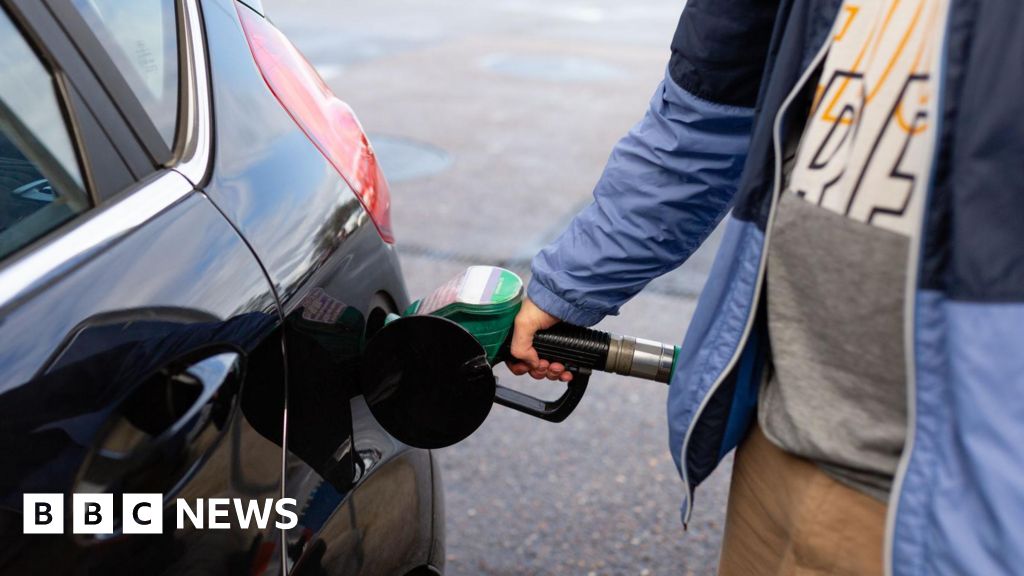
Lindsay James, investment strategist at Quilter, said that the impact of the war so far in the UK has been largely limited to higher petrol and diesel prices, but “every day that passes without a resumption of supply sees the risk of physical shortages and steeper price rises on a range of goods increasing”.

Yum Brands on Wednesday reported quarterly earnings and revenue that topped analysts’ expectations, fueled by another strong quarter for Taco Bell.
Here’s what the company reported compared with what Wall Street was expecting, based on a survey of analysts by LSEG:
- Earnings per share: $1.50 adjusted vs. $1.38 expected
- Revenue: $2.06 billion vs. $2.04 billion expected
Yum reported first-quarter net income of $432 million, or $1.55 per share, up from $253 million, or 90 cents per share, a year earlier.
Excluding charges related to its strategic review of Pizza Hut and other items, the company earned $1.50 per share.
Net sales climbed 15% to $2.06 billion, lifted by higher revenue from company-owned restaurants. Last year, the company bought more than 100 Taco Bell locations across the Southeast with a goal of accelerating development and profitability.
Across Yum, global same-store sales rose 3%, driven by growth at Taco Bell, the gem of the company’s portfolio.
Taco Bell’s same-store sales increased 8%, topping Wall Street’s estimates of 5.6% growth, according to a survey by StreetAccount.
“Taco Bell delivered an outstanding 8% same-store sales growth, meaningfully ahead of the [quick-service restaurant] industry, building off a very strong Q1 same-store sales growth rate in 2025,” Yum CEO Chris Turner said in a statement.
Yum also plans to expand its use of artificial intelligence-driven A/B testing for Taco Bell’s drive-thru lanes, following a successful pilot in the first quarter. The technology lets Taco Bell change the layout, visuals and content shown to cars in the drive-thru lanes, allowing the chain to learn quickly about what messages resonate more with customers.
“If I think about our philosophy as it relates to AI, first and foremost, we want to use AI to drive growth,” Turner said on the company’s earnings conference call.
KFC reported same-store sales growth of 2%, shy of the 2.5% increase projected by StreetAccount. While the fried chicken chain’s international business is considered one of Yum’s “growth engines,” its U.S. business has struggled in recent years, buckling under increased competition and consumers’ value expectations.
KFC U.S. system sales fell 2% during the first quarter. Yum is no longer sharing the market’s quarterly same-store sales, signaling that the chain’s U.S. business is now considered immaterial to the company’s broader results. Its home market is now KFC’s third-largest region by system sales, falling behind China and Europe. However, Turner said that KFC U.S. is still “strategically important” for Yum.
To win back customers, KFC is taking some cues from Taco Bell’s successful playbook by leaning into innovation and affordability. It’s also been expanding a spinoff chain that focuses on chicken tenders called Saucy, which provides the broader KFC business with ideas about what menu items are resonating with diners.
Similarly, Pizza Hut saw stronger results outside of its home market. The struggling pizza chain reported flat same-store sales globally, although its international business saw same-store sales rise 2% in the quarter. Its U.S. same-store sales shrank 4%.
Analysts were projecting global same-store sales declines of 0.7% for Pizza Hut, according to StreetAccount.
In November, Yum said it would explore strategic options for the chain, which has long been the laggard of its portfolio. Several private equity firms, including Apollo Global Management and Sycamore Partners, are among the potential buyers vying for Pizza Hut, Reuters reported earlier this month.
While Yum did not provide an update on the strategic review on Wednesday, its earnings release did include a bullet point showing the company’s system sales, unit count and core operating profit excluding Pizza Hut.
Business
Stock market today (April 29, 2026): Sensex jumps 609 points, Nifty nears 24,200-Check top gainers and losers today – The Times of India

Benchmark equity indices Sensex and Nifty rebounded nearly 1 per cent on Wednesday, helped by bargain buying in FMCG, auto and telecom shares, upbeat earnings sentiment and gains across Asian markets.Traders said signs of possible de-escalation in geopolitical tensions also supported sentiment.In a volatile session, the 30-share BSE Sensex climbed 609.45 points, or 0.79 per cent, to close at 77,496.36. During the day, it surged 1,095.60 points, or 1.42 per cent, to touch 77,982.51.The NSE Nifty rose 181.95 points, or 0.76 per cent, to settle at 24,177.65, according to PTI.
Nifty 50 top gainers
- ITC (+3.88%)
- Tech Mahindra (+3.68%)
- Maruti Suzuki (+2.84%)
- Coal India (+2.77%)
- Reliance Industries (+2.63%)
- Bharti Airtel (+2.41%)
- M&M (+2.08%)
- Sun Pharma (+1.80%)
- Nestle India (+1.78%)
- Tata Consumer (+1.77%)
Nifty 50 top losers
- InterGlobe Aviation (-2.19%)
- Dr Reddy’s (-1.84%)
- NTPC (-1.37%)
- ICICI Bank (-0.86%)
- Bajaj Finserv (-0.84%)
- Hindalco (-0.67%)
- Asian Paints (-0.63%)
- Trent (-0.61%)
- Apollo Hospital (-0.57%)
- HDFC Bank (-0.46%)
BSE Sensex top gainers
- ITC (+3.88%)
- Tech Mahindra (+3.68%)
- Maruti Suzuki (+2.84%)
- Reliance Industries (+2.63%)
- Bharti Airtel (+2.41%)
- M&M (+2.08%)
- Sun Pharma (+1.80%)
- L&T (+1.45%)
- Adani Ports (+1.44%)
- Infosys (+1.34%)
BSE Sensex top losers
- InterGlobe Aviation (-2.19%)
- NTPC (-1.37%)
- ICICI Bank (-0.86%)
- Bajaj Finserv (-0.84%)
- Asian Paints (-0.63%)
- Trent (-0.61%)
- HDFC Bank (-0.46%)
- SBI (-0.41%)
Maruti advanced 2.82 per cent after the country’s largest carmaker reported a record annual consolidated net profit of Rs 14,679.5 crore for FY26, up 1.24 per cent year-on-year, driven by its highest-ever annual sales of more than 24.22 lakh units, helped by GST rate reduction.In Asian markets, South Korea’s Kospi, Shanghai’s SSE Composite and Hong Kong’s Hang Seng ended higher. Japanese markets were shut for a holiday.“The core driver of today’s strength remained earnings. Strong results from key companies reinforced confidence in underlying domestic demand and balance sheet resilience. This fundamental support, combined with easing geopolitical concerns, helped markets shift focus away from macro stress toward corporate performance,” Hariprasad K, Research Analyst and Founder, Livelong Wealth, said, PTI quoted.“Hopes of potential de-escalation in geopolitical tensions helped stabilise crude oil expectations, which is critical for India’s macro outlook,” he added.European markets were trading lower, while US markets had ended lower on Tuesday.Brent crude, the global oil benchmark, jumped 2.85 per cent to USD 114.4 per barrel.“Despite weak global cues, elevated crude prices, and a depreciating INR, India’s equity markets rebounded from recent lows as investors used the correction to add exposure, supported by better-than-expected earnings despite geopolitical uncertainty.“Gains were led by FMCG, auto, and realty stocks on strong results and positive commentary, while financials lagged due to regulatory tightening and provisioning concerns,” Vinod Nair, Head of Research, Geojit Investments Limited, said.Foreign Institutional Investors (FIIs) sold equities worth Rs 2,103.74 crore on Tuesday, while Domestic Institutional Investors (DIIs) bought shares worth Rs 1,712.01 crore, as per exchange data.
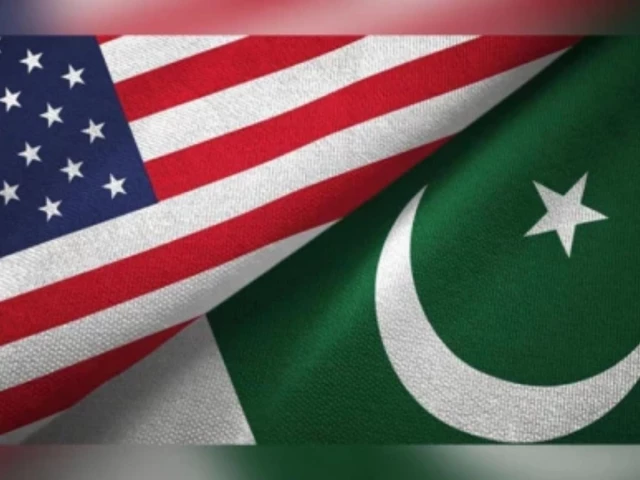
In case Pakistan accepts the US offer, it may also help fast-track the installation of these systems
President Donald Trump’s administration has backed a $2.4 billion investment offer by an American firm to install advanced security systems at major Pakistani airports to detect criminals and transnational threats.
US Chargé d’Affaires to Pakistan Natalie A Baker has recently supported an investment proposal by Securiport — an American firm — to install Advanced Passenger Information (API) and Passenger Name Record (PNR) capability systems, according to the official documents. She urged the Pakistani authorities to consider the proposal.
The proposed solution guarantees data transport from the airline to the government while allowing Pakistan to retain full ownership and custody of all the data, with 24/7 support and training, showed these details.
In case Pakistan accepts the US offer, it may also help fast-track the installation of these systems. A separate move by the Pakistan Airports Authority (PAA) to install such systems has recently become controversial due to transparency concerns raised by the Senate Standing Committee on Defence.
Securiport has proposed funding all upfront investment related to the deployment of its system and offered to recover its costs over the contract term via a government-mandated passenger security surcharge model, showed the details.
The company has offered to invest $2.4b over the proposed 25-year life of the contract. The company would also establish a subsidiary in Pakistan through which it will train over 1,000 Pakistani citizens in these modern technologies, according to the proposal.
Natalie extended the “support” of the US government for the Securiport investment proposal in a communication with the Ministry of Defence, which is the PAA’s administrative division.
Natalie supported the proposal of deploying the API and PNR capability systems by the US firm.
“We appreciate your consideration of Securiport’s proposal and continued partnership with the US in advancing Pakistan’s security and our efforts to achieve safe, secure and efficient travel”, said Natalie, in a correspondence with Pakistani authorities.
According to the offer, the API and the PNR systems would be operated by the Federal Investigation Agency (FIA), which would provide the government with an integrated biometric-enabled border management plan.
In her support letter for the investment offer, Natalie wrote that Securiport has more than two decades of experience in numerous countries and adheres to a stringent compliance framework.
When contacted, the spokesperson of the US embassy in Islamabad said, “We do not comment on private diplomatic correspondence. We would direct you to the Pakistani government”.
Defence Minister Khawaja Asif also did not comment on whether Pakistan plans to accept the US offer for investment.
Securiport provides border security, biometric technology, and threat assessment solutions to governments globally.
Securiport’s installed system can “detect and interdict criminal and transnational threats in real-time at the border”, stated the US chargé d’affaires in her support letter. She added that the proposed solution guaranteed data transport from the airline to the government while allowing Pakistan to retain full ownership and custody of all the data with 24/7 support and training.
The proposal is in line with Pakistan’s efforts to install the automated border control system, known as E-gates. However, these efforts have recently become controversial due to the decision to award the contract to the state-owned enterprise by invoking the Public Procurement Regulatory Authority (PPRA) direct contracting rules.
The International Monetary Fund has already asked Pakistan to withdraw the PPRA rules that allow direct contracting to the state-owned enterprises as part of its conditions under the Governance and Corruption Diagnostic Assessment report.
In 2020, the PAA had initiated a global competitive request for proposal for the deployment of E-gates, API and PNR systems. Again in 2024, a fresh EOI was issued to invite experienced international firms. But subsequently, both these EOIs were ignored.
In January this year, the Senate Standing Committee on Defence took a briefing from the airport authority on the automated project.
The committee had been informed by the authority that under the proposed system, e-gates equipped with biometric passport scanners and facial recognition technology were planned to be deployed, which were expected to reduce average immigration clearance time from three to five minutes to under 45 seconds per passenger.
The committee was further apprised that these e-gates would be integrated with the FIA’s exit control list, passenger name record systems, and Interpol databases to enable real-time identification of high-risk travellers.
However, the chairman of the Senate Standing Committee on Defence raised concerns regarding reports that the bidding process for the procurement of e-gates was not carried out in accordance with the relevant PPRA Rules, the record showed.
The committee directed the Ministry of Defence to furnish all relevant procurement records and documentation to enable a thorough examination of the matter and to ascertain whether any procedural irregularities or violations had occurred.
This week, Transparency International Pakistan approached the Prime Minister’s Office over alleged serious violations of the PPRA Rules 2004 in the award of the E-Gate project by the PAA, according to a media report.


Egypt’s SCZONE signs $8-mn Turkish textile project in Qantara West

Olivia Wilde recent appearance worries fans
Oil price jumps to $117 after reports of ‘extended’ Iran blockade

-

 Politics1 week ago
UK’s Starmer seeks to deflect blame over Mandelson appointment
-
 Business1 week ago
How Trump’s psychedelics executive order could unlock stalled cannabis reform
-

 Entertainment1 week ago
Lee Anderson, Zarah Sultana kicked out of UK Parliament for calling PM ‘liar’
-
 Business1 week ago
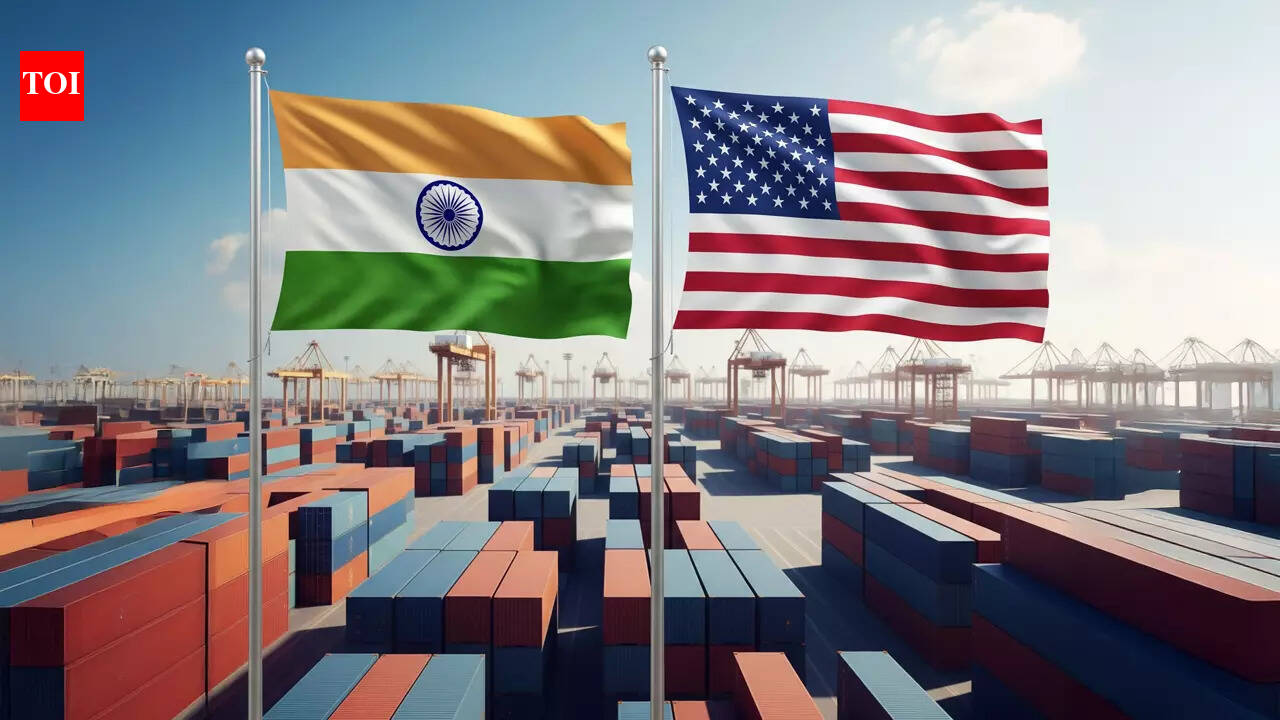
Us-India Trade Talks: US–India trade deal: Where do talks stand & what to expect – explained – The Times of India
-

 Fashion1 week ago
India, US to resume BTA talks today
-

 Tech1 week ago
A Humanoid Robot Set a Half-Marathon Record in China
-
 Business1 week ago
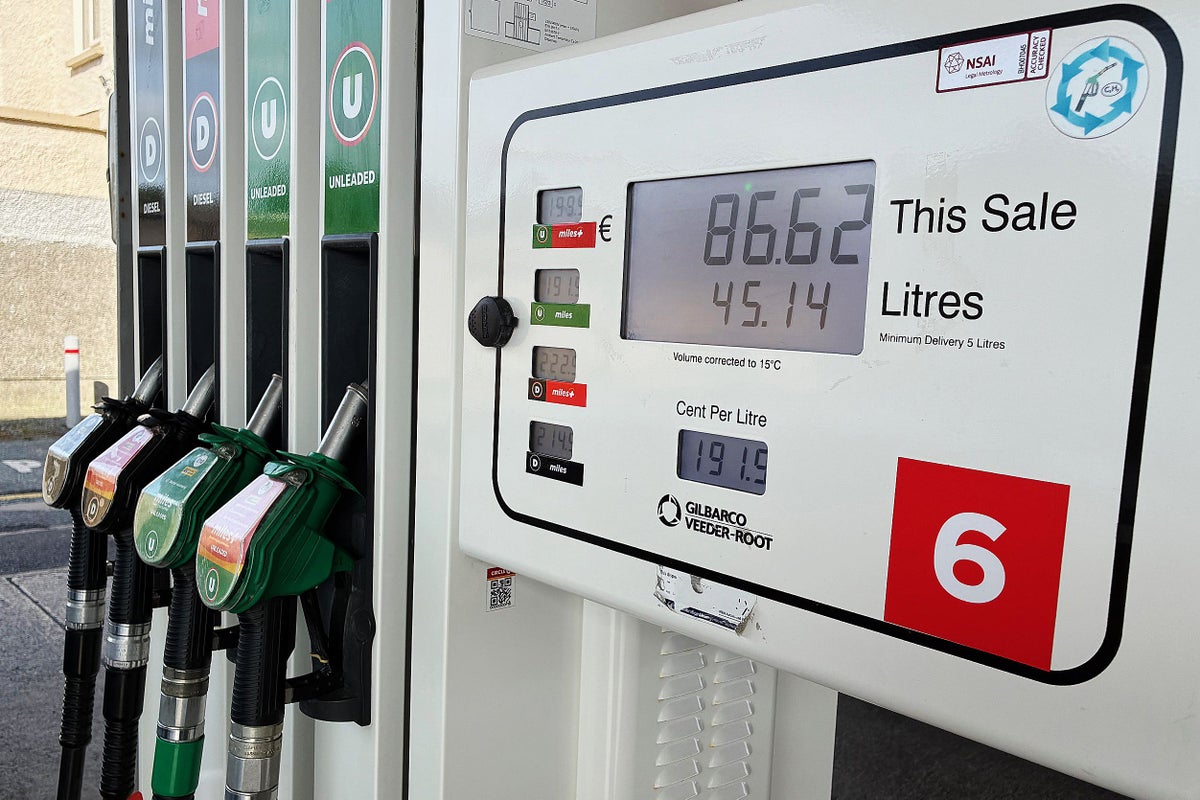
UK inflation accelerates after Iran war drives sharp rise in fuel prices
-

 Fashion1 week ago
Global energy growth slows to 1.3% in 2025: Report