

Tech
Disney content has gone dark on YouTube TV. Here’s what customers should know

Disney content has gone dark on YouTube TV, leaving subscribers of the Google-owned live streaming platform without access to major networks like ESPN and ABC.
That’s because the companies have failed to reach a new licensing deal to keep Disney channels on YouTube TV. Depending on how long it lasts, the dispute could particularly impact coverage of U.S. college football matchups over the weekend—as well as NBA and NFL games—on top of other news and entertainment disruptions that have already arrived.
In the meantime, YouTube TV subscribers who want to watch Disney channels could have little choice other than turning to traditional broadcasting or the company’s own platforms—which come with their own price tags.
Here’s what we know.
Why is Disney content not on YouTube TV today?
Disney content was pulled from YouTube TV after a carriage agreement expired on Thursday. The two sides have been unable to reach a new deal to continue licensing Disney channels on the platform—resulting in the current blackout.
YouTube TV says that Disney is proposing terms that would be too costly, resulting in higher prices and fewer choices for its subscribers. Google’s streamer has accused Disney of following through on “the threat of a blackout on YouTube TV as a negotiating tactic”—and claims that the move also benefits Disney’s own streaming products like Hulu + Live TV and Fubo.
Meanwhile, Disney says that YouTube TV has refused to pay fair rates of its channels—and is therefore choosing “to deny their subscribers the content they value most.” The California entertainment giant also accused Google of “using its market dominance to eliminate competition and undercut the industry-standard terms we’ve successfully negotiated with every other distributor.”
In a Friday note to employees, Disney Entertainment Co-Chairs Dana Walden and Alan Bergman and ESPN Chairman Jimmy Pitaro added that YouTube TV pulled Disney content Thursday night “prior to the midnight expiration of our deal”—and noted the platform also deleted subscribers’ previously-recorded programming. The Associated Press reached out to Google for further comment.

What channels are impacted?
ESPN and ABC are among the biggest networks that YouTube TV subscribers can no longer access amid the dispute.
And beyond those top sports and news offerings, other Disney-owned content that is now dark on the platform include channels specific to U.S. college athletic regions, like the Atlantic Coast Conference and the Southeastern Conference. NatGeo and FX are also impacted.
Here’s a recap of the full list outlined by YouTube TV:
1. ESPN, ESPN2, ESPNU, ESPNews and ESPN Deportes (Spanish Plan)
2. ABC and ABC News Live
3. Nat Geo, Nat Geo Wild and Nat Geo Mundo (Spanish Plan)
4. Disney Channel, Disney Junior and Disney XD
5. FX, FXX and FXM
6. SEC Network and ACC Network
7. Freeform
8. Localish
9. Baby TV Español (Spanish Plan)
Google says that streamer adds-ons like 4K Plus and Spanish Plus are also affected.
Where else can I watch ESPN and ABC?
Consumers can continue to watch Disney’s sports programming on the company’s own ESPN offerings—but it will come with an additional cost. For streaming, the network launched its own platform earlier this year under the same ESPN name, starting at $29.99 a month.
Other Disney content can be found on platforms like Hulu, Disney+ and Fubo. Again, those come with their own price tags. Disney also allows people to bundle ESPN along with Hulu and Disney+ for $35.99 a month—or $29.99 a month for the first year.
Disney also directed customers to a website called KeepMyNetworks.com to explore other options, which includes more traditional broadcast services.
But if you’re a YouTube TV subscriber and don’t have these streaming subscriptions or broadcast offerings, you might be left without access to this Disney content as long as the impasse lasts. YouTube TV said it would give subscribers a $20 credit if Disney content unavailable “for an extended period of time.”
YouTube TV’s base subscription plan costs $82.99 per month. Beyond Disney content, the platform currently offers live TV from networks like NBC, CBS, Fox, BBC, PBS, Hallmark, Food Network and more.
How long could the dispute last?
YouTube TV and Disney have acknowledged that the disruption is frustrating—and both maintain that they’re still committed to finding a resolution. But only time will tell.
The current blackout marks the latest in growing list of licensing disputes that impact consumers’ access to content.
From sports events to awards shows, live programming that was once reserved for broadcast has increasingly made its way into the streaming world over the years—as more and more consumers ditch traditional cable or satellite TV subscriptions for content they can get online. But renewing carriage agreements can also mean tense contract negotiations, particularly amid growing competition in the space.
YouTube TV and Disney have been down this road before. In 2021, YouTube TV subscribers also briefly lost access to all Disney content on the platform after a similar contract breakdown between the two companies. That outage lasted less than two days, with the companies eventually reaching an agreement.
Some past impasses have been shorter and limited to a matter of hours—or found a way to temporarily ward of disruptions at the last minute. In August, for example, YouTube TV reached a “short-term extension” in its contract dispute with Fox, and the two later reached a new licensing deal.
© 2025 The Associated Press. All rights reserved. This material may not be published, broadcast, rewritten or redistributed without permission.
Citation:
Disney content has gone dark on YouTube TV. Here’s what customers should know (2025, October 31)
retrieved 31 October 2025
from https://techxplore.com/news/2025-10-disney-content-dark-youtube-tv.html
This document is subject to copyright. Apart from any fair dealing for the purpose of private study or research, no
part may be reproduced without the written permission. The content is provided for information purposes only.











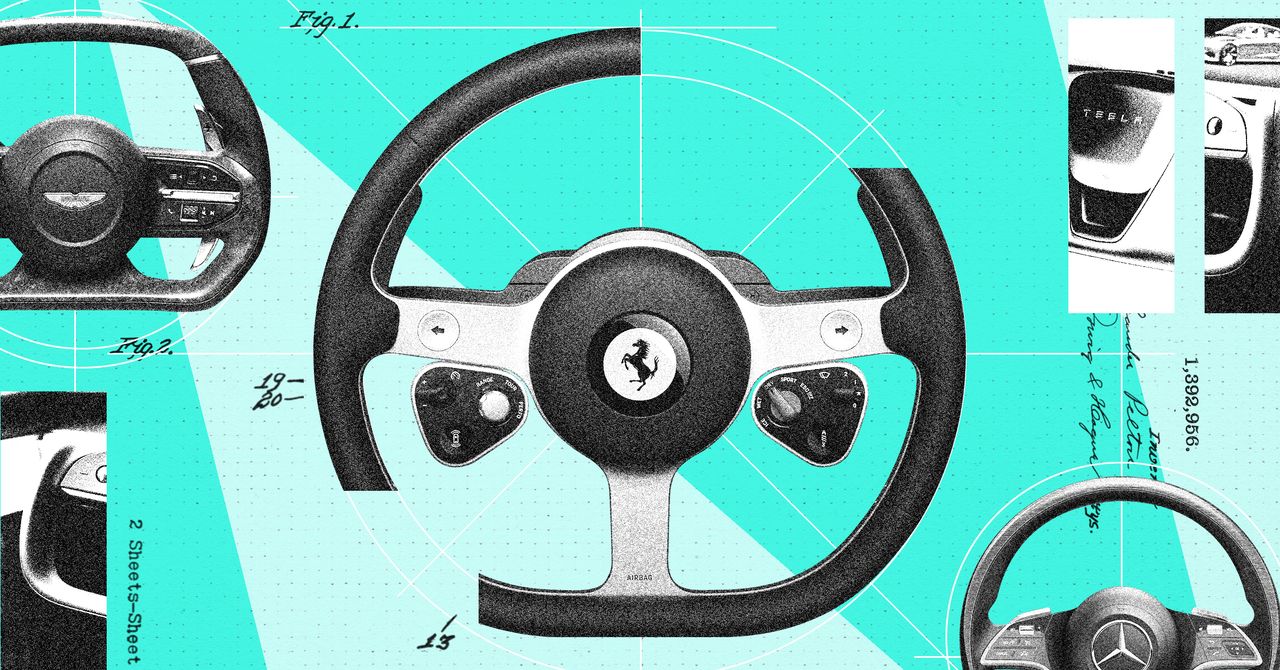
Cars didn’t always have steering wheels. The very first car—the 1885 Benz Patent-Motorwagen, invented by Karl Benz—used a tiller system: a horizontal bar with a handle mounted to a vertical bar. The lever-like handle was similar in many respects to a boat’s rudder. Amazingly, it would be another nine years before French engineer Alfred Vacheron saw sense and fitted the first known steering wheel to his 4-horsepower Panhard for the Paris-Rouen race. Just four years later, in 1898, Panhard made the infinitely preferable and safer steering wheel standard on all its cars. And we’ve been using them ever since.
Hans-Peter Wunderlich is Mercedes’ creative director of interior design. He has been designing steering wheels for 35 years. “I started in 1991 on my first,” he tells me. “A steering wheel is really the most challenging and difficult element to sculpture, to design, to develop in the car.” It is so difficult that Wunderlich has used the wheel as a test on potential recruits.
“When we hire a designer, I have given them the task, after I see a nice portfolio, to draw me a steering wheel,” he says. “The steering wheel is, for me, the proof. Should I hire them or not? If a designer is able to create a perfect steering wheel, even just as a scribble, then they will be a good designer for the total interior of a car.”
It was this challenge, in part, that attracted Ive and his team. “Our starting point was trying to understand the essential nature of the problem to be solved, and that normally means dismissing received wisdom,” Ive tells me. “A car is the aggregation of multiple products, and, in many ways, we’re designing furniture. We’re designing complex and sophisticated input methods. One of the challenges was to try to create cohesion. You don’t get something to be cohesive by a set of rules. That was a wonderful new challenge, and one wrestled with over a number of years.”
For both Ive and Wunderlich, science accompanies the art of design. They talk of the intricacies of the ergonomics, the logic of the switches, factoring in an “exploding element in the center” (the airbag), which is getting more and more complicated, says Wunderlich. “Even the rim is an ergonomic science in itself,” he adds, saying that his team works hand in glove with Mercedes’ in-house ergonomics department on these stages. “It’s almost 50-50. We get requirements data from engineering and ergonomics.”
Spinning Out
Look closely at your steering wheel rim; in cross-section, it won’t be round. Cut it into segments, and each will likely have a different profile, aiming to optimize grip wherever your hands grasp the wheel. Even the padding has to be just right. “It mustn’t be like bone but also not too fat. You need a nice balance,” Wunderlich says. “[It must say] this car is solid, it’s quality, it’s strong, it’s powerful, but it’s not crude.”
“If you hold the wheel on the three and nine o’clock positions, you can carve in with your fingers on the rear of the rim—so you have the hump, the scallop of the rim,” Wunderlich says. “And then we carve into a valley where your fingers could rest. That means your hands can close. You have the feeling you’re holding the car. This is so challenging, because in that area you have such a technical structure to maintain—complex electronics and heating elements. We torture the engineers to keep that area so small so we can sculpt it out.”
Ive tortured Raffaele De Simone, Ferrari’s chief engineer and head development driver. De Simone is sometimes described at the company as “Customer No. 1” because, apparently, no Ferrari road car leaves the factory until he is satisfied with its performance.

After a relatively quiet few months, Amazon is bringing back another of its famously invented shopping holidays. The Amazon Spring Sale is in its third year, running now through March 31. Like during last year’s event, Amazon is promising customers thousands of deals across various daily, themed categories.
Of course, as we’ve seen in the past with Prime Day, Black Friday, and Cyber Monday, the true discounts on good products will likely be buried among junk deals on shoddy wares. The WIRED Reviews team tests gear all year long, and we fact-checked discounts on the products we actively recommend to our friends, family, and readers. We’ve highlighted the best deals from the Amazon Spring Sale below.
Be sure to check out our other deals coverage for vacuum discounts, smart bird feeders, and more.
Updated March 27, 2026: We’ve added additional deals, removed expired discounts, and checked for accuracy throughout.
WIRED Featured Deals:
Our audiophile reviewers test more headphones than anyone would deem sane or necessary. The Sony WH-1000XM6 are the pair they’ve declared the best wireless headphones of all, with “the best noise reduction on Earth.” You’ll also get 30 hours of battery life, multipoint Bluetooth pairing, folding ear cups and a travel case, sparkling and clear sound, and fabulous controls. They’re nearly perfect. When they’re not on sale for this price, they’re selling for the full MSRP. If you’re in the market, now is the time—or, if you’re not ready right now, wait until the next time they’re on sale for this price.
Tech
I Tested Garmin Watches for a Decade While Hiking, Biking, and Climbing. Here’s What You Should Buy
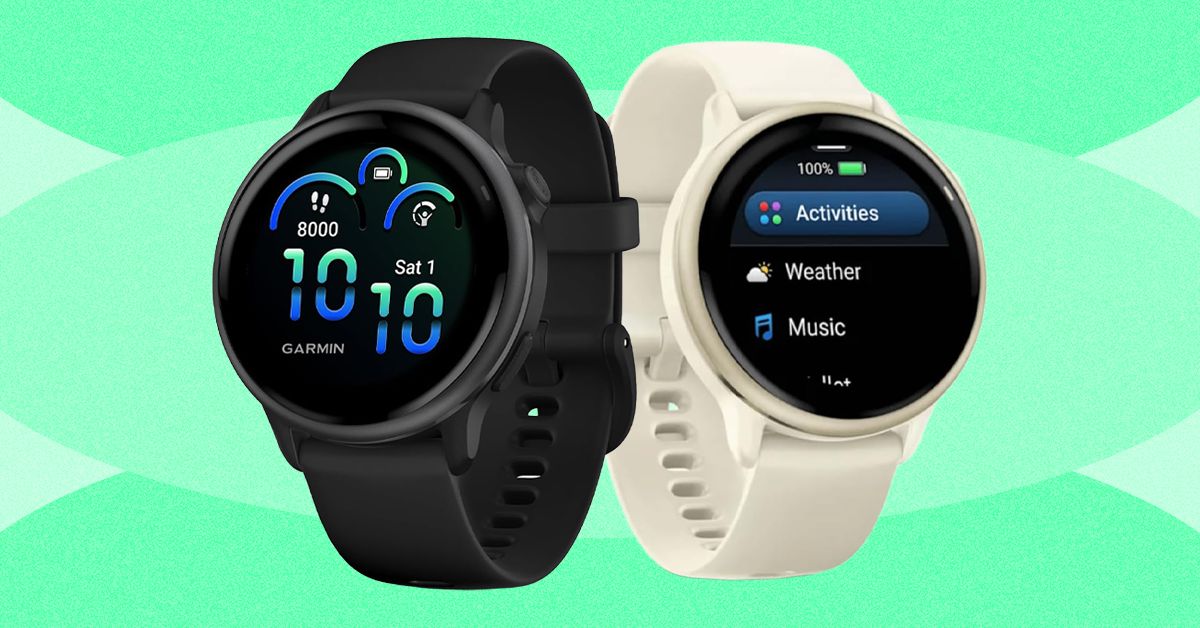
Last year, Garmin introduced a Pro version that incorporates the inReach’s satellite communications savvy. Not only does it cost at least $400 more than the Apple Watch Ultra and $200 more than the regular Fenix 8, but you also have to pay for the inReach subscription plan, which has several tiers and ranges from $8/month to $50/month depending on whether you want features like unlimited texting or sending photo messages.
What you get for this mind-boggling price is a sports watch that can do anything and everything. It has best-in-class battery life (every Fenix can last for weeks on a single charge, and up to a month with solar charging) and features like the depth sensor from Garmin’s Descent line, which means this watch works as a full-on dive computer for scuba and free diving. It has a microphone and speaker for basic voice commands (although no onboard cellular connectivity), the surprisingly useful built-in LED flashlight, and Garmin’s signature built-in topographic maps, 24/7 health monitoring, and tracking for over a hundred different activities.
I’ve taken the 51-mm version on pretty much every outdoor sport—snowboarding, trail running, mountain biking, and rock climbing. Every time I use it, its capabilities far outclass my own. I have irritated many a fellow climber by attempting to track route difficulty, duration, and falls while integrating my Body Battery metrics and so on. The danger is always that you’ll spend more time fiddling with your Garmin Fenix 8 than you do with your actual sport. I have the version with the sapphire glass face and the titanium bezel, and have smashed it into rock faces with nary a scratch. If you’re up for paying the price and want a good-looking watch that will last forever (I have friends who are still wearing their Fenix 5s and 6s, and honestly, they’re fine), this is the one to get.
Best Running Watch
The Garmin Forerunner series launched in the early 2000s and has become the quintessential runner’s watch. Like all Garmins, the Forerunner comes in a range of price points, each offering different features. Last year, Garmin released the Forerunner 570 ($550), a midrange model with no LED flashlight or onboard maps, and the Forerunner 970 ($750), which is the premium version. Before I go into detail about why the Forerunner 970 is the best option, I should also say that I have tested many previous Garmin Forerunners at various price points. If you’re not a triathlete, the older Forerunners are still worth considering, and the entry-level $200 Forerunner 165 is aimed explicitly at runners, instead of including triathletes as the more expensive models do.


Kerry Katona refuses to ‘give oxygen’ to Katie Price feud

The Deceptively Tricky Art of Designing a Steering Wheel

Reranking the MVP for each of the top Premier League clubs

-
 Business1 week ago
Flipkart group CFO to leave co amid IPO plans – The Times of India
-

 Sports1 week ago
Rating Adidas’ 2026 World Cup away shirts: Argentina, Spain, Mexico and more
-

 Fashion1 week ago
China’s textile & apparel exports surge 17% to $50 bn in Jan-Feb 2026
-

 Sports1 week ago
American Conference Commissioner Tim Pernetti thanks Trump for Army-Navy game executive order
-

 Tech1 week ago
Gamers Hate Nvidia’s DLSS 5. Developers Aren’t Crazy About It, Either
-

 Sports1 week ago
How to watch 2026 NCAA swimming and diving championships
-
 Business5 days ago
Property Play: Home flippers see smallest profits since the Great Recession, real estate data firm says
-
 Business1 week ago
‘Marriage penalty’ in Washington state’s new millionaire tax stirs debate