

Business
Government ‘stands ready’ to support consumers with energy bills

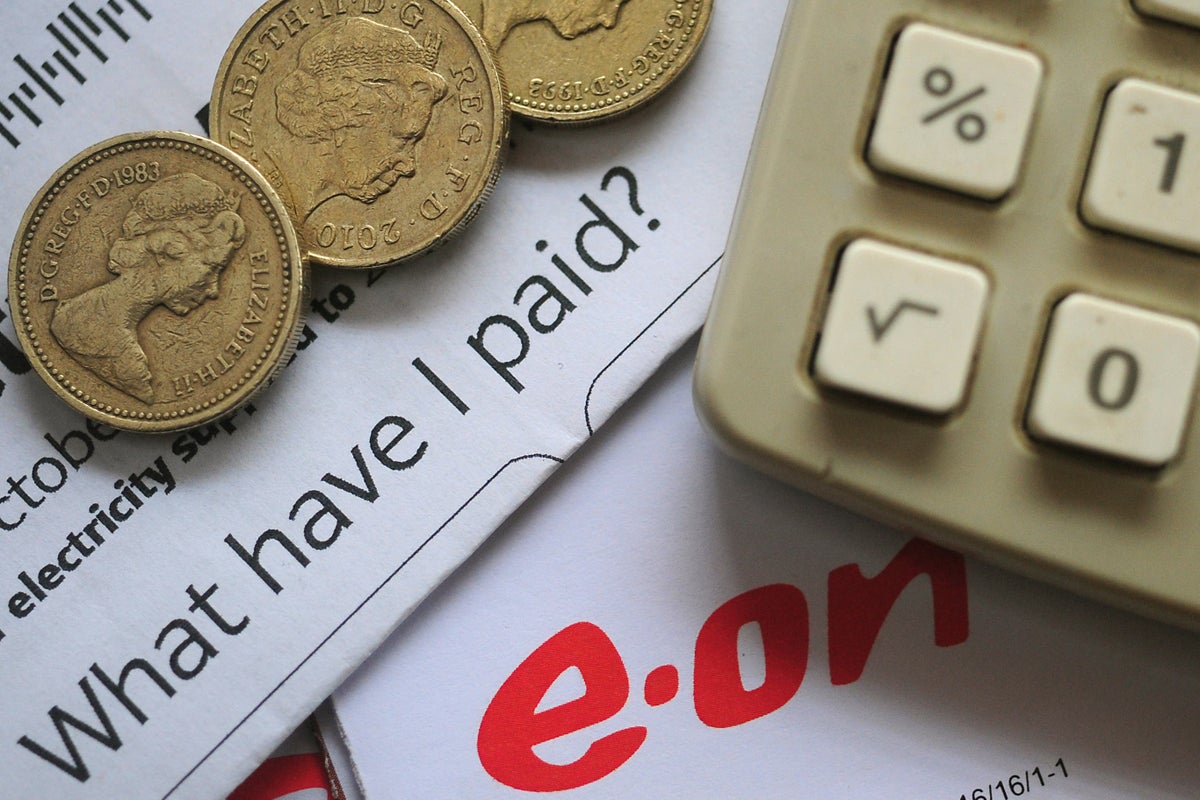
The Government “stands ready to provide whatever support is needed to consumers” amid predictions of soaring energy bills because of the Middle East conflict.
Energy minister Michael Shanks told the Energy Security and Net Zero Committee that he “would give some reassurance” that the UK’s energy supplies were secure but said there was “no question” that the Middle East conflict “does have an impact on price”.
He said: “First of all, despite some scaremongering stories that have surfaced in the past two weeks, the UK has very strong energy supplies from a diverse range of sources.
“If we think about our gas supply for example, we have that from a number of different sources that are all still operating as normal. I spoke to the three LNG terminals just yesterday to confirm that that is still the case.
“If we think about fuel it’s really important to say that across the country we monitor very closely fuel supplies and there are no concerns at all about that fuel supply.
“Clearly we keep all these things under review, but it is important to re-state that publicly because clearly we want people to go about their lives refilling cars and everything else in the way they normally would, which is how we make sure that supplies continue to operate as normal.”
He added: “But there is no question that the situation in the Middle East and the uncertainty that that brings does have an impact on price and that’s why, really clearly, the Government has said look, we will fight the corner of consumers. We will do everything we can to first of all de-escalate the situation … but secondly to provide support wherever we can.”
Asked what would happen when Ofgem’s already announced price cap ends at the end of June, he said: “Clearly, what happens at the end of that price cap period is still being worked through.
“We’re at quite an early stage of what’s called the observation window looking at the range of factors that will lead to that.
“And although we’re now over slightly over two weeks into this conflict, in truth we don’t know exactly where this is going to go and when and, therefore, it’s far too early – and Ofgem have repeated this point themselves – it’s far too soon to say with any certainty exactly what that will look like.
“But clearly, as we get closer to that period we’ll have more evidence and be able to see what the price cap might do, and the Government and the Chancellor and the Prime Minister have said this, we stand ready to provide whatever support is needed to consumers.”
Committee chairman Bill Esterson asked about the possibility of removing further policy costs from bills, which currently make up £236 of price cap and were “a huge sum to play with”.
Mr Shanks said: “It’s an avenue that we have to look at very carefully.”
He added: “We also have to invest, and this can be a trade-off where we’re saying that we should simply take policy costs off with no consideration of the system we want to build for the future.
“At the same time as we want to protect consumers right now, we have to start building a system that protects them permanently and keeps bills low in the future.
“We look at every single part of the bill. We’re in regular contact with Ofgem about more that we could do together to really bear down on the costs of that.
“And every single bit of renewables that we build helps reduce the role that gas plays in setting the wholesale price, and that reduces people’s bills.”

Asian markets mostly rose on Wednesday, and oil prices dipped following another tech-led advance on Wall Street, as the United States hit Iranian missile sites near the key Strait of Hormuz and Tehran struck crude-producing Gulf neighbours.
While the war in the Middle East shows no sign of ending and oil has stuck around $100 a barrel — threatening to fuel a fresh inflation spike — equity traders have shifted back into the market after the steep losses suffered at the outset of the conflict.
However, analysts warned the positive mood could fade if the crisis drags on and energy costs spiral with Hormuz — through which a fifth of global oil and gas flow — effectively closed by Iran.
That comes with central banks increasingly in a bind as the need for lower interest rates to support the economy goes up against the prospect of rising prices, which would need higher borrowing costs.
In a bid to ease traffic through the crucial Strait, US forces dropped several 5,000-pound (2,250 kg) bombs on “hardened Iranian missile sites” near the coast, Central Command said.
Iran has sought to extract a heavy toll on the global economy in retaliation for the US-Israeli attack, including by driving up the cost of oil.
US President Donald Trump on Tuesday fumed that allies, which have largely distanced themselves from his war, were not lining up to help escort tankers through Hormuz.
The attacks came as Israel announced it had killed security chief Ali Larijani, a key force leading Iran since the death of Supreme Leader Ayatollah Ali Khamenei in the first strikes of the war.
Meanwhile, Saudi Arabia intercepted six drones and Kuwait’s air defences responded to a rocket and drone attack, authorities from both countries said Wednesday, while two people were killed by missiles near Tel Aviv.
Israel also hit a central Beirut neighbourhood as it looks to take out the Hezbollah.
Rystad Energy estimated just 12.5 million barrels per day of Middle Eastern oil remains online, down from the 21 million per day pre-war base.
“But the 12.5 million bpd figure is not secure,” Rystad said. “If the (Hormuz) situation persists, the drop in departures could start feeding through into additional export losses in the weeks ahead, as producers face growing difficulty moving crude out of the Gulf.”
Still, oil prices fell, with West Texas Intermediate losing more than one percent to sit around $95, while Brent dipped 0.8%, though it was still holding above $102.
And stocks continued to defy gravity following gains on Wall Street that were helped by tech giants including Apple and Amazon.
Seoul jumped more than three percent thanks to a surge in chip giants Samsung and SK hynix. The Kospi, however, is still well down from the record highs touched before the war broke out.
Tokyo was up more than two percent, while Taipei, Sydney, Singapore and Wellington also rallied. Hong Kong and Shanghai dipped.
“Asia is picking up the baton with a cautiously constructive tone… all of it leaning on the signal from Wall Street where the S&P and Nasdaq have now strung together a second day of gains, suggesting the market is actively choosing to look through the geopolitical noise rather than price it in the fore,” wrote SPI Asset Management’s Stephen Innes.
However, Fawad Razaqzada at Forex.com warned that traders might begin to rethink their positions the longer the conflict rumbles on.
“If the war continues then the US and Israel will have to continue alone, because other NATO members have decided against joining the conflict,” he wrote.
“This may work in favour of Iran keeping the Strait of Hormuz closed for longer.”
Focus is also on the Federal Reserve’s policy meeting that concludes later Wednesday.
The bank is expected to keep borrowing costs on hold but it will release its “dot plot” forecast for rates in the coming months, amid speculation it could be forced to hike again.

Lululemon offered a weak 2026 outlook on Tuesday as tariffs, higher expenses and a dramatic proxy battle with its founder weigh on its bottom line.
The athleisure company’s guidance for both the current quarter and the fiscal year came in lower than expected on the top and bottom lines.
Lululemon is expecting first quarter sales to be between $2.40 billion and $2.43 billion, weaker than estimates of $2.47 billion, according to LSEG. It anticipates earnings per share will range between $1.63 and $1.68, also weaker than estimates of $2.07.
For the full year, Lululemon is expecting sales to be between $11.35 billion and $11.50 billion, below expectations of $11.52 billion. Earnings guidance of $12.10 to $12.30 per share was also far weaker than estimates of $12.58.
“The work is really underway in terms of our action plan, and we’re really focused on the importance of course correcting on a number of fronts,” interim co-CEO Meghan Frank told CNBC in an interview. “We’ve got a new creative director, his first line is hitting in Q1, we are seeing some green shoots, I would say, from the product in Q1 so we’re excited about some of the momentum we have on that line item. We have had some great response from some of our recent product activations, and then we’re also reducing our speed to market timeline.”
During Lululemon’s holiday quarter, the company beat estimates on both the top and bottom lines, though Wall Street had lowered its expectations for the period in recent months.
Here’s how the Vancouver-based retailer performed during its fiscal fourth quarter compared with what Wall Street was anticipating, based on a survey of analysts by LSEG:
- Earnings per share: $5.01 vs. $4.78 expected
- Revenue: $3.64 billion vs. $3.58 billion expected
The company’s net income for the three-month period that ended Feb. 1 was $586.9 million, or $5.01 per share, compared with $748.4 million, or $6.14 per share, a year earlier.
Sales rose slightly to $3.64 billion, up about 1% from $3.61 billion a year earlier.
Lululemon raised its fiscal fourth-quarter guidance during the ICR conference in Orlando earlier this year, so all eyes were on the company’s 2026 guidance following more than a year of underperformance.
The retailer, always considered a premium brand that rarely offered promotions, had been leaning on discounts to drive sales and move inventory. The company is now working to pull back that strategy this year, Frank said. Lululemon expects the move will weigh on sales in the near term, but it will bring the company back to a full-price business over time, she said.
Meanwhile, it’s seeing a number of pressures on its bottom line. Higher tariffs and the end of the de minimis exemption continue to be a major cost for the company.
This year, Lululemon expects tariffs to cost the company $380 million, up from $275 million last year, on a gross basis. Once mitigation efforts are taken into account, the net impact is expected to be $220 million in 2026, up from $213 million in 2025.
Lululemon has been negotiating with suppliers and taking other actions to reduce its exposure to tariffs, but it isn’t increasing prices to offset the added costs, especially as it looked to promotions to drive sales in recent months. The brand was already priced toward the high end of the market prior to President Donald Trump’s tariff hikes last year, leaving it with fewer tools in its arsenal to offset the duties, especially as it faces intense competition and a slowdown in the athleisure market.
Last year, the company raised prices on a select number of items. Shoppers are still responding favorably so far, but there are no plans to build on those increases for now, said Frank.
Beyond tariffs, the company is also seeing higher expenses from marketing, labor, incentives and costs related to its proxy contest with founder Chip Wilson. Wilson, Lululemon’s largest independent shareholder, has been pressuring the company to make changes to its board of directors and has criticized it for losing sight of its creative vision.
Just before releasing earnings, Lululemon announced it was adding former Levi Strauss CEO Chip Bergh to its board of directors. Bergh was not among the candidates Wilson put forward for consideration, but he does have considerable public company experience and spent around 13 years as Levi’s CEO. During his tenure with the company, Levi began pursuing a more profitable direct selling strategy and sales rose by around 30%.
As part of the announcement, Lululemon said board member David Mussafer, managing partner and chairman of private equity firm Advent, will not stand for re-election during the company’s upcoming 2026 shareholder meeting at the conclusion of his current three-year term. The announcement marks a win for Wilson, who has criticized Mussafer publicly. In a letter to shareholders last month, Wilson pointed out that Mussafer was overseeing the board’s interview process for prospective nominees at a time when he was up for election, creating a potential conflict of interest.
A source familiar with the matter said Wilson had called on Mussafer to step down from the board because he lacks independent leadership, among other issues.
Mussafer didn’t immediately respond to a request for comment.
Prior to the earnings announcement, Wilson issued a statement saying shareholders will be “critically evaluating” any claims of success or improvement from Lululemon when it released results.
“The core issue at lululemon is one the Company has struggled with for years: there is a disconnect between the Company’s creative engine and the Board’s understanding for how brand power and product excellence fuel cultural strength, margin durability and long-term shareholder value,” he said.
Lululemon declined to comment.
While parts of Lululemon’s business are still growing, it has primarily seen that expansion in China and in other international regions, which make up a fraction of overall revenue. Same-store sales in its largest region, the Americas, haven’t grown in around two years, and Lululemon is expecting another year of declines in 2026.
The company said it expects sales in the Americas to decline between 1% and 3% in 2026.
Meanwhile, sales in China are expected to grow around 20%, and the rest of the world by a mid-teens percentage.

KARACHI:
Pakistan’s dependence on remittances is growing as it seeks to finance its expanding trade deficit. One of the countries contributing to these remittances is Oman, where many Pakistani workers send valuable foreign exchange back home. Meanwhile, Oman Vision 2040 aims for long-term economic transformation, which could significantly change employment opportunities for thousands of Pakistani expatriate workers.
As Oman gradually shifts toward a more digital and knowledge-based economy, it is also tightening labour market regulations through its omanisation policy. Remittances from the Gulf region continued to dominate Pakistan’s inflows in February, reflecting the large concentration of Pakistani workers in Middle Eastern labour markets. From Oman alone, overseas Pakistanis sent $92.6 million during the month, slightly lower than the $105.6 million recorded in January, but still maintaining a steady contribution to overall inflows.
Alongside Oman, other Gulf Cooperation Council countries collectively contributed about $317.2 million, including Qatar with $102.8 million, Kuwait $77 million and Bahrain $44.8 million. Meanwhile, the two largest Gulf corridors, the United Arab Emirates and Saudi Arabia, remained the dominant sources, sending $696.2 million and $685.5 million respectively in February, underscoring the continued importance of Gulf economies for Pakistan’s remittance inflows and external account stability. The transition reflects a broader structural shift in Oman’s growth model. With non-oil activities now contributing more than 70% of the country’s gross domestic product, economic expansion is increasingly driven by sectors such as logistics, digital infrastructure, advanced services and industrial operations. As these systems become more complex, demand is expected to move from basic operational labour toward workers capable of handling data, coordinating digital platforms and operating technologically advanced systems.
For Pakistani workers, many of whom have historically been employed in construction, maintenance, logistics and technical trades, this change could gradually redefine the types of skills required to remain competitive in the Omani labour market.
Industry observers say the challenge is not the availability of technology or infrastructure, but the availability of skilled workers able to operate and manage those systems efficiently. “At a certain stage, technology stops being the constraint. People become the limiting factor,” said technology investor and infrastructure operator Matvii Diadkov, who has worked on ecosystem-level digital infrastructure deployments across logistics, e-commerce and real estate sectors in Oman and the wider region. “Systems only scale when there are enough skilled operators to run them, improve them and pass that knowledge forward,” he noted through an email communication.
Oman already has strong digital infrastructure foundations, with internet penetration exceeding 95% and nationwide mobile coverage supporting advanced services. However, information and communication technology professionals still represent only about 2-3% of the country’s workforce.
Regional benchmarks suggest that more than 40% of jobs now require at least some level of digital capability, highlighting a gap between infrastructure development and workforce readiness.
For expatriate workers, including Pakistanis, this gap may create both opportunities and risks. While specialists with strong technical or digital skills may find continued demand in areas such as engineering, healthcare and advanced system operations, mid-level operational roles could face increasing pressure as Oman prioritises employment opportunities for its own citizens. The tightening of labour market regulations is part of Oman’s broader omanisation strategy, which seeks to increase the participation of Omani nationals in private-sector jobs. Under the country’s updated labour law, companies can hire foreign workers only when suitable local candidates are unavailable, and firms may replace expatriate employees with Omani workers under localisation plans.
This policy shift is occurring alongside demographic dynamics that add further pressure to the labour market. More than half of Oman’s population is under the age of 35, while youth unemployment remains structurally higher than the national average, estimated at around 10-12%. Analysts say the future trajectory of Pakistani workers in Oman will largely depend on how quickly they can upgrade their skills to match the evolving demands of a more technologically advanced economy.
While many Pakistani migrants already work in technical fields such as engineering, electrical maintenance and healthcare, experts note that the next phase of economic transformation will require stronger capabilities in digital system operations, data management, logistics coordination and industrial automation. “Another challenge is the absence of publicly available data on the exact digital skill levels among Pakistani expatriates working in Oman, making it difficult to measure how well their training aligns with the country’s future workforce needs,” Matvii Diadkov said.
Some analysts argue that closer cooperation between Pakistan and Oman on skills development could help address the mismatch.
Potential initiatives include joint certification programmes, pre-departure technical training, digital verification of professional qualifications and sector-specific training for industries such as logistics, energy infrastructure and industrial operations.
Education specialists note that talent development in digital sectors often takes eight to twelve years to mature, meaning early investments in training and institutional partnerships could play a crucial role in determining the long-term competitiveness of Pakistan’s overseas workforce.


Bangladesh apparel faces its toughest stress test amid war disruption

Top MQM-P leader demands PM reinstate Kamran Tessori as Sindh governor

Switzerland, Vietnam push to conclude EFTA FTA talks by June 2026

Stock market crash today (March 12, 2026): Nifty50 opens below 23,600; BSE Sensex down over 900 points on continuing US-Iran war – The Times of India

Intertextile Shanghai 2026: Fringe events spotlight market trends

What time will NASA’s 600 kg satellite crash to Earth today— 14 years after launch?

-
Business6 days ago
Stock market crash today (March 12, 2026): Nifty50 opens below 23,600; BSE Sensex down over 900 points on continuing US-Iran war – The Times of India
-
 Fashion1 week ago
Intertextile Shanghai 2026: Fringe events spotlight market trends
-
 Entertainment1 week ago
What time will NASA’s 600 kg satellite crash to Earth today— 14 years after launch?
-
 Fashion1 week ago
German brand Adidas posts 13% revenue growth in 2025
-

 Fashion7 days ago
UK’s Topshop unveils Tolu Coker capsule collection
-

 Fashion7 days ago
India’s textile recycling market may reach $3.5 bn by 2030: Report
-
 Entertainment6 days ago
Gas, food, household prices explained
-

 Tech7 days ago
Meta Developed 4 New Chips to Power Its AI and Recommendation Systems