

Fashion
India’s Pearl Global reports solid Q3 FY26 with margin improvement


During the quarter, adjusted EBITDA stood at ₹97 crore, up 4.4 per cent YoY, with margins at 8.3 per cent. After excluding tariff-related costs and ramp-up expenses of around ₹9 crore, the adjusted EBITDA margin improved to about 9.1 per cent. Profit after tax (PAT) increased 6.8 per cent YoY to ₹52 crore.
Pearl Global Industries has posted strong Q3 FY26 results, with consolidated revenue rising 14.4 per cent to ₹1,170 crore (~$129.3 million) and PAT up 6.8 per cent.
9M revenue grew 13.2 per cent to ₹3,711 crore (~$410.5 million), supported by multi-country operations and higher value-added products.
Improved margins, rating upgrades and capacity expansion in Bangladesh strengthen its growth outlook.
Standalone performance also showed improvement. Q3 FY26 standalone revenue was ₹246 crore, with adjusted EBITDA of ₹13 crore and margins improving by 140 basis points YoY to 5.1 per cent. Excluding tariff costs of around ₹5 crore, margins stood at roughly 7.2 per cent. Standalone PAT rose sharply to ₹14 crore from ₹4 crore in Q3 FY25.
For the first nine months (9M) of FY26, PGIL reported consolidated revenue of ₹3,711 crore (~$410.5 million), registering a 13.2 per cent YoY increase, supported by its diversified multi-country manufacturing footprint and a higher value-added product mix. Adjusted EBITDA excluding ESOP expenses rose 14 per cent YoY to ₹333 crore, with margins of around 9 per cent.
After adjusting for reciprocal tariff costs of approximately ₹31 crore and incremental ramp-up expenses of about ₹11 crore, adjusted EBITDA margin improved to nearly 10.1 per cent. PAT for the period grew 14 per cent YoY to ₹189 crore, led by strong momentum in Vietnam and Indonesia.
On a standalone basis for 9M FY26, it reported revenue of ₹777 crore. Adjusted EBITDA surged 63.7 per cent YoY to ₹43 crore, with margins expanding to 5.5 per cent, an improvement of 220 basis points, largely due to cost restructuring. Excluding reciprocal tariff costs of around ₹14 crore, adjusted EBITDA margin stood at about 7.3 per cent. Standalone PAT increased to ₹55 crore from ₹32 crore a year earlier.
PGIL’s credit profile strengthened during the period, with ICRA upgrading its long-term rating from BBB (Stable) in 2021 to A+ (Stable) in 2026, and its short-term rating improving to A1+, reflecting strong liquidity and operational resilience.
The company said Bangladesh remains a key growth engine, with capacity expansion on track for completion by Q2 FY27. Indonesia and Vietnam continue to operate at optimal utilisation levels, positioning them well for future growth. PGIL added that recent trade agreements covering major global markets valued at over $250 billion, combined with existing capacity, place it in a strong position to accelerate revenue growth, improve profitability and create long-term value for stakeholders.
“We are delighted to report another quarter of encouraging performance in FY26 for the group amidst a challenging macroeconomic and geopolitical environment. Our 9M FY26 revenue grew by 13.2 per cent and EBITDA grew by 14 per cent YoY,” said Pulkit Seth, vice-chairman and non-executive director of PGIL. “Our India operations are expected to gain significant momentum following the reduction of US tariffs to 18 per cent. This trade agreement removes the burden of the additional 25 per cent duty, thereby enhancing profitability and supporting sustained top-line growth. Another positive industry development is India-EU Free Trade Agreement (FTA), which creates a level playing field for Indian exporters.”
“This agreement will accelerate growth in our India operations, allow us to leverage existing relationships with EU customers including those currently served from our other manufacturing locations. Further, the UK FTA opens new opportunities to expand India’s revenue contribution to the UK market. With capacity already in place, we are well-positioned to capitalise all these opportunities and continue to grow revenue and profitability,” added Seth.
“This performance underscores the strength of Pearl global’s diversified operating model and disciplined execution across geographies. Despite ongoing macroeconomic and trade-related challenges, we have delivered consistent growth, supported by a higher value-added product mix and operational efficiencies,” said Pallab Banerjee, managing director of the company.
“While Vietnam, Indonesia and Bangladesh continue to grow, our India operations were constrained by the high US tariff in FY26, however with the February deal with US and necessary capacity and capability in place, our India operations are also well positioned to regain growth trajectory from FY27 onwards,” added Banerjee.
Fibre2Fashion News Desk (SG)







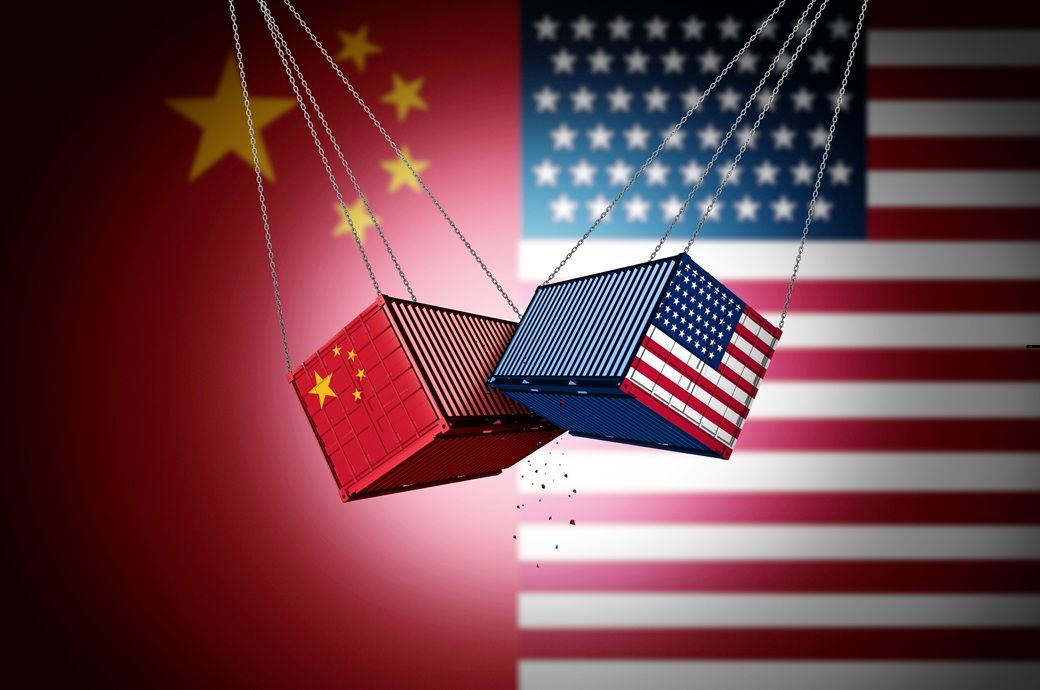
The move follows two separate Section 301 investigations by the Office of the US Trade Representative on March 12 and 13, targeting multiple economies, including China, over concerns such as “overcapacity” and alleged lapses in preventing imports linked to forced labour. Beijing expressed strong dissatisfaction and firm opposition to these actions.
China has launched two trade barrier investigations into the United States (US) measures following recent Section 301 probes by Washington.
The move targets actions affecting global supply chains and green trade.
Beijing opposed the US investigations and said it would take steps based on findings, signalling rising trade tensions between the two economies.
A ministry spokesperson said the probes were initiated in accordance with China’s Foreign Trade Law and related rules, adding that appropriate measures would be taken based on the findings.
Commerce Minister Wang Wentao also raised concerns over the US actions during a meeting with US Trade Representative Jamieson Greer on the sidelines of the 14th WTO Ministerial Conference in Yaoundé, Cameroon.
Fibre2Fashion News Desk (CG)
According to the informal agreement, there will be a new handling fee for each item entering the EU from non-EU countries and sent directly to EU consumers, to cover the extra cost of handling an ever-increasing number of individual parcels.
This will be paid by the same entity responsible for paying other customs charges for the same parcel, to avoid shifting the cost to consumers.
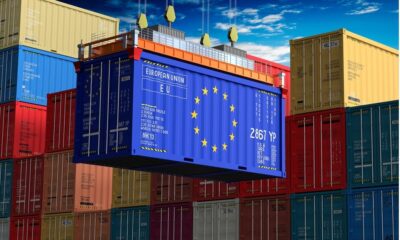
The European Parliament and European Council have reached a deal on a major reform of the EU Customs Code to address problems relating to e-commerce, safety of goods and efficiency.
A new handling fee will be charged for each item entering the EU from non-EU nations and sent directly to EU consumers.
The European Commission will establish the level of the fee and reassess it every two years.
The European Commission will establish the level of the fee and reassess it every two years. Member states will start collecting it as soon as the necessary information technology (IT) system becomes operational, and in any case no later than November 1, this year.
Under the new rules, sellers and platforms that facilitate distance sales of goods from non-EU countries directly to EU customers will be treated as importers. This will oblige them to provide customs authorities with all the necessary data, pay or guarantee any charges, and make sure that the goods comply with EU laws, an official release said.
These companies must be established in the EU or be represented by an EU-based entity having either authorised economic operator (AEO) or trusted trader status. This should prevent the use of shell companies.
To incentivise bulk shipments that are easier for customs authorities to check, non-EU country sellers and platforms are encouraged to operate warehouses in the EU. Their intra-EU client shipments would benefit from a lower handling fee, provided their goods were imported in collective packaging and large enough quantities to make customs checks more efficient.
Companies that repeatedly ignore EU rules could be punished with a fine of at least 1 per cent (and up to 6 per cent) of the total value of goods imported into the EU in the previous 12 months.
Additionally, customs authorities may suspend, revoke, or annul their trusted trader or AEO status and flag them as high-risk operators.
Import-export companies that follow the rules and agree to cooperate transparently with the customs authorities may benefit from a simplified ‘trust and check’ regime. This would initially require them to go through thorough vetting and grant customs authorities access to their electronic systems.
In exchange, their shipments would be checked less frequently and they would have more flexibility regarding the payment of duties and fees.
The current AEO qualification will remain in place to keep customs status accessible to smaller economic operators.
The reform also establishes a new customs data hub to be managed by the new EU Customs Authority (EUCA). It will be available for optional use by 2031 and mandatory by 2034.
The data hub will replace at least 111 software systems currently used by customs.
The provisional agreement needs to be officially approved by Parliament in plenary as well as by the EU Council, before it will become law.
Fibre2Fashion News Desk (DS)
This was driven by an 8.36-per cent YoY decline in import volume and a 7.76-per cent YoY decrease in average unit prices.
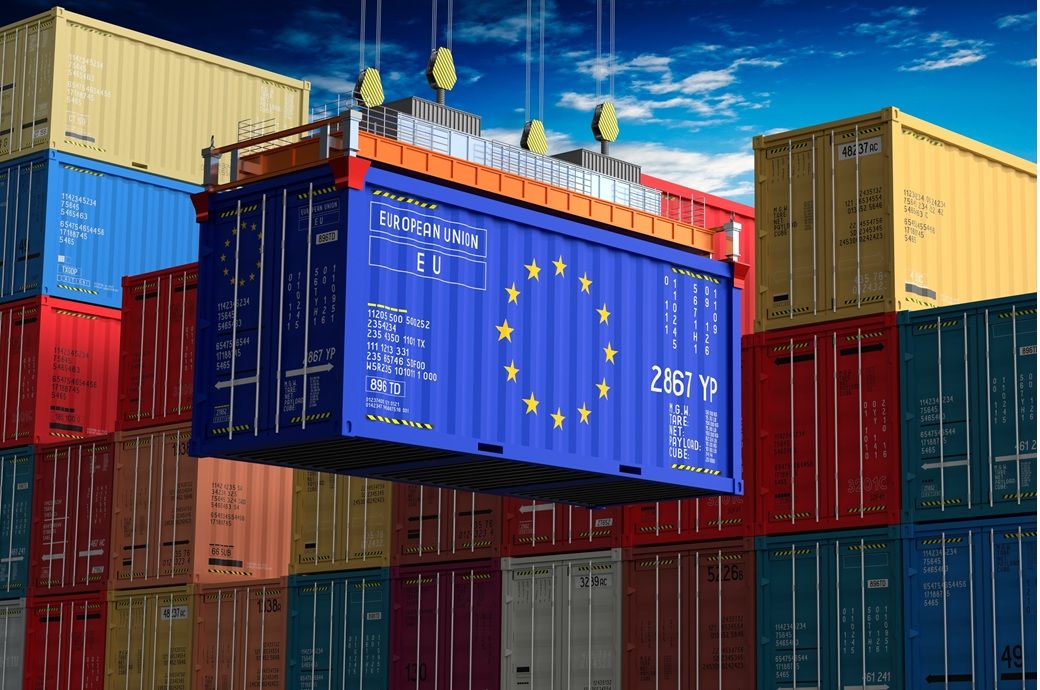
The EU’s apparel imports fell by 15.48 per cent YoY in January to €7.03 billion, according to Eurostat.
Bangladesh’s apparel exports to the EU fell to €1.43 billion in January—a 25.25-per cent drop in value.
China remained the top exporter of apparel to the EU (€2.22 billion), but still saw a 6.9-per cent decline YoY in value.
India, Pakistan, Vietnam and Cambodia also remained in negative territory.
Bangladesh’s apparel exports to the bloc fell to €1.43 billion in January—a sharp 25.25-per cent drop in value. It saw a 17.49-per cent YoY decrease in the quantity of goods shipped, coupled with a 9.41 per cent drop in the unit price per kilogram.
China remained the top exporter of apparel to the EU (€2.22 billion), but still saw a 6.9-per cent decline YoY in value. Its unit prices dropped by 8.01 per cent YoY, while its export volume grew a bit by 1.21 per cent YoY.
Turkey faced a severe hit with a 29.12-per cent YoY decrease in apparel export value to the EU in the month, totaling €619.98 million.
Other countries like India, Pakistan, Vietnam and Cambodia remained in negative territory, reflecting a broad-based slowdown in the European fashion retail market.
Fibre2Fashion News Desk (DS)


Pakistan hosts quadrilateral meeting to discuss Middle East tensions

Saudi Arabia pumps 7 million bpd via east-west pipeline amid Hormuz disruption – The Times of India

China launches twin probes into US trade practices

-
 Business1 week ago
Flipkart group CFO to leave co amid IPO plans – The Times of India
-

 Fashion1 week ago
China’s textile & apparel exports surge 17% to $50 bn in Jan-Feb 2026
-

 Sports1 week ago
Rating Adidas’ 2026 World Cup away shirts: Argentina, Spain, Mexico and more
-

 Sports1 week ago
American Conference Commissioner Tim Pernetti thanks Trump for Army-Navy game executive order
-
Tech1 week ago
The Corsair 4000D RS PC Case Keeps Your System Cool
-

 Tech1 week ago
Gamers Hate Nvidia’s DLSS 5. Developers Aren’t Crazy About It, Either
-
 Business5 days ago
Property Play: Home flippers see smallest profits since the Great Recession, real estate data firm says
-
 Business1 week ago
‘Marriage penalty’ in Washington state’s new millionaire tax stirs debate