

Tech
Jennifer Lewis ScD ’91: “Can we make tissues that are made from you, for you?”

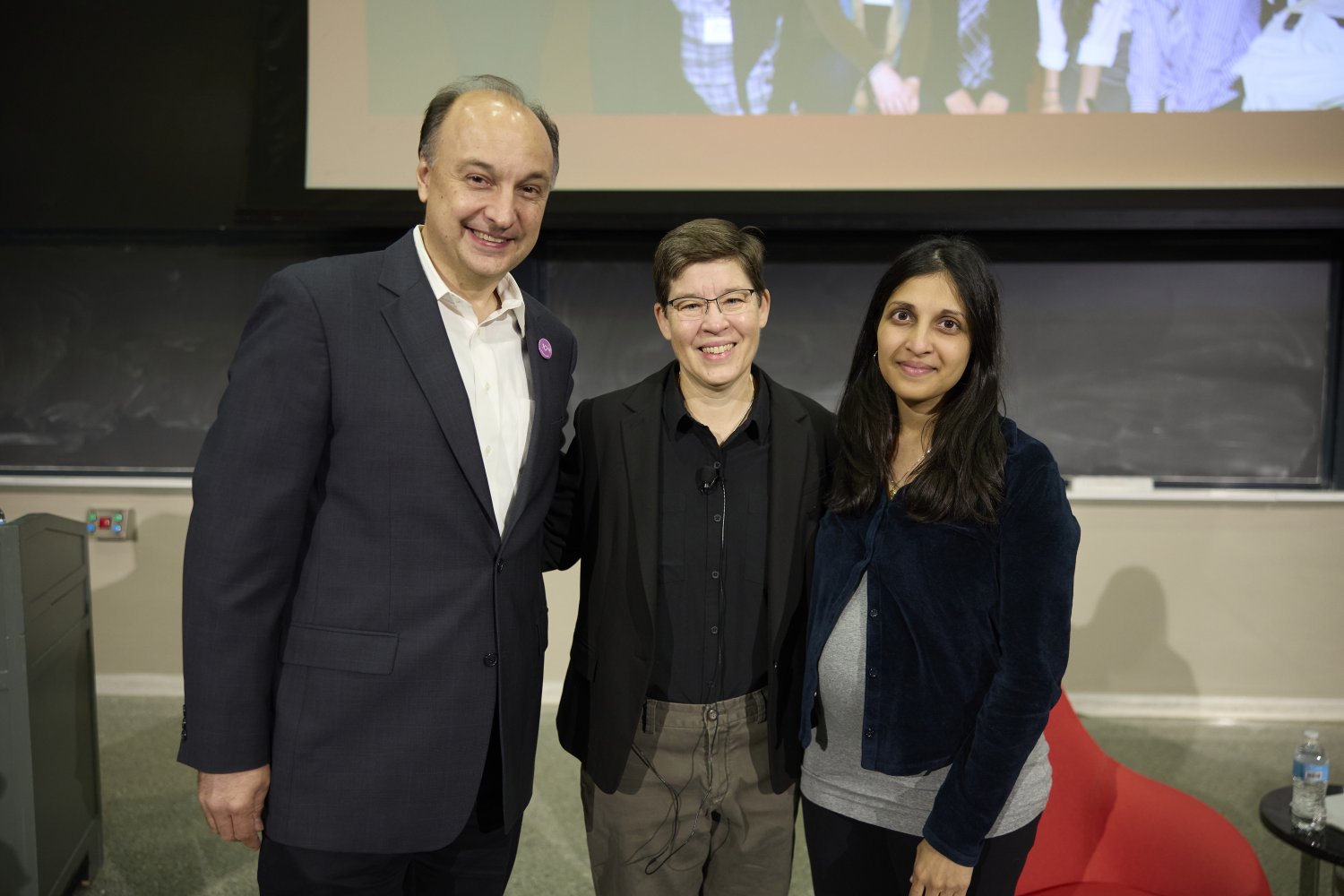
“Can we make tissues that are made from you, for you?” asked Jennifer Lewis ScD ’91 at the 2025 Mildred S. Dresselhaus Lecture, organized by MIT.nano, on Nov. 3. “The grand challenge goal is to create these tissues for therapeutic use and, ultimately, at the whole organ scale.”
Lewis, the Hansjörg Wyss Professor of Biologically Inspired Engineering at Harvard University, is pursuing that challenge through advances in 3D printing. In her talk presented to a combined in-person and virtual audience of over 500 attendees, Lewis shared work from her lab that focuses on enhanced function in 3D printed components for use in soft electronics, robotics, and life sciences.
“How you make a material affects its structure, and it affects its properties,” said Lewis. “This perspective was a light bulb moment for me, to think about 3D printing beyond just prototyping and making shapes, but really being able to control local composition, structure, and properties across multiple scales.”
A trained materials scientist, Lewis reflected on learning to speak the language of biologists when she joined Harvard to start her own lab focused on bioprinting and biological engineering. How does one compare particles and polymers to stem cells and extracellular matrices? A key commonality, she explained, is the need for a material that can be embedded and then erased, leaving behind open channels. To meet this need, Lewis’ lab developed new 3D printing methods, sophisticated printhead designs, and viscoelastic inks — meaning the ink can go back and forth between liquid and solid form.
Displaying a video of a moving robot octopus named Octobot, Lewis showed how her group engineered two sacrificial inks that change from fluid to solid upon either warming or cooling. The concept draws inspiration from nature — plants that dynamically change in response to touch, light, heat, and hydration. For Octobot, Lewis’ team used sacrificial ink and an embedded printing process that enables free-form printing in three dimensions, rather than layer-by-layer, to create a fully soft autonomous robot. An oscillating circuit in the center guides the fuel (hydrogen peroxide), making the arms move up and down as they inflate and deflate.
From robots to whole organ engineering
“How can we leverage shape morphing in tissue engineering?” asked Lewis. “Just like our blood continuously flows through our body, we could have continuous supply of healing.”
Lewis’ lab is now working on building human tissues, primarily cardiac, kidney, and cerebral tissue, using patient-specific cells. The motivation, Lewis explained, is not only the need for human organs for people with diseases, but the fact that receiving a donated organ means taking immunosuppressants the rest of your life. If, instead, the tissue could be made from your own cells, it would be a stronger match to your own body.
“Just like we did to engineer viscoelastic matrices for embedded printing of functional and structural materials,” said Lewis, “we can take stem cells and then use our sacrificial writing method to write in perfusable vasculature.” The process uses a technique Lewis calls SWIFT — sacrificial writing into functional tissue. Sharing lab results, Lewis showed how the stem cells, differentiated into cardiac building blocks, are initially beating individually, but after being packed into a tighter space that will support SWIFT, these building blocks fuse together and become one tissue that beats synchronously. Then, her team uses a gelatin ink that solidifies or liquefies with temperature changes to print the complex design of human vessels, flushing away the ink to leave behind open lumens. The channel remains open, mimicking a blood vessel network that could have fluid actively, continuously flowing through it. “Where we’re going is to expand this not only to different tissue types, but also building in mechanisms by which we can build multi-scale vasculature,” said Lewis.
Honoring Mildred S. Dresselhaus
In closing, Lewis reflected on Dresselhaus’ positive impact on her own career. “I want to dedicate this [talk] to Millie Dresselhaus,” said Lewis. She pointed to a quote by Millie: “The best thing about having a lady professor on campus is that it tells women students that they can do it, too.” Lewis, who arrived at MIT as a materials science and engineering graduate student in the late 1980s, a time when there were very few women with engineering doctorates, noted that “just seeing someone of her stature was really an inspiration for me. I thank her very much for all that she’s done, for her amazing inspiration both as a student, as a faculty member, and even now, today.”
After the lecture, Lewis was joined by Ritu Raman, the Eugene Bell Career Development Assistant Professor of Tissue Engineering in the MIT Department of Mechanical Engineering, for a question-and-answer session. Their discussion included ideas on 3D printing hardware and software, tissue repair and regeneration, and bioprinting in space.
“Both Mildred Dresselhaus and Jennifer Lewis have made incredible contributions to science and served as inspiring role models to many in the MIT community and beyond, including myself,” said Raman. “In my own career as a tissue engineer, the tools and techniques developed by Professor Lewis and her team have critically informed and enabled the research my lab is pursuing.”
This was the seventh Dresselhaus Lecture, named in honor of the late MIT Institute Professor Mildred Dresselhaus, known to many as the “Queen of Carbon Science.” The annual event honors a significant figure in science and engineering from anywhere in the world whose leadership and impact echo Dresselhaus’ life, accomplishments, and values.
“Professor Lewis exemplifies, in so many ways, the spirit of Millie Dresselhaus,” said MIT.nano Director Vladimir Bulović. “Millie’s groundbreaking work, indeed, is well known; and the groundbreaking work of Professor Lewis in 3D printing and bio-inspired materials continues that legacy.”






Trump first teased the release in February in a Truth Social post. The Pentagon coordinated the release in partnership with the White House, Director of National Intelligence Tulsi Gabbard, the Energy Department, NASA, and the FBI. Many of the files in this new drop contain documents that are already publicly available. However, some versions of these known documents in the new files contain more pages, or fewer redactions, than previously released versions.
More than 60 percent of Americans believe that the government is concealing information about UAP, according to YouGov, while 40 percent think UAP are likely alien in origin, according to Gallup. Congress has held hearings into whether there’s been a decades-long program to recover “non-human” technologies, yet evidence remains elusive.
Courtesy of the US Department of Defense
“If it’s just more blobby photos or redacted documents that don’t have any details in them, it’s more of the same,” Adam Frank, an astrophysicist at the University of Rochester who studies the search for alien life, says of the new files. “What we need are actual scientific results from the investigations that should have been done if the most extraordinary claims being made are true.”
The document drop follows a week of high-profile discussions of aliens, including Stephen Colbert’s interview with former President Barack Obama, released on Wednesday. Obama cast doubt on government cover-ups about aliens by joking that “some guy guarding the installation would have taken a selfie with the alien and sent it to his girlfriend.”

Courtesy of the US Department of Defense
Members of the Artemis II crew also second-guessed the idea of a vast government-wide conspiracy to hide the discovery of extraterrestrial life in a discussion with The Daily this week.
“Do you realize that if we found alien life out there, and we came back and reported on it, NASA would never have a budget issue for the rest of eternity?” said Reid Weisman, the commander of Artemis II. “So trust me.”
Victor Glover, the astronaut who piloted the mission, added: “Why would we hide that from you?”
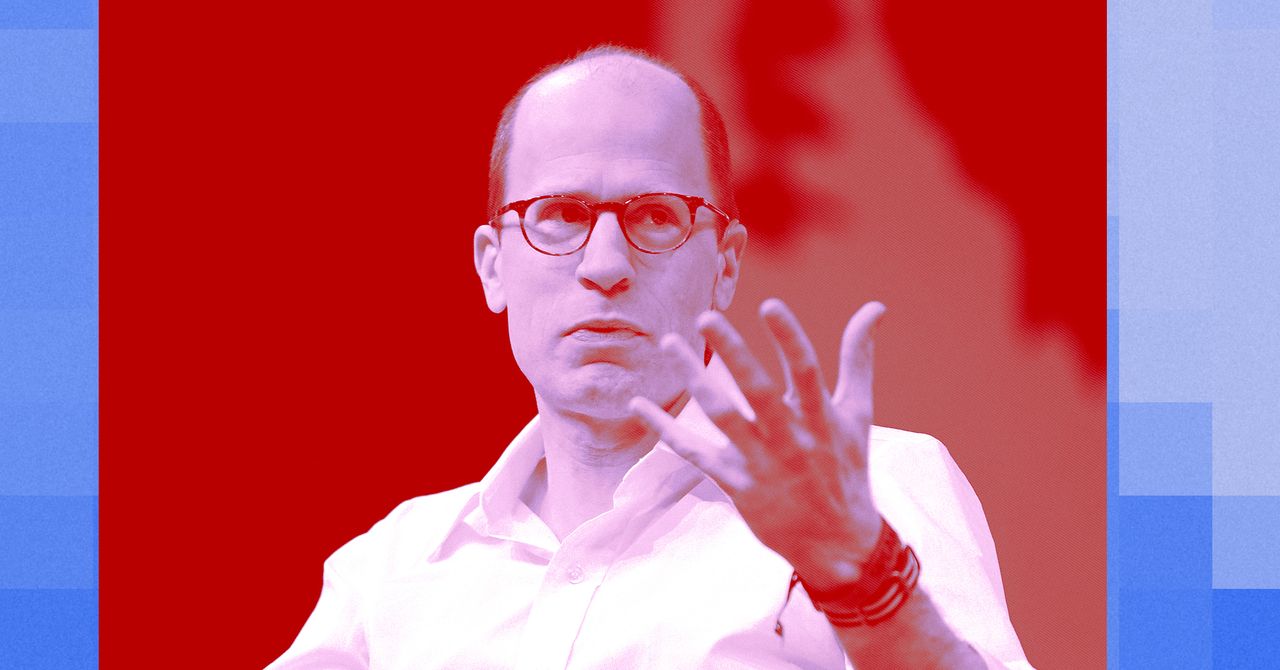
Philosopher Nick Bostrom recently posted a paper, where he postulated that a small chance of AI annihilating all humans might be worth the risk, because advanced AI might relieve humanity of “its universal death sentence.” That upbeat gamble is quite a leap from his previous dark musings on AI, which made him a doomer godfather. His 2014 book Superintelligence was an early examination of AI’s existential risk. One memorable thought experiment: An AI tasked with making paper clips winds up destroying humanity because all those resource-needy people are an impediment to paper clip production. His more recent book, Deep Utopia, reflects a shift in his focus. Bostrom, who leads Oxford’s Future of Humanity Institute, dwells on the “solved world” that comes if we get AI right.
STEVEN LEVY: Deep Utopia is more optimistic than your previous book. What changed for you?
NICK BOSTROM: I call myself a fretful optimist. I am very excited about the potential for radically improving human life and unlocking possibilities for our civilization. That’s consistent with the real possibility of things going wrong.
You wrote a paper with a striking argument: Since we’re all going to die anyway, the worst that can happen with AI is that we die sooner. But if AI works out, it might extend our lives, maybe indefinitely.
That paper explicitly looks at only one aspect of this. In any given academic paper, you can’t address life, the universe, and the meaning of everything. So let’s just look at this little issue and try to nail that down.
That isn’t a little issue.
I guess I’ve been irked by some of the arguments made by doomers who say that if you build AI, you’re going to kill me and my children and how dare you. Like the recent book If Anyone Builds It, Everyone Dies. Even more probable is that if nobody builds it, everyone dies! That’s been the experience for the last several 100,000 years.
But in the doomer scenario everybody dies and there’s no more people being born. Big difference.
I have obviously been very concerned with that. But in this paper, I’m looking at a different question, which is, what would be best for the currently existing human population like you and me and our families and the people in Bangladesh? It does seem like our life expectancy would go up if we develop AI, even if it is quite risky.
In Deep Utopia you speculate that AI could create incredible abundance, so much that humanity might have a huge problem with finding purpose. I live in the United States. We’re a very rich country, but our government, ostensibly with support of the people, has policies that deny services to the poor and distribute rewards to the rich. I think that even if AI was able to provide abundance for everyone, we would not supply it to everyone.
You might be right. Deep Utopia takes as its starting point the postulation that everything goes extremely well. If we do a reasonably good job on governance, everybody gets a share. There is quite a deep philosophical question of what a good human life would look like under these ideal circumstances.
The meaning of life is something you hear a lot about in Woody Allen movies and maybe in the philosophers community. I’m worried more about the wherewithal to support oneself and get a stake in this abundance.
The book is not only about meaning. That’s one out of a bunch of different values that it considers. This could be a wonderful emancipation from the drudgery that humans have been subjected to. If you have to give up, say, half of your waking hours as an adult just to make ends meet, doing some work you don’t enjoy and that you don’t believe in, that’s a sad condition. Society is so used to it that we’ve invented all kinds of rationalizations around it. It’s like a partial form of slavery.

Billionaire California gubernatorial candidate Tom Steyer is rolling out a new proposal that would guarantee jobs with benefits for workers displaced by artificial intelligence. He’s the first state-wide candidate to make such a pledge.
The plan, which builds on a broader AI policy framework Steyer released in March, promises to make California “the first major economy in the world” to ensure “good-paying” jobs to workers impacted by AI. To do so, Steyer tells WIRED he plans to build off a previous proposal to introduce a “token tax” which would tax big tech companies “a fraction of a cent for every unit of data processed” for AI. The funding generated by that tax would go to what Steyer has called the Golden State Sovereign Wealth Fund, with some of that money being earmarked for jobs building housing, health care, and modernizing California’s energy infrastructure.
“The aim of the initiative will be to strengthen the foundation of the state’s economy, invest in our communities, and create beautiful, vibrant public spaces,” states a campaign memo viewed by WIRED. “To support these efforts, Tom will also invest heavily in training and apprenticeship programs across the state.”
The new plan also intends to expand unemployment insurance and establish a new agency called the AI Worker Protection Administration that would include union leaders, academics, and technologists that would adopt rules to protect workers’ rights, the memo says.
“People all over this state are terrified that AI is going to hollow out this whole economy and they’re going to lose their jobs. Young people are worried they’ll never get a job,” Steyer tells WIRED. “We believe this can be an amazing transformational technology in many ways, but we’re not in the business of leaving people in California behind.”
Steyer’s job guarantee comes as lawmakers across the state and federal levels—and even some AI executives—scramble to address the ramifications of widespread AI adoption across the US workforce. In New Jersey, state senator Troy Singleton recently put out a bill that would require companies that replace workers with AI to contribute to a fund that would pay to retrain those workers. In Congress, there are a handful of proposals for grants and tax credits for companies to provide AI training to existing employees.
Dario Amodei, CEO of Anthropic, has previously suggested the concept of a token tax that is now being proposed by Steyer. “Obviously, that’s not in my economic interest,” Amodei told Axios last year. “But I think that would be a reasonable solution to the problem.” In April, OpenAI proposed a similar public wealth fund to what Steyer has rolled out.
Steyer’s announcement comes days after Democratic primary opponent Xavier Becerra—former Health and Human Services secretary under president Joe Biden—offered his own AI plan. In that proposal, Becerra calls for “workforce investment and transition support” but doesn’t provide a specific funding mechanism.
“Displacement without support is abandonment,” Becerra said in a Monday memo outlining his plan. “I will work with the Legislature, the California public education system and industry partners to build accessible, stackable workforce programs that prepare Californians for the AI economy and support workers navigating role changes.”
Over the past few months, the White House has threatened to go after states that choose to regulate AI. In December, President Donald Trump signed an executive order that could revoke federal broadband funding from states that approve “onerous” AI laws. This is happening in local races as well: In New York, a super PAC backed by a number of Silicon Valley powerhouses, including OpenAI cofounder Greg Brockman, has targeted Alex Bores, a Manhattan congressional candidate who has made AI regulation the centerpiece of his campaign.
“Not regulating AI doesn’t seem remotely reasonable,” Steyer says. “But if California wants to lead, we’ve got to have a vision for the future that includes something that is not just about letting entrepreneurs get rich at the expense of everybody else.”


Rihanna embraces new tattoo given by children

Extended interview: Lizzo

Trump announces three-day ceasefire between Russia and Ukraine

-

 Politics5 days ago
Iran weighs US reply delivered via Pakistan as Trump signals opposition to deal terms
-
 Business1 week ago
PSX plunges over 4,800 points | The Express Tribune
-

 Fashion1 week ago
Canada’s Lululemon appoints Esi Eggleston Bracey to board of directors
-

 Fashion7 days ago
US’ J.Jill, Inc. appoints Kimberly Wallengren as CMO
-

 Tech1 week ago
Almost half of UK businesses hit by cyber attacks | Computer Weekly
-

 Tech1 week ago
This Indigenous Language Survived Russian Occupation. Can It Survive YouTube?
-

 Entertainment1 week ago
David Allan Coe, country singer who wrote “Take This Job and Shove It,” dies at age 86
-
 Business1 week ago
Government hikes jet fuel prices by 5% for international airlines – The Times of India