

Fashion
Middle East IPO boom fades amid competition from global markets


By
Bloomberg
Published
December 9, 2025
After four blockbuster years, the Middle East’s initial public offering boom is losing steam as valuations come under scrutiny and listings roar back in the US and Asia. In recent months, the Gulf’s listing volumes have fallen to their lowest since the pandemic, investors have become markedly more selective, and the region’s once-reliable first-day pop has faded.
The change in sentiment was on show this week as Saudi Arabia’s EFSIM Facilities Management canceled plans for an up to $89 million listing on the kingdom’s main exchange. Saudi Arabia’s sovereign wealth fund has also slowed work on several planned first-time share sales, Bloomberg News has reported. Those moves come as the benchmark Tadawul index has dropped nearly 12% this year.
The Gulf had been a rare bright spot in recent years, buoyed by government privatisations and a push to deepen local capital markets. But lower oil prices have started to cloud the Middle East’s growth outlook, particularly in Saudi Arabia. Meanwhile, as IPO activity fired back up elsewhere, a region that thrived in a global listings drought suddenly faced competition.
The most striking shift this year was the sharp drop in IPO volumes across the Gulf, with regional listing proceeds more than halving from $13 billion to under $6 billion in 2025. In the UAE, listings slowed dramatically after the soft debuts of Lulu Retail Holdings PLC and Talabat Holding PLC late last year left investors more cautious. Dubai-based online classifieds platform Dubizzle Ltd. postponed its first-time share sale, a rare example of a pulled deal in the country. Oman, which had briefly outpaced London in IPO volumes in 2024, also saw activity dry up.
In Saudi Arabia, the EFSIM deal was pulled in part due to generally weaker market demand, people familiar with the matter said. Still, the kingdom’s IPO proceeds held steady compared to last year at roughly $4 billion, helping the kingdom reclaim its title as the Gulf’s busiest listing venue. But most deals came from the private sector as the government eased off on large privatisations.
“Government IPOs are large tickets, this year the market was not for this,” said Mostafa Gad, head of investment banking at EFG Hermes, one of the leading arranger of share sales in the Gulf. “Postponing the big ones was a very wise idea.”
The shift in sentiment was evident in deal size as well. Last year produced three IPOs nearing $2 billion after strong orderbooks allowed Talabat and Lulu to upsize their offerings late in the process, even though that enthusiasm didn’t carry into trading. In 2025, there was just one billion-dollar deal from low-cost carrier Flynas, and only four transactions topped $500 million.
Investors pushed toward smaller, simpler stories with clearer financials, “Anything above $500 million starts to get difficult,” said Gad, “People are not willing to navigate through a lot of complexity.”
If UAE IPOs slowed, follow-ons filled the gap. Secondary share sales in the emirates climbed toward $5 billion, overtaking IPO proceeds for the first time. Much of that activity came from Abu Dhabi government-backed shareholders trimming stakes to boost free floats, liquidity and index weightings.
Even Qatar, which has largely missed the Gulf-wide share sale boom, saw rare activity: Ooredoo’s multi-million-dollar stake sale by Abu Dhabi Investment Authority became the country’s most significant ECM event in years. Saudi follow-on volumes were more muted than last year, which was dominated by the government’s $12 billion sell-down in oil major Aramco.
Another defining shift came in performance. The 30% plus first-day jumps that had become a feature of Gulf listings started to crack in late 2024 and evaporated in 2025. In Saudi Arabia, the average listing gain turned negative, and only two of the kingdom’s ten largest IPOs now trade above offer. Broader market weakness didn’t help – Saudi equities were among the worst performers in emerging markets this year, dragged down by softer oil prices and concerns that this could dampen government spending.
Demand has also suffered in recent listings. Riyadh developer Al Ramz’s institutional investor books were only 11 times covered earlier this month, a far cry from the triple-digit oversubscription levels that were the norm months ago.
IPOs in the UAE fared better, but signs of fatigue appeared there too. Even contractor Alec Holdings PJSC – state-backed and the kind of deal that historically delivered a strong debut – traded tepidly on day one and is up a modest 3%. Dubai and Abu Dhabi’s main stock indices overall performed relatively well, but instant double-digit listing gains were no longer a given.
For some, that’s a welcome correction. “Everyone will adjust to the idea that not all IPOs will perform 30–40% on day one,” Gad said. “We’re becoming a mature market.”




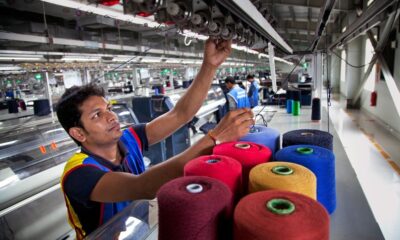







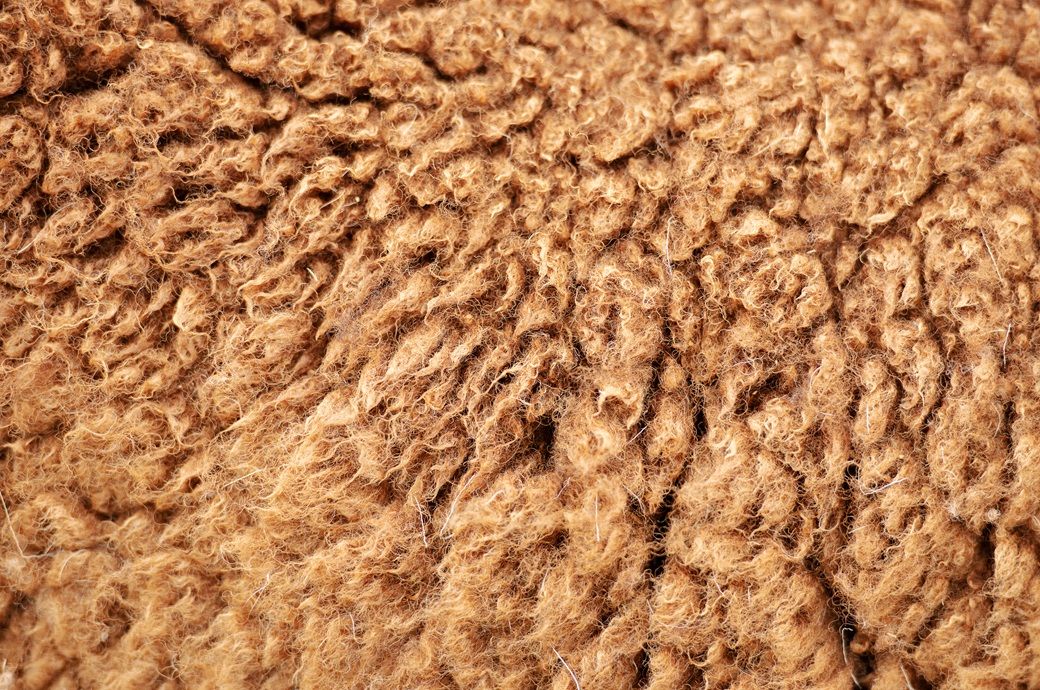
According to Australian Wool Innovation (AWI) commentary for week 38 (March 2026), the Eastern Market Indicator (EMI) fell by 32 Australian cents/kg, while the Western Market Indicator (WMI) dropped more sharply by 69 cents, signalling comparatively weaker conditions in Fremantle.
Australia’s wool market declined this week, ending a recent rally as weaker buyer sentiment and margin pressures weighed on prices.
The EMI fell 32 cents and WMI dropped 69 cents, led by losses in Merino wools.
Softer demand, higher supply, and a stronger Australian dollar pressured the market, though selective buying for quality lots persisted.
“Losses were led by medium Merino wools, which fell 70–75 cents in the eastern centres and 85–90 cents in the west. Finer Merino types also declined by 45–60 cents across all regions. Crossbred wool prices eased by 25–30 cents. In the carding segment, eastern markets remained steady to 5 cents higher, while Fremantle saw a sharper fall of around 45 cents,” the AWI Limited said in its Commentary.
The uniform decline across Merino fleece categories points to a broader pullback in buyer demand rather than isolated weakness. This follows several weeks of strong gains after the Chinese New Year period, with much of the earlier purchases still moving through processing and manufacturing stages.
Market sentiment this week reflected growing caution among exporters and processors facing tighter margins due to rising input costs. Increased wool offerings further reduced buyer urgency, while a firmer Australian dollar added pressure on export competitiveness, the AWI commentary noted.
Despite the overall softer trend, demand remained relatively firm for well-prepared, lower-risk lots, indicating that buyers are becoming more selective rather than exiting the market entirely.
Industry observers view the current downturn as a phase of consolidation, with the market testing resistance levels after recent gains, rather than signalling a fundamental shift in demand.
Looking ahead, all three auction centres will operate on a Tuesday-Wednesday schedule next week, with 40,909 bales expected to be offered.
Market direction will depend on the trade’s ability to absorb current supply levels and navigate prevailing cost pressures.
Fibre2Fashion News Desk (CG)

The most traded May 2026 contract settled at 68.70 cents per pound, down 0.07 cent. May contract has maintained a gain of 353 points despite slight fall. The contract had witnessed rally during the last five trading sessions.
ICE cotton futures paused after hitting an 8-month high, pressured by a stronger US dollar and profit booking.
The May 2026 contract settled at 68.70 cents per pound.
Rising crude oil capped losses by supporting cotton over polyester.
Lower volumes but higher open interest signalled fresh positions, while markets await the USDA report for direction.
Middle East tensions increased risks to energy supply, pushing Brent crude prices higher. Higher crude oil prices raised polyester production costs, making cotton relatively more competitive and providing indirect price support.
Market pressure was mainly due to a stronger US dollar, which recovered after the Federal Reserve kept interest rates unchanged, reversing prior weakness. The stronger dollar made US cotton more expensive for overseas buyers, weighing on demand sentiment.
Trading volume stood at 86,811 contracts, lowest in last 3 sessions, indicating lighter market participation. Open interest increased by 2,046 to 341,326 contracts, suggesting fresh positions and continued market involvement. Certified stocks unchanged at 116,789 bales as per ICE data on March 17, indicating no immediate supply pressure
Cotton rallied strongly over the past several sessions, driven largely by speculative short covering, pushing prices to multi-month highs. Current dip reflects mild profit booking and signs that short covering may be slowing or nearing completion.
Market analysts stated that the recent rally triggered significant short covering, but the future direction will depend on how speculative positions evolve next week. Mills were previously complacent with low inventories, but sudden price rise forced them to re-enter the market and cover demand.
Market participants are awaiting the next USDA export sales report for fresh direction.
This morning (Indian Standard Time), ICE cotton for May 2026 was traded at 68.13 cents per pound (down 0.57 cent), cash cotton at 67.95 cents (unchanged), the July 2026 contract at 69.95 cents (down 0.62 cent), the October 2026 contract at 71.99 cents (down 0.13 cent), the December 2026 at 72.12 cents (down 0.52 cent) and the March 2027 contract at 72.99 cents (down 0.48 cent)). A few contracts remained at their previous closing levels, with no trading recorded so far today.
Fibre2Fashion News Desk (KUL)
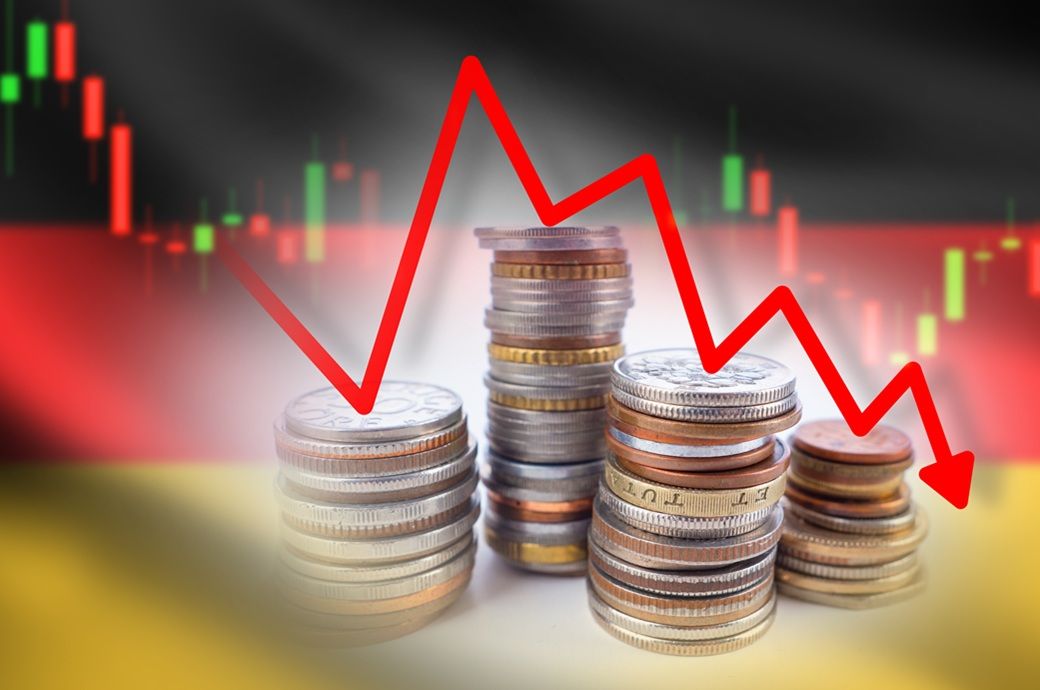
The sharp fall reflects growing concerns over rising energy prices and inflationary pressures linked to the ongoing conflict, ZEW said in a press release.
“The ZEW Indicator has collapsed,” said Achim Wambach, president of ZEW, noting that the escalation in the Middle East is fuelling energy costs and increasing risks to Germany’s fragile economic recovery. He added that financial market experts remain sceptical about a swift resolution to the conflict, raising uncertainty over the economic outlook.
Germany’s economic sentiment plunged in March 2026, with the ZEW index falling 58.8 points to -0.5 amid Middle East tensions driving energy and inflation concerns.
While the current situation improved slightly to -62.9, it remained weak.
Around 80 per cent expect rising inflation.
Eurozone sentiment also declined sharply, with expectations at -8.5 and conditions worsening to -29.9.
In contrast, the assessment of Germany’s current economic situation showed a modest improvement. The corresponding indicator rose by 3 points to -62.9, although it remains firmly in negative territory, signalling continued weakness in overall economic conditions.
Inflation concerns have intensified, with around 80 per cent of respondents anticipating increased price pressures in both Germany and the broader eurozone.
The negative sentiment extended across the eurozone, where the expectations index fell by 47.9 points to -8.5, slipping into negative territory. Meanwhile, the assessment of the current economic situation in the eurozone declined further to -29.9 points, down by 16.3 points from February.
Fibre2Fashion News Desk (SG)

Interest rate cuts not on the horizon, Bank of England governor says

Iran will never compromise on its people’s security: FM Araghchi

A New Game Turns the H-1B Visa System Into a Surreal Simulation

Stock market crash today (March 12, 2026): Nifty50 opens below 23,600; BSE Sensex down over 900 points on continuing US-Iran war – The Times of India

UK’s Topshop unveils Tolu Coker capsule collection
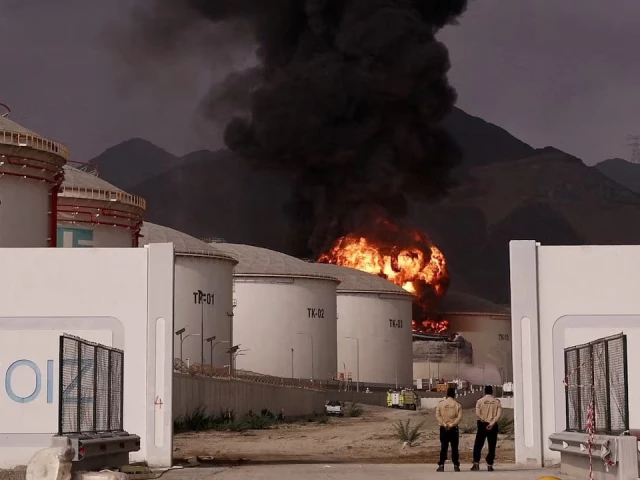
US ignites Iran war, but Gulf Arab states pay the price | The Express Tribune

-
Business1 week ago
Stock market crash today (March 12, 2026): Nifty50 opens below 23,600; BSE Sensex down over 900 points on continuing US-Iran war – The Times of India
-
 Fashion1 week ago
UK’s Topshop unveils Tolu Coker capsule collection
-
Business1 week ago
US ignites Iran war, but Gulf Arab states pay the price | The Express Tribune
-

 Fashion1 week ago
India’s textile recycling market may reach $3.5 bn by 2030: Report
-

 Tech1 week ago
Meta Developed 4 New Chips to Power Its AI and Recommendation Systems
-
 Business1 week ago
8th Pay Commission: How Much Will Central Govt Employees’ Salaries Rise? What We Know So Far
-

 Sports1 week ago
Bangladesh crush Pakistan in ODI series opener | The Express Tribune
-

 Entertainment1 week ago
Gas, food, household prices explained