

Politics
Muslim candidates divide right in Italian city vote

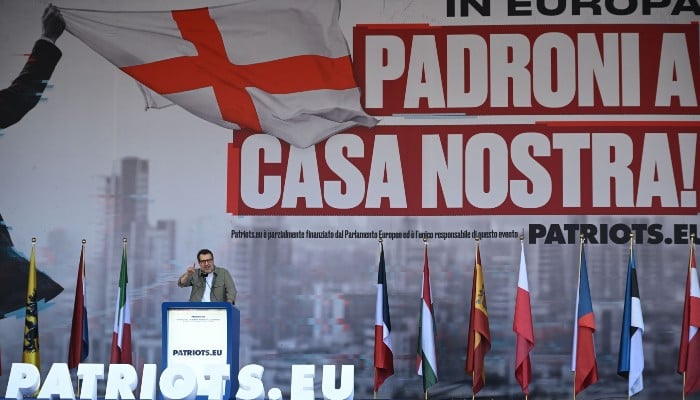
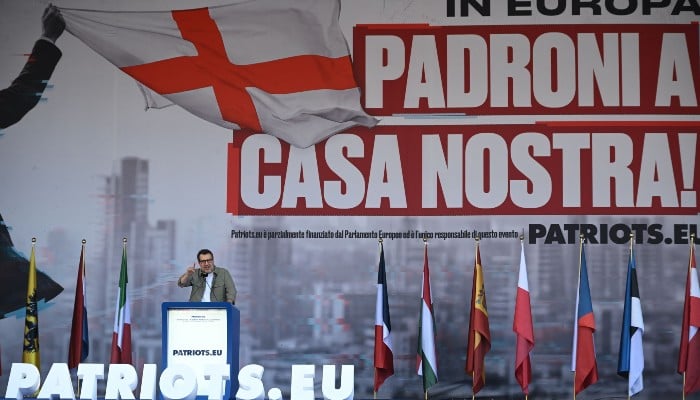
VIGEVANO: A local election in an industrial city in northern Italy is exposing differences over immigration between governing coalition parties and showing how the country’s rapidly changing social fabric is shaping politics.
Surrounded by factories and rice paddies, Vigevano is a city of 62,000 people where 15% of the population is foreign, including many people from Egypt and Romania.
Many more are naturalised Italians and second-generation immigrants.
Once a Communist Party bastion, the city is held by the League, a far-right junior partner in Italy’s ruling coalition whose leader Matteo Salvini has said citizenship should be revoked for second-generation immigrants who commit crimes.
But the League’s mayoral candidate, Riccardo Ghia, a jeweller, made headlines last month when he put two Muslim candidates on his list of prospective councillors — with an eye to attracting votes from immigrant communities.
One of the two, Italian-Egyptian Hagar Haggag, 20, said she had received a slew of insults and threats since her candidacy was announced.
She attributed the virulent reaction mainly to the fact that she wears a headscarf.
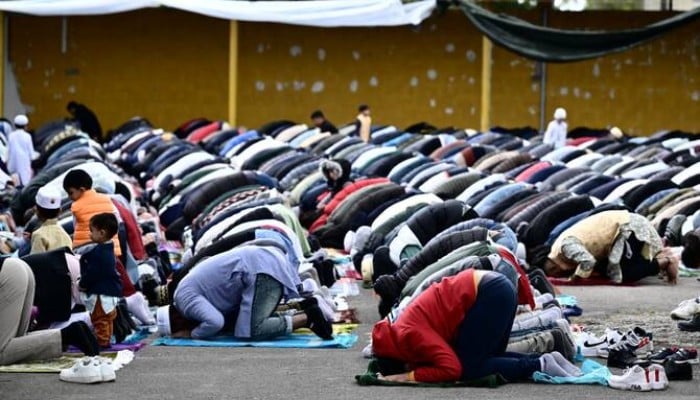
She told AFP she had “never felt racism” in the local section of the party, pointing out that the former League mayor had allowed a Muslim prayer hall to open in a disused hangar in 2022.
Haggag said she was also running because she wanted to “put an end to the left-wing cliche that Muslim women are ignorant”.
She is studying diplomacy and is considering a political career beyond Vigevano — maybe even in Egypt.
The other candidate, Ibrahim Hussein, is a spokesman for the local prayer hall who presented his bid “in the name of Allah”.
Hussein wrote on Facebook that he chose to be a candidate for the League because he sees himself as “a real example of integration”.
On the last day of campaigning on Friday in Vigevano’s majestic central square, Ghia said he “does not look at whether people are Muslim or Buddhist”, adding that whoever “respects the rules is a citizen with full rights”.
Divisions between parties
Italy is gearing up for national elections next year in a country that is becoming ever more multi-ethnic and where the political clout of second-generation immigrants is growing.
The national leadership of the League said it was “distancing” itself from the candidates in Vigevano, which voted on Sunday and Monday.
But Prime Minister Giorgia Meloni’s Brothers of Italy party is supporting the candidates.
Forza Italia, another coalition partner, is more open on immigration and integration but is supporting a different mayoral list.
The divisions could be a boon for Roberto Vannacci, a former general who quit the League to set up a more radical far-right party called Futuro Nazionale (National Future).
Vannacci was in Vigevano on May 17 for a speech laden with anti-immigrant rhetoric.
The speech came a day after a young Italian man of Moroccan heritage with mental health problems rammed his car into pedestrians in the city of Modena, injuring eight people.
The local candidate supported by National Future, lawyer Furio Suvilla, says his programme is focused on security.
He has called for the army to intervene against groups of young people who gather around the station and wants the Muslim hall closed.
He said he thinks he could “pick up quite a few League voters”.
‘Still a foreigner’
Candidates with foreign origins still remain relatively rare in Italian elections, where immigration has been more recent than in France or Germany, said sociologist Maurizio Ambrosini from Milan’s Statale university.
Several right-wing parties “are trying to attract candidates with immigrant origins,” the sociologist said, adding that “many naturalised migrants tend towards the right”.
Sabrine Hamrouni, 23, a health sector worker, is also a candidate in Vigevano but for the centre-left. She said she thinks divisions on the right could help boost her campaign.
Hamrouni’s father moved from Tunisia to Vigevano in the 1990s to work in construction.
“I was born here. I have always lived here but I am still a foreigner,” the candidate said.
She said she wants to make Vigevano “a beautiful city — it will take a long time but I am willing to put in that time”.
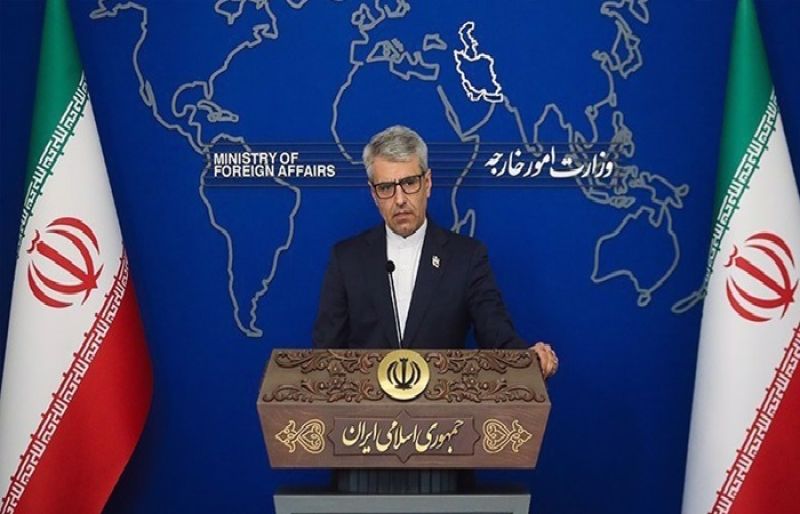
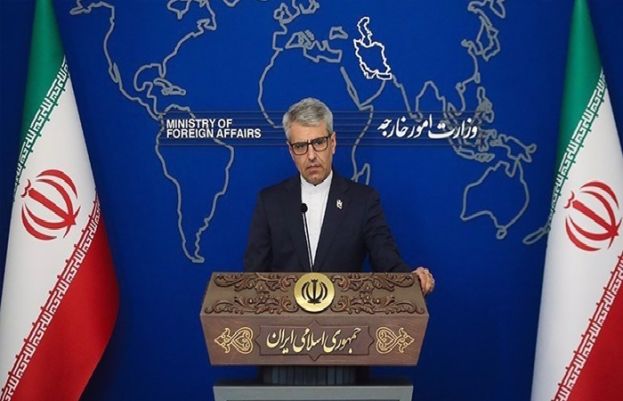
Iran’s Foreign Ministry spokesperson Ismail Baghaei said that Tehran’s current priority is to end the ongoing tensions and conflict through negotiations. Addressing a press conference today, he clarified that there are currently no plans to send an Iranian delegation to Pakistan, while noting that Iran remains in contact with countries cooperating on issues related to the Strait of Hormuz. Baghaei added that recent progress in negotiations has been made possible through the mediation efforts of Pakistan and other countries.
Baghaei said that the management of the Strait of Hormuz falls within the jurisdiction of coastal states, adding that Iran will ensure the protection of ships passing through the waterway and will respond to any act of aggression. He further stated that any proposed memorandum of understanding does not include detailed provisions on the management of the strait.
He said that most points in the ongoing negotiations have been agreed upon, but stressed that this does not mean a final deal or signing is imminent. According to him, Iran is currently focused on practical steps and shaping its strategy based on ground realities, while continuing to define its own policy independently. He added that pressure and threats are part of politics, but Iran makes its decisions based on its own assessments.
Baghaei further said that Iran and the United States have reached a general framework and are engaged in talks aimed at ending the conflict, although nuclear issues are not part of the current discussions. He cautioned against assumptions that a formal agreement or announcement is close.
He also said that a proposed ceasefire framework reportedly covers all fronts of the conflict, and that Iran is acting with a focus on implementation rather than rhetoric.
- BJP govt claims move aimed at targeting illegal migrants.
- Critics say measure reflects hardline stance on immigration.
- Order sparks fear among minorities about arbitrary expulsions.
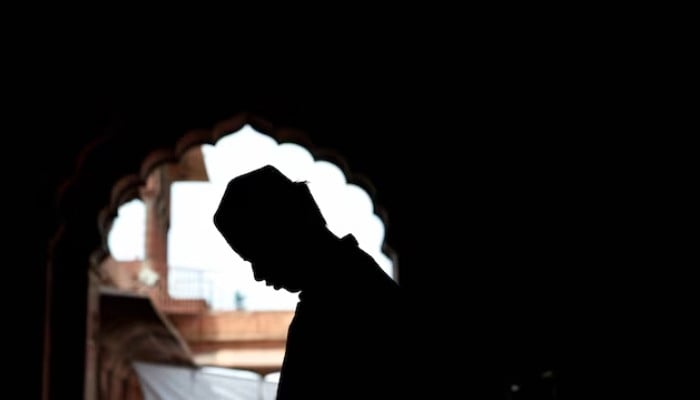
India’s ruling Hindu-nationalist party has ordered detention centres for undocumented Bangladeshis and Rohingyas in West Bengal state, sparking fear among minorities that it could lead to arbitrary expulsions.
The directive comes just days after Prime Minister Narendra Modi’s Bharatiya Janata Party (BJP) won power in the eastern state for the first time since the country’s independence in 1947.
The order calls on local authorities to set up “holding centres” for “apprehended foreigners” awaiting deportation, as part of a broader crackdown on illegal migration.
The government has defended its “detect, delete, deport” principle, saying those targeted are migrants staying illegally in the country.
“Illegal migration has security and socio-economic ramifications which are often well beyond law enforcement” read the order, issued last week.
The decision has fuelled anxiety among West Bengal’s roughly 35 million Muslims, many of whom share linguistic and cultural ties with neighbouring Bangladesh.
Critics say the measure reflects the government’s long-standing hardline stance on immigration, with top BJP members referring to Bangladeshi migrants as “termites” and “infiltrators” in the past.
The party has pursued similar policies in the neighbouring state of Assam, where it has overseen sweeping identification drives and largescale detentions.
Rights activists say hundreds have been deported to Bangladesh from Assam without due legal process, often based on ethnic profiling.
Many of them have been allegedly pushed across the border at gunpoint, according to activists and lawyers who have challenged the measures in court.
They argue the policies disproportionately impact the Muslim population by conflating religious identity with illegal migration.
The planned centres in West Bengal have drawn particular concern because of the state’s porous border with Bangladesh and its long history of migration.
The inclusion of Rohingya refugees in the order has also drawn criticism.
India has previously been accused by humanitarian groups of forcibly returning Rohingya to Myanmar, despite ongoing conflict there, in potential violation of international norms on refugee protection.
Adding to the unease of the Muslims, the BJP-led government in Assam on Monday introduced legislation to amend personal religious laws, which critics say could further marginalise minorities.
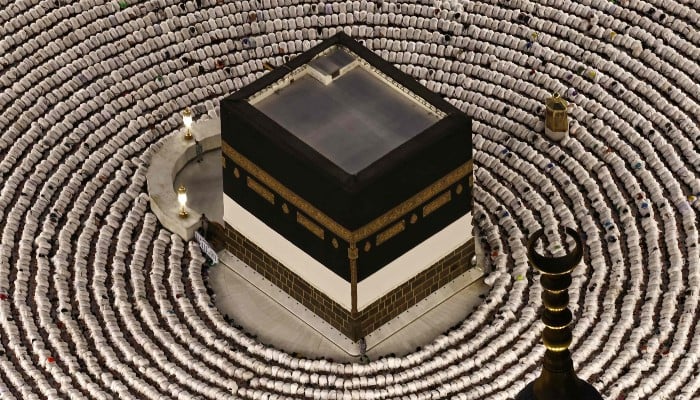
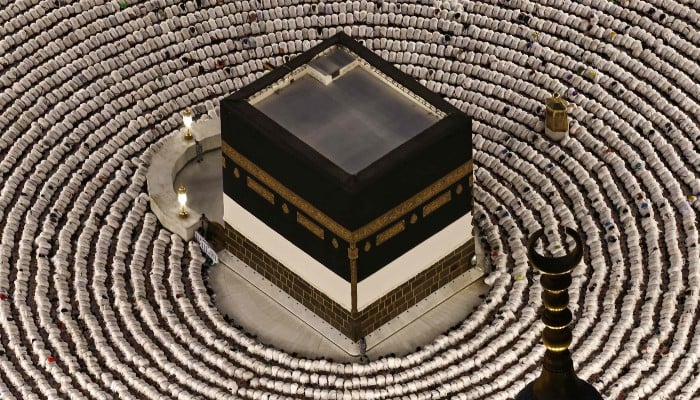
MAKKAH: Over 1.5 million Muslims began filling a vast tent city in the holy city of Makkah on Monday for an annual Hajj pilgrimage carried out against the backdrop of hopes for an end to the war in the Middle East.
The white-robed pilgrims on buses or on foot arrived at the sprawling encampment in Mina after performing the “tawaf” — walking seven times around the Kaaba at Makkah’s Grand Mosque.
The start of the Hajj came as US President Donald Trump continued to send mixed signals over a possible agreement to extend an uneasy ceasefire with Iran and a deal to reopen the Strait of Hormuz.
Despite the uncertainty triggered by the conflict, Saudi officials noted over the weekend that more pilgrims had travelled from abroad to participate in this year’s Hajj than in 2025.
But, amid the spiritual euphoria experienced by the pilgrims in the days ahead of the Hajj, authorities in the kingdom signalled their readiness.
A video posted on social media by the Saudi defence ministry showed advanced air defence batteries positioned on the outskirts of Makkah.
“The air defence forces are responsible for protecting the skies over the holy sites and dealing with all aerial threats, ensuring the safety and peace of mind of the guests,” read the post.
Many pilgrims who spoke to AFP expressed their hope that peace would prevail soon.
“The war in Iran has affected the entire world. Nobody wants wars or harm to countries and peoples,” said Mohammed Chahada, an Egyptian in his 50s, as he walked through a crowd exiting the Grand Mosque.
Rituals
The Hajj, one of the five pillars of Islam, must be performed at least once by all Muslims with the means.
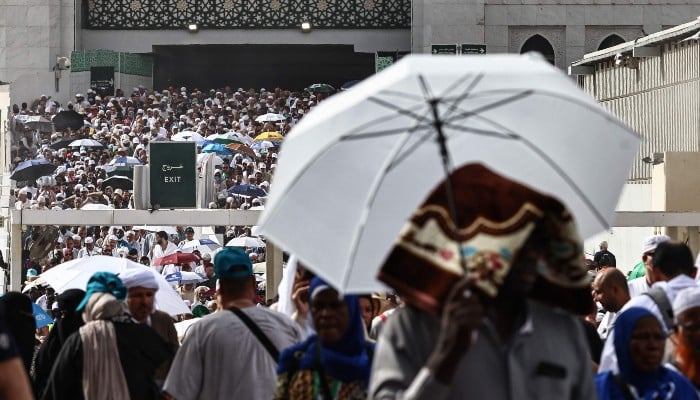
During the Hajj, men wear a seamless shroud-like white garment that emphasises unity among believers regardless of their social status or nationality.
Women must wear loose dresses, exposing only their faces and hands.
The first ritual of the Hajj requires walking seven times around the Kaaba. Pilgrims next walk seven times between the two hills of Safa and Marwa.
They then move on to Mina, around five kilometres (three miles) away, ahead of the main rite of the pilgrimage at Mount Arafat.
On Tuesday, the climax of the Hajj is the gathering on Mount Arafat, about 10 kilometres from Mina, where Prophet Mohammed (PBUH) delivered his final sermon.
The arduous, outdoor pilgrimage will be held against the backdrop of geopolitical tensions but also under punishing heat, with temperatures forecast to top 40°C for much of the week.
Despite the heat and the uncertainty over the war, pilgrims in Makkah were ecstatic.
“I have wanted to perform the pilgrimage my entire life, for 40 or 50 years,” said Jreish Mohammed, a 68-year-old decked out in the traditional attire from his native Morocco.
“And this year, my dream came true.”


Financial conditions, oil prices concerns for India: RBI Bulletin

US govt formally implements extension of AGOA till 2026 end
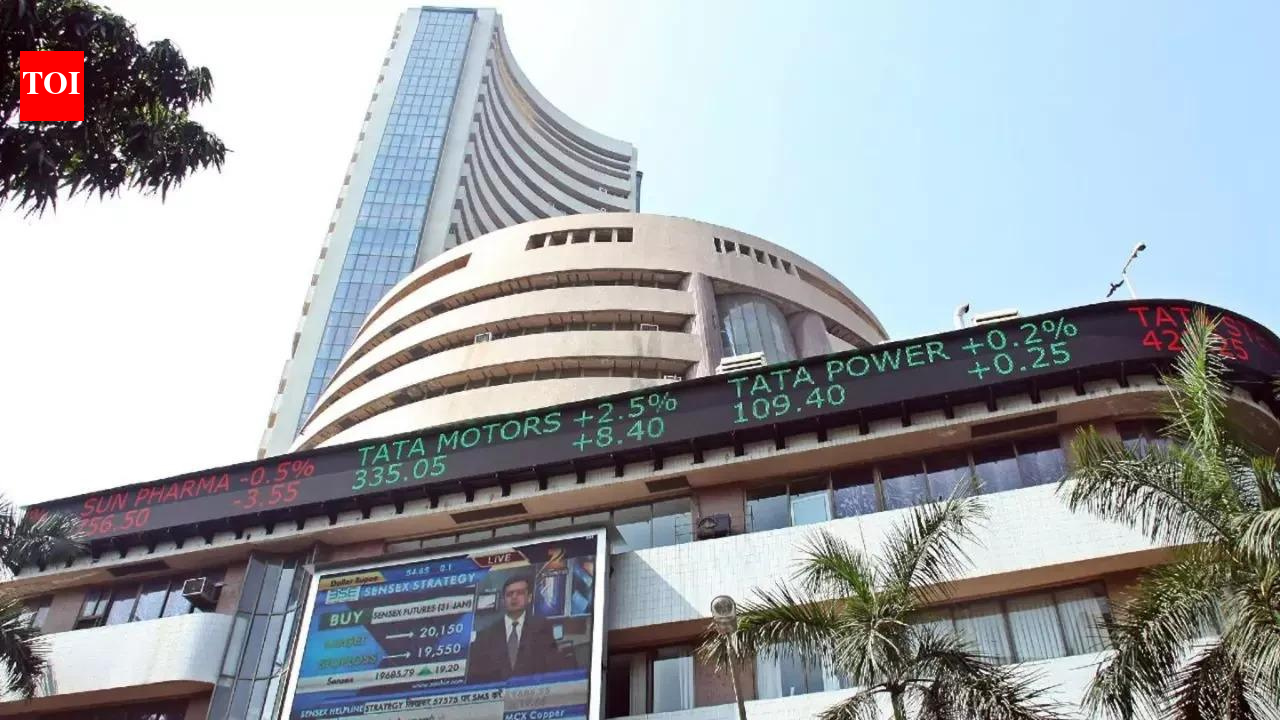
Stock market today: Which are top gainers and losers on NSE & BSE on May 25? Check list

-

 Entertainment1 week ago
Where Pete Davidson, Elsie Hewitt stand after breakup: Details revealed
-

 Tech1 week ago
Why Is Your Grill So Dumb? The Best Grills Set Temp Like an Oven
-

 Tech1 week ago
This Solar-Powered Smart Sprinkler Keeps My Lawn Watered Without Any Power Cables
-
 Fashion7 days ago
Turkiye’s current account deficit expected to widen in 2026: Minister
-

 Fashion5 days ago
US cotton planting advances to 41%, concerns persist in Texas
-

 Fashion4 days ago
ICE cotton sees mixed trend as rain forecasts weaken sentiment
-

 Fashion1 week ago
India’s Pearl Global’s FY26 revenue crosses $521 mn milestone
-
 Tech1 week ago
A Danish Couple’s Maverick African Research Finds Its Moment in RFK Jr.’s Vaccine Policy