

Business
Sportsbook CEOs expect record betting ahead of NFL kickoff


DraftKings CEO Jason Robins has never been more enthusiastic about the kickoff to the NFL — sports betting’s biggest season.
It’s second only to the Super Bowl in terms of importance for acquiring customers and growing the overall betting pool, Robins told CNBC at the Bank of America Gaming and Lodging Conference.
“The numbers just keep going up right into kickoff, and it’ll continue through Sunday,” Robins said. “We’re seeing big numbers, record numbers, and we’re really excited about what we’re going to see through the start of the season.”
The American Gaming Association estimates legal betting in the U.S. will grow by 8.5% this NFL season, to $30 billion.
DraftKings and its competitors have largely seen declines in the costs to acquire customers even as legal sports betting opportunities continue to expand. Sports betting has proven to be resilient even amid volatility in consumer sentiment and broader concerns over discretionary spending.
“We’re seeing nothing to suggest that there’s any slowdown in the numbers for our business right now, everything is going up,” Robins said.
DraftKings beat Wall Street expectations for revenue and profit when it reported second-quarter results in August, surprising investors with significant growth.
BetMGM, jointly owned by MGM Resorts and Entain is also demonstrating real momentum, raising earnings guidance for a second time this year.

BetMGM CEO Adam Greenblatt told CNBC that last week was the sportsbook’s best ever in terms of revenue, with pre-season volume up 30%.
“We’re seeing no softness. We’re seeing no reduction in average bet size. We’re seeing no reduction in how many active sessions per week, per month, that players are engaging with BetMGM,” Greenblatt said when assessing the strength of the American consumer.
“I’m delighted to say that our sector seems to be behaving in a contrarian manner, ” he said.
Greenblatt is especially enthusiastic about the cross-selling opportunities with NFL kickoff. He says 60% of sports bettors will then wager on online casino games, or iGaming, which has higher profit margins than sports betting.
The nation’s leading sportsbooks are facing new competition — as well as potential opportunities — in the form of prediction markets events contracts, where odds change based on trades, like stock prices. Events contracts in the financial markets are regulated by the Commodities and Futures Trading Commission.
Front Office Sports reported in July that DraftKings was in talks to buy Railbird, an exchange that received CFTC approval to begin trading.
Robins declined to comment on the report, but said he’s interested, though cautious, about entering predictions markets.
“We’re regulated in a lot of states, and some states have taken a very adversarial position, so we have to obviously be careful and engage the regulator,” Robins said, adding DraftKings is unwilling to risk any threat to its sports betting licenses.
In August, Flutter-owned FanDuel announced a partnership on financial events contracts with the Chicago Mercantile Exchange. And Underdog, the fantasy and sports gaming company, announced on CNBC Tuesday that it will partner with Crypto.com to offer sports predictions markets. Robinhood, Kalshi and Polymarket are also offering sports trades.
“Rapidly growing volumes, new product launches, especially around player props and parlays, and more clear direct marketing by prediction markets (post recent fundraising) are all key developments to watch for,” said Bank of America research analyst Shaun Kelly.
Investors will also be watching to see how federal courts rule on the pending question of whether sports predictions are in fact a form of sports betting. States and tribes argue it is and that offering sports trades through predictions markets violates tribes’ sovereign rights or states’ rights to legalize sports gambling.
MGM CEO Bill Hornbuckle told the BofA Gaming and Lodging conference Thursday he doesn’t endorse the predictions markets.
“Our view is that invites the federal government into a space it’s never been, and it’s not a place we’d like to see this marketplace go. Full stop,” he said.
The NFL told its employees they are under the same restrictions with regards to sports predictions markets as they are for betting. The league has said it worries about the integrity of the game in the face of the possibility of price distortion and other kinds of manipulation.


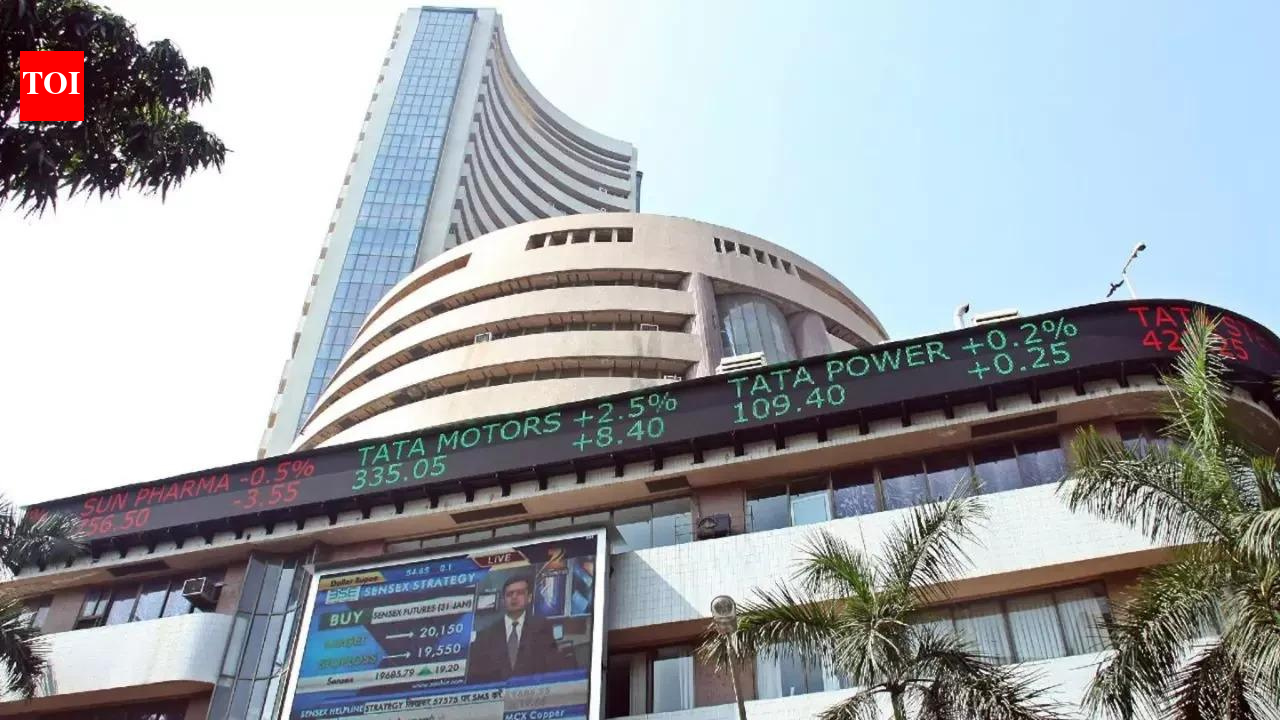
Stock market rallied sharply on Monday, with the Sensex soaring more than 1,000 points and the Nifty reclaiming the 24,000 mark, as easing geopolitical tensions in West Asia and falling crude oil prices boosted investor sentiment globally.The 30-share BSE Sensex jumped 1,073.61 points, or 1.42 per cent, to close at 76,488.96, while the NSE Nifty 50 surged 312.40 points, or 1.32 per cent, to settle at 24,031.70.The rally came after optimism grew around a possible agreement between the United States and Iran, following remarks by US President Donald Trump over the weekend that a deal was “largely negotiated”.
Nifty50 top gainers
| Company Name | Current Price (Rs) | Price Change | % Change |
|---|---|---|---|
| Eicher Motors | 7,414 | 433.00 ↑ | 6.20% ↑ |
| Adani Ent. | 2,850 | 132.00 ↑ | 4.88% ↑ |
| Bajaj Finance | 941.90 | 25.40 ↑ | 2.77% ↑ |
| Tata Motors PV | 373.25 | 9.90 ↑ | 2.73% ↑ |
| L&T | 4,033 | 107.00 ↑ | 2.72% ↑ |
| HDFC Bank | 786.85 | 20.10 ↑ | 2.62% ↑ |
| Eternal | 247.67 | 5.72 ↑ | 2.37% ↑ |
| Bajaj Finserv | 1,807 | 41.40 ↑ | 2.35% ↑ |
| Kotak Bank | 392.85 | 8.71 ↑ | 2.27% ↑ |
| Shriram Finance | 961.95 | 21.00 ↑ | 2.23% ↑ |
Sensex top gainers
| Company Name | Current Price (Rs) | Price Change | % Change |
|---|---|---|---|
| Bajaj Finance | 941.90 | 25.40 ↑ | 2.77% ↑ |
| L&T | 4,033 | 107.00 ↑ | 2.72% ↑ |
| HDFC Bank | 786.85 | 20.10 ↑ | 2.62% ↑ |
| Eternal | 247.67 | 5.72 ↑ | 2.37% ↑ |
| Bajaj Finserv | 1,807 | 41.40 ↑ | 2.35% ↑ |
| Kotak Bank | 392.85 | 8.71 ↑ | 2.27% ↑ |
| ICICI Bank | 1,292 | 27.50 ↑ | 2.18% ↑ |
| SBI | 969.60 | 20.40 ↑ | 2.15% ↑ |
| Axis Bank | 1,311 | 25.80 ↑ | 2.01% ↑ |
| Titan Company | 4,159 | 79.40 ↑ | 1.95% ↑ |
Nifty50 top losers
| Company Name | Current Price (Rs) | Price Change | % Change |
|---|---|---|---|
| Max Healthcare | 1,001 | -22.40 ↓ | -2.19% ↓ |
| ONGC | 284.95 | -5.06 ↓ | -1.75% ↓ |
| Hindalco | 1,100 | -9.61 ↓ | -0.87% ↓ |
| Nestle India | 1,414 | -9.50 ↓ | -0.67% ↓ |
| Bajaj Auto | 10,491 | -58.50 ↓ | -0.56% ↓ |
| Infosys | 1,169 | -6.00 ↓ | -0.52% ↓ |
| TCS | 2,308 | -9.11 ↓ | -0.40% ↓ |
| Tata Consumer | 1,187 | -4.60 ↓ | -0.39% ↓ |
| HUL | 2,197 | -7.10 ↓ | -0.33% ↓ |
| Sun Pharma | 1,841 | -4.00 ↓ | -0.22% ↓ |
Sensex top losers
| Company Name | Current Price (Rs) | Price Change | % Change |
|---|---|---|---|
| Infosys | 1,169 | -6.00 ↓ | -0.52% ↓ |
| TCS | 2,308 | -9.11 ↓ | -0.40% ↓ |
| HUL | 2,197 | -7.10 ↓ | -0.33% ↓ |
| Sun Pharma | 1,841 | -4.00 ↓ | -0.22% ↓ |
| Kwality Wall’s | 26.33 | -0.06 ↓ | -0.19% ↓ |
Oil prices tumble as Iran deal hopes rise
Investor confidence improved as markets increasingly priced in the possibility of a diplomatic breakthrough between Washington and Tehran, which could lead to the reopening of the Strait of Hormuz and ease global energy supply concerns.According to news agency ANI, market expert Ponmudi R said optimism surrounding a potential US-Iran agreement revived risk appetite across global markets.“Investor sentiment improved significantly after Donald Trump stated over the weekend that a deal was ‘largely negotiated’, encouraging markets to increasingly price in the possibility of a near-term diplomatic resolution,” he said.He added that markets would look for the “successful implementation of a lasting peace agreement and the credible reopening of the Strait of Hormuz”.Brent crude prices dropped sharply below the $100 per barrel mark and were trading around $98 per barrel, down more than 5 per cent during the session.The Indian rupee also recovered strongly, gaining 48 paise to trade at Rs 95.21 against the US dollar after recent weakness.
Banking stocks lead market rally
Financial stocks led the gains on Dalal Street. Bajaj Finance, Larsen & Toubro, HDFC Bank, Eternal, Bajaj Finserv and Kotak Mahindra Bank emerged among the top Sensex gainers.Sectorally, Nifty PSU Bank rose 2.73 per cent, while Nifty Private Bank advanced 2.02 per cent, as per ANI. Nifty Auto climbed 1.66 per cent and Realty gained 1.54 per cent.However, FMCG stocks remained under pressure. Infosys, Tata Consultancy Services, Sun Pharma and Hindustan Unilever were among the laggards.
Global markets gain amid improving sentiment
Asian markets also ended higher on Monday amid improving global risk appetite. Japan’s Nikkei 225 surged 2.76 per cent, while Taiwan’s weighted index jumped 3.15 per cent.European markets were trading in positive territory, while US markets had settled higher on Friday.Meanwhile, Foreign Institutional Investors (FIIs) offloaded equities worth Rs 4,440.47 crore on Friday, according to exchange data.
Business
PSX gains over 2,500 points as US-Iran peace hopes fuel bullish rally | The Express Tribune

KSE-100 surges past 170,000 intraday on strong institutional buying, easing geopolitical tensions
KARACHI:
The Pakistan Stock Exchange (PSX) extended strong bullish momentum on Monday as the benchmark KSE-100 Index hovered around 170,423.30 points at 1:24pm, up 2,579.06 points or 1.54% in intraday trade.
During the session, the benchmark index touched an intraday high of 171,519.26 points, while the day’s low was recorded at 170,161.66 points. Market participation remained strong, with traded volume reaching 125.96 million shares and total traded value standing at Rs11.75 billion.
Read: PSX gains 2,248 points in mixed week
Investor sentiment remained upbeat amid reports of a likely peace agreement between the United States and Iran, which boosted confidence across regional markets and improved risk appetite among investors.
Analysts said the rally was driven by aggressive institutional buying and renewed optimism over easing geopolitical tensions following progress in US-Iran negotiations.
The previous close of the KSE-100 index was 167,844.24 points.
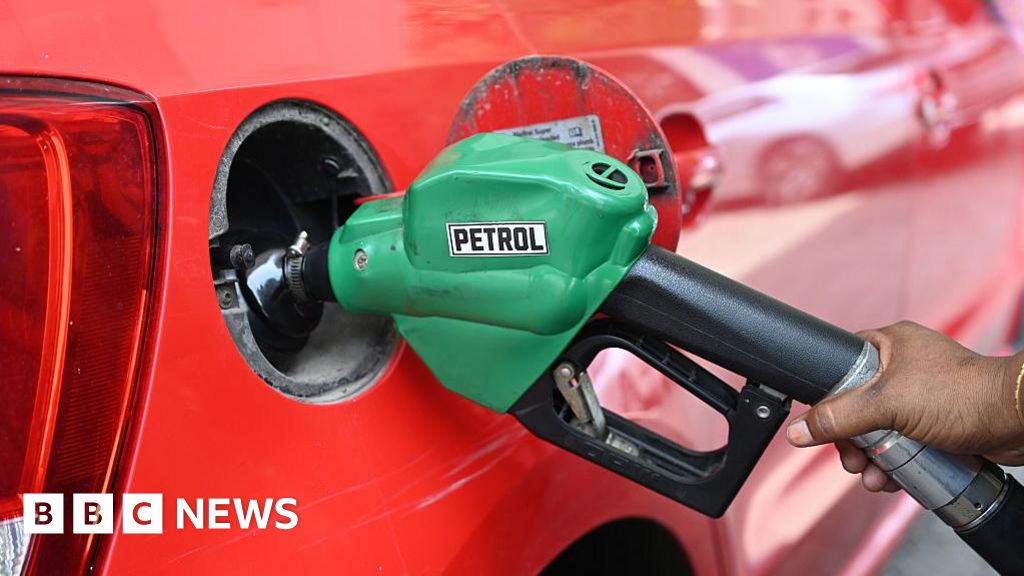
Trump said on Saturday that an agreement would include the reopening of the Strait of Hormuz, without giving further details.
Source link


US govt formally implements extension of AGOA till 2026 end
Stock market today: Which are top gainers and losers on NSE & BSE on May 25? Check list

These Privacy-Conscious Gay Dating Apps Want to Dethrone Grindr

-

 Entertainment1 week ago
Where Pete Davidson, Elsie Hewitt stand after breakup: Details revealed
-

 Politics1 week ago
Rising diesel costs from Iran war strain US school budgets
-

 Tech1 week ago
Why Is Your Grill So Dumb? The Best Grills Set Temp Like an Oven
-

 Tech1 week ago
This Solar-Powered Smart Sprinkler Keeps My Lawn Watered Without Any Power Cables
-
 Fashion7 days ago
Turkiye’s current account deficit expected to widen in 2026: Minister
-

 Fashion5 days ago
US cotton planting advances to 41%, concerns persist in Texas
-

 Fashion4 days ago
ICE cotton sees mixed trend as rain forecasts weaken sentiment
-

 Entertainment1 week ago
Princess of Wales praised as ‘step ahead’ of royal family