

Tech
TikTok Is Now Collecting Even More Data About Its Users. Here Are the 3 Biggest Changes

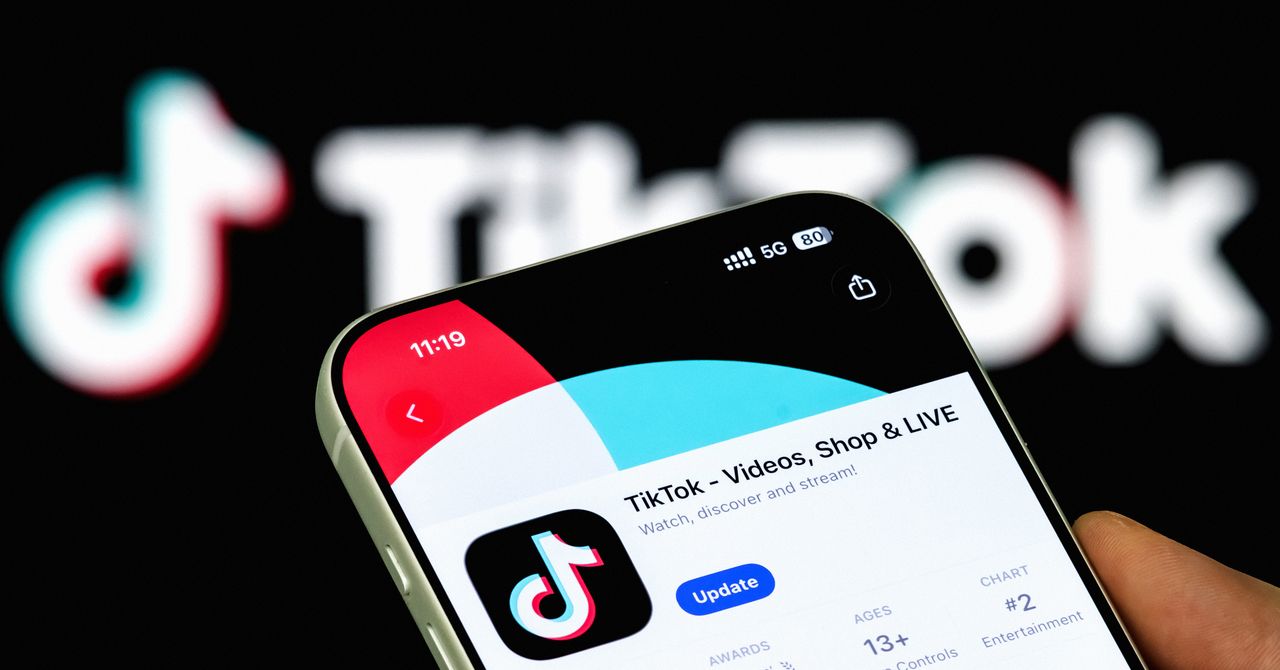
When TikTok users in the US opened the app today, they were greeted with a pop-up asking them to agree to the social media platform’s new terms of service and privacy policy before they could resume scrolling.
These changes are part of TikTok’s transition to new ownership. In order to continue operating in the US, TikTok was compelled by the US government to transition from Chinese control to a new, American-majority corporate entity. Called TikTok USDS Joint Venture LLC, the new entity is made up of a group of investors that includes the software company Oracle.
It’s easy to tap Agree and keep on scrolling through videos on TikTok, so users might not fully understand the extent of changes they are agreeing to with this pop-up.
Now that it’s under US-based ownership, TikTok potentially collects more detailed information about its users, including precise location data. A spokesperson for TikTok USDS declined to comment.
Here are the three biggest changes to TikTok’s privacy policy that users should know about.
TikTok Adds Precise Location Tracking
TikTok’s change in location tracking is one of the most notable updates in this new privacy policy. Before this update, the app did not collect the precise, GPS-derived location data of US users. Now, if you give TikTok permission to use your phone’s location services, then the app may collect granular information about your exact whereabouts. Similar kinds of precise location data is also tracked by other social media apps, like Instagram and X.
Old Privacy Policy:
We collect information about your approximate location, including location information based on your SIM card and/or IP address. In addition, we collect location information (such as tourist attractions, shops, or other points of interest) if you choose to add the location information to your User Content. Current versions of the app do not collect precise or approximate GPS information from US users.
New Privacy Policy:
Location information about your approximate location based on your device and network information, such as SIM card region, IP address, and device system settings. We also collect information, such as tourist attractions, shops, or other points of interest, if you choose to add the location to your user content. Also, if you choose to enable location services for the TikTok app within your device settings, we collect approximate or precise location information from your device.
TikTok Now Tracks AI Interactions
Rather than an adjustment, TikTok’s policy on AI interactions adds a new topic to the privacy policy document. Now, users’ interactions with any of TikTok’s AI tools explicitly fall under data that the service may collect and store. This includes any prompts as well as the AI-generated outputs. The metadata attached to your interactions with AI tools may also be automatically logged.
Old Privacy Policy:
(These AI interactions are not explicitly mentioned in the past policy.)
New Privacy Policy:
When you create an account, upload content, contact us directly, or otherwise use the Services, you may provide some or all of the following information … AI interactions, including prompts, questions, files, and other types of information that you submit to our AI-powered interfaces, as well as the responses they generate.
We automatically collect certain information from you when you use the Services, including … metadata that is automatically uploaded in connection with your user content, messages, or AI interactions, such as how, when, where, and by whom the user content was created, or message or prompt was sent. Metadata may also include information, such as your username, that enables your user content to be traced back to your account by other users.
TikTok Expands Its Ads Network
This change to TikTok’s privacy policy may not be as immediately noticeable to users, but it will likely have an impact on the types of ads you see outside of TikTok. So, rather than just using your collected data to target you while using the app, TikTok may now further leverage that info to serve you more relevant ads wherever you go online. As part of this advertising change, TikTok also now explicitly mentions publishers as one kind of partner the platform works with to get new data.
Old Privacy Policy:












More than half of the nine developers who worked on the game have either obtained a US visa or tried and failed to do so. Most of them are from China, but the team also intentionally recruited talent from other countries in the hopes of incorporating more diverse immigrant perspectives.
“Everybody knows somebody that’s on a visa, but not all of them are vocal about that part of their identity,” says Andrea Saravia Pérez, an immigrant from Colombia who joined the team in February as a narrative designer. “How can we develop a project that’s interactive and shows people this immigration system that a lot of Americans are not familiar with?”
There’s growing interest across the gaming industry in making political games, says Yang. When her team brought H1B.Life to the annual Game Developers Conference in San Francisco last week, she says they received a tremendous amount of interest and support because they are tackling an important societal issue without expecting to make much profit. (The game was supported by a philanthropic organization and the developers also plan to raise additional funding from a future Kickstarter campaign.)
Yang says she has also heard from people in Germany and Australia interested in licensing or adapting the game for different countries. “The whole world is turning right, and life is getting more difficult for all immigrants,” she says.
“If we can just put people in our shoes, I think it can create a very positive impact,” says Saravia Pérez. “As long as players come to have fun and are able to sympathize and understand it a little bit more, I think that we’ve done our job as a team.”
Courtesy of Reality Reload
Technicalities Versus Emotions
The H-1B visa program, created in 1990, is one of the most reliable US immigration pathways for white collar workers with college degrees. In recent years, the program issued about 85,000 visas annually, but since there are often more applicants than slots, a lottery system determines who ultimately is chosen. And if you don’t get it, you have to wait an entire year before you try again. Every person who has gone through the process has their own success or failure story to tell, me included.
The team behind H1B.Life started developing the game by interviewing immigrants. So far, Yang says they have talked to over two dozen people about their H-1B journeys and used those interviews to make the game more realistic and accurate. The biggest challenge now is to figure out how to balance explaining complicated immigration rules accurately and ensuring the game is still entertaining.

Moxie Marlinspike, the privacy advocate who created the secure communication app Signal and its widely used open source encryption protocol, said this week that his privacy-focused AI platform, Confer, will start incorporating its technology into Meta’s AI systems.
Every day, billions of chat messages sent through Signal, Meta’s WhatsApp, and Apple’s Messages are protected by end-to-end encryption. The feature, which makes it impossible for tech companies and anyone other than the sender and recipient to snoop on your messages, has become mainstream over the past decade. As generative AI platforms explode in popularity, though, people are now also exchanging billions of messages a day with AI chatbots that don’t offer the protection of end-to-end encryption—making it easy for AI firms to access what you talk about.
This is by design, given that platforms often want to train their AI models on as much user data as possible and have made it hard to opt out of having your information used as training data. But as chatbots and AI agents have become more capable, some technologists and companies are pushing to create more constrained and privacy-focused systems.
“As LLMs continue to be able to do more, we should expect even more data to flow into them,” Marlinspike wrote in a short blog post about his collaboration with Meta published on Tuesday. “Right now, none of that data is private. It is shared with AI companies, their employees, hackers, subpoenas, and governments. As is always the case with unencrypted data, it will inevitably end up in the wrong hands.”
Marlinspike wrote that he will “work to integrate Confer’s privacy technology so that it underpins Meta AI.” He also emphasized that Confer, which debuted at the beginning of this year, will continue to operate independent of Meta. The project’s goal, Marlinspike added, is to offer a technology that “allows everyone to get the full power of AI along with the full privacy of an encrypted conversation.”
In 2016, Marlinspike worked with WhatsApp, which is owned by Meta, to roll out end-to-end encryption to more than a billion accounts simultaneously. Over the last year, WhatsApp has introduced a Meta AI chatbot into its app, which isn’t shielded from the company in the same way individual chats are.
“People use AI in ways that are deeply personal and require access to confidential information,” WhatsApp head Will Cathcart wrote on Wednesday on the social media platform X about the collaboration with Confer. “It’s important that we build that technology in a way that gives people the power to do that privately.”
The adoption of encrypted AI is still emerging. The cryptographic schemes used in end-to-end encryption for traditional digital communication aren’t easily or directly translatable into data protections for generative AI. For its part, Confer is still a new project, and Marlinspike’s blog post did not provide specific details about how exactly the collaboration with Meta will work or what the specific goals are for integration.
Neither Marlinspike nor Meta provided WIRED with additional comment ahead of publication.
Mallory Knodel, a cryptography researcher at New York University, says it would be “great for people using chatbots that use Meta AI to have confidentiality and privacy within that exchange.” Crucially, that means Meta would not be able to access AI chat data for training, says Knodel, who along with colleagues recently published a study on end-to-end encryption and AI. “I really hope more AI chatbots adopt this approach.”
Knodel’s preliminary, initial assessments of Confer indicate that the platform isn’t perfect, but is an important example of how to build a private AI chatbot.
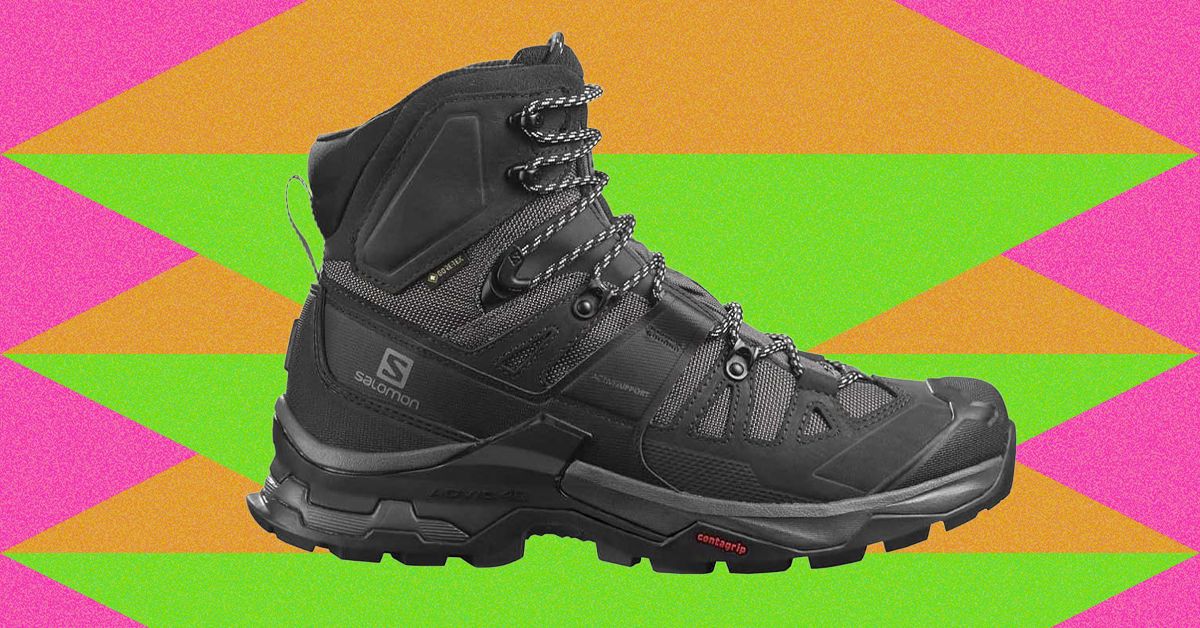
When I started hiking, big leather boots were the only real option. They were burly, stiff, and difficult to break in, but one pair would last you decades. Technology has mercifully caught up, however. If you head to the trails today, most hikers and backpackers are opting for more lightweight, low-cut options. While an influx of new shoes from brands like Hoka, Merrell, Danner, and Salomon has transformed the footwear industry, that doesn’t mean the hiking boot has had its day. It just depends on what you’re looking to do and when you’re doing it.
Which shoes should you pick to go out for the day? I tested countless pairs of great hiking boots, trail runners, and hiking shoes across a variety of terrain, from forest trails and coastal paths to high alpine terrain. To get a better understanding of the differences between the many options available—and which is right for you—I grilled Ingrid Johnson, a leading footwear product specialist at REI. (For what it’s worth, Johnson’s personal recommendation is the Salomon XA Pro).
When you’ve chosen your next pair of trail running shoes (or hiking boots), be sure to check out more of WIRED’s outdoor guides, like the Best Gravel Running Shoes, the Best Merino Wool T-Shirts, and the Best Electric Bikes.
Update March 2026: We added links to recent coverage, added the On Running Cloudrock Low, and updated links and prices.
Jump to Section
Here’s When You Need Boots
If you’re carrying a heavy pack over rough terrain, or if it’s wet or snowy, you need hiking boots. They tend to be higher at the ankle, with stiff midsoles and protective toe caps, and they are generally made from very durable materials like leather and tough synthetic fabrics like Cordura. Hiking boots prioritize stability, protection, and durability.
Boots generally have thick, deep lugs, tougher soles, stronger toe guards, and sturdier ankle support. They protect you from rock impact, uneven ground, moisture, and often colder conditions. The high-cut designs also offer more ankle support, something I found reassuring when coming back from a recent injury.
But don’t think that hiking boot brands are stuck in the dark ages. Borrowing lightweight features and materials from trail running, brands are able to offer technical boots with cushioning, grip, and stability. They’re still heavy, but featherweight compared to a traditional leather boot. Hoka’s Kaha 3 GTX ($240) is one of the best boots available, blending soft nubuck leather, Vibram Megagrip sole, and bags of cushioning. Here are a few other picks:
Perennially popular for good reason, these Salomons boast superb levels of comfort and support without the bulk typically associated with traditional walking boots. They feel like ski boots, but that’s not a criticism; the height and support is most welcome when walking all day carrying a full pack.


A New Game Turns the H-1B Visa System Into a Surreal Simulation

British journalist narrowly escapes Israeli missile strike on live camera

How assistant managers handle players, personal ambition

Stock market crash today (March 12, 2026): Nifty50 opens below 23,600; BSE Sensex down over 900 points on continuing US-Iran war – The Times of India

UK’s Topshop unveils Tolu Coker capsule collection

US ignites Iran war, but Gulf Arab states pay the price | The Express Tribune

-
Business1 week ago
Stock market crash today (March 12, 2026): Nifty50 opens below 23,600; BSE Sensex down over 900 points on continuing US-Iran war – The Times of India
-
 Fashion1 week ago
UK’s Topshop unveils Tolu Coker capsule collection
-
Business1 week ago
US ignites Iran war, but Gulf Arab states pay the price | The Express Tribune
-

 Fashion1 week ago
India’s textile recycling market may reach $3.5 bn by 2030: Report
-

 Tech1 week ago
Meta Developed 4 New Chips to Power Its AI and Recommendation Systems
-
 Business1 week ago
8th Pay Commission: How Much Will Central Govt Employees’ Salaries Rise? What We Know So Far
-

 Sports1 week ago
Bangladesh crush Pakistan in ODI series opener | The Express Tribune
-

 Entertainment1 week ago
Ed Sheeran makes surprising Benny Blanco confession after hygiene uproar