

Fashion
US’ Under Armour posts challenging Q3 as North America drags results


North America remained the biggest drag on performance, with revenue falling 10 per cent to $757 million amid ongoing restructuring and demand softness. In contrast, international revenue grew 3 per cent to $577 million, rising 1 per cent on a currency-neutral basis. Within international markets, Europe, the Middle East and Africa (EMEA) delivered solid momentum with 6 per cent growth, while Asia-Pacific declined 5 per cent and Latin America recorded strong growth of 20 per cent, supported by improving brand traction and distribution expansion.
Under Armour has posted a challenging Q3 FY26, with revenue down 5 per cent YoY to $1.33 billion amid tariff pressure and weak North America demand.
International growth partly offset declines.
Margins narrowed, resulting in losses, though liquidity stayed strong.
For FY26, revenue is seen down 4 per cent, with improving profitability supported by restructuring and cost controls.
Channel performance was mixed. Wholesale revenue declined 6 per cent to $660 million, while direct-to-consumer (DTC) revenue fell 4 per cent to $647 million. Within DTC, owned-and-operated store revenue slipped 2 per cent and e-commerce declined 7 per cent, with digital sales accounting for 38 per cent of total DTC revenue during the quarter.
Category-wise, apparel revenue showed relative resilience, declining 3 per cent to $934 million. Footwear remained under pressure, falling 12 per cent to $265 million, while accessories revenue decreased 3 per cent to $108 million.
Profitability was weighed down by external and structural factors. Gross margin declined 310 basis points to 44.4 per cent, primarily due to higher tariffs, alongside pricing headwinds and an unfavourable channel and regional mix. These impacts were partially offset by foreign exchange gains and a more favourable product mix, Under Armour said in a press release.
Selling, general and administrative (SG&A) expenses increased 4 per cent to $665 million. Excluding a $99 million litigation reserve linked to an insurance carrier dispute and $3 million in transformation costs related to the fiscal 2025 restructuring plan, adjusted SG&A declined 7 per cent to $563 million, mainly due to lower marketing spend following timing shifts.
Restructuring charges during the quarter amounted to $75 million. The company reported an operating loss of $150 million, while adjusted operating income stood at $26 million after excluding litigation, restructuring and transformation expenses.
Under Armour posted a net loss of $431 million in Q3, largely driven by a $247 million valuation allowance on US federal deferred tax assets. Adjusted net income was $37 million. Diluted loss per share was $1.01, while adjusted diluted earnings per share came in at $0.09.
Inventory levels improved, declining 2 per cent to $1.1 billion. Liquidity remained strong, with cash and cash equivalents of $465 million at quarter-end. The company also held $600 million in restricted investments earmarked for repayment of senior notes due in June 2026 and had no borrowings under its $1.1 billion revolving credit facility.
Under Armour continued to progress with its FY25 Restructuring Plan, first announced in May 2024, which aims to enhance operational efficiency. The plan is now expected to cost up to $255 million. By the end of Q3 FY26, the company had incurred $224 million in restructuring and transformation costs, with the remaining charges expected to be recognised by the end of fiscal 2026.
“Our third quarter adjusted operating results exceeded expectations, and despite a few unfortunate, non-recurring impacts, we’re encouraged by the progress we’re making in the business to reignite brand momentum,” said Kevin Plank, president and CEO of Under Armour. “In North America, we believe the December quarter marked the most challenging phase of our business reset, and we expect greater stability ahead as we build on this progress globally.”
“Our transformation is accelerating as we sharpen our focus and strengthen execution. Our strategy is gaining traction through better products, bolder storytelling, and a more disciplined market presence, positioning Under Armour to operate with greater intention and confidence going forward,” added Plank.
Looking ahead, Under Armour revised its full FY26 outlook as revenue is expected to decline 4 per cent, compared with the prior outlook of a 4 to 5 per cent decline. This includes an approximate 8 per cent decline in North America and a 6 per cent decline in Asia-Pacific, each compared with a previously expected high-single-digit decline, partially offset by an approximate 9 per cent increase in EMEA revenue, compared with a previously expected high-single-digit increase.
The gross margin is expected to decline approximately 190 basis points, compared with the prior outlook of a 190 to 210 basis point decline, primarily due to higher US tariffs, unfavourable channel and regional mix, and pricing headwinds, partially offset by favourable foreign exchange and product mix, added the release.
SG&A expenses are expected to decline at a low-double-digit rate, compared with the prior outlook of a mid-teen percentage decline. Adjusted SG&A, which excludes litigation reserve expenses, transformation expenses related to the FY25 Restructuring Plan, and impairment charges, is expected to decline at a mid-single-digit rate, unchanged from the prior outlook, driven by lower marketing costs, restructuring savings, and other cost management initiatives.
Operating loss is expected to be approximately $154 million, compared with the prior outlook of a $56 million to $71 million loss. Excluding the litigation reserve expense and expected transformation and restructuring charges, adjusted operating income is expected to be approximately $110 million, compared with the prior outlook of $95 million to $110 million.
Diluted loss per share is expected to range from $1.24 to $1.25. Adjusted diluted earnings per share is expected to range from $0.10 to $0.11, compared with the prior outlook of $0.03 to $0.05.
Fibre2Fashion News Desk (SG)









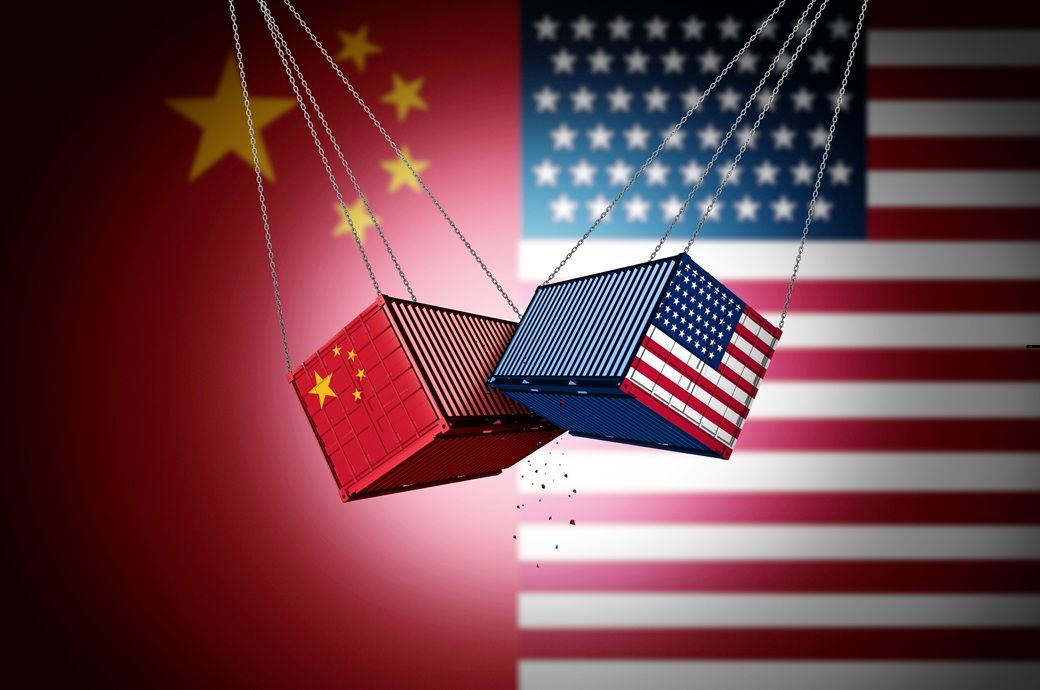
The move follows two separate Section 301 investigations by the Office of the US Trade Representative on March 12 and 13, targeting multiple economies, including China, over concerns such as “overcapacity” and alleged lapses in preventing imports linked to forced labour. Beijing expressed strong dissatisfaction and firm opposition to these actions.
China has launched two trade barrier investigations into the United States (US) measures following recent Section 301 probes by Washington.
The move targets actions affecting global supply chains and green trade.
Beijing opposed the US investigations and said it would take steps based on findings, signalling rising trade tensions between the two economies.
A ministry spokesperson said the probes were initiated in accordance with China’s Foreign Trade Law and related rules, adding that appropriate measures would be taken based on the findings.
Commerce Minister Wang Wentao also raised concerns over the US actions during a meeting with US Trade Representative Jamieson Greer on the sidelines of the 14th WTO Ministerial Conference in Yaoundé, Cameroon.
Fibre2Fashion News Desk (CG)

According to the informal agreement, there will be a new handling fee for each item entering the EU from non-EU countries and sent directly to EU consumers, to cover the extra cost of handling an ever-increasing number of individual parcels.
This will be paid by the same entity responsible for paying other customs charges for the same parcel, to avoid shifting the cost to consumers.
The European Parliament and European Council have reached a deal on a major reform of the EU Customs Code to address problems relating to e-commerce, safety of goods and efficiency.
A new handling fee will be charged for each item entering the EU from non-EU nations and sent directly to EU consumers.
The European Commission will establish the level of the fee and reassess it every two years.
The European Commission will establish the level of the fee and reassess it every two years. Member states will start collecting it as soon as the necessary information technology (IT) system becomes operational, and in any case no later than November 1, this year.
Under the new rules, sellers and platforms that facilitate distance sales of goods from non-EU countries directly to EU customers will be treated as importers. This will oblige them to provide customs authorities with all the necessary data, pay or guarantee any charges, and make sure that the goods comply with EU laws, an official release said.
These companies must be established in the EU or be represented by an EU-based entity having either authorised economic operator (AEO) or trusted trader status. This should prevent the use of shell companies.
To incentivise bulk shipments that are easier for customs authorities to check, non-EU country sellers and platforms are encouraged to operate warehouses in the EU. Their intra-EU client shipments would benefit from a lower handling fee, provided their goods were imported in collective packaging and large enough quantities to make customs checks more efficient.
Companies that repeatedly ignore EU rules could be punished with a fine of at least 1 per cent (and up to 6 per cent) of the total value of goods imported into the EU in the previous 12 months.
Additionally, customs authorities may suspend, revoke, or annul their trusted trader or AEO status and flag them as high-risk operators.
Import-export companies that follow the rules and agree to cooperate transparently with the customs authorities may benefit from a simplified ‘trust and check’ regime. This would initially require them to go through thorough vetting and grant customs authorities access to their electronic systems.
In exchange, their shipments would be checked less frequently and they would have more flexibility regarding the payment of duties and fees.
The current AEO qualification will remain in place to keep customs status accessible to smaller economic operators.
The reform also establishes a new customs data hub to be managed by the new EU Customs Authority (EUCA). It will be available for optional use by 2031 and mandatory by 2034.
The data hub will replace at least 111 software systems currently used by customs.
The provisional agreement needs to be officially approved by Parliament in plenary as well as by the EU Council, before it will become law.
Fibre2Fashion News Desk (DS)
This was driven by an 8.36-per cent YoY decline in import volume and a 7.76-per cent YoY decrease in average unit prices.
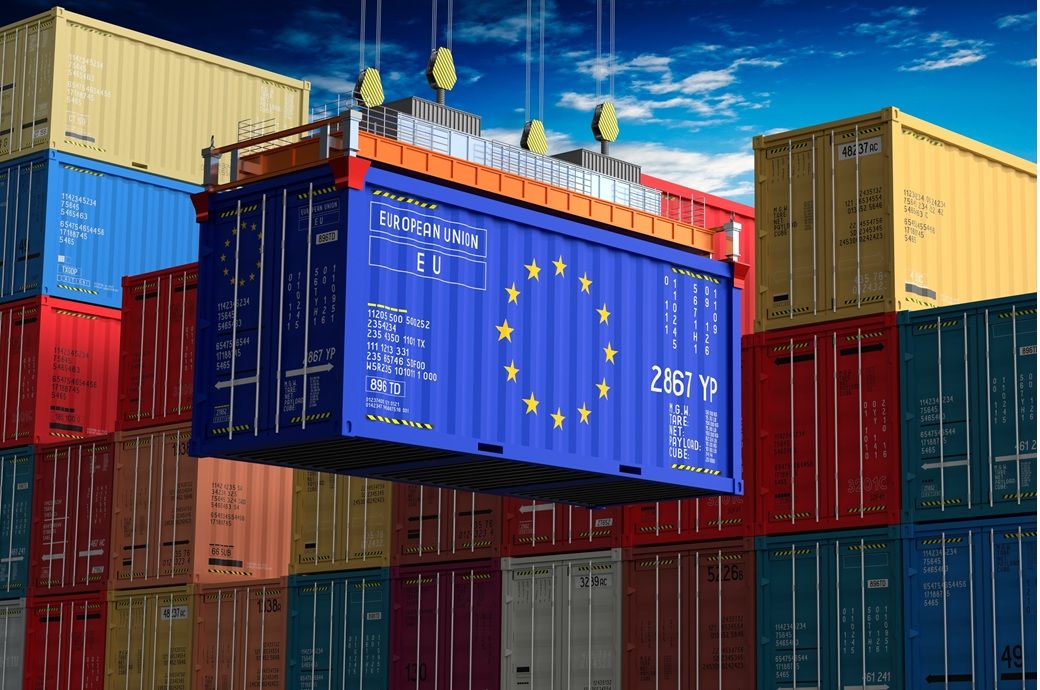
The EU’s apparel imports fell by 15.48 per cent YoY in January to €7.03 billion, according to Eurostat.
Bangladesh’s apparel exports to the EU fell to €1.43 billion in January—a 25.25-per cent drop in value.
China remained the top exporter of apparel to the EU (€2.22 billion), but still saw a 6.9-per cent decline YoY in value.
India, Pakistan, Vietnam and Cambodia also remained in negative territory.
Bangladesh’s apparel exports to the bloc fell to €1.43 billion in January—a sharp 25.25-per cent drop in value. It saw a 17.49-per cent YoY decrease in the quantity of goods shipped, coupled with a 9.41 per cent drop in the unit price per kilogram.
China remained the top exporter of apparel to the EU (€2.22 billion), but still saw a 6.9-per cent decline YoY in value. Its unit prices dropped by 8.01 per cent YoY, while its export volume grew a bit by 1.21 per cent YoY.
Turkey faced a severe hit with a 29.12-per cent YoY decrease in apparel export value to the EU in the month, totaling €619.98 million.
Other countries like India, Pakistan, Vietnam and Cambodia remained in negative territory, reflecting a broad-based slowdown in the European fashion retail market.
Fibre2Fashion News Desk (DS)


China launches twin probes into US trade practices

From office desks to dark streets: How the oil crunch is reshaping daily life in different nations – The Times of India

USMNT handed reality check by Doku, Belgium ahead of World Cup

-
 Business1 week ago
Flipkart group CFO to leave co amid IPO plans – The Times of India
-

 Fashion1 week ago
China’s textile & apparel exports surge 17% to $50 bn in Jan-Feb 2026
-

 Sports1 week ago
Rating Adidas’ 2026 World Cup away shirts: Argentina, Spain, Mexico and more
-

 Sports1 week ago
American Conference Commissioner Tim Pernetti thanks Trump for Army-Navy game executive order
-
Tech1 week ago
The Corsair 4000D RS PC Case Keeps Your System Cool
-
 Business5 days ago
Property Play: Home flippers see smallest profits since the Great Recession, real estate data firm says
-
 Business1 week ago
‘Marriage penalty’ in Washington state’s new millionaire tax stirs debate
-

 Tech1 week ago
Gamers Hate Nvidia’s DLSS 5. Developers Aren’t Crazy About It, Either