

Tech
Emergency First Responders Say Waymos Are Getting Worse

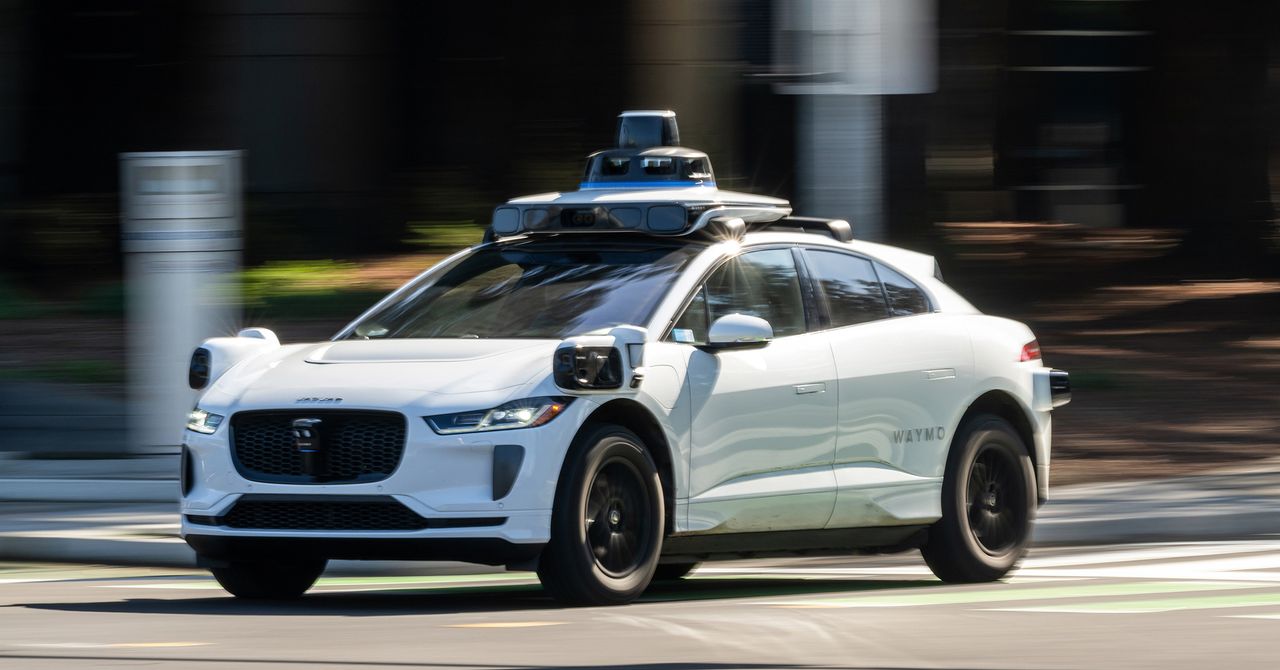
Emergency first-responder leaders told federal regulators in a private meeting last month that they were frustrated with the performance of autonomous vehicles on their streets—that city firefighters, police officers, EMTs, and paramedics are forced to spend time during emergencies resolving issues with frozen or stuck cars. One fire official called them “a safety issue for our crews as well as the victims.” WIRED obtained an audio recording of the meeting.
Officials from San Francisco and Austin, where Waymo has been ferrying passengers without drivers for more than a year, said the vehicles’ performance is getting worse. “We are actually seeing something interesting: backsliding of some things that had improved upon,” Mary Ellen Carroll, the executive director of San Francisco’s Department of Emergency Management, told officials with the National Highway Traffic Safety Administration (NHTSA), which oversees self-driving vehicle safety in the US. “They are committing more traffic violations.”
“We’ve seen some behavior we haven’t seen in a few years … Waymo is frequently now blocking our fire stations from access,” added Chief Patrick Rabbitt, the head of the San Francisco Fire Department. “Their default is to freeze.” The situation can prevent firetrucks from responding to emergencies in a “timely and appropriate” way, he said.
In Austin, first responders have been frequently stymied by Waymos “freezing up,” said Lieutenant William White, head of Highway Enforcement Command at the Austin Police Department. White said that, contrary to what Waymo had told first responders, the vehicles often fail to recognize or respond to officers’ hand signals, which can lead to cascading delays during emergencies or unusual road incidents.
“I believe the technology was deployed too quickly in too vast amounts, with hundreds of vehicles, when it wasn’t really ready,” White said. NHTSA did not respond to WIRED’s request for comment.
The complaints come as Waymo embarks on an ambitious expansion across the US and the world. Today, the company offers driverless rides in parts of 10 US cities, with plans to launch service in 10 more before the end of the year, including London. Waymo said last month that it’s now providing 500,000 paid rides weekly—a figure that’s still dwarfed by human-powered ride-hail services (Uber provides some 400 times that number weekly) but has grown tenfold since last year.
But these comments from cities where the service is already operating threaten to slow the rollout of driverless technology, which, according to Waymo’s data, reduces serious crashes compared to human-driven cars. Waymo is already facing political opposition, especially from organized labor, in several dense, blue, and potentially lucrative cities, including Boston, New York City, Seattle, and Washington, DC.
In a statement, Waymo spokesperson Julia Ilina wrote: “We deeply value our partnership with first responders and our shared commitment to safety. Their ongoing feedback has been instrumental in driving impactful improvements to the Waymo service.” The company says it has conducted in-person training for more than 35,000 emergency responders across the country.
Public Comment Periods
The comments made in the private meeting are blunter than what government officials have generally said in public. But they reflect long-simmering and sometimes vocal frustrations expressed by city leaders since at least late last year. Since autonomous vehicle operations are regulated in California and Texas by state rather than city officials, local first-responder departments and those who represent them can generally only request that developers like Waymo make specific changes to their operations.
On Wednesday, Austin first responders appeared before the City Council to discuss Waymo’s response to an incident last month in which a driverless vehicle blocked an ambulance for two minutes that was responding to a shooting in the city’s downtown, which killed three people and injured at least 14. Though officers were able to connect quickly with Waymo operators to move the vehicle, they reported that it had taken up to three minutes to connect with a remote agent in the past. They reiterated that Waymos don’t always respond well to hand signals, especially ones from police mounted on motorcycles.
Waymo declined to attend the meeting, and two front-row chairs labeled “RESERVED FOR: WAYMO” remained empty throughout the two-hour session.













An 18-year-old woman who promotes herself as the “#1 female looksmaxxer” is suing the highly controversial streamer Braden Eric Peters, aka Clavicular, for fraud, battery, and alleged sexual assault.
In the suit, which was filed in Miami-Dade County court and obtained by WIRED, Aleksandra Mendoza, who goes by the name @zahloria, or Alorah Ziva, on Instagram, alleges that she first encountered Peters in May 2025, when she was just 16 years old. According to the complaint, Peters promised Mendoza he could make her “the female face of looksmaxxing,” the online trend of using surgery or drugs to enhance one’s facial features.
Eager to grow her social media following, Mendoza agreed to make four looksmaxxing videos for Peters in exchange for a $1,000 payment, court documents say. The two allegedly began a text-based relationship, with Peters offering to pay for an Uber ride for Mendoza to visit him and his family in Cape Cod.
Upon her arrival, Mendoza alleges, Peters plied her with alcohol and “had sex with Mendoza while she was knowingly intoxicated, to the point where she was unable to give consent,” the complaint says.
Mendoza goes on to accuse Peters of nonconsensually having sex with her again the following morning while she was sleeping. The suit notes that Peters was aware of Mendoza’s age, referring to her as a “minor” in an online comment. (The age of consent in Florida is 18, but the state’s “Romeo and Juliet” law provides an exception for those who are older than their 14-to-17-year-old partners by four years or less.)
According to the suit, Mendoza bumped into Peters in Miami a few months later. He allegedly invited her to his house to livestream with him, promising that he could help her grow her following. During the livestream, he then allegedly injected her in the cheeks with Aqualyx, an injectable used to reduce fat in the chin, thighs, or stomach.
According to the US Food and Drug Administration website, Aqualyx is not approved by the FDA and can result in “permanent scars, serious infections, skin deformities, cysts, and deep, painful knots” in the skin if it is administered by a non-professional. Mendoza contends that her right cheek became “perforated” after she was injected by Peters.
Though Peters and Mendoza continued to have sporadic contact with each other, the suit alleges, their relationship soured in early 2026, when Mendoza signed a contract to promote an online trading platform. She alleges that she lost this sponsorship after Peters “began a campaign to discredit [her],” which the suit contends was due to Peters’ concerns over her exposing him.
Mendoza is suing Peters for battery, fraud, and emotional distress, and is seeking at least $50,000 in damages. In a post on X, Peters appeared to deny the allegations, writing, “The consistent theme of girls trying to use me for money is brutal for a young guy trying to navigate a complex society. Hopefully I can find a good girl whos [sic] intent is to not to screw me over and take my money.”
This is not the first time Peters has faced legal action. In 2026, he was arrested by Fort Lauderdale police for allegedly instigating a physical fight between two women and livestreaming it on the platform Kick. He is also reportedly being investigated by Florida state wildlife authorities for shooting a dead alligator on livestream.
Through her attorney Andrew Moss, Mendoza declined to comment. “She will tell her story through the legal process,” Moss said. “We do look forward to hearing from Mr. Peters and his lawyers.” A representative for Peters did not immediately return WIRED’s request for comment.

SenseTime, a Chinese AI company best known for its facial recognition technology, released a new open source model on Tuesday that it claims can both generate and interpret images far faster than top models developed by US competitors. SenseNova U1 could help the company reclaim lost ground after it slipped from its place among the leading players in China’s AI development race.
The model’s secret sauce is its ability to “read” images without translating them to text first, speeding up the process and reducing the amount of computing power required. “The model’s entire reasoning process is no longer limited to text. It can reason with images as well,” Dahua Lin, cofounder and chief scientist at SenseTime, said in an interview with WIRED.
Lin, who is also a professor of information engineering at the Chinese University of Hong Kong, says that models capable of processing images directly will enable robots to better understand the physical world in the future.
Like DeepSeek’s latest flagship model, SenseTime says U1 can be powered by Chinese-made chips. “Several Chinese domestic chipmakers have finished optimizing compatibility with our new model,” Lin says. On release day, 10 Chinese chip designers, including Cambricon and Biren Technology, announced their hardware supports U1.
That flexibility matters because US export controls restrict Chinese firms from accessing the world’s most advanced AI chips, particularly those used for training, which at this point are primarily developed by Western companies like Nvidia. “We will continue to push for training on more different chips,” Lin says. But he also acknowledges that SenseTime “may still need to use the best chips to ensure the speed of our iteration.”
SenseTime released U1 for free on Hugging Face and GitHub, another sign of how Chinese companies are becoming some of the most active contributors to open source AI.
SenseTime was founded in 2014 and became a world leader in computer vision, which is used in applications like facial recognition and autonomous driving. But when ChatGPT and other AI systems powered by natural language processing became the hottest thing in the tech industry, SenseTime began struggling to turn a profit and fell behind newer Chinese startups like DeepSeek and MiniMax.
SenseTime says it hopes that releasing SenseNova-U1 publicly for anyone to use will help it catch up with both domestic and Western AI players. Lin says the company finally made the decision last year to focus on open source because of the helpful feedback it gets from researchers, which enables the company to iterate faster. “In this day and age, being open source or closed source is not the winning factor; the speed of iteration is,” Lin explains.
Going open source also helps SenseTime continue collaborating with international researchers without the interference of geopolitics. The company has been sanctioned repeatedly by the US government in recent years over allegations that its facial recognition technology helped power surveillance systems used to monitor and detain Uyghurs and other minority groups in China’s Xinjiang region. As a result, US firms are restricted from investing in SenseTime and selling certain technologies to it without a license. (SenseTime has denied the allegations.)
Seeing Clearly
In an accompanying technical report, SenseTime claims that SenseNova-U1 generates higher-quality images than all other open source models currently on the market. Its performance is comparable to leading Chinese closed source models like Alibaba’s Qwen and ByteDance’s Seedream, but it still lags behind industry leaders like GPT-Image-2.0, which came out just a week ago.
But the model’s main selling point is its ability to generate images much faster than all of those models. It relies on an innovative technical structure called NEO-Unify that SenseTime previewed earlier this year.



Big US tech stocks swing as investors probe AI spending

Former NFL defensive end Josh Mauro dies at 35

Ford raises 2026 guidance as $1.3 billion tariff refund assists in offsetting higher costs

-

 Politics1 week ago
UK’s Starmer seeks to deflect blame over Mandelson appointment
-
 Business1 week ago
Us-India Trade Talks: US–India trade deal: Where do talks stand & what to expect – explained – The Times of India
-

 Fashion1 week ago
Global energy growth slows to 1.3% in 2025: Report
-
 Business1 week ago
UK inflation accelerates after Iran war drives sharp rise in fuel prices
-

 Fashion1 week ago
India, US to resume BTA talks today
-

 Tech1 week ago
Microsoft faces court battle in £2bn Windows Server class action | Computer Weekly
-

 Tech1 week ago
Nation states responsible for ‘nationally significant’ cyber attacks against UK, says NCSC chief | Computer Weekly
-

 Entertainment1 week ago
Christina Applegate exhibits strength amid ‘health issues’