

Sports
Pakistan hockey’s long sunset | The Express Tribune

PUBLISHED
March 22, 2026
KARACHI:
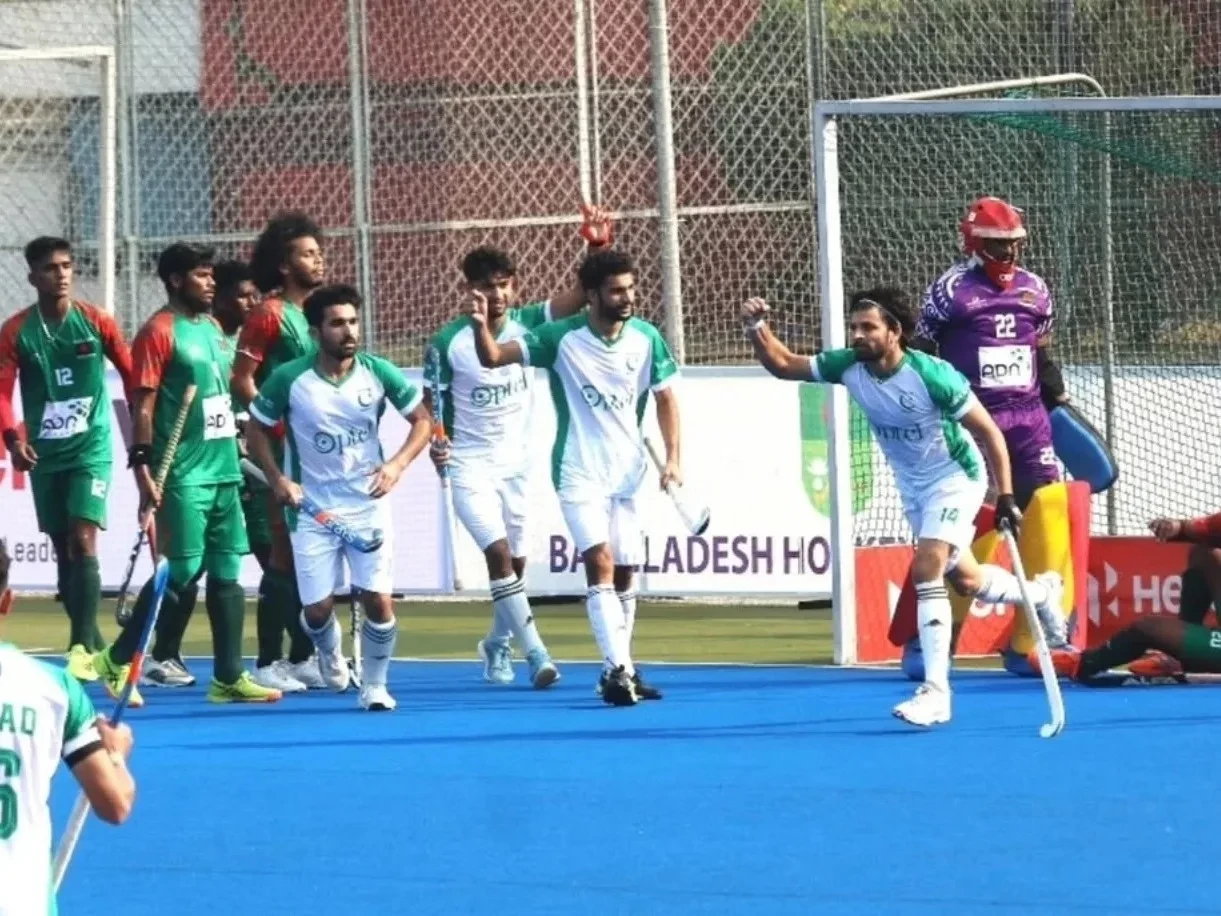
For the national sport of Pakistan, moments of celebration have been rare in recent years. The national team’s qualification for the Hockey World Cup after eight years has provided one such moment, a result that has been welcomed across the hockey community.
Yet even as the team returns to the global stage, the questions surrounding Pakistan hockey have not entirely disappeared.
In many ways, the recent success sits alongside a familiar reality, where moments on the field offer hope, but the structures around the sport continue to struggle.
The latest round surfaced during the national team’s recent tour when reports began circulating that players had been left managing their own accommodation arrangements abroad. Instead of the organised travel and lodging expected for an international side, members of the squad found themselves staying in short-term rentals and taking care of basic tasks themselves while preparing for matches.
“The boys are making their own breakfast in the morning. They are washing their dishes or hours, cleaning their bedrooms and toilets. We hardly have time to rest,” said Pakistan captain Ammad Butt.
For a team representing the country at the international level, the story struck a nerve. Within hours, the accounts spread across social media and the hockey community. Former players expressed disappointment, fans questioned how such a situation could arise, and once again the conversation shifted from performance on the field to the management of the sport.
The response that followed also felt familiar. Officials linked to the arrangements stepped aside quietly. Explanations were offered, resignations submitted, and the controversy appeared to settle, at least on the surface.
But for those who have followed Pakistan hockey closely, the episode did not feel new.
Over the past decade, similar controversies have surfaced with uncomfortable regularity. The details change, but the pattern remains. One year the issue revolves around funding, another around team preparation, travel arrangements or delayed allowances. Criticism grows louder, officials resign, and the system continues much the same way it did before.
For journalists covering the sport, that pattern has become difficult to ignore.
The issue is rarely a single incident. It reflects deeper structural problems that continue to shape Pakistan hockey, from administrative uncertainty and financial constraints to player preparation and domestic development.
A decade of repeating problems
Since around 2014, the sport has moved through several phases of leadership, each arriving with promises of revival. Administrations have changed, committees have been formed, and former players have been brought into coaching and managerial roles with the belief that their experience could reconnect the team with its past success.
Yet the broader picture has rarely shifted. The structure of the Pakistan Hockey Federation (PHF) has remained largely familiar. The presidency has often been held by retired bureaucrats or military officials, while the secretary’s position has frequently been filled by former Olympians. At the coaching level too, former players who once represented Pakistan with distinction have been entrusted with guiding the next generation.
On paper, the arrangement carries a certain logic. Few people understand Pakistan hockey better than those who helped build its legacy.
But the results have struggled to reflect those intentions. Over the years, Pakistan has slipped in international rankings while struggling to keep pace with teams that have adapted more quickly to the demands of modern hockey. Occasional victories and promising tournaments have appeared, but they have rarely translated into sustained progress.
The latest controversy involving the national team’s tour only reinforced that pattern, where logistical issues, public criticism and administrative reshuffling have become recurring features of Pakistan hockey.
Part of the challenge lies in how dramatically the sport itself has changed. International hockey today is faster, more tactical and far more structured than before. Teams study opponents through video analysis, track player movement through data and prepare carefully designed penalty corner strategies. Training programmes are built around detailed fitness conditioning to maintain peak performance during tournaments.
Pakistan’s setup, however, has often struggled to keep pace with these developments. Camps still rely largely on conventional routines, while the analytical support, sports science and performance monitoring that many teams now treat as standard remain limited.
The result is a gap that has become increasingly difficult to bridge. On one side stand decorated Olympians and administrators who once carried Pakistan’s colours with distinction. On the other side is a modern sport that has evolved faster than the structures trying to manage it.
Within that reality, the current generation of players is trying to build its future.
Modern hockey and Pakistan’s struggle to keep pace
Hockey today is not the same sport Pakistan once ruled. The game has changed quietly but dramatically over the past two decades. Matches are faster, transitions are sharper, and teams operate within carefully planned systems. Players rarely stay on the field for long stretches. Rolling substitutions keep fresh legs coming in, allowing teams to maintain a high tempo from the first whistle to the last.
Tactics have also become far more organised. Teams press collectively, defend in structured formations, and attack through patterns that are rehearsed repeatedly during training. Even penalty corners, once seen as moments of individual skill, are now built around detailed planning. Variations are practised, angles are studied, and every movement is timed.
Much of this preparation now happens away from the pitch. International teams spend hours analysing opponents through video footage. Training sessions are supported by fitness specialists and performance analysts. GPS devices are commonly used to measure how much players run during practice, how quickly they recover, and whether their workload is being managed properly during a tournament.
Fitness has become central to the modern game. The ability to maintain speed and intensity over several matches often separates winning teams from the rest.
Pakistan’s training camps, however, still operate in a very different environment. Preparation largely follows traditional routines, and the kind of technical support that many international teams rely on remains limited. Sports science is rarely part of the conversation, and monitoring players’ fitness or recovery through data is still uncommon.
Even basic aspects of athlete preparation can highlight the difference. Players have often spoken about the absence of structured nutrition plans during camps. Sugary drinks are still commonly available during training sessions, while specialised recovery or energy drinks are rarely part of the setup.
None of these issues alone decides a match. But when a team is competing against opponents who prepare through detailed planning, technology and scientific support, those small gaps gradually begin to show on the field.
The domestic structure problem
Beyond the national team, the deeper challenge lies within the domestic structure that once kept Pakistan hockey alive.
For a long time, the sport depended heavily on departmental teams. Organisations such as WAPDA, PIA, National Bank and Railways did not just compete in national tournaments, they also provided employment to players. For many young athletes, that system offered a clear path. A player could begin at school level, move into club hockey, find a place in a departmental side and eventually push for national selection.
Over the years, that structure has slowly weakened. Several departments have reduced their involvement in hockey, while some have withdrawn completely. As those teams disappeared, so did many of the opportunities that once allowed players to continue the sport with some financial stability. Domestic competitions still exist, but they no longer carry the same depth or consistency that once defined them.
The impact is most visible at the grassroots level.
For many young players today, hockey does not appear to offer the kind of future it once did. In earlier decades, representing a department often meant secure employment alongside sport. Today that certainty is largely missing. Without contracts or long-term financial backing, many players eventually reach a point where they must choose between continuing hockey or focusing on education and work.
Coaches working at junior levels often talk about this shift. Participation in school and academy competitions has gradually declined. It is very different from an earlier time when hockey grounds in many cities remained full late into the evening, with young players practising long after sunset.
Now many of those youngsters are turning towards other sports, or stepping away from competitive sport altogether.
When fewer players enter the system at the beginning, the impact eventually reaches the national team as well.
The funding blame game
Financial constraints are often presented as the central problem facing Pakistan hockey. Yet the question of funding has rarely been straightforward.
For years, responsibility has moved back and forth between the Pakistan Hockey Federation and the Pakistan Sports Board. Federation officials frequently point to limited government support, while the sports board maintains that funds allocated to the sport have already been released. It is a familiar cycle in which accountability becomes difficult to establish.
The recent controversy surrounding the national team’s overseas tour briefly brought that tension into public view. Pakistan captain Butt said players were given different explanations regarding the situation during the trip. According to him, officials from the sports board maintained that funds had already been provided to the federation, while members of the team management suggested that the amount released was not sufficient for the tour.
The management, however, rejected the allegations. Head coach Tahir Zaman described the situation as exaggerated and said the arrangements made during the team’s transit in Sydney had been misrepresented.
What followed was another round of administrative turbulence. At the time, the federation was headed by president Tariq Bugti, who blamed the issue on financial limitations and differences with the Pakistan Sports Board (PSB). The president later imposed a two-year ban on Butt, accusing him of influencing other players against the management. The decision triggered criticism across the hockey community, and within days Bugti stepped down from his position. This pattern is not new.
In February 2026, Mohyuddin Ahmad Wani was appointed as the ad hoc president of the federation with a mandate to stabilise its affairs and oversee fresh elections. One of the early decisions of the new administration was to revoke the ban on the captain before the team departed for the World Cup qualifying tournament.
Hockey in Pakistan operates with limited commercial backing and almost no long-term sponsorship strategy. Without sustained corporate partnerships or a professional league, the sport remains heavily dependent on government support.
The recent World Cup qualification, however, has briefly shifted the conversation. For the first time in years, Pakistan hockey is being discussed for what has happened on the field rather than off it.
But whether this moment represents a turning point or simply a temporary lift is still an open question.
Signs of progress on the field
The national team’s recent campaign in the World Cup qualifying tournament has offered one such glimpse. Pakistan not only reached the semi-final stage but went on to secure qualification for the FIH Men’s Hockey World Cup, marking their return after eight years.
For the players, the achievement has been the result of persistence through a difficult period for the sport.
Captain Butt credited the squad’s collective effort after securing a place in the knockout stage. “As my team performed, I give all the credit to my team. We qualified for the semi-final, that is a very important match for my team,” he said ahead of the decisive encounter. “As you know there is a knockout, so it is very important for us to win this match. We have to qualify for the World Cup as well.”
The captain also acknowledged the support the team received by the PCB chairman and the government. “They listened to us and facilitated the players in the best way,” he said.
Beyond the immediate results, the campaign has also shown small but encouraging signs within the team. Several younger players have begun to find their place in the squad, while the team’s performances have suggested a group still willing to compete despite the uncertainty surrounding the sport.
Between legacy and the road ahead
Pakistan hockey today sits in an uneasy space between memory and possibility.
For older fans, the sport still carries the weight of a remarkable past. Olympic gold medals, World Cup triumphs and decades of dominance once made Pakistan one of the defining powers of world hockey. Those achievements remain an important part of the country’s sporting identity.
The recent World Cup qualification has shown that the ability to compete at a high level still exists within the current group of players. It has also reminded many that the sport’s decline has never been about a lack of talent alone.
Yet the structural challenges remain unchanged. Domestic pathways are still limited, administrative instability continues, and long-term planning remains uncertain.
One side carries the memory of a sport that once defined national pride. On the other side is a team that has shown it can still fight, even within an imperfect system.
Whether this qualification becomes the beginning of something sustained, or simply another isolated moment, will depend not on the players, but on whether the system around them finally begins to change.











SOUTH BEND, Ind. — Notre Dame’s Ahmed Hesham won the men’s saber Sunday, and the Fighting Irish men joined the women in winning the inaugural three-weapon national championship at the Joyce Center.
Hesham defeated St. John’s Adham Moataz 15-12 in the final after a third-place finish last season.
Notre Dame finished with 91 points, 10 better than runner-up Columbia. St. John’s (63), Harvard (62) and Pennsylvania (58) rounded out the top five.
Notre Dame’s Chase Emmer fell short in defense of his foil title after losing 15-8 to Columbia’s Sam Kumbla in the final.
Fighting Irish freshman Kruz Schembri made it to the épée final before losing to North Carolina’s Youssef Shamel 15-7.
The Fighting Irish trio led all three disciplines after the first day.
Notre Dame won 14 co-ed championships, including six of the last eight. The Fighting Irish won last season’s title in the final year of the combined men’s and women’s team championship.
Notre Dame edged Columbia 102-99 on Friday to win the first women’s three-weapon title. Eszter Muhan won the épée for the Irish.
The first half of the Sweet 16 is set, with 16 teams playing for one of the final eight tickets to the second weekend of the 2026 men’s NCAA tournament as the second round continues Sunday.
ESPN reporters are on-site across the country, from Philadelphia to San Diego, to deliver courtside insights. Follow along as they and the staff track all the action.
Jump to: Previews for rest of Sunday’s games
Previews
All times Eastern.
5:15 p.m., CBS
How Kansas can advance to the Sweet 16: Flory Bidunga has to be the key for Kansas against St. John’s. He will have his hands full against Zuby Ejiofor, one of the best two-way big men in the country, but Bidunga has held his own in matchups against Motiejus Krivas and JT Toppin. Bidunga has also struggled mightily in other big games, five points and four points in two games against Houston, two points against Arizona and eight points against North Carolina, and his win/loss splits are telling. In Kansas’ wins, Bidunga averages 15.1 points and shoots better than 70% from the field. In losses, he averages 9.9 points and shoots 50.6% from the field. Defensively, the Jayhawks have to keep St. John’s out of transition and force the Red Storm to make perimeter shots. They ranked near the bottom of the Big East in 3-point attempt rate and percentage of points from 3s. Their 10 3s against Northern Iowa was the first time they made double-digit 3s in a game since Jan. 10. — Borzello
How St. John’s can advance to the Sweet 16: The biggest edge St. John’s will have against Kansas is on the offensive glass. The Red Storm are one of the most effective offensive rebounding teams in the country, ranking 17th nationally in second-chance points per game. Kansas, meanwhile, was one of the worst defensive rebounding teams in the Big 12, allowing opponents to rebound nearly 32% of their misses. Ejiofor and Dillon Mitchell should get extra possessions for the Red Storm. With the exception of the drubbing at UConn in late February, St. John’s defense has been operating at an incredibly high level for several weeks. The Red Storm have allowed their past five opponents to make an average of just 3.4 3-pointers per game. — Borzello
6:10 p.m., TNT
How Virginia can advance to the Sweet 16: This isn’t Tony Bennett’s team anymore. The Cavaliers knock down 3s and also score with a rugged game in the paint. They also have a top-25 defense. They’ll need all of those tools against Tennessee, which is No. 1 in the country in offensive rebounding rate. They can’t allow the Vols to dominate with second-chance points, and the Cavaliers are equipped to do that thanks to a top-five defense inside the arc. They’ll also have to limit the touches of projected NBA draft lottery pick Nate Ament. Tennessee is 2-3 in its past five games when he shoots nine or fewer shots inside the arc. They also have to pressure Ja’Kobi Gillespie (11 turnovers in the past four losses). The Cavaliers’ 3-point barrage must continue after Virginia made 13 against Wright State. The Cavaliers probably can’t win without a big game from Thijs De Ridder, but they will struggle if they go cold from the 3-point line. — Medcalf
How Tennessee can advance to the Sweet 16: Rick Barnes’ team ended Miami (Ohio)’s fairy tale Friday. The Volunteers outscored Travis Steele’s squad 40-16 in the paint to advance — and they did it despite projected NBA draft lottery pick Ament going 0-for-3 in the game. The Vols will need Ament to look more like the player who scored 27 points in an SEC tournament win over Auburn to reach the Sweet 16. Ja’Kobi Gillespie continues to make this group soar. If he gets to his spots, Ament plays to his potential and the Vols dominate the offensive glass, they will have the offensive tools to win. But nearly 50% of Virginia’s field goal attempts are 3-pointers, and the Cavaliers are a top-10 offensive rebounding team. They can play Tennessee’s game, too. The Vols will have to play it better. — Medcalf
7:10 p.m., TBS
How Florida can advance to the Sweet 16: Florida’s game prep will focus on stopping Bennett Stirtz and getting the ball out of his hands. Stirtz is a high-usage point guard, and Ben McCollum’s system revolves around him having a hand in nearly every possession. Boogie Fland has really developed as a defender this season and will likely be tasked with guarding Stirtz. The rest of Florida’s plan will be about imposing its will. The Gators are bigger and more athletic than Iowa, and they’re elite on defense. If they can speed the game up and make Iowa uncomfortable, it’s hard to picture the Hawkeyes keeping up. Iowa hasn’t played a game with more than 70 possessions this season; Florida averages 70.7 possessions per game, per KenPom. — Borzello
0:39
No. 1 Florida vs. No. 9 Iowa game preview
Check out some stats on the matchup between Florida and Iowa in the NCAA men’s tournament.
How Iowa can advance to the Sweet 16: On paper, Iowa is in for a tough night down low against Florida. The Gators have one of the most dominant frontcourts in the country, ranking second nationally in paint points per game and third in second-chance points per game. They also lead the country in offensive rebounds per game. Iowa doesn’t block shots and allows opponents to shoot 56.5% inside the arc in Big Ten play, but the Hawkeyes played a frontcourt with comparable size and ability when they faced Michigan earlier this month. And though they lost, they held their own up front, outscoring the Wolverines in the paint and scoring more second-chance points. Can the Hawkeyes repeat the feat against Florida? Iowa will also have to get the game at its preferred pace, one of the slowest in the country, forcing the Gators to play in the halfcourt more than they would like. — Borzello
7:50 p.m., truTV
How Arizona can advance to the Sweet 16: Arizona doesn’t have to tweak anything to its game plan to reach its third consecutive Sweet 16. Big 12 Player of the Year Jaden Bradley scored just seven points against LIU on Friday, and the Wildcats still put up 92 points. If they continue to rely on that depth, they’ll be difficult to stop; five Arizona players scored at least eight points in the win over Long Island. Plus, the Wildcats, who have been criticized after making just 33% of their 3-point attempts in Big 12 play, have made 39% of their shots from beyond the arc over their current 10-game winning streak. They’re different now. To stop Utah State’s offense, Arizona will have to defend well against numerous ball screens that put MJ Collins Jr. and Mason Falslev in positions to score. The Aggies will probably attack 7-foot-2 Arizona center Motiejus Krivas more than anyone else on those ball screens, and attempt to use their speed to set up big plays for their top guards. Utah State will need a magical effort to beat Arizona. — Medcalf
How Utah State can advance to the Sweet 16: Utah State will need another clutch effort from Collins and Falslev — one of the best guard duos in America who combined for 42 points against Villanova — to advance past Arizona, a team with just two losses. In the second half of Friday’s game, the pair got hot thanks in part because of off-ball screens and backdoor cuts to the basket. They have to find their spots to have a chance against Arizona, too. On defense, the Aggies could follow two blueprints against Arizona: Kansas refused to relent to Arizona’s bruising frontcourt, and Texas Tech needed a combination of 31 points from JT Toppin and perimeter pressure that held the Wildcats to a 4-for-16 clip from 3. But the Wildcats are diverse, so Utah State will need 6-foot-10 Zach Keller and 6-foot-9 Adlan Elamin to protect the paint. The Aggies will also need their guards to limit an Arizona team that has been hot from beyond the arc in recent weeks. — Medcalf
8:45 p.m., TNT
How UConn can advance to the Sweet 16: UConn can win most of its matchups in this game, even if Silas Demary Jr. is unavailable. Solo Ball can create shots off the dribble, Alex Karaban is a threat on the perimeter as a 38.6% 3-point shooter, Tarris Reed Jr. just finished with 31 points and 27 rebounds in the win over Furman, and Braylon Mullins is a first-round NBA prospect. The Huskies have dealt with efficiency issues and turnovers in recent weeks, but if they can play with more rhythm, they can beat any team in the country. If Tyler Bilodeau returns, however, their bigs — including Reed — will be challenged to defend in space. Still, a Huskies team with wins over Florida, BYU and St. John’s has overcome more star power than UCLA has on its roster. UConn can keep things simple and win. — Medcalf
0:52
No. 7 UCLA vs. No. 2 UConn game preview
Check out some stats on the matchup between UCLA and UConn in the NCAA men’s tournament.
How UCLA can advance to the Sweet 16: It would help if Bilodeau returned. The 6-foot-9 star is UCLA’s best 3-point shooter — he spaces the floor for the Bruins in a unique manner that balances their offense. Against UConn, his presence would be a difference-maker because of his size and talent. Without him, the Bruins have to work harder to find open looks against a UConn squad with a top-15 defense. And Donovan Dent, who was 4-for-17 from the field against UCF, can’t be a spectator in this game. He was one of the most coveted transfers in the portal during the offseason. He has to play to his ceiling to help UCLA beat a team that has won two of the past three national titles.
On defense, Xavier Booker will have the responsibility of containing Reed, who just finished with 31 points and 27 rebounds in a win over Furman. If the 6-foot-11 Booker can’t slow down Reed, UCLA won’t have a chance. The Bruins should also look to exploit UConn’s ballhandling woes — the Huskies have committed 79 turnovers in their past six games — especially if Demary is out again. — Medcalf
9:45 p.m., TBS
How Alabama can advance to the Sweet 16: Similar to Tech’s keys, Alabama has to win the perimeter battle. The Crimson Tide shoot the ball at an incredible volume from beyond the arc, but are not quite as accurate as the Red Raiders — and the Tide have lost four of the six games in which they have made fewer than 10 3s. Moreover, Alabama’s 3-point defense is far worse than Texas Tech’s 3-point defense. Without Aden Holloway, Alabama has fewer players who can get their own shot off the dribble, making the Crimson Tide more reliant on Labaron Philon Jr. to have another big game. As one of the elite playmakers and shotmakers in the sport, Philon is likely up for the task. But he’ll be facing a fellow All-American and first-round pick in Christian Anderson. Who wins that matchup? That’s the key. — Borzello
How Texas Tech can advance to the Sweet 16: Texas Tech is one of the few teams in America that can keep up with Alabama from the perimeter. Though the Crimson Tide lead the country in 3-point attempt rate and made 3-pointers per game, the Red Raiders aren’t far behind — they’re third nationally in 3-point shooting percentage and fifth in made 3-pointers per game. They’ve leaned into it even more since JT Toppin suffered a season-ending right knee injury, with a 3-point attempt rate above 51% in four of its past five games. At the other end, can Tech keep Philon from getting into the lane at will? He is a bit bigger than Anderson, but Donovan Atwell has shown promise as an individual defender and could draw the assignment. — Borzello
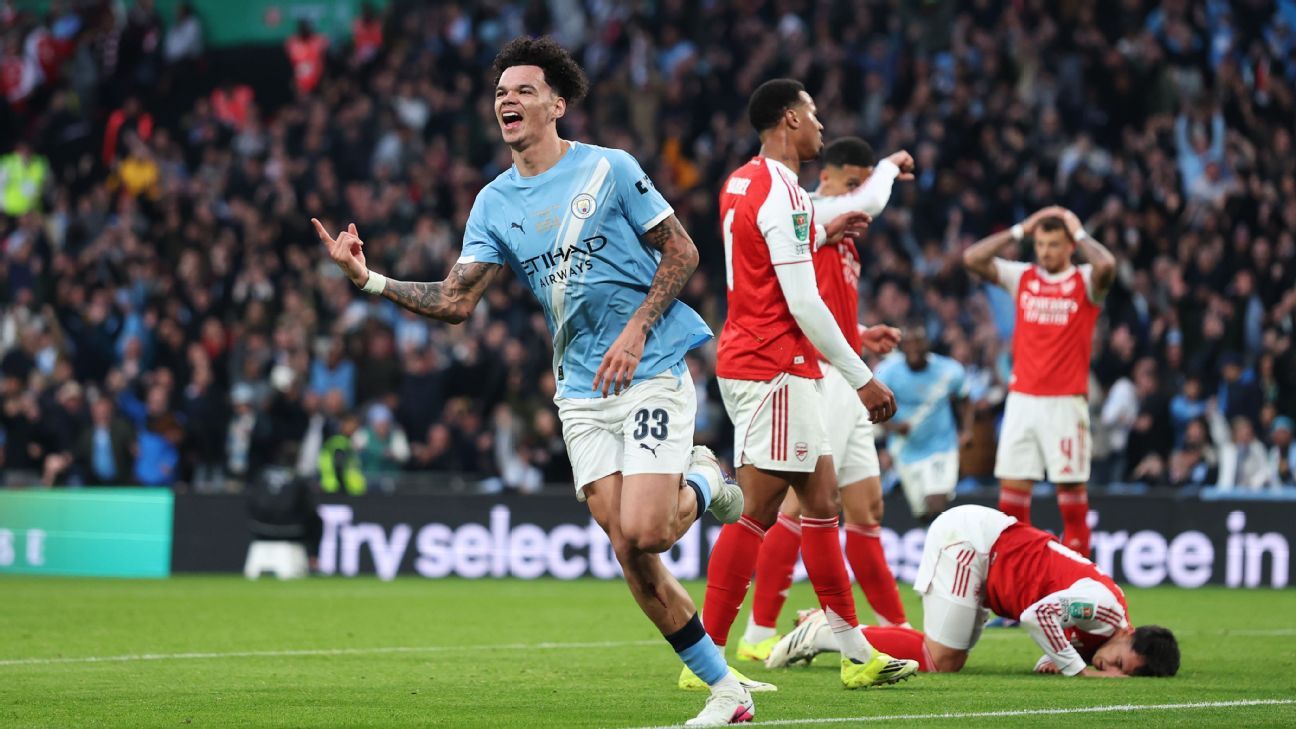
LONDON — A second-half brace from Nico O’Reilly ensured Manchester City beat Arsenal 2-0 in Sunday’s Carabao Cup final to earn Pep Guardiola’s 19th trophy in charge of the club.
After a cagey opening 45 minutes of few chances at Wembley, Man City upped the tempo and scored on the hour mark after a bad mistake from Gunners stand-in goalkeeper Kepa Arrizabalaga. Kepa could only get his fingertips to Rayan Cherki‘s cross and O’Reilly beat Martín Zubimendi to the loose ball for a simple close-range header.
City doubled their lead four minutes later as Cherki releases Matheus Nunes and his cross found O’Reilly in a similar position to score.
With the result, Arsenal’s hopes of an unprecedented quadruple are over and their six-year wait for a trophy goes on. Meanwhile, City will hope this victory can inspire them to overhaul a nine-point deficit to the Gunners in the Premier League. — James Olley
– Premier League Power Rankings: Why Arsenal dropped below Man City
– No plan, no fight: Spurs near relegation after limp loss to Forest
– UWCL quarterfinal predictions: Will Arsenal beat Chelsea?
Passive Arsenal’s trophy drought continues
Arsenal have occupied a curious position for a while: they were in the hunt for a Quadruple while also facing questions over their ability to win any silverware at all.
The Gunners’ last trophy was the 2020 FA Cup but manager Mikel Arteta’s transformational job in the interim has positioned them on the brink of greatness. After three consecutive second-place finishes in the Premier League, the one remaining ask of them — and it is a big one — is this: can they get over the line and win?
The answer here at Wembley, yet again, was no. They ultimately paid the price for being too passive, concerned primarily with keeping City out rather than injecting enough risk in their play to create chances.
After an opening salvo, Arsenal sat deep and struggled to exert any sustained pressure, and their second-half showing was alarmingly underwhelming. Yet, they have a healthy nine-point lead at the top of the table, an inviting Champions League quarterfinal tie against Sporting Lisbon and an FA Cup quarter-final at Championship side Southampton.
Their season could still be spectacular. But trophies don’t often come to you — you tend to have to reach out and grab them. Arsenal’s ability to do that is still in doubt. — Olley
Man City put Arsenal on notice in Premier League race
Speaking at his pre-match news conference on Friday, Guardiola was reluctant to make any link between possible victory over Arsenal in the final having an impact in the title race.
“We could play good in the final and then bad in the league,” was his conclusion.
It’s a fair point, but one which ignores the nerves in Arsenal’s fanbase as they chase a first Premier League title in more than 20 years. Nine points clear, it’s theirs to lose. But City have a game in hand and Arsenal still have to travel to the Etihad in April. One slip up from Arteta’s team and it’s game on.
There were no league points on offer at Wembley, but there will be plenty of Arsenal fans heading home after the game nervous about what’s to come over the next few weeks.
The question all season has been about whether they have the mentality to get over the line when it really matters. In an age driven by data and statistics, it’s impossible to quantify what losing a cup final to City will do to their confidence.
It’s something that will only be answered on the pitch, starting with their next league game against Bournemouth at the Emirates on April 11. — Rob Dawson
O’Reilly the face of Man City’s new era
For Bernardo Silva, this was a fifth Carabao Cup final win. But for others, including match-winner O’Reilly, it was a first medal in City colours. Siva is one of the last remaining players of the treble-winning 2022-23 team. He’s likely to leave in the summer — possibly with Guardiola.
City’s new team has already started to evolve around him, built around younger players like Marc Guéhi, Antoine Semenyo and Rayan Cherki. O’Reilly, a graduate of the club’s academy, is another important piece.
He turned 21 the day before the Carabao Cup final and could yet have another decade in the first-team. He started at left-back against Arsenal — a position he could fill for England at the World Cup — but it’s likely that eventually nail down a place in midfield, the position he played regularly as he came through the ranks.
Wherever he plays, O’Reilly will become one of the faces of City’s new era. One without Guardiola or long-serving stalwarts like Silva. Depending on the next two months play out, this could end up being Guardiola’s last trophy at City. It’s likely to be the first of many for O’Reilly. — Dawson
Backup goalkeepers help decide the Carabao Cup
Neither team fielded their first-choice goalkeeper here. Guardiola confirmed on Friday that James Trafford would start for City while Arteta admitted he had made his decision but did not publicly state Kepa would play.
The pair could not have had more contrasting fortunes. While Trafford made a superb triple save from Kai Havertz and Bukayo Saka (twice) in the seventh minute to stifle Arsenal’s positive start, Kepa made the mistake which turned a tight contest in City’s favour. The Spaniard could only get his fingertips to Rayan Cherki’s 60th-minute cross, taking all the pace off the ball as it dropped behind him, where O’Reilly stooped to head in.
Kepa’s complicated relationship with this fixture continues: he sensationally refused to be substituted when Chelsea lost the 2019 final to City and then missed in the shootout as the Blues were beaten by Liverpool on penalties three years later.
Kepa started every game in this competition and the decision to continue was perfectly logical in theory but David Raya is one of the best in the world these days and leaving him out may be a source of regret for Arteta. Trafford is likely to leave City after joining last summer expecting a prominent role, only for Gianluigi Donnarumma to join afterwards and usurp him. His time at City may be short but he played a key role in having something to show for it. — Olley
Haaland still in search of his goal in a final
There were questions but to Guardiola earlier in the season — when Erling Haaland was banging in goals every week — about whether City were too reliant on their Norwegian striker.
Well Haaland drew another blank at Wembley and yet Guardiola’s team still found a way to win. Haaland has looked short of his best for a while now and it continued against Arsenal. He hasn’t scored in a final since the 2021 German cup final when he was playing for Borussia Dortmund.
In the end it didn’t matter. O’Reilly popped up from left-back to score two opportunistic headers in the space of four second half minutes and it was enough to win.
It earned O’Reilly the man-of-the-match award, but it could have quite easily gone to Cherki. The Frenchman was involved in both goals as he buzzed around Arsenal’s box. In a tight game decided by fine margins, he was one of the few players who looked like he had enough space to create genuine chances.
He’s having an impressive first season at City following his summer move from Lyon and he’s capped it with at least one trophy. There’s far more to come from a young player with a very high ceiling. — Dawson

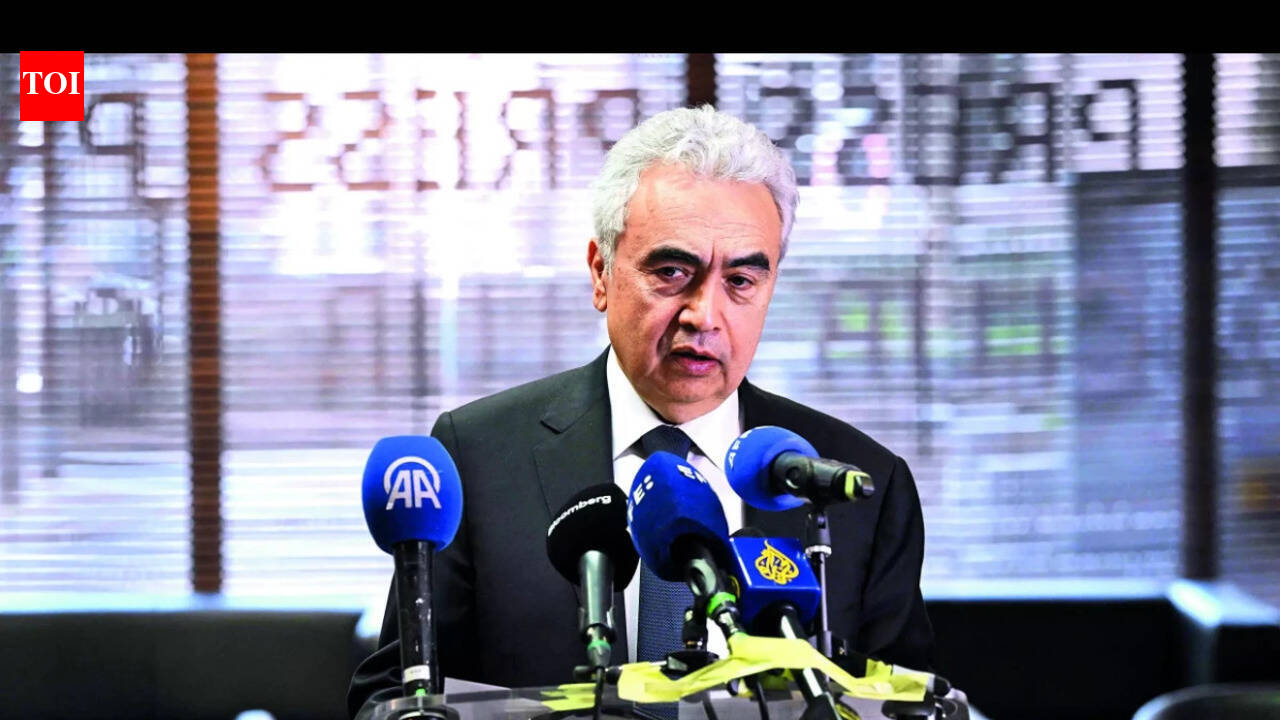
‘Crisis worse than two 1970s oil shocks put together’: IEA chief’s big warning on Strait of Hormuz – The Times of India

Nation marks Pakistan Day without parade amid Middle East-linked austerity measures

EU regulatory tsunami hits war-distracted textile industry now

Tips and Advice for Buying Used or Refurbished Electronics

UAE savings strategies 2026 explained: Best apps, tools, budget rules and smart money hacks to beat rising cost of living in emirates – The Times of India

Iran threatens US-linked oil facilities after Kharg Island bombed

-
 Tech1 week ago
Tips and Advice for Buying Used or Refurbished Electronics
-
Business1 week ago
UAE savings strategies 2026 explained: Best apps, tools, budget rules and smart money hacks to beat rising cost of living in emirates – The Times of India
-
 Politics1 week ago
Iran threatens US-linked oil facilities after Kharg Island bombed
-

 Entertainment1 week ago
Strategic oil stocks to be released ‘immediately’ in Asia and Oceania: IEA
-

 Entertainment1 week ago
Iran at war
-

 Sports1 week ago
Japan suffers shocking collapse to Venezuela in World Baseball Classic
-

 Politics1 week ago
How can US get out of Iran war?
-

 Sports1 week ago
College Basketball Invitational abruptly cancels 2026 tournament