

Business
UAE leaves OPEC and OPEC+ in huge blow to global oil producers’ group | The Express Tribune

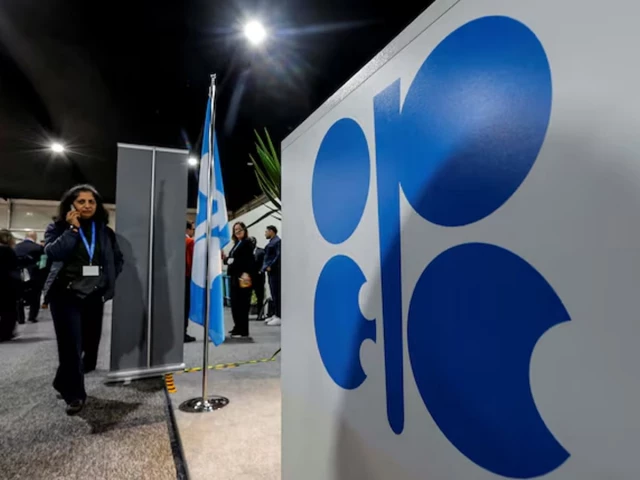
The stunning loss of the longstanding OPEC member could create disarray and weaken the group
A woman passes by a logo of Organization of the Petroleum Exporting Countries (OPEC) during the United Nations climate change conference COP29, in Baku, Azerbaijan November 13, 2024. Photo: Reuters
The United Arab Emirates said on Tuesday it quit the Organisation of the Petroleum Exporting Countries (OPEC) and OPEC+, dealing a heavy blow to the oil-exporting groups and their de facto leader, Saudi Arabia, at a time when the Iran war has caused a historic energy shock and unsettled the global economy.
The stunning loss of the UAE, a longstanding OPEC member, could create disarray and weaken the group, which has usually sought to present a united front despite internal disagreements over issues ranging from geopolitics to production quotas.
The UAE said it would withdraw to focus on “national interests”, a statement carried by the official WAM news agency said.
The UAE has been an OPEC member through the emirate of Abu Dhabi since 1967, four years before the former British protectorate became a country. The last OPEC member to withdraw from the cartel was Angola in 2024.
“This decision reflects the UAE’s long-term strategic and economic vision and evolving energy profile,” the UAE statement said.
“During our time in the organisation, we made significant contributions and even greater sacrifices for the benefit of all,” it added.
“However, the time has come to focus our efforts on what our national interest dictates.”
UAE Energy Minister Suhail Mohamed al-Mazrouei told Reuters the decision was taken after a careful look at the regional power’s energy strategies.
Asked whether the UAE consulted with Saudi Arabia, he said the UAE did not raise the issue with any other country.
“This is a policy decision, it has been done after a careful look at current and future policies related to level of production,” said the energy minister.
OPEC Gulf producers have already been struggling to ship exports through the Strait of Hormuz, a narrow chokepoint between Iran and Oman through which a fifth of the world’s crude oil and liquefied natural gas normally passes, because of Iranian threats and attacks against vessels.
Mazrouei said the move, in which the UAE will also leave the OPEC+ grouping, would not have a huge impact on the market because of the situation in the strait.
The UAE’s exit from OPEC represents a win for United States President Donald Trump, who, in a 2018 address to the UN General Assembly, accused the organisation of “ripping off the rest of the world” by inflating oil prices.
Trump has also linked US military support for the Gulf with oil prices, saying that while the US defends OPEC members, they “exploit this by imposing high oil prices”.
The move came after the UAE, a regional business hub and one of Washington’s most important allies, criticised fellow Arab states for not doing enough to protect it from numerous Iranian attacks during the war.
Anwar Gargash, the diplomatic adviser for the UAE president, criticised the Arab and Gulf response to the Iranian attacks in a session at the Gulf Influencers Forum on Monday.
“The Gulf Cooperation Council countries supported each other logistically, but politically and militarily, I think their position has been the weakest historically,” Gargash said.
“I expect this weak stance from the Arab League and I am not surprised by it, but I haven’t expected it from the [Gulf] Cooperation Council and I am surprised by it,” he said.
Mazrouei noted the UAE has been a member of OPEC and OPEC+ for a long time, but he said the world would demand more energy, suggesting his country’s move will help meet those needs.
The UAE’s exit comes as global spare capacity hovers at historically low levels, leaving the oil market increasingly tight.
Operating outside the producer group allows the UAE to fully leverage its position as a supplier of some of the world’s lowest-cost and lowest-carbon barrels.
Jorge Leon, an analyst at Rystad Energy, said its withdrawal may not immediately impact oil markets while Hormuz shipments remain on hold.
But the UAE will now be free to raise production, “raising broader questions about the sustainability of Saudi Arabia’s role as the market’s central stabiliser — and pointing to a potentially more volatile oil market as OPEC’s capacity to smooth supply imbalances diminishes”.
Jamie Ingram, managing editor for the Middle East Economic Survey, posted that OPEC was losing 13% of its production capacity with the UAE’s departure, citing the International Energy Agency.
Founded in 1960, the 12-member OPEC cartel in 2016 partnered up with 10 other producers to form OPEC+ to gain more clout.
The Vienna-based group drew international attention in 1973, when it imposed an oil embargo against Israel’s allies in the midst of the Yom Kippur War, triggering the first oil crisis.
Within just a few months, prices quadrupled, highlighting the cartel’s dominance.
Faced with rising competitors in the 1980s, it introduced the famous quota system that enabled it to exert more control over the market.
This strategy meant the group fared relatively well during the 2008 financial crisis and the price shock in the wake of the Covid pandemic, despite increased internal tensions.




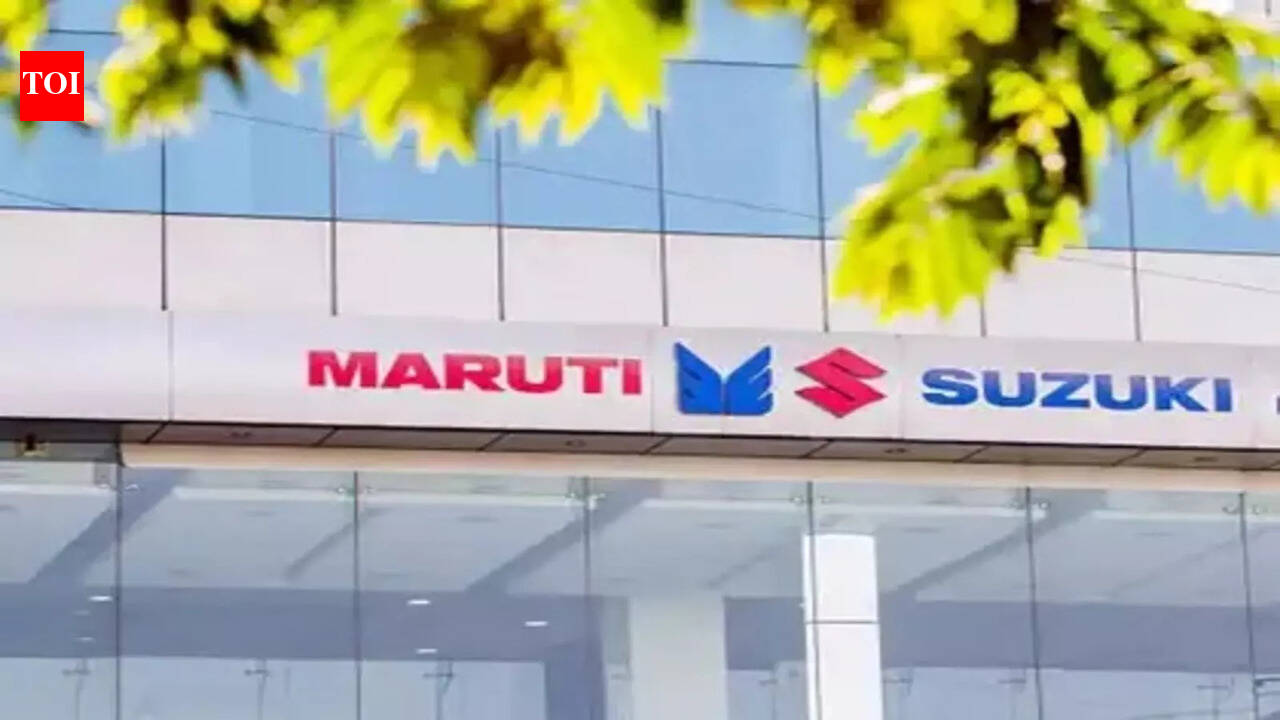
New Delhi: Maruti Suzuki had a record year in 2025-26 in terms of revenue and sales, but rising costs took a bite out of profits. The automaker posted consolidated revenue of over Rs 1.8 lakh crore, up 19.9% from the previous year, with total sales of 24.2 lakh vehicles. Net profit, however, barely moved – rising 1.2% to Rs 14,680 crore – as higher material, employee and depreciation costs ate into margins.The March quarter told a similar story: Revenue jumped 28.6% to Rs 52,462 crore, but net profit slipped 6.4% to Rs 3,659 crore.R C Bhargava, chairman, Maruti Suzuki India, said the auto industry is back in a growth phase, helped by stronger consumer demand and govt support, including lower taxes on small cars. He said Maruti expects to roll out about 2.5 lakh more vehicles this year as supply bottlenecks ease and new capacity comes online. The bigger constraint right now, he said, is not whether people want to buy cars but how many the company can actually make. Maruti is adding new production lines that will bring roughly 5 lakh additional units of annual capacity this year.
Several warning lights are flashing that have some wondering whether we are in the foothills of another financial crisis.
Source link

The Middle East energy shock could wipe around £35 billion from the UK economy over the next two years in a “best-case” scenario, an economic think tank has warned.
The National Institute of Economic and Social Research (Niesr) said that a more protracted crisis in the Middle East could see the UK enter a recession in the second half this year.
The group’s latest quarterly economic projections pointed to an increasingly gloomy outlook as the war between US-Israeli and Iranian forces weighs on economies globally, with the UK set for slower growth and rising inflation.
It indicated that the Bank of England’s committee rate-setters are likely to increase interest rates this summer as a result, with the potential for up to six more hikes in a more severe scenario.
On Thursday, the Bank’s Monetary Policy Committee will vote on whether to keep interest rates at their current level of 3.75%.
Niesr said it expects interest rates to be held at this meeting, but predicted they will be increased to 4% in July – staying at this level through the rest of the year.
However, it said a severe scenario, which would see further inflationary pressure from a continuing conflict, could result in rates rising as high as 5.25%.
In its best-case scenario which would include a resolution in the Middle East this year, the organisation still pointed towards a slowdown in economic growth to 0.9% for 2026, compared with 1.4% growth in 2025.
The group said growth is likely to improve marginally to 1% in 2027.
In its previous outlook, Niesr had predicted 1.4% growth this year and 1.3% growth in 2027.
Even with a swift resolution to the conflict, Niesr said the UK economy will be around £35 billion smaller in 2026 and 2027, casting uncertainty over the Chancellor’s ambitions to grow the UK economy.
However, Niesr’s deputy director for macroeconomics Stephen Millard said an adverse situation is likely to knock around 0.4 percentage points off growth over the next two years.
The forecasts also indicated that inflation, which lifted to 3.3% last month, will slow to 2.5%.
But it is then expected to shoot higher as higher energy prices drive further inflation, with it expected to peak at 4.1% in January next year.
Niesr said it expects inflation will not drop back to the Bank of England’s 2% target rate until 2028 as a result.
Inflation is set to surpass wage growth, which is predicted to slow to 3.3% next year, putting pressure of household finances.
Growth in real personal disposable income is forecast to slow to 1% in 2026 and 0.6% in 2027, with low-income households who spend a higher proportion of their income on energy being hit the hardest.
David Aikman, Niesr director, said: “This is a serious blow to the Government’s mission to get the UK economy growing again.
“The Middle East conflict has laid bare the fact that the UK remains highly exposed to global energy shocks.
“Even if hostilities ease rapidly, higher energy prices will leave households poorer, businesses facing higher costs, and the economy materially smaller than we expected only a few months ago.”


Egypt’s SCZONE signs $16.5-mn pact with Turkish firm for RMG project

Antonio Banderas meets up with ‘lifelong friend’, ex Melanie Griffith

Trump approval rating falls to lowest of term amid cost-of-living, Iran war worries: poll

-
 Politics1 week ago
UK’s Starmer seeks to deflect blame over Mandelson appointment
-
 Business1 week ago
How Trump’s psychedelics executive order could unlock stalled cannabis reform
-

 Fashion1 week ago
UK’s Sosandar returns to profitability amid robust FY26 performance
-
 Business1 week ago
Us-India Trade Talks: US–India trade deal: Where do talks stand & what to expect – explained – The Times of India
-
 Entertainment1 week ago
Lee Anderson, Zarah Sultana kicked out of UK Parliament for calling PM ‘liar’
-
 Tech1 week ago
A Humanoid Robot Set a Half-Marathon Record in China
-

 Fashion1 week ago
India, US to resume BTA talks today
-
 Business7 days ago
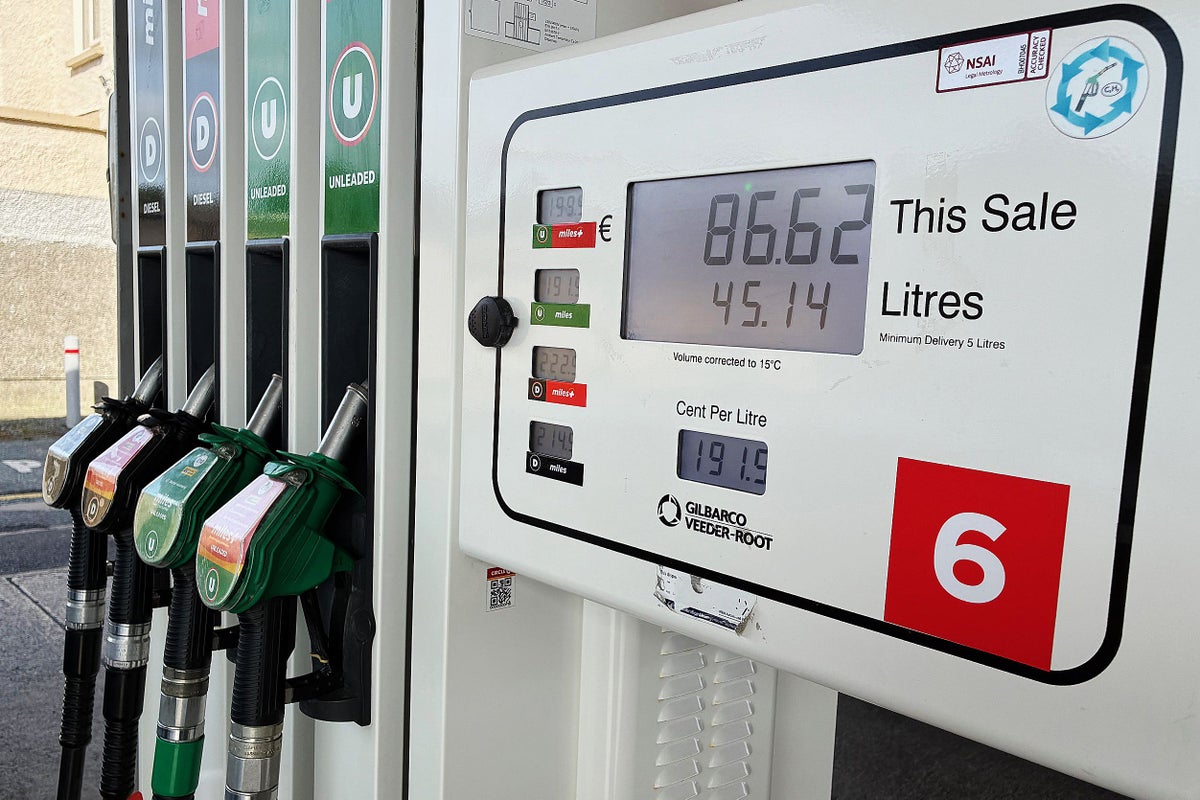
UK inflation accelerates after Iran war drives sharp rise in fuel prices