

Business
Europe seeks a pie in Reko Diq | The Express Tribune


European Investment Bank keen on investment, but seeks EU share in mineral off-take
ISLAMABAD:
The European Investment Bank on Wednesday showed interest in the multibillion-dollar Reko Diq mining project in return for securing some share of the critical resources, as Pakistan’s director general for minerals said that the claim of having $6 trillion mineral reserves was “highly exaggerated”.
“The $6 trillion is a highly exaggerated figure, which is not based on proper exploration studies, but we have vast minerals,” said Director General (Minerals) Dr Nawaz Ahmed Virk at the Ministry of Energy.
Dr Virk was speaking at a mining responsible resource partnerships for Europe and Pakistan session during the second day of the EU-Pakistan Business Forum. The $6 trillion worth of mineral reserves have been pitched by the country’s leadership as a long-term solution to Pakistan’s debt and economic problems.
He further said that contractors are also raising the issue of imposition of sales tax and withholding tax during the development phase of the Reko Diq project. Pakistan has exempted the income of the Reko Diq project from any type of taxes to make it attractive for foreign investors.
In his remarks, Dr Virk said that his ministry was working with the Finance Division on the general sales tax and the withholding taxes issue, and was hopeful that the Finance Division would agree to defer these taxes until production begins.
Marco Arena, an official of the European Investment Bank, said that his institution was keen to invest in the enabling infrastructure of the Reko Diq mines. However, he also said that the European Union should get a share of the off-take.
Also Read: Mining gains traction despite Reko Diq delays
“Of course, we don’t expect that the entire off-take goes to Europe, that’s unthinkable in an interconnected world. But having a strong connection to the European market is key, and the European Investment Bank supports the critical minerals, which would enable Europe to secure critical mineral supplies for their green transition and digital transition, which are ultimately very important for European competitiveness,” said Arena.
The EIB has recently finalised €160 million agreements with Pakistan to fund water and housing projects; it’s first in over one decade.
Marco said that the EIB commitment in Pakistan goes back a long way, but there has been a bit of a hiatus since 2015. There is a real interest in this region, from the European Commission, or the EIB, to engage with Pakistan, including in the mineral sector, he added.
The EIB official further said that engineering was the easiest part in mining, but often, the greater risks are around policies, regulations, and stability. In terms of regulation, we see the fact that regulation should be predictable, and a lot of steps have been taken by Pakistan and other countries in that direction. Also, counter enforceability is very important, and the currency risks, he added.
The evidence from mines and critical materials projects around the world shows that when these risks are actually tackled, not just on paper, but in reality, the project becomes successful, said Arena. “We try actually to invest in projects that do have and take all these issues into consideration,” he added.
Despite the country’s top priority, Barrick Gold this month paused the implementation of the Reko Diq mining project.
In a statement issued early this month, Barrick Gold said that on February 5, the company had announced that it was reviewing all aspects of the project in light of the escalation of security risks and increased security incidents.
Read More: Barrick delays Reko Diq project in Pakistan
“Following the preliminary findings of the review and the further escalation of security issues in Pakistan and the region, the Company considers it necessary to slow the development activity and continue the project review until mid-2027,” according to Barrick Gold.
It added that the continued review will allow the company to assess, in a comprehensive manner, the evolving security situation, capital requirements, project financing, project scope, and timeline.
While development activity will be slowed, the project will remain under active management with a reduced capital spend. According to the statement, the development of Phase 1 of the Reko Diq project was approved on this basis.
Barrick Gold said it was anticipating that there could be significant increases to the previously disclosed total estimated capital budget and timeline for the project.
The previously disclosed total estimated capital cost of Phase one was between $5.6 billion and $6 billion, exclusive of capitalisation of financing costs. The second phase cost had been estimated between $3.3 billion and $3.6 billion, exclusive of capitalisation of financing costs, with first production targeted by the end of 2028.
One of the largest undeveloped copper-gold projects in the world, Reko Diq is owned 50% by Barrick, 25% by three federal state-owned enterprises, and 25% by the government of Balochistan.










Mercedes-Benz and two other lenders are set to challenge the financial watchdog’s compensation scheme for motorists mis-sold car loans.
The Financial Conduct Authority (FCA) faces a legal battle over its redress programme, as a consumer group has also lodged an appeal.
This development follows days after several of the UK’s biggest lenders opted not to pursue similar challenges.
A spokeswoman for Mercedes-Benz said: “Given that this is subject to ongoing legal proceedings, we cannot comment further.”
The German carmaker is exposed to the car finance mis-selling saga through its financial services arm.
The FCA also confirmed that two other lenders were appealing. It did not name the firms but reports have said that Volkswagen Financial Services was one of the companies involved, according to Sky News.
A spokeswoman for the FCA said: “We have received challenges from three lenders in addition to the challenge from Consumer Voice, represented by Courmacs Legal.
“We are considering our approach and will set out more later this week.”
Earlier this week, it appeared that the watchdog had a clearer path to proceed with the compensation plans after the main industry body joined major lenders in backing out of any legal challenge.
The Finance and Leasing Association (FLA) said it had “concerns” about the programme but that it was choosing not to raise a challenge, while Santander, Barclays and Lloyds had also decided to accept the scheme as it is.
The FCA estimates that payouts are due on 12.1 million mis-sold car finance deals from an array of lenders, expected to result in compensation totalling around £7.5 billion.
The deadline for companies to lodge legal challenges to the watchdog’s scheme passed on Monday.
While the lenders are likely to be resisting the billions of pounds of compensation that they are required to pay, the FCA is also being challenged on the other side of the coin by a group representing consumers.
Consumer Voice has applied to the Upper Tribunal for a review of the scheme over concerns that it could leave millions of consumers out of pocket by several hundred pounds per claim.
The consumer group said it supports the need for an industry-wide scheme but argued that it should “fairly reflect” the harm drivers have suffered, with “properly calculated compensatory interest”.
Business
Paramount CEO David Ellison wants to release 30 films annually. History and Hollywood say it’s unrealistic

CEO of Paramount Skydance David Ellison speaks on stage during the Paramount Pictures presentation at CinemaCon at The Colosseum at Caesars Palace on April 16, 2026 in Las Vegas, Nevada.
Valerie Macon | AFP | Getty Images
Paramount CEO David Ellison is trying to do something that no other studio has done in the modern age of cinema — release 30 films annually.
Ellison once again promised this theatrical feat in front of thousands of exhibitors at CinemaCon earlier this month. Applause erupted from the crowd after he made the pronouncement.
But privately, movie theater operators have expressed concerns and skepticism about the proposed future slate of films. While a massive string of releases would help cinemas, companies doubt he will be able to follow through on the promise.
His 30-film plan would hinge on Paramount receiving regulatory approval for its proposed merger with Warner Bros. Discovery, which the latter company’s shareholders approved last week. Ellison noted that each studio would produce 15 films a year.
However, Ellison has not provided many details about those 30 releases, and it’s not clear how he would hit the ambitious goal. Representatives for Paramount did not reply to CNBC’s request for comment.
It’s unclear if all of the films would have wide releases (meaning they eventually play in at least 1,500 theaters, though the typical benchmark is 2,000). It’s also not certain whether the company will count films it distributes but doesn’t produce as part of this figure, or how many of those proposed titles will be considered tentpole blockbusters.
Movie theater operators and industry experts are skeptical that Paramount would be able to sustain a 30-film slate after the initial merger. After all, part of the consolidation process is eliminating redundancies, which inevitably leads to layoffs as well as cost-cutting measures that often result in fewer productions.
“When it comes to traditional brand-new wide release films, 30 movies a year is a lofty plan given that most distributors are releasing on average anywhere from 10 to 15 wide releases each year,” said Paul Dergarabedian, head of market trends at Comscore.
In fact, in the last 25 years, no studio has released 30 films in a single year. The combination of 20th Century Fox and Searchlight came close in 2006 when the studios had 25 wide releases, according to data from Comscore.
The data also show that when studios have merged in the past, the result has been fewer theatrical releases, not more.
Prior to acquiring 21st Century Fox and its studio assets, Disney was averaging 12 films a year dating back to 2000. Meanwhile, the combined efforts of 20th Century Fox and Searchlight averaged 16 films during that same time. Not including 2020, in which theatrical releases were impacted by pandemic-related cinema closures, Disney has averaged around 13 films a year following the 2019 merger.
The line chart shows the annual film releases by Disney and 20th Century between 2000 and 2019 ahead of the two companies’ eventual merger.
“I don’t remember any instance with consolidation where one plus one equals two,” Eric Handler, managing director and senior research analyst at Roth Capital Partners, told CNBC.
Additionally, a combined Paramount and Warner Bros. slate would face some logistical issues in placing 30 films on a 52-week calendar, as well as competition for coveted premium large format theaters.
The wider Hollywood cohort has also balked at the merger, citing similar concerns about job losses and reduced productions. More than 4,000 A-listers, including Robert De Niro, David Fincher, Pedro Pascal and Florence Pugh have signed an open letter opposing the combination of the two companies.
At least one theater operator, however, is supportive of the merger. AMC CEO Adam Aron came out in favor of Paramount’s acquisition of Warner Bros. during CinemaCon earlier this month.
“Of particular importance are David’s public commitments to expand film distribution by Paramount and Warner to at least 30 movies per year, and his vocal embrace of a 45-day exclusive theatrical window,” he wrote in a statement.
“I am confident that David Ellison is sincere as to his intentions, and truly believe that he in fact will wind up delivering on these commitments,” he added.
‘Empty seats and vacant screens’
However, Ellison’s target would not only be higher than any recent precedent — it would be significantly more.
“Historically, the max you’re seeing out of the studio is sort of 20 a year,” said Doug Creutz, senior research analyst at TD Cowen.
He noted that studios like Disney, Universal and Warner Bros. have the funds to make 30 films annually, but they don’t not only because is it not profitable to do so, but also because few studios have enough quality IP or original stories to put out in a year.
“If you had 30 good ideas, then I’d say do it, but you won’t,” he said. “Most studios don’t have 20 good ideas.”
“I think that the reality of it is that they’ll realize that, they probably realize it already, but they’re saying 30 because you’re trying to get the deal approved,” Creutz added. “I would say my guess is that there isn’t a year where Warner plus Paramount release 30 films unless the slates are already set pre-merger.”
This sentiment was repeated by industry analysts, movie theater owners and even rival studios during private conversations CNBC had at CinemaCon earlier this month. More so, there was an overwhelming sense of tension between studios and cinema operators, particularly when it came to the number of theatrical titles being offered up.
Theater companies would welcome more quality releases, but there has been a shortage of them following the Covid pandemic.
“I tell people that the only thing that exhibition has are empty seats and vacant screens until the studios step up and give us something to play,” one veteran movie theater executive, who requested anonymity to speak candidly, told CNBC. “We have no other alternative.”
The executive noted that re-released films, live sports and concert screenings “don’t pay the bills,” and even concession sales aren’t driving the same kind of revenue that they used to.
“We can’t survive without movies,” they said.
Movie theaters have struggled in the wake of the pandemic because of a lack of titles. Production was slowed due to Covid-related shutdowns and exacerbated when both the writers and actors guilds went on strike just a few years later. At the same time, streaming has become more prominent and studios are producing fewer titles for theatrical release.
Fewer films has led to lower domestic box office hauls. Prior to the pandemic, annual ticket sales routinely topped $11 billion in the U.S. and Canada, but in the years after, the combined efforts of the studios have yet to surpass $10 billion.
This year could break that trend, as the slate of films is significantly larger. However, if a merger does take place, the expectation is that the release schedule will once again shrink.
“We know what’s going to happen,” the veteran theater executive said. “We know that when Paramount eats Warner, it’s going to be exactly like Disney-Fox. There is no difference.”
Other theater operators echoed these sentiments when speaking anonymously to CNBC. They, too, questioned how the gaps in the slate would be filled if Paramount can’t deliver on its 30-film plan.
Amazon MGM has already stepped up to the plate in recent years and has promised at least 15 theatrical releases per year starting in 2027. The studio is on pace to have 13 releases in 2026. One of its recent films, “Project Hail Mary,” which arrived in theaters in March, has set box office records for the studio and delivered audiences to theaters.
However, Amazon’s 15-film annual addition to the overall slate was already replacing the films lost from the Disney-Fox merger. It wouldn’t be enough to also account for any losses in titles from a merger between Paramount and Warner Bros.
“It’s not great for exhibition,” the cinema veteran said. “It’s a lose-lose proposition.”

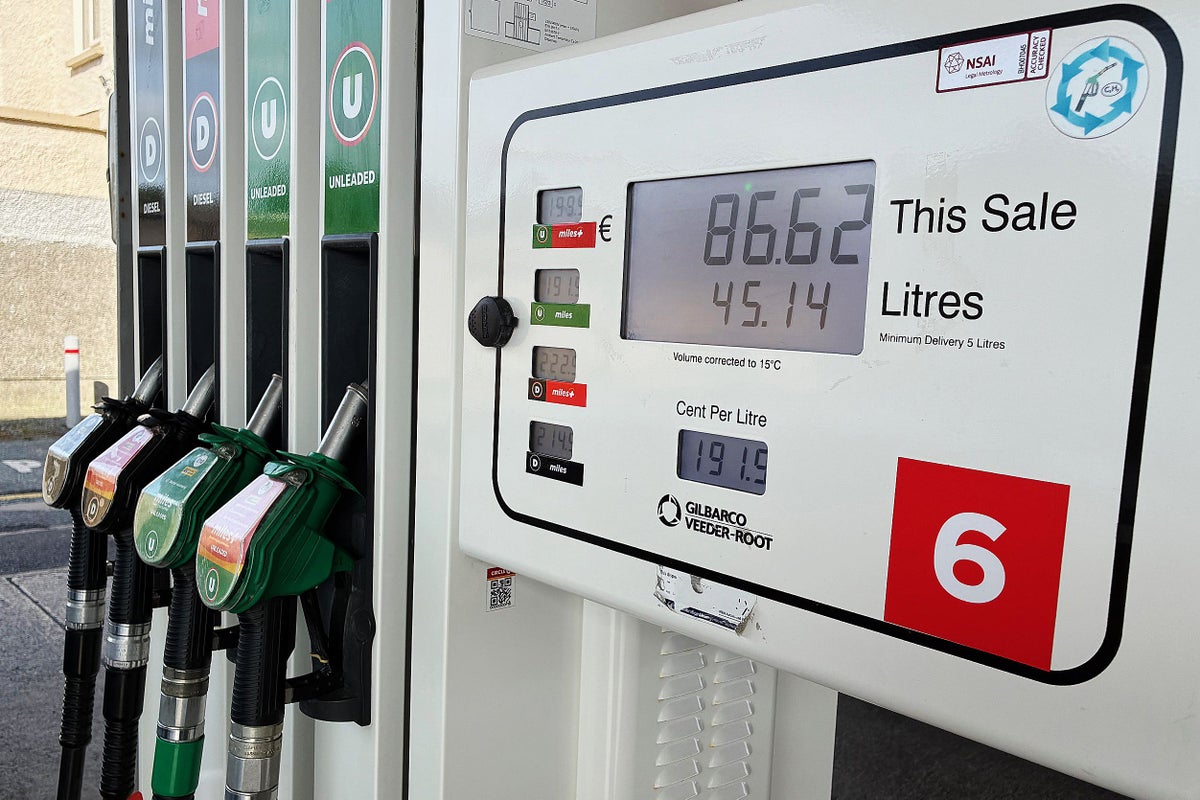
Lindsay James, investment strategist at Quilter, said that the impact of the war so far in the UK has been largely limited to higher petrol and diesel prices, but “every day that passes without a resumption of supply sees the risk of physical shortages and steeper price rises on a range of goods increasing”.


A Female Looksmaxxer Is Suing Clavicular for Alleged Battery

Chinese fighter jet’s firm sales jump after Pakistan-India standoff: report
Mercedes-Benz among firms to challenge car finance compensation scheme

-

 Politics1 week ago
UK’s Starmer seeks to deflect blame over Mandelson appointment
-
 Business1 week ago
Us-India Trade Talks: US–India trade deal: Where do talks stand & what to expect – explained – The Times of India
-

 Fashion1 week ago
India, US to resume BTA talks today
-

 Tech1 week ago
A Humanoid Robot Set a Half-Marathon Record in China
-

 Fashion1 week ago
Global energy growth slows to 1.3% in 2025: Report
-
 Business1 week ago
UK inflation accelerates after Iran war drives sharp rise in fuel prices
-

 Entertainment1 week ago
Christina Applegate exhibits strength amid ‘health issues’
-

 Tech1 week ago
Blackbox replaces two racks of HPE storage with 8U of Everpure | Computer Weekly