

Business
Starbucks union sent the company a proposed contract. Here’s what baristas want


Starbucks union members and their supporters, including baristas who have just walked off the job, effectively closing a local branch, picket in front of the store, Feb. 28, 2025 in New York City.
Andrew Lichtenstein | Corbis News | Getty Images
Starbucks Workers United presented the company with a comprehensive proposed contract last month, the union said on a call with investors Friday, as baristas attempt to strike their first labor agreement with the coffee giant.
Here’s what baristas asked for in that proposal:
- Protections for union baristas against discrimination, unjust firings and temporary or permanent store closures.
- Starting wage floor of $17 per hour, down from its prior proposal of $20 an hour but still above the company’s current starting wage of $15.25 to $16 an hour in 43 states.
- Annual raises of 4%.
- A process for baristas, management and union representatives to resolve workforce grievances.
- A dress code endorsed by the union.
- Requirement for at least three workers on the floor at all times and enforceable staffing and safety protections.
- A mandate to offer open hours to existing employees before hiring new baristas.
- Resolution of hundreds of outstanding unfair labor practice charges.
The union said Starbucks has not yet responded to the substance of the proposal.
The coffee giant told CNBC that it would like to restart talks with Workers United as soon as this month.
“Starbucks has proposed to resume in-person bargaining with Workers United on March 30 and to remain available for continued negotiations throughout April,” Starbucks spokesperson Jaci Anderson said in a statement.
Workers United represents about 6% of Starbucks’ company-owned locations in the U.S., according to regulatory filings.
The announcement comes months after bargaining talks between the two parties hit a wall. Starbucks and the union last held formal negotiations in December 2024. Several months later, the two parties met for mediation, but hundreds of barista delegates voted down the economic package proposed by the company in April.
Over the holiday season, baristas in more than 40 cities held an open-ended strike that stretched on for several weeks. The work stoppage led to dozens of temporary store closures for the coffee chain during its busiest time, although the company said it didn’t materially affect its business.
Starbucks’ strained relations with its baristas will also likely garner attention at its annual meeting for shareholders, scheduled to be held on March 25.
A group of investors led by union-affiliated SOC Investment Group is urging shareholders to vote against the reelection of directors Jørgen Vig Knudstorp and Beth Ford, citing their oversight roles tied to the company’s labor relations. Proxy advisory firm Glass Lewis has recommended voting against the reelection of Ford, chair of the nominating and corporate governance committee.
“The Starbucks Board has the necessary skills and experience to effectively oversee our strategy, including human capital management, which is vital to our ability to drive growth and deliver for our customers,” Anderson said in a statement to CNBC.
The prolonged battle between the company and its baristas poses a potential roadblock to Starbucks as it attempts a turnaround of its sluggish U.S. business. During the company’s holiday quarter, its store traffic rose for the first time in two years.
In Starbucks’ most recent annual filing, the company noted potential risks ahead, like further work stoppages or harm to its reputation and brand.



Business
Paramount CEO David Ellison wants to release 30 films annually. History and Hollywood say it’s unrealistic

CEO of Paramount Skydance David Ellison speaks on stage during the Paramount Pictures presentation at CinemaCon at The Colosseum at Caesars Palace on April 16, 2026 in Las Vegas, Nevada.
Valerie Macon | AFP | Getty Images
Paramount CEO David Ellison is trying to do something that no other studio has done in the modern age of cinema — release 30 films annually.
Ellison once again promised this theatrical feat in front of thousands of exhibitors at CinemaCon earlier this month. Applause erupted from the crowd after he made the pronouncement.
But privately, movie theater operators have expressed concerns and skepticism about the proposed future slate of films. While a massive string of releases would help cinemas, companies doubt he will be able to follow through on the promise.
His 30-film plan would hinge on Paramount receiving regulatory approval for its proposed merger with Warner Bros. Discovery, which the latter company’s shareholders approved last week. Ellison noted that each studio would produce 15 films a year.
However, Ellison has not provided many details about those 30 releases, and it’s not clear how he would hit the ambitious goal. Representatives for Paramount did not reply to CNBC’s request for comment.
It’s unclear if all of the films would have wide releases (meaning they eventually play in at least 1,500 theaters, though the typical benchmark is 2,000). It’s also not certain whether the company will count films it distributes but doesn’t produce as part of this figure, or how many of those proposed titles will be considered tentpole blockbusters.
Movie theater operators and industry experts are skeptical that Paramount would be able to sustain a 30-film slate after the initial merger. After all, part of the consolidation process is eliminating redundancies, which inevitably leads to layoffs as well as cost-cutting measures that often result in fewer productions.
“When it comes to traditional brand-new wide release films, 30 movies a year is a lofty plan given that most distributors are releasing on average anywhere from 10 to 15 wide releases each year,” said Paul Dergarabedian, head of market trends at Comscore.
In fact, in the last 25 years, no studio has released 30 films in a single year. The combination of 20th Century Fox and Searchlight came close in 2006 when the studios had 25 wide releases, according to data from Comscore.
The data also show that when studios have merged in the past, the result has been fewer theatrical releases, not more.
Prior to acquiring 21st Century Fox and its studio assets, Disney was averaging 12 films a year dating back to 2000. Meanwhile, the combined efforts of 20th Century Fox and Searchlight averaged 16 films during that same time. Not including 2020, in which theatrical releases were impacted by pandemic-related cinema closures, Disney has averaged around 13 films a year following the 2019 merger.
The line chart shows the annual film releases by Disney and 20th Century between 2000 and 2019 ahead of the two companies’ eventual merger.
“I don’t remember any instance with consolidation where one plus one equals two,” Eric Handler, managing director and senior research analyst at Roth Capital Partners, told CNBC.
Additionally, a combined Paramount and Warner Bros. slate would face some logistical issues in placing 30 films on a 52-week calendar, as well as competition for coveted premium large format theaters.
The wider Hollywood cohort has also balked at the merger, citing similar concerns about job losses and reduced productions. More than 4,000 A-listers, including Robert De Niro, David Fincher, Pedro Pascal and Florence Pugh have signed an open letter opposing the combination of the two companies.
At least one theater operator, however, is supportive of the merger. AMC CEO Adam Aron came out in favor of Paramount’s acquisition of Warner Bros. during CinemaCon earlier this month.
“Of particular importance are David’s public commitments to expand film distribution by Paramount and Warner to at least 30 movies per year, and his vocal embrace of a 45-day exclusive theatrical window,” he wrote in a statement.
“I am confident that David Ellison is sincere as to his intentions, and truly believe that he in fact will wind up delivering on these commitments,” he added.
‘Empty seats and vacant screens’
However, Ellison’s target would not only be higher than any recent precedent — it would be significantly more.
“Historically, the max you’re seeing out of the studio is sort of 20 a year,” said Doug Creutz, senior research analyst at TD Cowen.
He noted that studios like Disney, Universal and Warner Bros. have the funds to make 30 films annually, but they don’t not only because is it not profitable to do so, but also because few studios have enough quality IP or original stories to put out in a year.
“If you had 30 good ideas, then I’d say do it, but you won’t,” he said. “Most studios don’t have 20 good ideas.”
“I think that the reality of it is that they’ll realize that, they probably realize it already, but they’re saying 30 because you’re trying to get the deal approved,” Creutz added. “I would say my guess is that there isn’t a year where Warner plus Paramount release 30 films unless the slates are already set pre-merger.”
This sentiment was repeated by industry analysts, movie theater owners and even rival studios during private conversations CNBC had at CinemaCon earlier this month. More so, there was an overwhelming sense of tension between studios and cinema operators, particularly when it came to the number of theatrical titles being offered up.
Theater companies would welcome more quality releases, but there has been a shortage of them following the Covid pandemic.
“I tell people that the only thing that exhibition has are empty seats and vacant screens until the studios step up and give us something to play,” one veteran movie theater executive, who requested anonymity to speak candidly, told CNBC. “We have no other alternative.”
The executive noted that re-released films, live sports and concert screenings “don’t pay the bills,” and even concession sales aren’t driving the same kind of revenue that they used to.
“We can’t survive without movies,” they said.
Movie theaters have struggled in the wake of the pandemic because of a lack of titles. Production was slowed due to Covid-related shutdowns and exacerbated when both the writers and actors guilds went on strike just a few years later. At the same time, streaming has become more prominent and studios are producing fewer titles for theatrical release.
Fewer films has led to lower domestic box office hauls. Prior to the pandemic, annual ticket sales routinely topped $11 billion in the U.S. and Canada, but in the years after, the combined efforts of the studios have yet to surpass $10 billion.
This year could break that trend, as the slate of films is significantly larger. However, if a merger does take place, the expectation is that the release schedule will once again shrink.
“We know what’s going to happen,” the veteran theater executive said. “We know that when Paramount eats Warner, it’s going to be exactly like Disney-Fox. There is no difference.”
Other theater operators echoed these sentiments when speaking anonymously to CNBC. They, too, questioned how the gaps in the slate would be filled if Paramount can’t deliver on its 30-film plan.
Amazon MGM has already stepped up to the plate in recent years and has promised at least 15 theatrical releases per year starting in 2027. The studio is on pace to have 13 releases in 2026. One of its recent films, “Project Hail Mary,” which arrived in theaters in March, has set box office records for the studio and delivered audiences to theaters.
However, Amazon’s 15-film annual addition to the overall slate was already replacing the films lost from the Disney-Fox merger. It wouldn’t be enough to also account for any losses in titles from a merger between Paramount and Warner Bros.
“It’s not great for exhibition,” the cinema veteran said. “It’s a lose-lose proposition.”

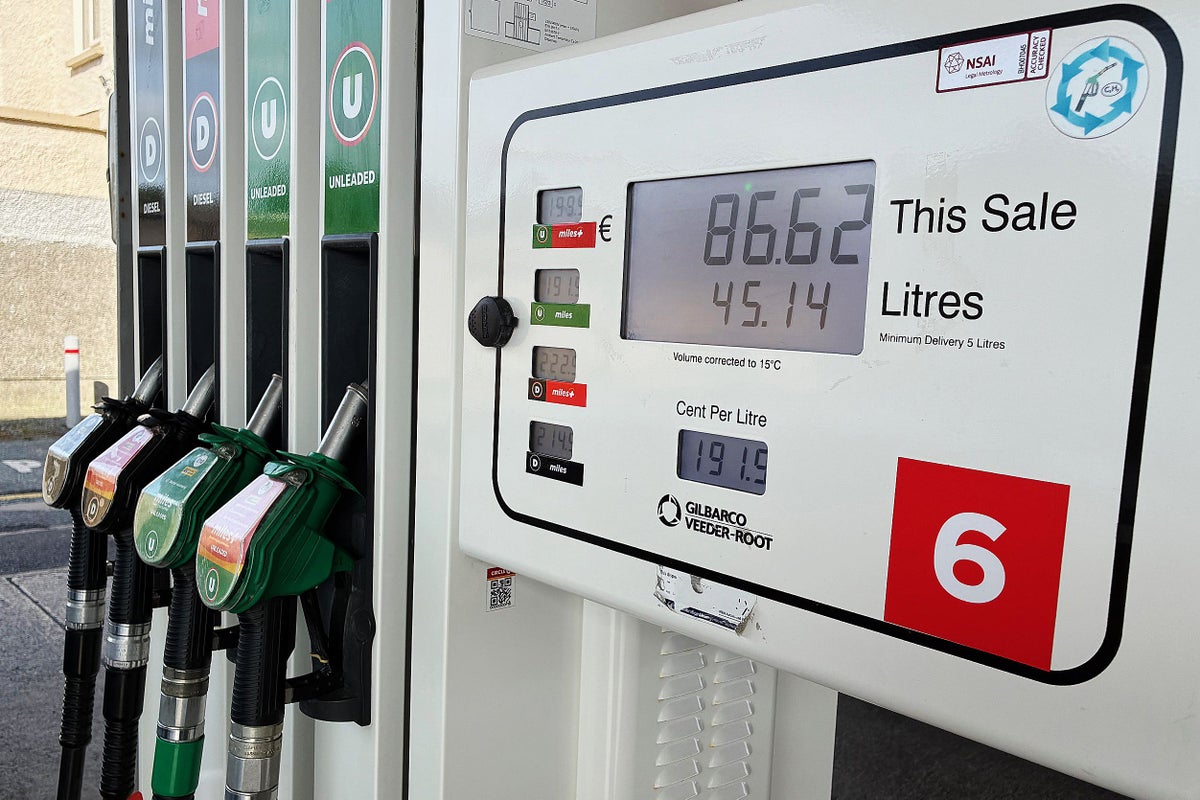
Lindsay James, investment strategist at Quilter, said that the impact of the war so far in the UK has been largely limited to higher petrol and diesel prices, but “every day that passes without a resumption of supply sees the risk of physical shortages and steeper price rises on a range of goods increasing”.

Yum Brands on Wednesday reported quarterly earnings and revenue that topped analysts’ expectations, fueled by another strong quarter for Taco Bell.
Here’s what the company reported compared with what Wall Street was expecting, based on a survey of analysts by LSEG:
- Earnings per share: $1.50 adjusted vs. $1.38 expected
- Revenue: $2.06 billion vs. $2.04 billion expected
Yum reported first-quarter net income of $432 million, or $1.55 per share, up from $253 million, or 90 cents per share, a year earlier.
Excluding charges related to its strategic review of Pizza Hut and other items, the company earned $1.50 per share.
Net sales climbed 15% to $2.06 billion, lifted by higher revenue from company-owned restaurants. Last year, the company bought more than 100 Taco Bell locations across the Southeast with a goal of accelerating development and profitability.
Across Yum, global same-store sales rose 3%, driven by growth at Taco Bell, the gem of the company’s portfolio.
Taco Bell’s same-store sales increased 8%, topping Wall Street’s estimates of 5.6% growth, according to a survey by StreetAccount.
“Taco Bell delivered an outstanding 8% same-store sales growth, meaningfully ahead of the [quick-service restaurant] industry, building off a very strong Q1 same-store sales growth rate in 2025,” Yum CEO Chris Turner said in a statement.
Yum also plans to expand its use of artificial intelligence-driven A/B testing for Taco Bell’s drive-thru lanes, following a successful pilot in the first quarter. The technology lets Taco Bell change the layout, visuals and content shown to cars in the drive-thru lanes, allowing the chain to learn quickly about what messages resonate more with customers.
“If I think about our philosophy as it relates to AI, first and foremost, we want to use AI to drive growth,” Turner said on the company’s earnings conference call.
KFC reported same-store sales growth of 2%, shy of the 2.5% increase projected by StreetAccount. While the fried chicken chain’s international business is considered one of Yum’s “growth engines,” its U.S. business has struggled in recent years, buckling under increased competition and consumers’ value expectations.
KFC U.S. system sales fell 2% during the first quarter. Yum is no longer sharing the market’s quarterly same-store sales, signaling that the chain’s U.S. business is now considered immaterial to the company’s broader results. Its home market is now KFC’s third-largest region by system sales, falling behind China and Europe. However, Turner said that KFC U.S. is still “strategically important” for Yum.
To win back customers, KFC is taking some cues from Taco Bell’s successful playbook by leaning into innovation and affordability. It’s also been expanding a spinoff chain that focuses on chicken tenders called Saucy, which provides the broader KFC business with ideas about what menu items are resonating with diners.
Similarly, Pizza Hut saw stronger results outside of its home market. The struggling pizza chain reported flat same-store sales globally, although its international business saw same-store sales rise 2% in the quarter. Its U.S. same-store sales shrank 4%.
Analysts were projecting global same-store sales declines of 0.7% for Pizza Hut, according to StreetAccount.
In November, Yum said it would explore strategic options for the chain, which has long been the laggard of its portfolio. Several private equity firms, including Apollo Global Management and Sycamore Partners, are among the potential buyers vying for Pizza Hut, Reuters reported earlier this month.
While Yum did not provide an update on the strategic review on Wednesday, its earnings release did include a bullet point showing the company’s system sales, unit count and core operating profit excluding Pizza Hut.

Paramount CEO David Ellison wants to release 30 films annually. History and Hollywood say it’s unrealistic

Egypt’s SCZONE signs $8-mn Turkish textile project in Qantara West

Olivia Wilde recent appearance worries fans

-

 Politics1 week ago
UK’s Starmer seeks to deflect blame over Mandelson appointment
-
 Business1 week ago
How Trump’s psychedelics executive order could unlock stalled cannabis reform
-

 Entertainment1 week ago
Lee Anderson, Zarah Sultana kicked out of UK Parliament for calling PM ‘liar’
-
 Business1 week ago
Us-India Trade Talks: US–India trade deal: Where do talks stand & what to expect – explained – The Times of India
-

 Tech1 week ago
A Humanoid Robot Set a Half-Marathon Record in China
-

 Fashion1 week ago
India, US to resume BTA talks today
-
 Business1 week ago
UK inflation accelerates after Iran war drives sharp rise in fuel prices
-

 Fashion1 week ago
Global energy growth slows to 1.3% in 2025: Report